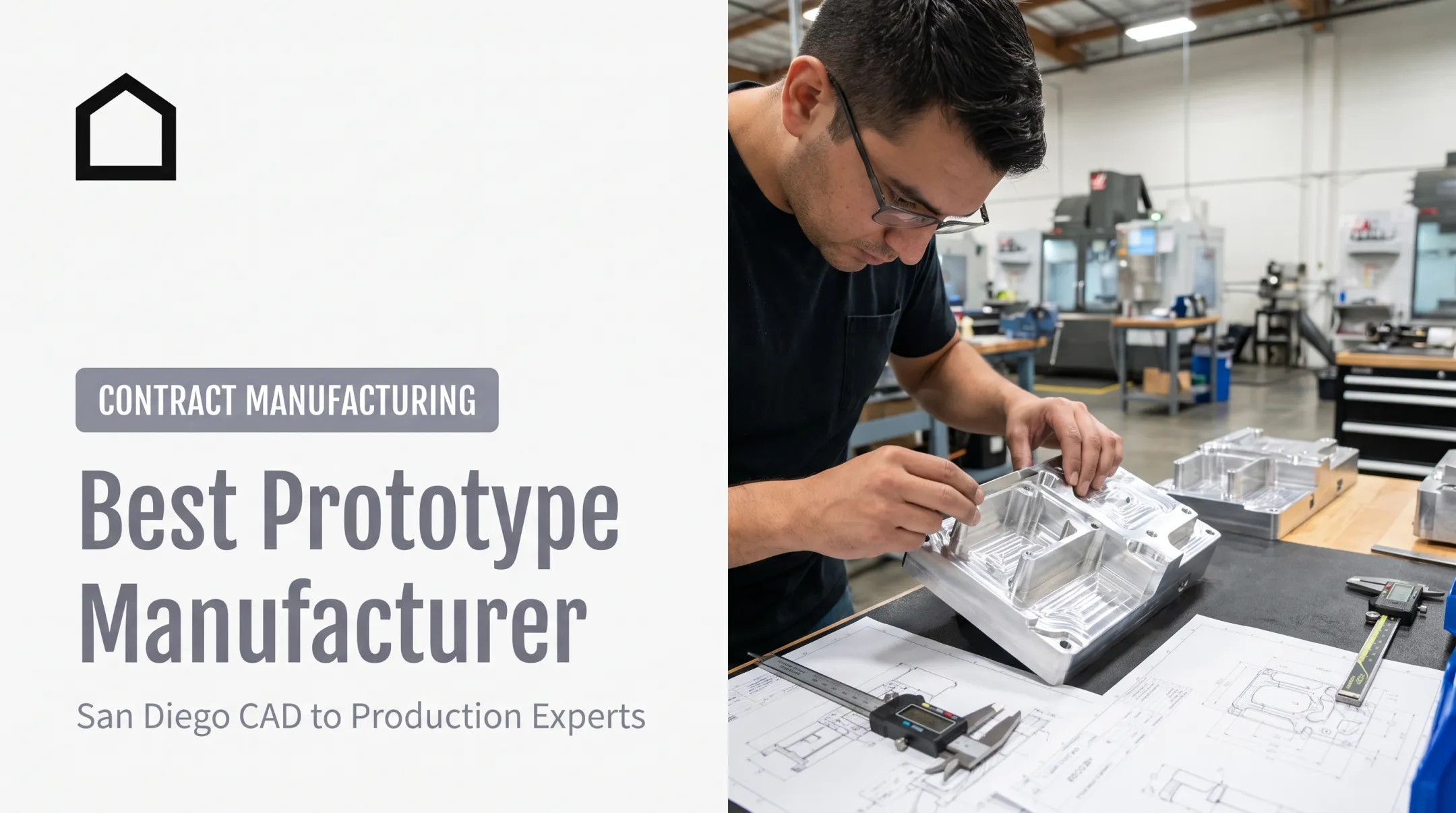

Prototype manufacturing is the process of building pre-production models to validate a design's form, function, and manufacturability before committing to tooling or mass production. This guide covers the main processes, realistic cost ranges, prototype types, and what to look for in a manufacturing partner this year.
Key Takeaways
- Prototyping validates design, materials, and manufacturability before expensive tooling decisions
- Match CNC, 3D printing, urethane casting, or injection molding to your fidelity, volume, and budget needs
- Costs range from roughly $20 for a simple printed part to $10,000+ for a molded prototype with tooling
- A one-stop-shop manufacturer cuts vendor handoffs—critical for speed in regulated industries
What Is a Manufacturing Prototype?
A manufacturing prototype is a physical, pre-production representation of a product built to test form, fit, function, and manufacturability before a company invests in tooling or a production run.
It's different from an early design prototype, which answers appearance and packaging questions using non-production materials like foam or PLA. A manufacturing prototype sits closer to production intent. It uses more representative materials and processes to expose real-world problems before they become expensive ones.
That distinction cuts both financial and technical risk. Catching a wall-thickness issue during a 3D-printed test costs a fraction of catching it after a $10,000 mold is already cut.
Prototypes evolve as a product matures:
- Rough concept models test whether an idea is even feasible
- Functional prototypes test mechanisms and performance
- Pre-production units mirror the final product closely enough for regulatory or user testing

Common Types and Examples of Prototypes
Proof-of-Concept and Visual Prototypes
These early models test basic feasibility or appearance only. Teams often use low-cost materials like foam or PLA plastic because the goal is answering one question: does this concept work at all? Fit, finish, and durability aren't priorities yet.
These early models test basic feasibility or appearance only. Teams often use low-cost materials like foam or PLA plastic because the goal is answering one question: does this concept work at all? Fit, finish, and durability aren't priorities yet.
Typical examples include:
- Foam or cardboard form studies for size and grip
- Basic PLA prints to check assembly clearances
- Painted appearance models with no mechanical function
Functional and Engineering Prototypes
After a concept clears initial testing, functional prototypes use production-representative materials to test mechanical performance, strength, and fit under real conditions. Teams build engineering confidence here before tooling commitments.
Typical examples include:
- CNC-machined housings for load and drop testing
- Urethane castings that mimic molded part flex and fit
- Working mechanisms used to validate cycle life and tolerances
Pre-Production and Field-Test Prototypes
These closely mirror the final product and support user testing, regulatory review, or investor demonstrations. For dental and orthopedic devices specifically, this stage carries extra weight.
The FDA's design-controls framework distinguishes verification (does the output meet the input?) from validation (does it meet user needs under real or simulated use conditions). Both require prototypes built to controlled, traceable standards (FDA Design Controls training).
Typical examples include:
- Pilot-tooling parts for design freeze and process checks
- Field units sent to clinicians or end users for simulated use
- Investor or regulatory demo units built to production intent
Finine Design and Manufacturing builds this level of fidelity and documentation for clients developing dental and orthopedic medical and educational products.
Main Manufacturing Processes Used in Prototype Manufacturing
Choosing a process comes down to one question: what are you trying to prove right now?
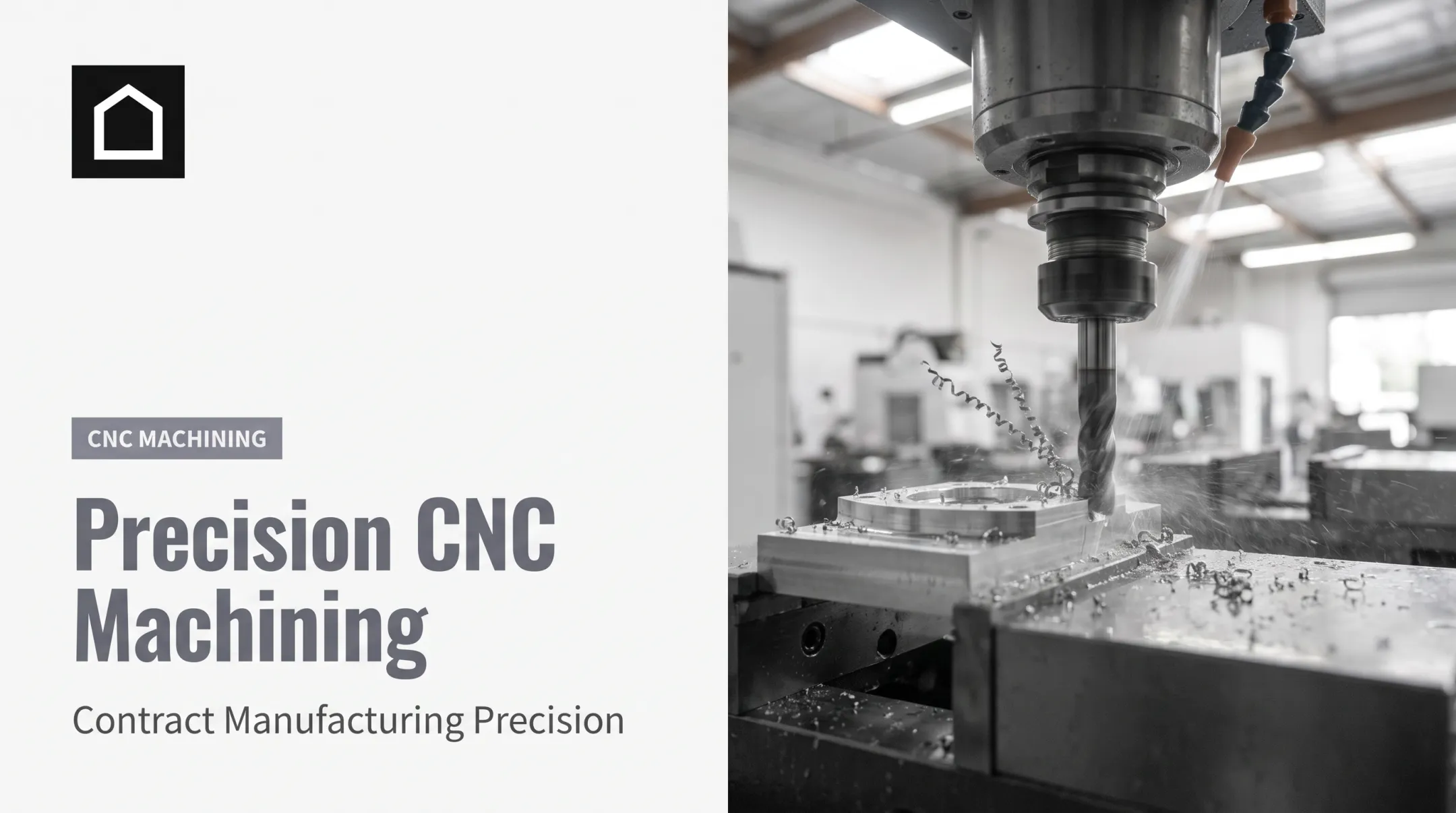
- CNC machining — High-precision functional prototypes in real production materials (about ±0.005 in. standard, ±0.002 in. precision) (Protolabs CNC guide). Best when you need to test actual metal or engineering plastic behavior.
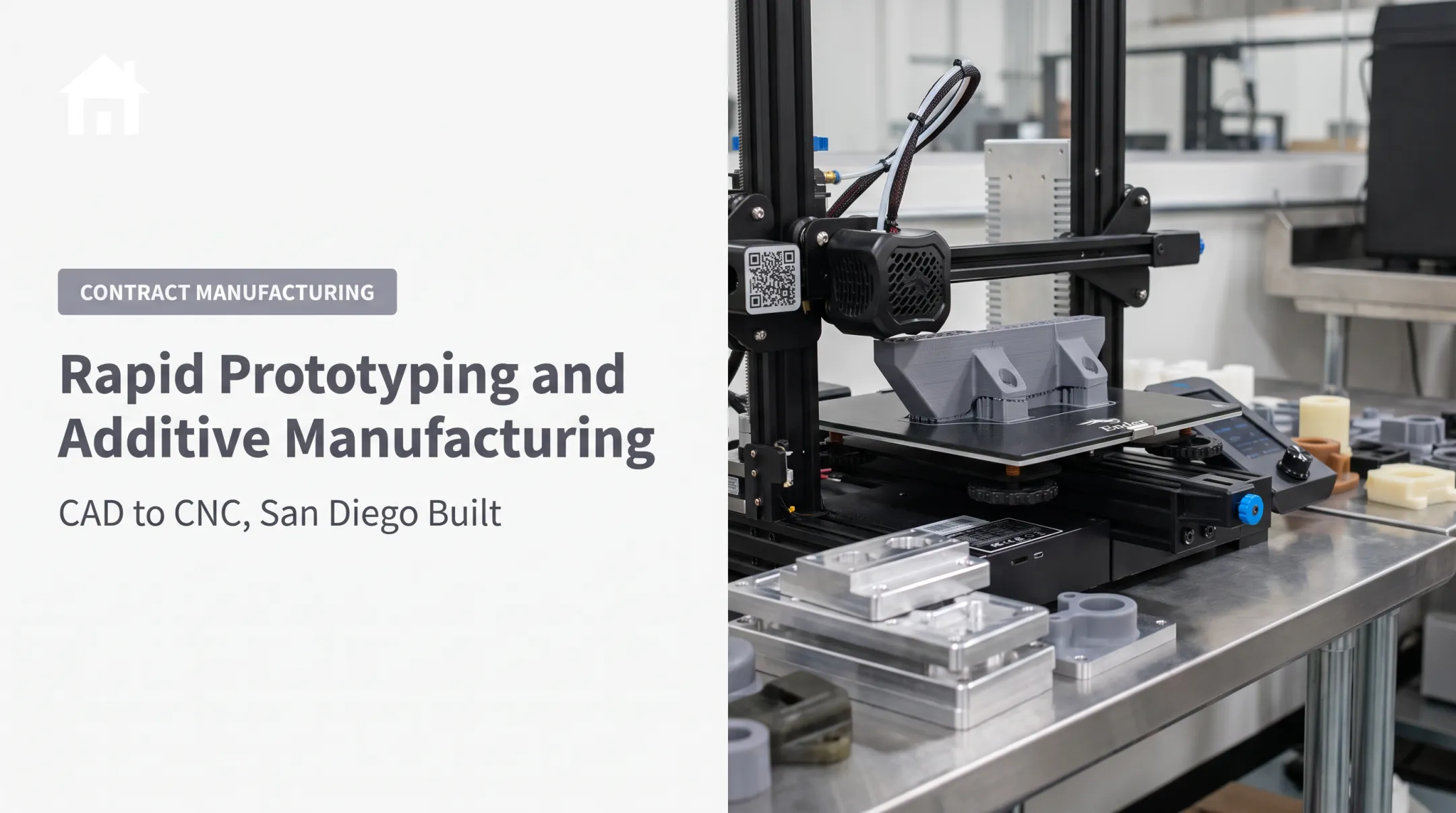
- 3D printing / additive manufacturing — Fastest and cheapest way to iterate. Parts can be produced in hours with complex geometries, though durability and finish trail production materials.
- Urethane casting — Mid-cost bridge option: silicone tools produce 15–25 plastic parts that look and feel closer to injection-molded output, without a steel mold.
- Injection molding — The production-grade choice once geometry is stable. Delivers accurate material behavior and market-testing quantities, but tooling adds cost and lead time.
- Production painting and finishing — Gives a prototype market-ready cosmetics, often paired with product graphics for branding.
Finine Design and Manufacturing performs all five of these processes in-house at its San Diego facility. That matters practically: a client can move from a 3D-printed concept model to a CNC-machined functional test to urethane-cast pre-production units without switching vendors, re-shipping parts, or re-explaining requirements to a new team each time.

How Much Does It Cost to Get a Prototype Made?
Cost depends on process choice, material, complexity, tolerances, and how many iterations you'll need. There's no single "prototype price"—only ranges tied to what you're building.
Directional planning ranges from a 2026 industry cost guide by Fictiv look like this:
| Process | Typical Range |
|---|---|
| Simple 3D-printed parts | $20-$200+ |
| CNC-machined prototypes | $100-$1,000+ |
| Urethane-cast parts | $200-$5,000+ |
| Injection-molded prototypes (incl. tooling) | $1,000-$10,000+ |
Beyond the process itself, a few factors push quotes up or down:
- Larger parts use more material and machine time
- Fine details and tight tolerances add precision work and labor
- Low CNC quantities look expensive per part; unit cost improves as volume rises
Multi-vendor shipping is another cost many teams miss. Every handoff between a printing shop, machine shop, and molder adds freight, lead time, and duplicated setup. A single integrated manufacturer removes that friction.
How Do I Get My Prototype Manufactured? (Step-by-Step)
- Finalize your CAD design and requirements. Define what fidelity level you actually need: concept validation, functional testing, or pre-production readiness.
- Select the process and material. Match your budget, timeline, and testing goals to the right process from the comparison above.
- Get a DFM review. A design-for-manufacturability review catches issues like insufficient draft angle or wall thickness problems before they cost you a build cycle.
- Build, test, and iterate. Record results against your requirements and fold the results into the next design revision. Expect more than one round.
- Transition toward tooling and mass production. Once the prototype passes, move validated designs into full tooling and production planning.

This sequence holds whether you're building a consumer electronics housing or a Class II medical device—only the documentation burden changes.
Choosing the Right Prototype Manufacturing Partner for 2026
Not every manufacturer fits every project. A few things worth checking before you commit:
- End-to-end capabilities. A partner offering CAD, 3D printing, CNC, molding, and painting under one roof avoids the delays and miscommunication that come with multiple vendor handoffs.
- Regulated-industry experience. Medical, dental, orthopedic, and defense products carry documentation and traceability requirements that generic prototyping shops may not be set up to handle.
- Turnaround and communication. Fast iteration cycles are non-negotiable in 2026 timelines. A partner who's slow to respond to a DFM question will cost you weeks over a project.
- Facility access. Being able to walk the production floor and see your parts in progress builds a different kind of confidence than a status email.
If those boxes matter for your next build, look for a partner that can prove them on the floor—not only on a capabilities page.
Finine Design and Manufacturing is a San Diego-based, full-service partner for concept-to-production work in automotive, military, consumer electronics, and medical markets, with particular depth in dental and orthopedic products. Clients can tour the facility by appointment and see parts move from CAD file to finished prototype.
Frequently Asked Questions
How much does it cost to get a prototype made?
Cost depends on process, material, and complexity. Expect roughly $20–$200+ for a simple 3D-printed part, $100–$1,000+ for CNC machining, and $1,000–$10,000+ for injection-molded prototypes with tooling included.
How do I get my prototype manufactured?
Finalize your CAD design, choose a process that fits your budget and testing goals, and get a DFM review. Then build, test, and iterate before committing to production tooling.
What are the main manufacturing processes used in prototype manufacturing?
The four most common are CNC machining, 3D printing, injection molding, and urethane casting. Each fits a different combination of speed, fidelity, and budget.
What is a manufacturing prototype?
A manufacturing prototype is a pre-production physical model used to validate form, fit, function, and manufacturability before a company commits to tooling and mass production.
What are the common types of prototypes?
Proof-of-concept prototypes test basic feasibility. Functional prototypes verify mechanical performance with production-representative materials. Pre-production prototypes closely mirror the final product for regulatory or user testing.