
Automotive suppliers, defense contractors, electronics manufacturers, and device companies all need one thing: parts machined to exact tolerances, every time. Yet many businesses juggle three or four vendors just to get from a CAD file to a finished part. That fragmentation creates real problems. Lead times stretch. Quality varies from batch to batch depending on which shop ran the job. One supplier handles prototypes, another handles production, and a third handles finishing, meaning nobody owns the whole picture. This guide breaks down what custom machining actually is, where it delivers the most value, which industries depend on it, and what to look for in a manufacturing partner who can carry a project from concept to finished, finished part.
Key Takeaways
- Custom machining achieves tolerances and geometries that standard, off-the-shelf processes can't replicate
- Best fit for prototypes, low-volume runs, and regulated sectors such as defense and dental/orthopedic work
- One partner from design through finishing cuts vendor complexity and shortens time-to-market
- Material and finish selection directly affect part performance and cost, so specify both early
What Is Custom Machining and How Does It Work?
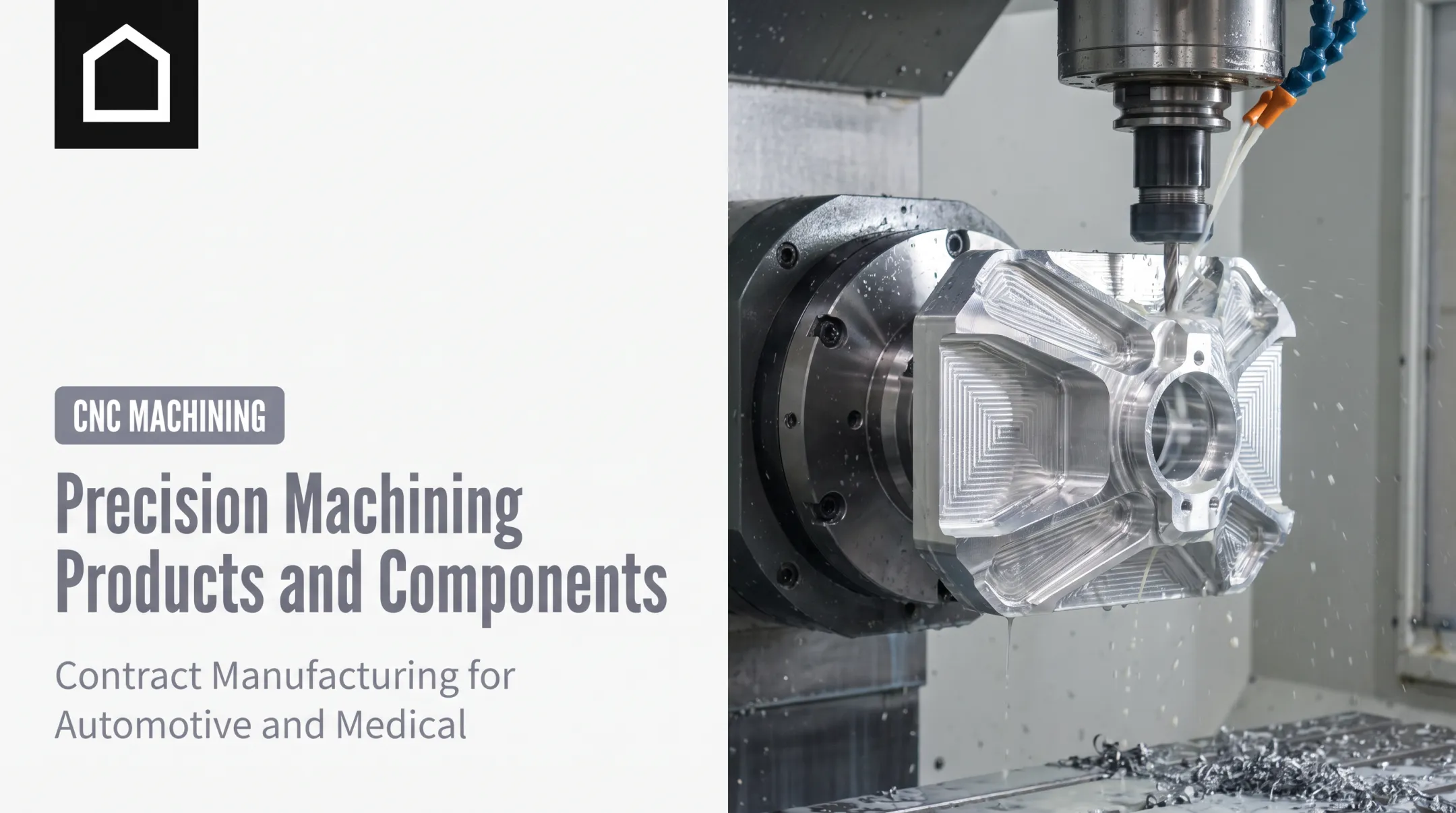
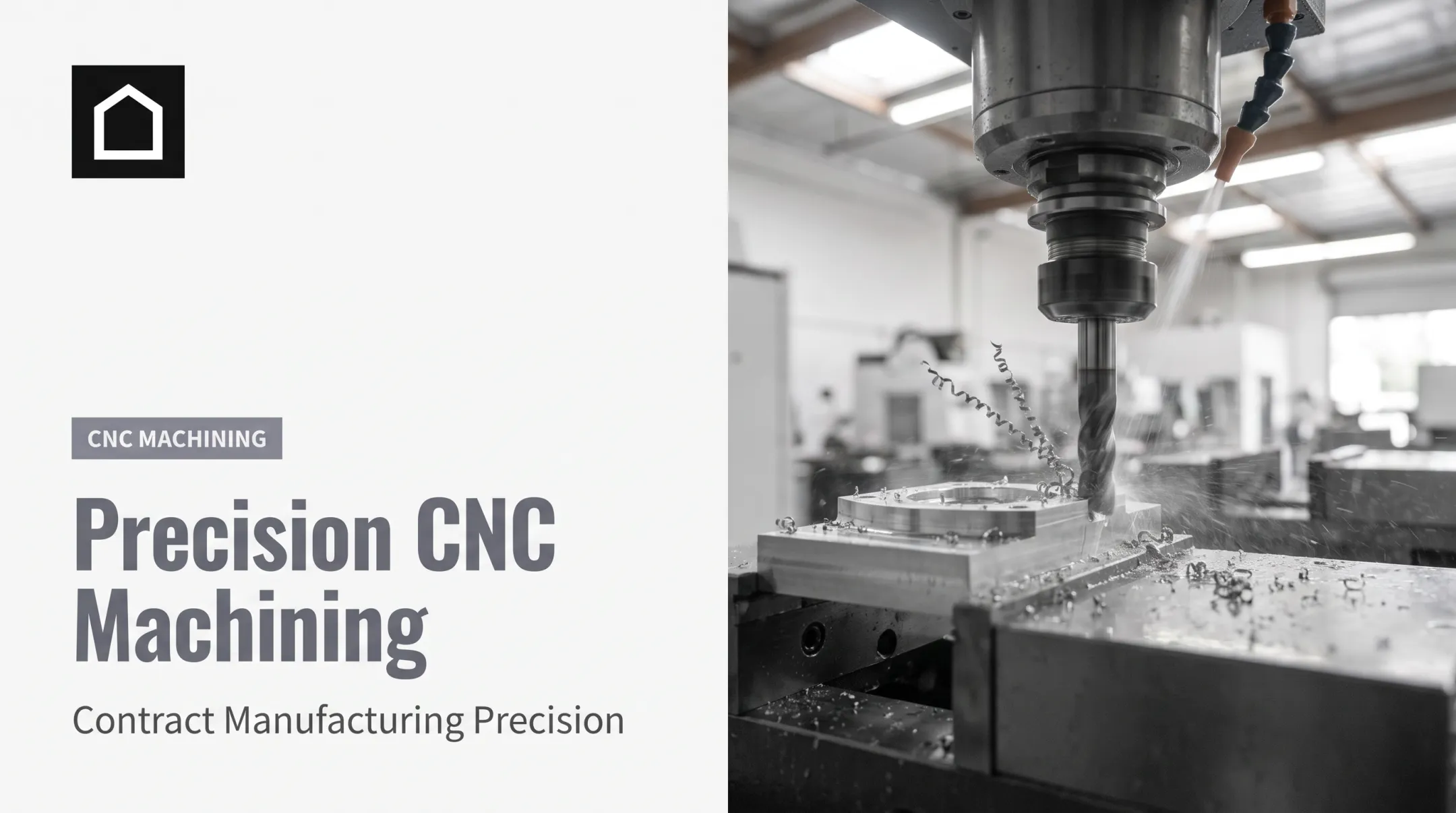
Custom machining is computer-controlled (CNC) subtractive manufacturing. A programmed machine removes material from a solid block, or workpiece, to produce a part matching exact dimensions, material, and finish requirements. The "computer-controlled" part is standard CNC; the "custom" part comes from tailoring tolerances, materials, and finishing to a specific project's timeline and function. The typical workflow looks like this:
- CAD file review – engineers examine the design for producibility
- DFM analysis – design-for-manufacturability feedback identifies costly geometries before cutting begins
- Material selection – choosing the metal or plastic that fits the application
- Tool path programming – converting the design into machine instructions
- Machining – the actual cutting, milling, or turning
- Quality inspection – verifying the finished part against the drawing

CNC Milling, Turning, and Multi-Axis: What's the Difference?
- CNC milling uses a rotating cutter that moves across a stationary workpiece, ideal for flat faces, slots, and pockets
- CNC turning spins the workpiece while a fixed tool removes material, best suited for round or cylindrical parts
- Multi-axis or turn-mill machining combines both approaches in a single setup, reducing handling and improving accuracy on complex parts A common technical question buyers ask: what's the difference between a
CNC mill and a machining center? A CNC mill is the base process and machine category. A machining center is typically a more automated milling platform, usually identified by an automatic tool changer that switches tools without manual reloading, and often with additional axes for complex, multi-step jobs. Terminology isn't standardized industry-wide. Ask any shop for axis count, tool-changer capacity, and work envelope rather than relying on the label alone. Material choice matters just as much as the method. Common options include:
- Aluminum – strong strength-to-weight ratio and solid machinability; popular for automotive and general manufacturing parts
- Steel – durability for load-bearing components
- Brass – corrosion resistance with a clean finish
- Engineering plastics (PEEK, polycarbonate) – weight savings, chemical resistance, or electrical insulation when metal strength isn't required

Key Benefits of Custom Machining Solutions
Custom machining earns its place in regulated and demanding industries for a few clear reasons. Precision and repeatability. Standard CNC machining typically holds tolerances around ±0.005 inches, while precision machining can tighten that to ±0.002 inches, with reamed holes reaching ±0.0005 inches under the right conditions, according to Protolabs' tolerance guidance. For safety-critical parts, such as an orthopedic implant or a suspension component, that consistency isn't optional. Design flexibility. Machining handles undercuts, internal features, and intricate geometries that injection molding can't produce without expensive mold modifications. Faster turnaround. Because machining skips the tooling step entirely, one benchmark shows CNC machining running around 3 days versus 7 to 20 days for injection molding depending on part complexity, per Protolabs' lead-time data. Cost efficiency for low volumes. No mold means no upfront tooling investment, often $50,000 or more for high-volume steel tooling. For prototypes and short runs, that difference matters. Those savings still depend on realistic rate planning. Published rate guides show wide variation, roughly $35 to $250 per hour depending on machine type and complexity, with 3-axis work landing on the lower end and 5-axis work commanding a premium. Treat these as planning estimates, not fixed pricing. Every quote should account for setup, programming, material, and inspection.

Industries That Rely on
Custom Machining Four sectors lean on custom machining more than most, each for different reasons.
Automotive Engine components, suspension parts, and transmission pieces face constant stress and vibration.
Aluminum alloys like 6061 are common here for their strength-to-weight ratio and machinability.
Military & Defense Mission-critical parts often carry
tight tolerances plus certification requirements tied to the specific program and customer. Aviation, space, and defense supply chains frequently reference AS9100 quality standards, and export-control obligations may apply depending on the work.
Consumer Electronics Enclosures, brackets, and heat sinks need a precise fit for cable entries, display windows, and thermal management. Cosmetic finish and burr control matter as much as dimensional accuracy.
Dental & Orthopedic
Finine Design and Manufacturing brings specialized experience in this sector. The company develops dental and orthopedic sales and educational products, where precision and presentation both matter. Device organizations typically work under quality frameworks like ISO 13485, including the FDA's Quality Management System Regulation. Confirm compliance requirements for each product and application.
From Prototype to Production:
Choosing the Right Manufacturing Partner Custom machining bridges early-stage prototyping and full production in a way injection molding can't. Injection molding requires locking in a design before cutting an expensive mold. Machining lets you revise a CAD model, regenerate the tool path, and cut a new prototype without that financial commitment. What to look for in a machining partner:
- DFM support that flags manufacturability issues before production starts
- Material expertise across metals and engineering plastics
- Quality control processes that catch problems before shipment
- Finishing capabilities so parts arrive ready for use, not requiring a separate vendor
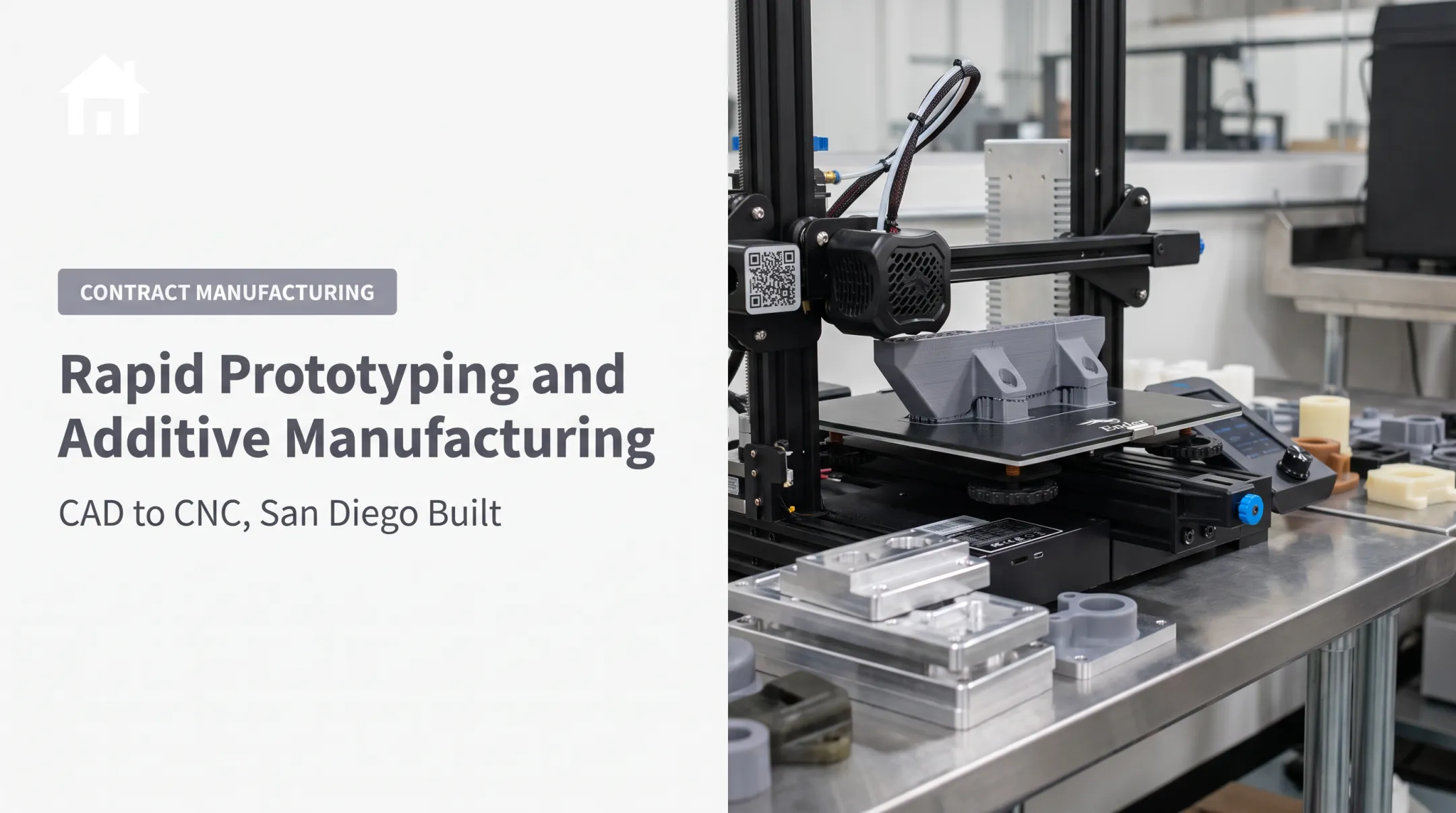
Finine Design and Manufacturing builds around that prototype-to-production path. The company combines CAD modeling, 3D printing, CNC machining, urethane casting, injection molding, and production painting under one roof at its San Diego, CA facility. A project can move from an initial 3D-printed prototype, through CNC-machined functional testing, to production tooling—without the design changing hands between separate shops. That matters because every handoff between vendors introduces delay and risk of miscommunication. A dedicated point of contact, like Jaime at Finine Design, helps keep a project moving instead of stalling while files bounce between companies.
Post-Machining Finishing Options A machined part is rarely
"done" the moment it comes off the machine. Finishing determines both function and appearance.
- Anodizing – builds a protective oxide layer on aluminum parts, improving corrosion resistance and allowing color options
- Powder coating – adds a durable, decorative coating suited for parts exposed to wear
- Bead blasting – creates a uniform matte texture and removes minor surface imperfections
- Production painting – delivers a professional, presentation-ready finish

For a trade show demo, an investor pitch, or a regulated product, finish quality isn't merely cosmetic. It's often the first thing a buyer, reviewer, or auditor notices. Finine Design and Manufacturing offers production painting in-house, so parts can ship presentation-ready without a separate finishing vendor.
Frequently Asked Questions
How much does CNC machining cost per hour?
Rates typically range from $35 to $250 per hour, depending on machine type, part complexity, and material. Always request a project-specific quote rather than relying on a general average.
What is the main difference between a CNC mill and a machining center?
A CNC mill removes material with a rotating cutter along set axes. A machining center adds automation—typically an automatic tool changer and extra axes—so complex, multi-step jobs run without manual reloading.
What materials can be custom machined?
Common metals include aluminum, steel, stainless steel, brass, and titanium. Common plastics include ABS, polycarbonate, and PEEK. The right choice depends on strength, weight, and application requirements.
How long does custom machining take compared to injection molding?
Machining skips tooling lead time entirely, making it faster for prototypes and low-volume runs. Injection molding requires mold creation first, which adds significant time before production even starts.
Is custom machining cost-effective for small production runs?
Yes. Machining avoids the tooling investment that molding requires, often $50,000 or more. Per-part costs run higher, but total project cost stays lower for small volumes.
What industries benefit most from custom machining services?
Automotive, military and defense, consumer electronics, and dental and orthopedic sectors use custom machining most for precision, regulated, or low-volume parts.