
That gap between "it works" and "it can be manufactured" is where a lot of product programs run into trouble. Tooling gets cut before a design is actually ready for it, or a part sails through testing in a material that has nothing to do with what production will actually use.
Production-intent prototyping closes that gap. It's a later-stage validation step that ties design decisions to the materials, methods, tolerances, and inspection criteria a product will actually see in production. This article covers what the term means, how it differs from other prototype types, how the process works in practice, the mistakes teams commonly make, and how to prepare for the transition into production.
Key Takeaways
- A production-intent prototype validates manufacturability, not just appearance or basic function.
- "Production intent" does not require final production tooling; CNC machining, soft tooling, and urethane casting often fit.
- Match the process to the manufacturability question you need answered, not a default method.
- Passing a prototype shows design readiness, not proof a production line can repeat the part at scale.
What Is a Production-Intent Prototype?
A production-intent prototype is a mature build meant to represent the final product, and its intended manufacturing route, as closely as the project allows. RCO Engineering describes production-intent assembly as building components using processes, materials, and specifications that closely mirror full-scale production. That's a useful bar to set—and it still leaves room to choose the right process for each validation goal.
At this stage, the prototype has to answer harder questions than "does it look right" or "does it move." Teams need to know whether the part can be manufactured consistently, assembled the way engineering intended, and finished to the standard the product requires.
What a production-intent build is expected to show:
- Manufacturability of the design as drawn
- Repeatable key dimensions across multiple units
- Assembly fit with mating components and fasteners
- Material behavior under real use conditions
- Production-representative surface finish and cosmetics
Production Tooling Isn't Always Required
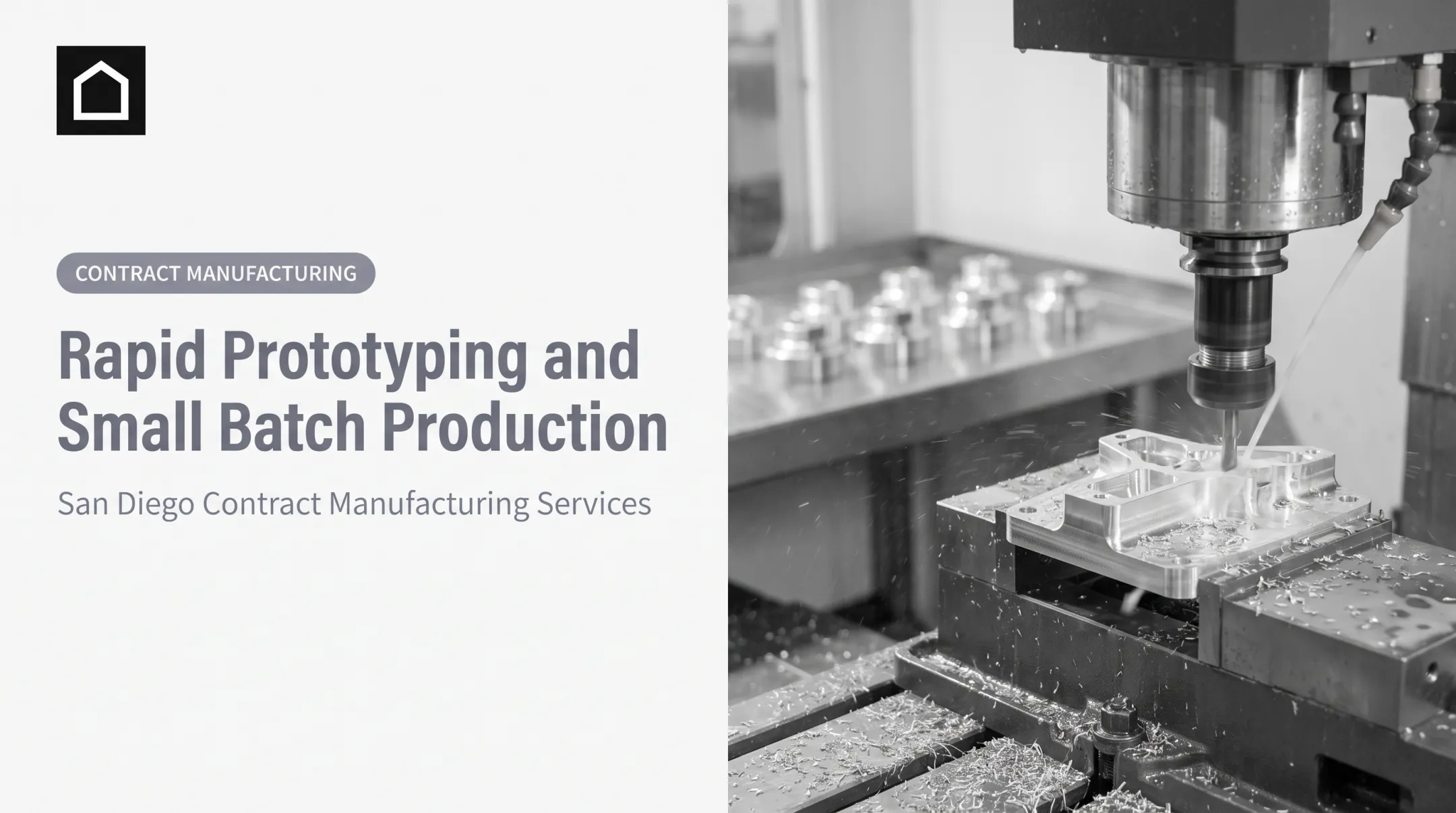
Here's where a lot of teams overcomplicate things. "Production intent" doesn't automatically mean steel tooling and a committed mold. Depending on what you're validating, prototype tooling, soft tooling, CNC machining, or additive manufacturing can all serve the purpose.
Common pairings include:
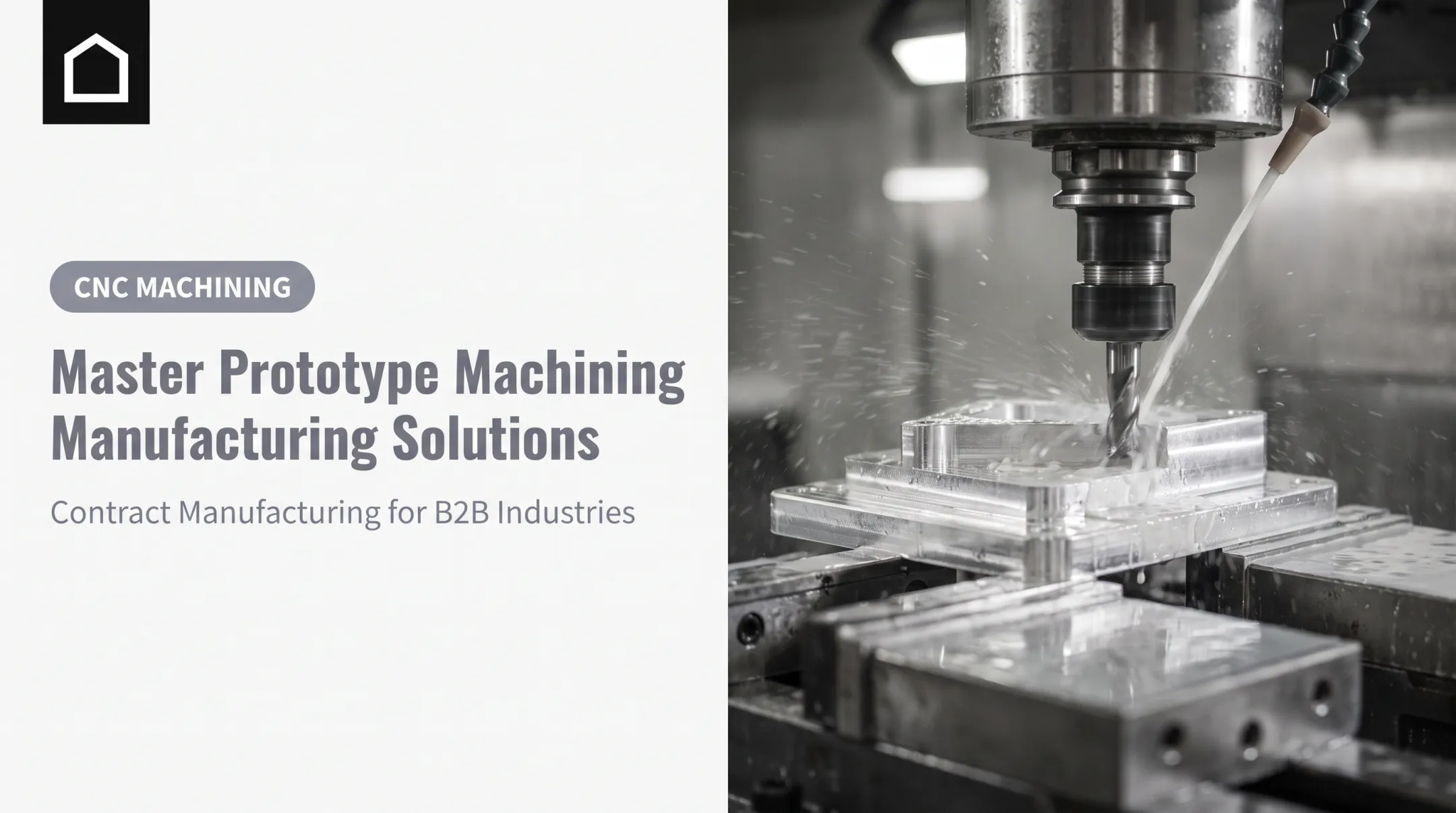
- CNC-machined aluminum to confirm dimensional accuracy and material performance before a mold exists
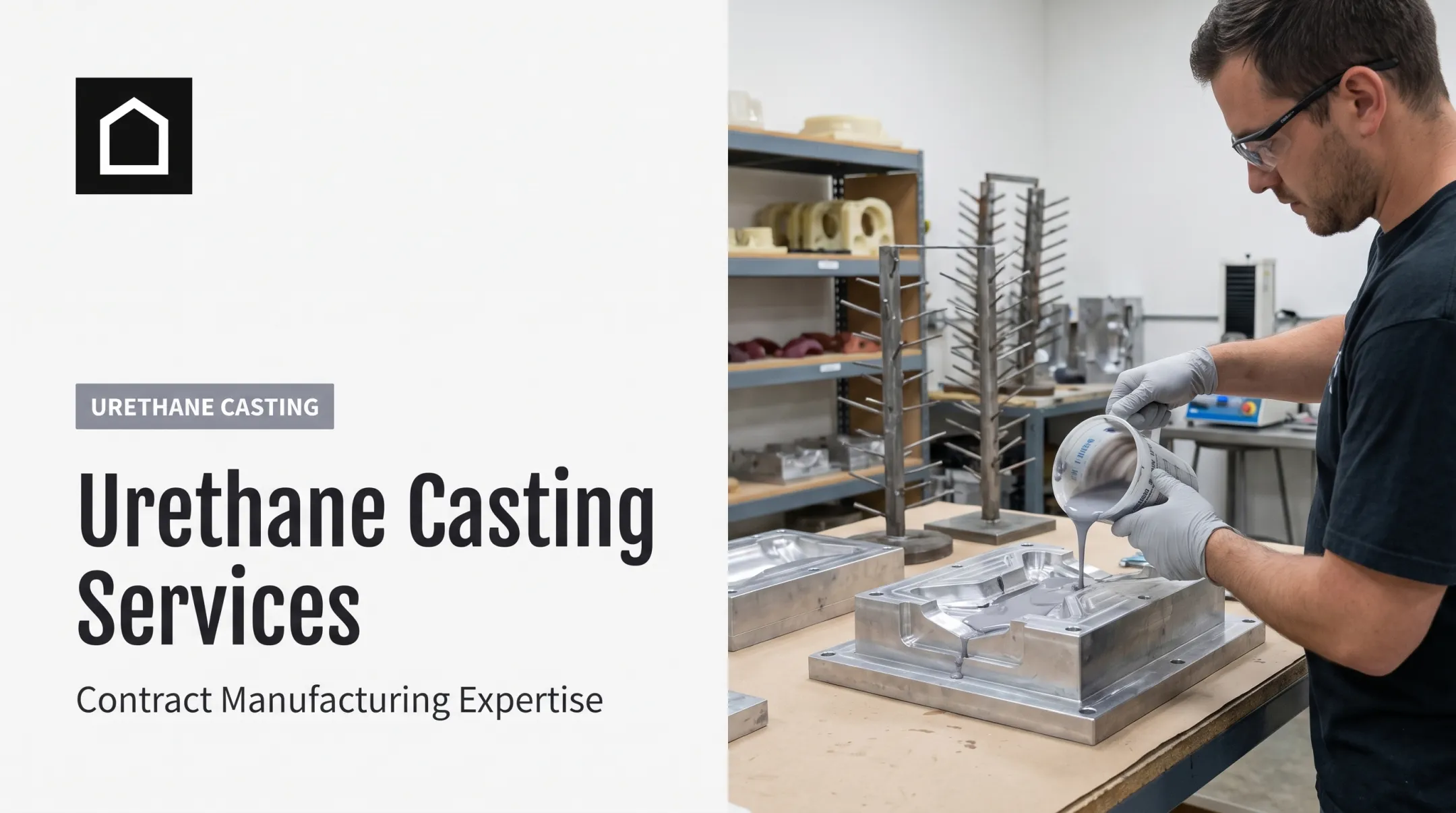
- Urethane casting with production-like material properties to test function ahead of injection molding
The method should match the question—not the other way around. Don't reverse-engineer the validation goal from whatever process is fastest or cheapest.
What Does "Production Intent" Mean in Practice?
Production intent is really a spectrum, not a single checkbox. The factors that make a build "production-representative" include:
- Material and geometry
- Tolerances and surface finish
- Joining method and manufacturing process
- Fixturing and inspection approach
- Post-processing steps
Not every validation question needs every one of those factors locked down. Fit inside an enclosure might only need accurate geometry, so 3D printing could be enough. Evaluating how a molded wall actually behaves under load or heat, on the other hand, usually needs a process that resembles injection molding, because the resin flow and cooling behavior simply don't translate from a printed part.
Design-for-Manufacturability Checks That Matter
A design-for-manufacturability (DFM) review at this stage should cover the details that decide whether a part is actually practical to make and assemble:
| Design Check | Why It Matters |
|---|---|
| Draft angles | Needed for clean part ejection from tooling |
| Wall thickness and radii | Uneven walls cause sink marks and warping |
| Undercuts and parting lines | Can block straight-pull ejection or force side-actions |
| Tolerance stack-up | Allocated tolerances need to match manufacturing capability |
| Assembly sequence | Fastener access and alignment features affect build time |
| Critical dimensions | Must be flagged on the drawing, not buried in the CAD file |
Design Validation Isn't Process Validation
A production-intent prototype provides evidence for a design. It does not automatically prove that a production process can repeat that result at rate. The FDA's guidance on design controls draws a clear line between design validation, which confirms a device meets its intended use on representative product, and transfer to manufacturing, which is a separate activity entirely.
In practice, this shows up across Finine Design's target industries:
- An automotive enclosure prototype might validate fit and vibration resistance
- A consumer electronics housing might validate snap-fit assembly and cosmetic finish
- A defense component might validate dimensional accuracy under CNC machining before any tooling exists
- A dental or orthopedic product might validate material behavior and fit before bridge production
In every case, the prototype answers a design question. Any regulatory testing, qualification, or clinical requirement sits with the client program and is a separate conversation.

Production-Intent Prototype vs. Other Prototype Types
Most product development programs move through several prototype categories, and each one answers a different question. Confusing them, or skipping ahead too fast, is where a lot of budget gets wasted.
| Prototype Type | Primary Question Answered |
|---|---|
| Visual/appearance | What will it look like? |
| Proof-of-concept | Does the basic idea work at all? |
| Functional | Do form, fit, and function work together? |
| Engineering | Does the design meet integrated requirements with DFM in mind? |
| Production-intent | Can the mature design be built using near-final materials, geometry, and process? |
Functional Prototype vs. Production-Intent Prototype
A functional prototype can show that a hinge opens and closes or a button triggers a circuit. That proof is valuable, but it says nothing about whether the part can be molded consistently, assembled on a line, or finished to spec.
A production-intent prototype is built to supply that next layer of evidence: representative material, dimensional accuracy, assembly method, and a documented inspection approach.
Production-Intent Prototype vs. Pre-Production Sample
A production-intent prototype validates a mature design under representative conditions. A pre-production sample or pilot build validates the production system—whether it can repeatedly make conforming parts at rate.
AIAG's Production Part Approval Process framework exists to confirm consistent compliance during an actual production run. That is a different threshold of evidence than a single successful prototype build.
Quick comparison framework:
- Design maturity: Production-intent builds may still take revisions; pre-production assumes a frozen design
- Tooling: Soft or prototype tooling is common for production-intent; pre-production uses production tooling
- Expected output: Production-intent yields design evidence; pre-production yields process evidence
Process choice matters as much as geometry. A 3D-printed part can't approve an injection-molded design, and a machined part can't fully stand in for a cast or formed component. The shape may match, but material behavior under the final process often will not.
How Production-Intent Prototyping Works
The process follows five stages, each building on the last.
- Define the validation plan. Decide exactly what the prototype needs to prove, whether that's fit, load performance, thermal behavior, assembly, appearance, or manufacturability. A vague goal produces a prototype that answers the wrong question.
- Review the product definition. This means CAD files, drawings, bill of materials, material specs, critical dimensions, tolerances, surface finishes, and anticipated production volume. Finine's prototype process typically starts with a 3D CAD model paired with a 2D drawing that identifies critical dimensions and tolerances.
- Select a manufacturing approach that matches the objective. Options include CNC machining, 3D printing, urethane casting, injection molding with prototype tooling, or sheet-metal fabrication. Finine chooses among these based on whether the part needs speed, dimensional accuracy, or production-representative material properties.
- Manufacture and inspect against agreed criteria. This covers dimensional inspection, functional testing, assembly checks, material verification, and documented deviations.
- Use the results before committing further. Findings feed back into design freeze decisions, tooling commitments, or a move into bridge production. Version control on CAD files, drawings, and specs matters here more than most teams expect, especially once multiple revisions start circulating.

Many manufacturers follow a Prototype → Bridge Production → Production path. Bridge production (often soft tooling or urethane casting) covers the gap between a validated prototype and committed production tooling.
Benefits, Limitations, and Common Mistakes
What Production-Intent Prototyping Gets You
- Earlier discovery of manufacturing problems, before they're expensive to fix
- More confidence in design decisions heading into tooling
- Reduced risk of costly tooling revisions after the fact
- Better communication between engineering and manufacturing teams
- Smoother handoff into production
What It Doesn't Prove
A production-intent prototype is not evidence of:
- Long-term process capability
- Full production capacity
- Sustained repeatability
- Supply-chain readiness
NIST researchers Lee and Kulvatunyou have noted that design changes made later in development cost more. They do not offer a universal savings percentage, and claims about early-issue catch should stay equally specific.
Common Mistakes to Avoid
- Building a production-like prototype before the design is actually mature
- Choosing a process because it's cheap or fast, not because it answers the right question
- Using substitute materials without checking whether they affect the test objective
- Ignoring tolerance stack-up until parts don't assemble
- Treating prototype approval as production approval
Quantity planning belongs in that same checklist. Plan prototype counts around the actual validation goals: some samples get consumed in testing, some get altered, and some need to stay as reference for later comparison. Skimping on quantity to save a few dollars often means repeating the whole cycle.
Choosing a Prototype-to-Production Manufacturing Partner
The right partner should be able to carry a project from early CAD work through to production without a handoff gap. Use this checklist when evaluating a partner:
- Clear engineering communication and DFM feedback, not just a quote for a drawing
- Relevant manufacturing processes in-house (CNC machining, 3D printing, urethane casting, injection molding)
- Material knowledge specific to your application
- Documented inspection capability, including critical-dimension reporting
- Finishing and assembly support (painting, graphics, labeling)
- Capacity planning that extends into bridge or full production
Having design, prototyping, and production under one roof removes a lot of friction. A project that needs CAD modeling, 3D printing, CNC machining, urethane casting, injection molding, and production painting shouldn't require a chain of separate vendors and handoffs.
Finine Design and Manufacturing operates this kind of connected model from its San Diego, CA facility. It supports automotive, military and defense, consumer electronics, dental, and orthopedic product programs across the US.
Its documented workflow runs CAD modeling into 3D printing, CNC machining, urethane casting, injection molding, and production painting. Projects that need to scale can follow a Prototype → Bridge Production → Production path without switching suppliers.
When requesting a prototype assessment or quote, come prepared with:
- CAD files and drawings
- Material requirements and intended use conditions
- Testing needs
- Target quantities
- Finish expectations
- Production timeline
Conclusion
An early prototype asks whether a concept works at all. A production-intent prototype asks something more demanding: whether the mature design holds up under conditions that genuinely represent how it will be made. Knowing the difference saves money, time, and a lot of rework after tooling is already cut.
Before choosing a prototyping method, define exactly what evidence you need. If you have a concept, a CAD model, or a production challenge you're working through, Finine Design and Manufacturing can help you choose the right approach. Reach Jaime at Jaime@fi9design.com or 1.858.900-9787 to walk through what fits your project.
Frequently Asked Questions
What are the five types of prototypes?
The common categories are visual/appearance, proof-of-concept, functional, engineering, and production-intent prototypes. Terminology varies by industry and company, so always confirm what a partner means by each term.
What does product prototype mean?
A product prototype is an early physical or digital representation of a product. Teams use it to evaluate appearance, fit, function, usability, materials, or manufacturability before full production begins.
What makes a prototype production-intent?
A production-intent prototype is built so its materials, geometry, tolerances, manufacturing process, assembly method, finishing, and inspection approach match the intended production product. How close that match needs to be depends on the specific question being tested.
Is a production-intent prototype the same as a pre-production sample?
No. A production-intent prototype validates a mature design under representative conditions. A pre-production sample or pilot build validates whether the production system itself can repeatedly make conforming parts.
Does a production-intent prototype require production tooling?
Not always. Prototype tooling, soft tooling, CNC machining, or urethane casting can be appropriate depending on the design stage and what you're trying to validate.
Can a production-intent prototype be used for medical or defense products?
Yes, it can support development and design validation for medical and defense products. The specific testing, documentation, quality controls, and regulatory approvals required still need to be determined for each product and program.