
Material choice ripples through your entire project. It affects tooling cost, cycle time, bonding options, part durability, and how fast you can get to production. Polypropylene made up 15.6% of European plastics production in 2024, according to PlasticsEurope's 2025 industry report, making it one of the most widely specified commodity thermoplastics on the market (PlasticsEurope, 2025). Polyurethane, by contrast, isn't one material at all. It's a chemistry platform that spans rigid foams, flexible elastomers, and cast urethane parts.
This guide breaks down how the two compare across cost, mechanical behavior, environmental resistance, and manufacturing process, so you can match the material to the application rather than assuming one is universally "better."
Key Takeaways
- Choose polypropylene for lightweight, chemically resistant parts in high-volume injection molding, packaging, and living-hinge designs.
- Reach for polyurethane when wear, impact, cushioning, or custom hardness matter across flexible, rigid, foamed, TPU, or cast grades.
- PP wins on unit cost at scale; PU wins on formulation range for demanding mechanical and cushioning needs.
- Match process to resin: injection molding or thermoforming for PP; casting, RIM, or TPU processing for PU.
- Confirm temperature, chemical exposure, load, bonding method, and production volume before locking in either material.
Polypropylene vs Polyurethane: Quick Comparison
Cost
PP is often the economical choice as a commodity thermoplastic, but raw resin price only tells part of the story. Trade reporting shows North American PP pricing shifting month to month based on feedstock and supply conditions, without a single stable benchmark figure (Plastics News, October 2026). What actually determines your part cost is the total production equation:
- Tooling investment (hard injection molds run into tens of thousands of dollars)
- Cycle time and labor per part
- Finishing and secondary operations
- Scrap rate and expected service life
Polyurethane can carry a higher per-part material or processing cost in some applications, but it often reduces upfront tooling investment for prototypes, bridge production, or low-volume complex parts.
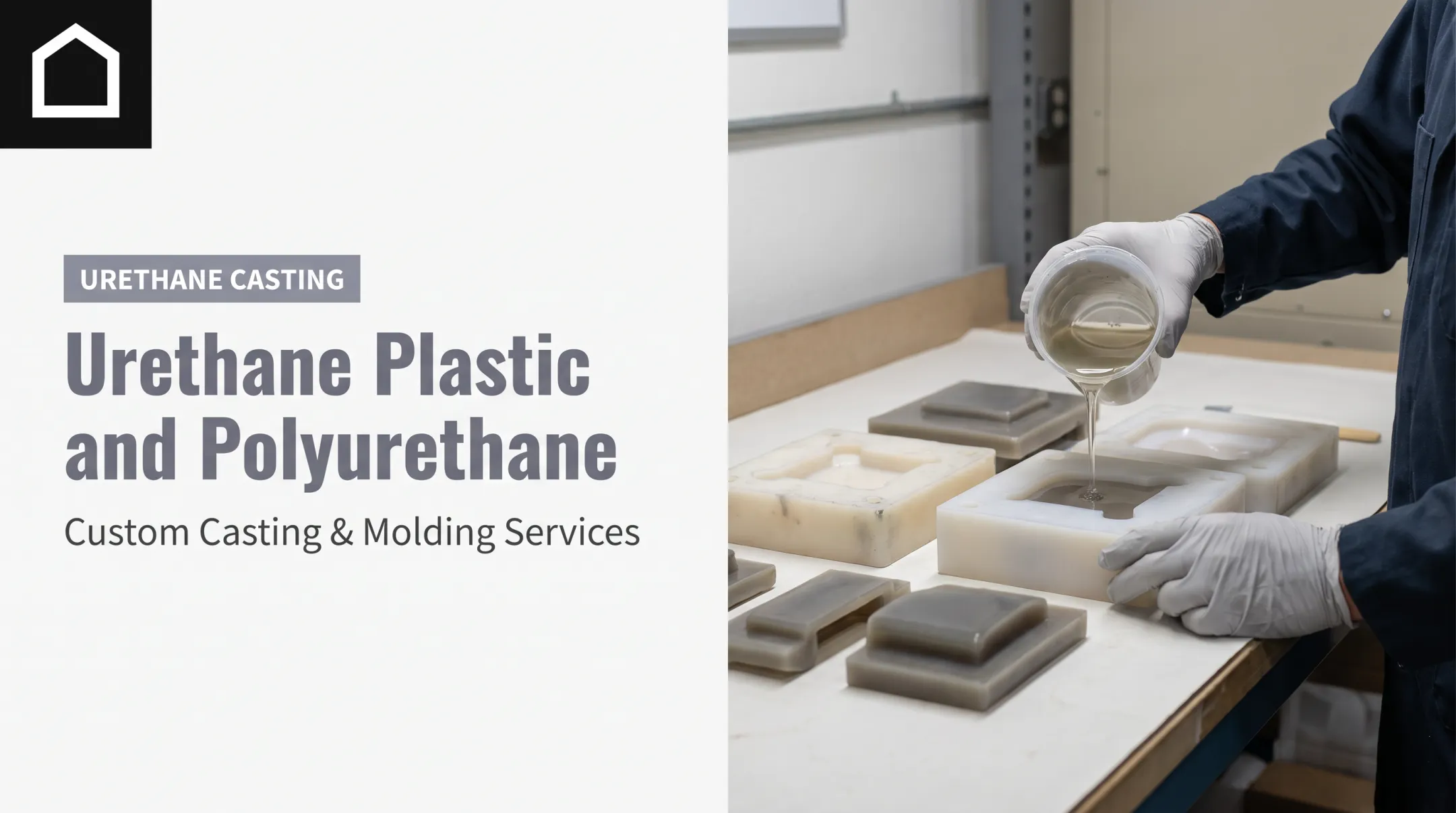
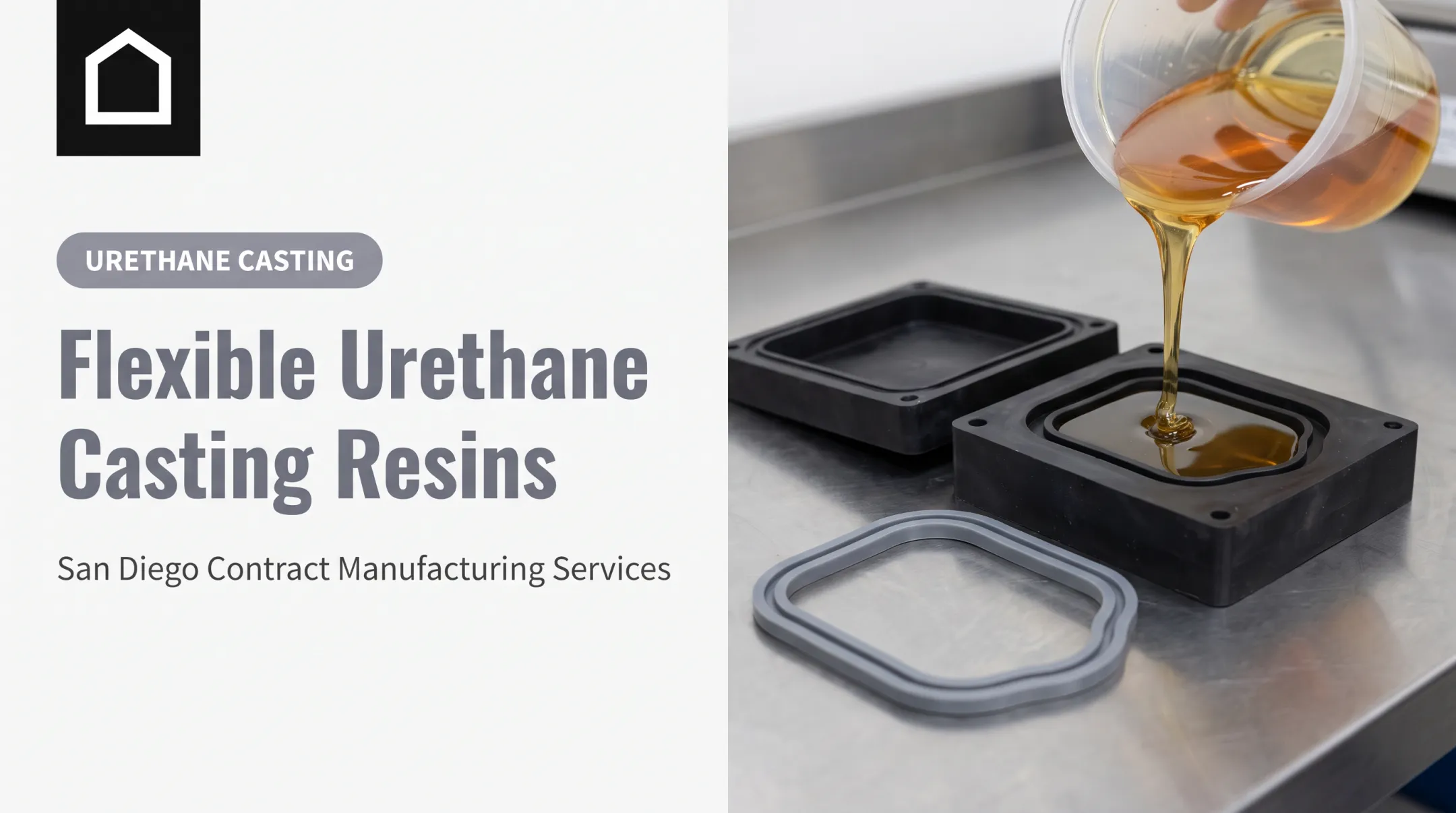
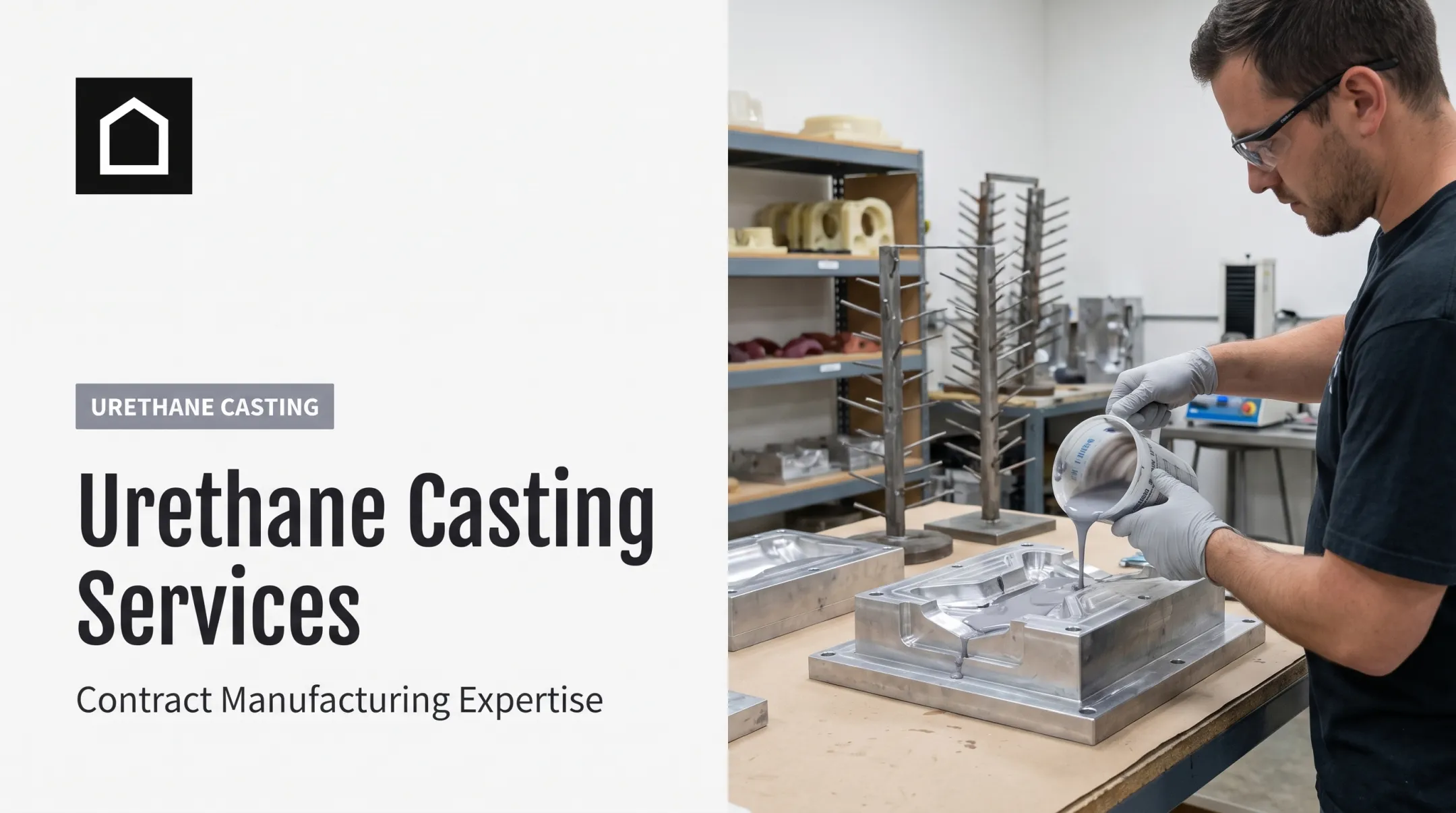
Reaction injection molding (RIM) cycle times for PU can range from 1 to 20 minutes depending on part size and system, with some fast systems demolding in 30 to 60 seconds (Covestro). Silicone tooling for cast urethane parts, the kind Finine Design and Manufacturing builds for clients bridging prototype to production, typically costs a fraction of a steel injection mold.
Don't anchor a material decision to a generic "$/lb" number. Get grade-specific quotes for your actual part geometry and volume.
Composition and Material Class
Polypropylene is a true thermoplastic. ISO 19069-1:2015 designates it as a molding and extrusion material that softens on reheating and can be reprocessed within normal limits (ISO). This is why production scrap from PP parts is often recyclable back into the process.
Polyurethane is not one material. It's a chemistry built from a polyol and an isocyanate, and the reaction can be tuned to produce:
- Thermoset PU composites
- Thermoplastic polyurethane (TPU)
- Rigid or flexible foam
- Elastomers and cast urethane
BASF's Elastollan line, for example, is specifically marketed as thermoplastic polyurethane (BASF), while Covestro documents separate thermoset PU systems (Covestro). Never order "urethane" as if it's a single spec. Ask for the exact formulation.
Durability and Mechanical Behavior
Here's where grade-specific data matters more than general claims. The table below pulls directly from manufacturer datasheets:
| Material / Grade | Tensile Property | Elongation | Tear/Abrasion |
|---|---|---|---|
| PP homopolymer (LyondellBasell Pro-fax 6523) | 30 MPa at yield | 12% at yield | Notched Izod: 6.2 kJ/m² |
| PP impact copolymer (Moplen EP649N) | 32 MPa at yield | 7% at yield | 100 J/m at 23°C |
| TPU (BASF Elastollan C 60 A 10P001) | 39 MPa at break | 870% at break | 31 mm³ abrasion loss |
| TPU (BASF Elastollan C 95 A 10 000) | 55 MPa at break | 550% at break | 30 mm³ abrasion loss |
| Cast PU, 85 Shore A (Covestro Desmodur MS70 system) | 50 MPa at break | 600% at break | 35 mm³ abrasion loss |
These numbers mix tensile-at-yield (PP) with tensile-at-break (PU), so they're not a head-to-head ranking. The takeaway isn't "PU beats PP" or vice versa. PP tends to hold shape under moderate strain with lower elongation, while PU formulations can flex hundreds of percent before failure. Which one you need depends entirely on whether your part bends repeatedly or stays rigid under load.

Temperature, Chemicals, and Environment
PP's heat-deflection temperature varies by grade and test load. Pro-fax 6523 lists 79°C at 0.45 MPa and 50°C at 1.80 MPa (LyondellBasell), while impact copolymer Moplen EP649N reaches 130°C at a lower load (LyondellBasell). These are test results under specified stress, not a continuous-use rating.
Polyurethane's weak point can be hydrolysis. BASF notes that polyether-based TPU resists hydrolytic degradation better than polyester-based TPU under prolonged hot, humid exposure (BASF).
After 21 days in 80°C water, one polyester TPU grade retained 40 MPa tensile strength and 500% elongation at break, down from its unaged values. UV stability is also formulation-dependent for both materials; neither PP nor PU gets a blanket rating.
Manufacturing, Bonding, and Finishing
PP runs through injection molding and thermoforming. PU covers a wider processing map: casting, RIM, TPU injection molding and extrusion, plus insert and multishot overmolding for TPU specifically (Lubrizol).
Bonding is where PP causes the most headaches. Untreated PP has low surface energy, which makes adhesive bonding genuinely difficult without surface prep like flame, corona, or plasma treatment. Polyurethane, especially TPU, tends to offer broader bonding and overmolding compatibility depending on the substrate.
When comparing processes, also weigh:
- Color and texture requirements
- Insert molding and tolerance needs
- Wall thickness and mold complexity
- Production quantity and recyclability
What Is Polypropylene?
Polypropylene is a lightweight thermoplastic that softens when heated, making it compatible with injection molding, thermoforming, and welding. Suitable production scrap can often be reprocessed, which helps keep material costs predictable on long runs.
Key benefits:
- Low density reduces part weight and shipping cost
- Chemical and moisture resistance suits containers and lab components
- Low friction surface works well for moving parts
- Repeated-flex capability makes it ideal for living hinges
Limitations to watch:
- Difficult to bond without surface treatment
- UV exposure degrades unstabilized grades over time
- Limited performance at elevated temperatures
- Poor fit for soft elastomeric feel or high abrasion resistance
PP also comes in multiple variations: homopolymer, copolymer, filled, reinforced, impact-modified, flame-retardant, and medical or food-contact grades. Each one needs its own datasheet review. A food-contact grade and a flame-retardant grade are not interchangeable just because both say "PP" on the label.
Use Cases of Polypropylene
PP shows up in packaging, containers, lab items, automotive interiors, battery components, pipes, living hinges, pallets, and general consumer products. It's a strong candidate when:
- Production volume is high
- Part weight needs to stay low
- Parts face chemical or moisture exposure
- Hinges need to flex thousands of times without cracking
In one measured case, SABIC's long-glass-fiber-reinforced STAMAX PP was selected by Chery for the inner tailgate structure of its eQ1 electric vehicle. The structure came in 40% lighter than a steel equivalent while still meeting stiffness requirements (SABIC).

What Is Polyurethane?
Polyurethane is a family of polymers formed through reactions between polyols and isocyanates. Depending on formulation, it becomes thermoset PU, thermoplastic polyurethane (TPU), rigid foam, flexible foam, elastomer, or cast urethane.
The core advantage is tunable chemistry. Adjust the formulation and you can specify:
- Flexible seals and gaskets
- Resilient wheels and rollers
- Impact-absorbing bumpers
- Rigid housings
- Cushioning and vibration damping
Limitations worth knowing:
- Heat and chemical resistance vary by formulation
- Moisture and hydrolysis risk is higher in some chemistries
- Thermoset PU cannot be remelted like a true thermoplastic
- Mixing and casting often need specialized processing equipment
Because "urethane" covers so much ground, call out durometer, tensile and tear strength, elongation, compression set, abrasion resistance, flame rating, and biocompatibility up front. Those specs matter more here than they do with simpler materials.
Use Cases of Polyurethane
Polyurethane shows up in seals, gaskets, rollers, wheels, bumpers, grips, protective coatings, cushioning, medical and dental models, orthopedic products, and consumer electronics components. It's the stronger candidate when a project needs:
- Variable hardness across one part family
- Resistance to repeated impact or vibration
- Flexible geometry or overmolding
- Rapid cast prototypes ahead of tooling commitment
Covestro documents a case where Vulkoprin produced cast-PU Vulkollan wheels for Deprez Construct's high-speed crate tipper, built for 24/7 peak operation under heavy loads with low maintenance (Covestro). That figure is a supplier-reported duty target, not a lab wear-life result, and it still points to the continuous high-load jobs where cast urethane is often chosen.
Those same cast-PU needs are where Finine's Prototype and Production Urethane Castings service comes in. Silicone tooling from 3D-printed masters bridges a one-off print and a steel injection mold.
It supports low- to medium-volume runs and bridge production while injection tooling is still in build, with hardness, color, and fill set per project instead of locked to one stock resin.
Which Material Is Better?
Neither material wins outright. The right answer depends on a decision framework built around your actual requirements:
- Hardness and flexibility — does the part need to bend repeatedly or hold rigid shape?
- Load and impact — will it absorb shock, or just carry static weight?
- Abrasion and wear — is this a high-friction, high-cycle application?
- Temperature and chemical exposure — what's the service environment?
- Bonding and appearance — does it need painting, printing, or adhesive assembly?
- Production volume and tooling budget — one-off prototype or 100,000-unit run?
Choose PP when:
- Low weight and chemical resistance matter
- You need repeated flexing (living hinges)
- High-volume injection molding economics drive the business case
- Bonding, UV, and wear limitations are acceptable for the application
Choose polyurethane or cast urethane when:
- Tailored hardness or cushioning is required
- Impact absorption or abrasion resistance is the priority
- Parts are complex and low-volume
- Rapid tooling turnaround matters more than per-unit material cost
If you're weighing thermoplastic polyurethane against PP, TPU is the closer processing match: both can run on injection molding equipment, unlike thermoset PU or cast urethane.
Total cost of ownership is the real comparison—not resin price per pound. Factor in:
- Tooling and mold maintenance
- Cycle time, finishing, and assembly
- Reject rates and mid-production material changes
This is where Finine Design and Manufacturing's design-to-production workflow helps. Capabilities under one roof include:
- CAD modeling and 3D printing
- Urethane casting and CNC machining
- Injection molding
That setup lets a team compare prototype performance in both materials before committing to a production tool.
Real-World Examples and Case Studies
PP case — automotive structural part. Celanese reports that 40% long-glass-fiber Celstran PP replaced a previously used material in the Mega Power Frunk of the 2023 Ford F-150 Lightning.
Reported outcomes included:
- 16 pounds less weight per vehicle
- Roughly $15 million in annual savings from shorter injection-molding cycles and eliminating a separate painting step
This is a supplier-reported project figure (Celanese), but it's specific: a named vehicle, a named part, and a measurable weight and cost outcome.
PU case — industrial equipment. Covestro's Vulkollan cast-PU wheels, made by Vulkoprin for Deprez Construct's crate tipper, support 24/7 peak-duty operation under heavy load.
Unlike the Ford example, this case doesn't publish a numeric wear-life or rated load figure. It still shows where cast urethane gets specified over a rigid thermoplastic: continuous mechanical duty cycles where impact absorption and abrasion resistance matter more than weight.
The lesson: Ford's team needed weight reduction and faster molding cycles at high volume, so PP won. Deprez needed a wheel that survives constant mechanical punishment, so cast urethane won.

Same decision process, opposite outcome, because the requirements were different. If your project sits somewhere between those two poles, prototype both material routes before committing to tooling.
Finine's team can walk through that comparison using 3D printed models, CNC-machined test parts, or urethane-cast samples before you lock in an injection-mold investment.
Conclusion
There's no universal winner between polypropylene and polyurethane. PP is a practical choice for lightweight, chemically resistant, cost-sensitive thermoplastic parts, especially at volume. Polyurethane earns its place when tailored flexibility, wear resistance, impact absorption, damping, or complex low-volume geometry matters more than raw material cost.
The right call depends on several factors:
- Specific grade and service environment
- Production quantity and manufacturing process
- Compliance requirements and total lifecycle cost
Prototype and test the properties that matter for your application—whether that means injection-molded PP samples or cast urethane parts—before locking in production.
Frequently Asked Questions
Is polypropylene similar to polyurethane?
Both are polymers used in manufactured parts and sometimes serve overlapping applications, but they differ in chemistry, processing, hardness range, and bonding behavior. Polyurethane is also a much broader material family than PP.
What is similar to polypropylene?
Polyethylene is the closest chemical and commercial relative, since both are polyolefins made from related feedstocks. Depending on strength, temperature, or flexibility needs, ABS, nylon, or TPU may also be worth comparing.
What is another name for polypropylene?
Polypropylene is commonly abbreviated as PP and sometimes called polypropene. These refer to the same base polymer, though specific commercial grades carry their own product names.
Which is more durable, polypropylene or polyurethane?
Durability depends on the failure mode and grade. PP tends to hold up well under chemical exposure and repeated flexing, while polyurethane formulations often perform better against abrasion, impact, or elastomeric wear.
Is polypropylene cheaper than polyurethane?
PP is often less expensive on a raw-material basis, but total part cost depends on volume, tooling, processing, finishing, and expected service life. Always compare grade-specific quotes rather than a generic price assumption.
Can polypropylene and polyurethane be used in the same application?
Sometimes, since they can serve overlapping functions, but substitution requires checking temperature, load, chemical exposure, bonding, hardness, and manufacturing process. Datasheet review and prototype testing are the only reliable way to confirm fit.