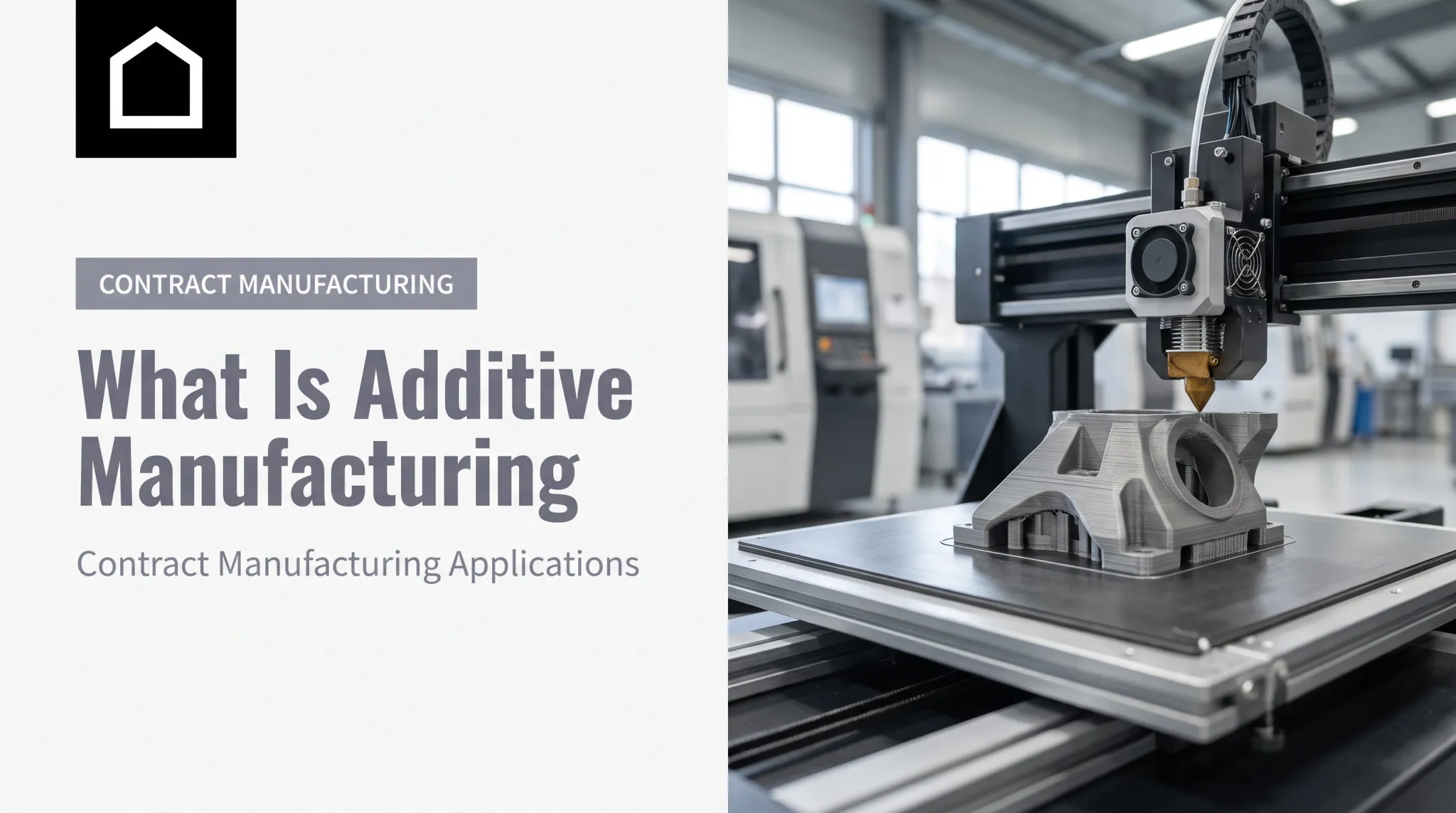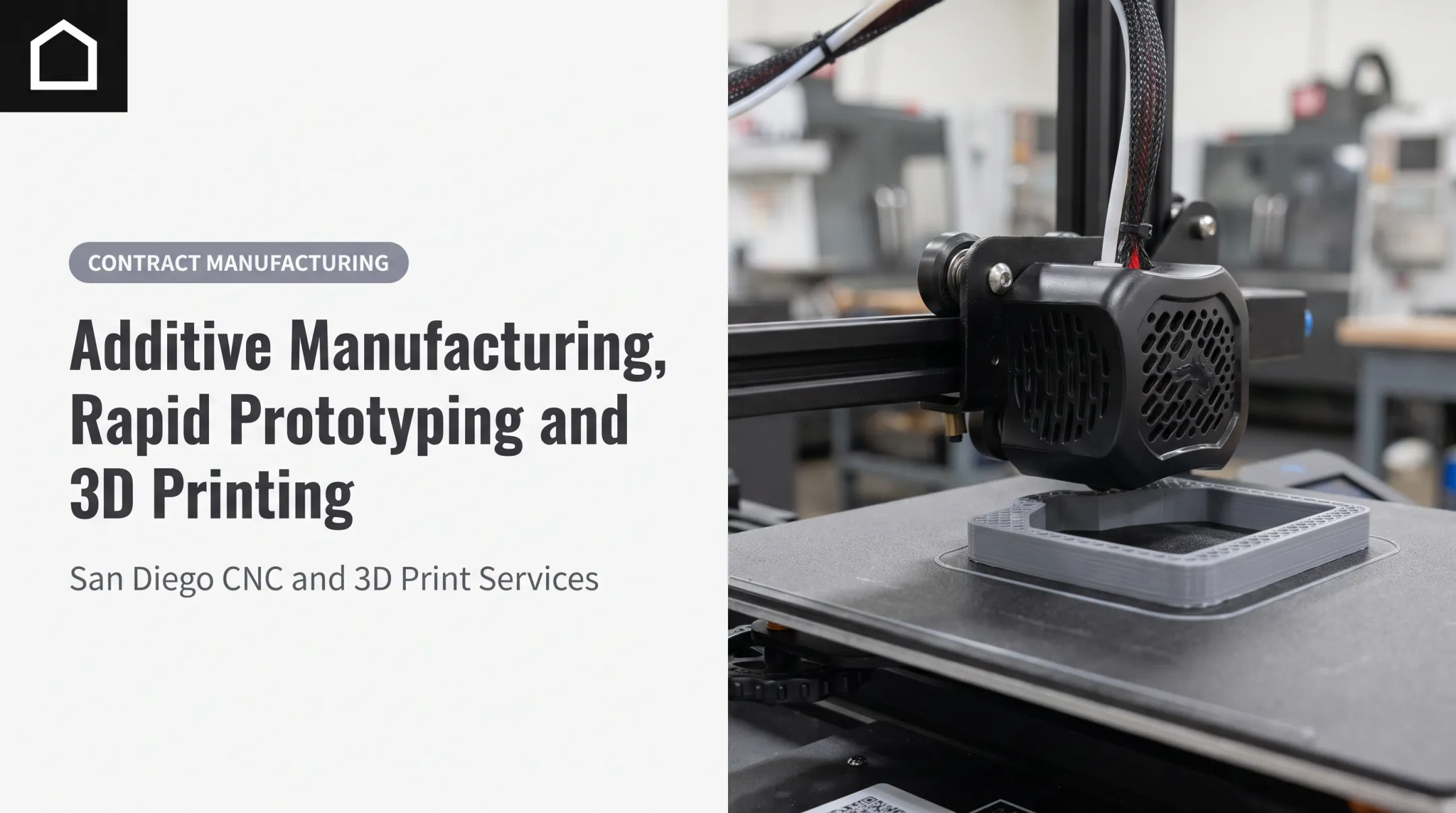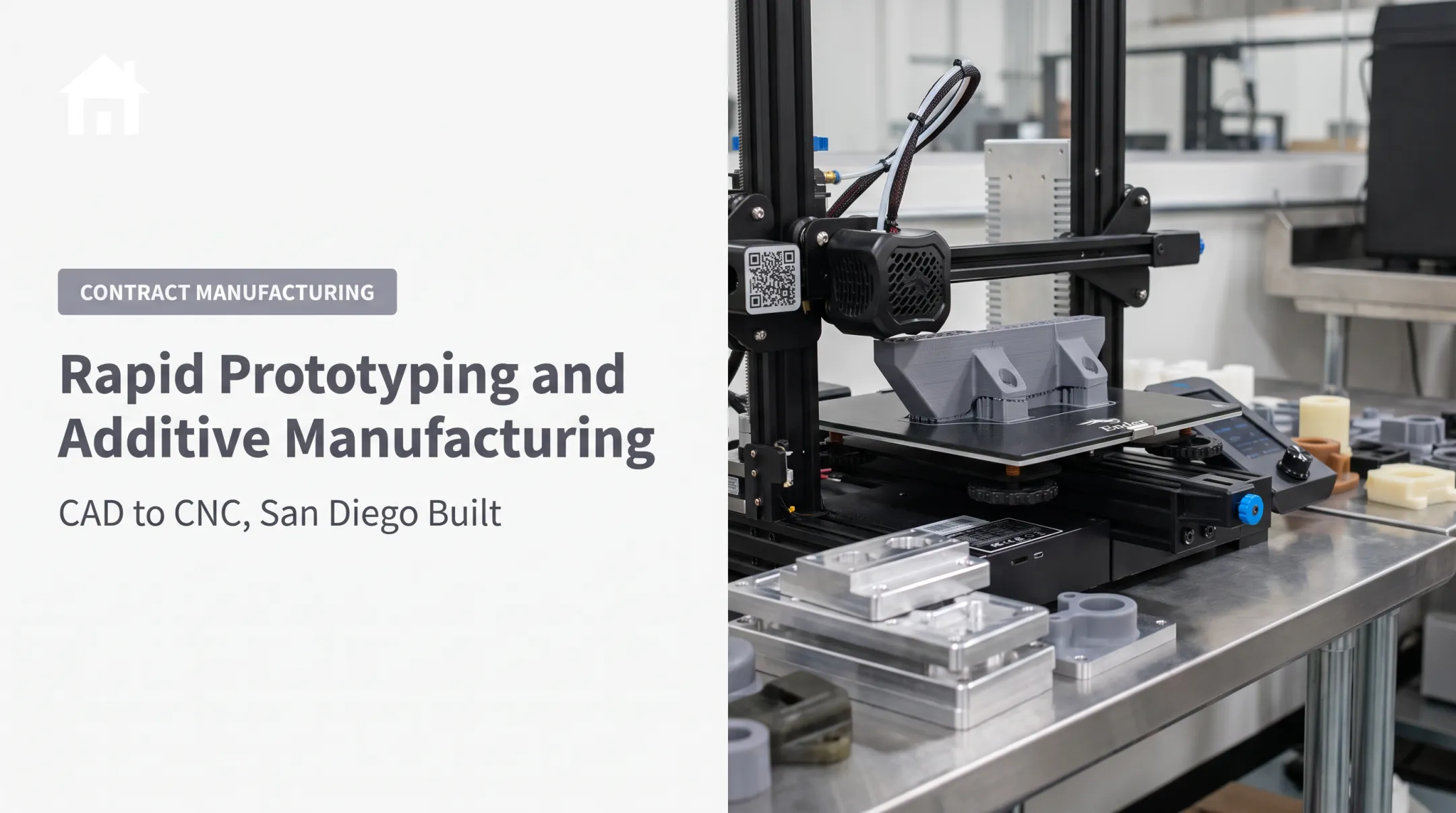

If you're trying to decide whether 3D printing fits your prototype, replacement part, tooling job, or production component, the real challenge isn't the printer. It's choosing the right process, material, quality checks, and manufacturing partner for your specific application.
This guide walks through how Georgia's ecosystem actually uses additive manufacturing today, where it delivers real value across industries, how to pick a technology, and what risks to manage before a printed part goes into service.
Key Takeaways
- 3D printing is one branch of additive manufacturing: it covers more processes, materials, and industrial uses.
- Georgia's AM activity spans defense (Robins AFB), research (Georgia Tech), and industry (Georgia-Pacific).
- Printing earns its keep when complexity, customization, low volume, or supply-chain gaps justify it.
- Success depends on design, material selection, inspection, and approval steps, not just the printer.
How Georgia Uses Additive Manufacturing Today
Three examples capture the range of Georgia's additive manufacturing activity: military sustainment, academic research, and industrial maintenance. Each operates under different rules and serves a different purpose.
Defense Sustainment at Robins Air Force Base
The 402nd Commodities Maintenance Group runs a program called READI (Reverse Engineering, Additive, Design and Inspection). Its team combines reverse engineering with 3D printing to solve a persistent military problem: parts for aircraft that are decades old and no longer have an active supply chain.
According to the Air Force's description of the READI Lab, a four-person team supports hard-to-source parts across seven aircraft platforms: the C-130, C-5, C-17, B-1, B-52, KC-135, and F-15. An automated inspection station checks dimensions against CAD models before a part moves forward.
This is sustainment work for operational aircraft, not a general commercial printing service. Every part still goes through qualification and documentation before installation. The lab's value is speed in solving a sourcing problem, not a shortcut around approval.
Georgia Tech's Research into Faster, More Efficient Printing
Georgia Tech researchers are exploring radio-frequency additive manufacturing (RFAM), a method that sinters carbon-doped polymer powder volumetrically using RF energy instead of a scanning laser. The goal: higher production rates, less waste, and better energy efficiency than conventional polymer powder bed fusion.
The research is still in progress. The gains under discussion are targets, not validated performance figures ready for procurement specs.
Separately, Georgia Tech Research Institute has tested 3D-printed metal and metal-coated polymer waveguides for radar and antenna equipment — a different application of RF technology, where RF is what the part handles rather than how it's printed.
Plant-Floor Problem Solving at Georgia-Pacific
Georgia-Pacific, headquartered in Atlanta, has reported using onsite 3D printing to solve small but costly operational problems. Examples include:
- Junction-box replacement tabs that avoid swapping the full unit
- Turnstile-camera mounts
- Protective cages for drones
- An organizer for holding glass sample beakers in a lab setting
The specific plants cited in Georgia-Pacific's reporting are in Muskogee, Oklahoma, and Brewton, Alabama, not Georgia. They are still useful examples from a Georgia-headquartered company, and they show operational-aid printing rather than safety-critical or regulated end-use parts.
Zooming out from these programs, the Wohlers Report 2026 estimates the global additive manufacturing market at $24.2 billion for 2025, up 10.9% from the prior year, with printing services making up 48% of that total. That is a global figure, not a Georgia-specific demand estimate, but it signals a growing, well-funded field.

Applications and Benefits for Georgia Industries
Where 3D printing earns its place depends entirely on the application. Across Georgia’s most active industries, it speeds iteration, reduces tooling risk, and keeps low-volume work viable when teams match the process to the job.
Automotive
Automotive teams use 3D printing for concept models, fit checks, jigs, fixtures, and low-volume replacement components. A printed part works well for checking how pieces fit together before committing to tooling.
When the final part needs specific material strength or long-term durability, the printed prototype should move to a production process like injection molding.
Military and Aerospace
Beyond Robins AFB's sustainment work, defense and aerospace applications commonly include:
- Reverse-engineered legacy parts
- Maintenance aids and tooling
- Lightweight component prototypes
- Supply-chain resilience for hard-to-source items
Important: Defense applications often require specific qualification, documentation, and export-control review. DoD Instruction 5000.93 calls for a risk-informed approach to approval, acceptance criteria, and quality control for additive parts.
Controlled technical data under ITAR rules can include manufacturing drawings and instructions. Confirm a given part's jurisdiction before assuming a CAD file is or isn't restricted.
Medical, Dental, and Orthopedic
The FDA lists printed orthopedic implants, cranial implants, surgical instruments, and dental crowns as real medical-device examples. But there's an important line to draw:
- Prototypes and anatomical models used for visualization, design review, or education sit in one category
- Patient-contacting or implantable products require applicable regulatory and quality-system controls under FDA's revised quality-system regulation
A printed anatomical model for a sales presentation and a printed implant are not interchangeable in what they require to reach use.
Consumer Electronics
For enclosures, ergonomic testing, and internal fit checks, 3D printing lets teams test a design before cutting tooling. Factors that matter most here:
- Surface finish quality
- Dimensional accuracy
- Thermal exposure during use
- Electrical clearance and insulation requirements
When Not to Use 3D Printing
Printing isn't always the right call. Consider conventional manufacturing instead when:
- Production volume is high enough that per-part cost favors injection molding or casting
- Surface finish requirements are strict
- The material properties you need aren't available in printable form
- Certification requirements limit qualified processes
- CNC machining, casting, or molding is simply faster and cheaper for the geometry
Choosing a Technology and Moving from Prototype to Production
Picking the right process starts with defining the part, not picking a machine.
Key Decision Variables
Before choosing a process, nail down:
- Part size and geometry — including overhangs, internal features, and wall thickness
- Tolerances — how tight the dimensional requirements are
- Mechanical or thermal performance — what the part needs to withstand
- Quantity — one-off, low-volume, or production run
- Surface finish — cosmetic or functional requirements
- Schedule and budget — how fast and how much
Process Families at a Glance
| Process Family | How It Works | Key Selection Question |
|---|---|---|
| Material extrusion | Deposits material layer by layer | Does directional strength matter for this use? |
| Vat photopolymerization | Light cures liquid resin | Does the cured resin meet performance needs? |
| Powder bed fusion | Laser/beam fuses powder layers | Is metal or engineering polymer required? |
| Material jetting | Jets and cures droplets | Does finish quality justify this method? |
| Metal additive | Powder-based metal processes | Does the part need qualification and inspection? |
From CAD to Production
A typical path looks like this:
- Define requirements — material, tolerance, intended use
- Build the CAD model, designed for the chosen additive process
- Print a prototype and inspect it against the design
- Run functional testing and revise as needed
- Plan for production — decide whether to stay with printing or transition to CNC machining, urethane casting, or injection molding

Finine Design's prototyping work follows this same arc. The team uses 3D printing, CNC machining, or urethane casting for fit checks and design reviews before a client commits to tooling, then moves straight into production once the design is approved.
Questions to Ask a Provider
Before committing to a partner, ask about:
- Equipment and process capabilities for your specific material
- Material traceability and documentation
- Dimensional inspection methods
- Post-processing options
- File security and intellectual-property protection
- Repeatability for future orders
- Support for transitioning into production volumes
Those answers matter most when you match the process to volume and use case:
- One-off replacement — choose a print process close enough to the original material for fit and function
- Functional prototype — favor a process that mimics final-material behavior
- Low-volume run — urethane casting often bridges prototype and production
- High-volume product — injection molding or CNC-machined tooling usually wins on per-part cost
Risks, Quality, and Implementation Considerations
For Georgia shops adopting additive manufacturing, printed parts often hide risks until testing or real service.
Common Technical Risks
- Anisotropic strength: weaker along one build axis than another
- Warping and shrinkage: common in larger or thin-walled parts
- Porosity: gas pockets or lack-of-fusion voids that can start fatigue cracks in metal parts
- Layer lines and surface roughness: can hurt fit and cosmetic finish
- Residual stress: may distort parts after printing or during machining
Safety, Validation, and Sign-Off
Treat quality gates as non-negotiable before a part goes into use:
- Review every printed part; apply extra scrutiny to safety-critical components
- Protect CAD files as sensitive intellectual property
- Check ITAR/EAR export-control rules when defense-related technical data is involved
Match validation to the application:
- Dimensional checks against the CAD model
- Material and process documentation
- Functional testing under real-use conditions
- Industry-specific qualification when defense or medical standards apply
Before printing, confirm:
- Intended use of the part
- Acceptance criteria
- Prototype quantity needed
- Material selection
- Inspection method
- Who owns final approval
- Next step in the manufacturing plan
How a Product Development Partner Can Help
Projects that need CAD modeling, prototyping, fabrication, finishing, and a production plan rarely stay inside one capability. Juggling separate vendors for each step adds time and risk — a dropped handoff between a prototyping shop and a molding supplier can cost weeks.
Finine Design and Manufacturing is a San Diego, California-based product development and manufacturing company. It offers CAD modeling, 3D printing, CNC machining, urethane casting, injection molding, and production painting under one roof.
The company is not based in Georgia, but it supports clients across the U.S., including teams working through the same prototype-to-production decisions covered in this guide.
Finine's workflow mirrors the path outlined above:
- Refine the concept through CAD modeling
- Print and assess prototypes for fit, form, and function
- Select the right production process based on volume and material needs
- Coordinate later-stage manufacturing (tooling, molding, casting, or finishing) without switching vendors
Work spans automotive, military, consumer electronics, dental, and orthopedic product development. For a Georgia-based product team evaluating 3D printing against other processes, one U.S.-based partner from concept through production can replace several separate suppliers.
If you're weighing a prototype, a replacement part, or a production transition, reach out to Jaime at Jaime@fi9design.com or 1.858.900-9787 to talk through what your project actually needs.
Frequently Asked Questions
Does 3D printing count as additive manufacturing?
Yes. 3D printing is a form of additive manufacturing. Additive manufacturing is the broader category, covering more processes, materials, and industrial applications than the term "3D printing" usually implies.
Where can I 3D print at Georgia Tech?
Georgia Tech's facilities, including the Hive makerspace and Manufacturing 4.0 Consortium, have specific access rules tied to affiliation and membership. Confirm access with the relevant department before assuming public or commercial use.
What industries in Georgia use additive manufacturing?
In Georgia, examples include defense (Robins AFB), academic research (Georgia Tech), and industrial operations (Georgia-Pacific). More broadly, automotive, aerospace, medical, and consumer product development all use additive processes.
What is the difference between a 3D-printed prototype and a production part?
A prototype validates design, fit, and function. A production part must perform repeatably over its service life, which typically requires defined material specifications, inspection, and documented qualification that the prototype didn't need.
How do I choose the right additive manufacturing process?
Start with geometry, material requirements, tolerances, quantity, surface finish, and performance needs. Budget and schedule narrow the field further. There's rarely one "best" process across every project.
Can additive manufacturing replace CNC machining or injection molding?
For prototypes, low-volume parts, complex geometries, or tooling, yes. It often complements or replaces those methods. For high volumes, tight tolerances, or specific material finishes, conventional manufacturing usually wins.