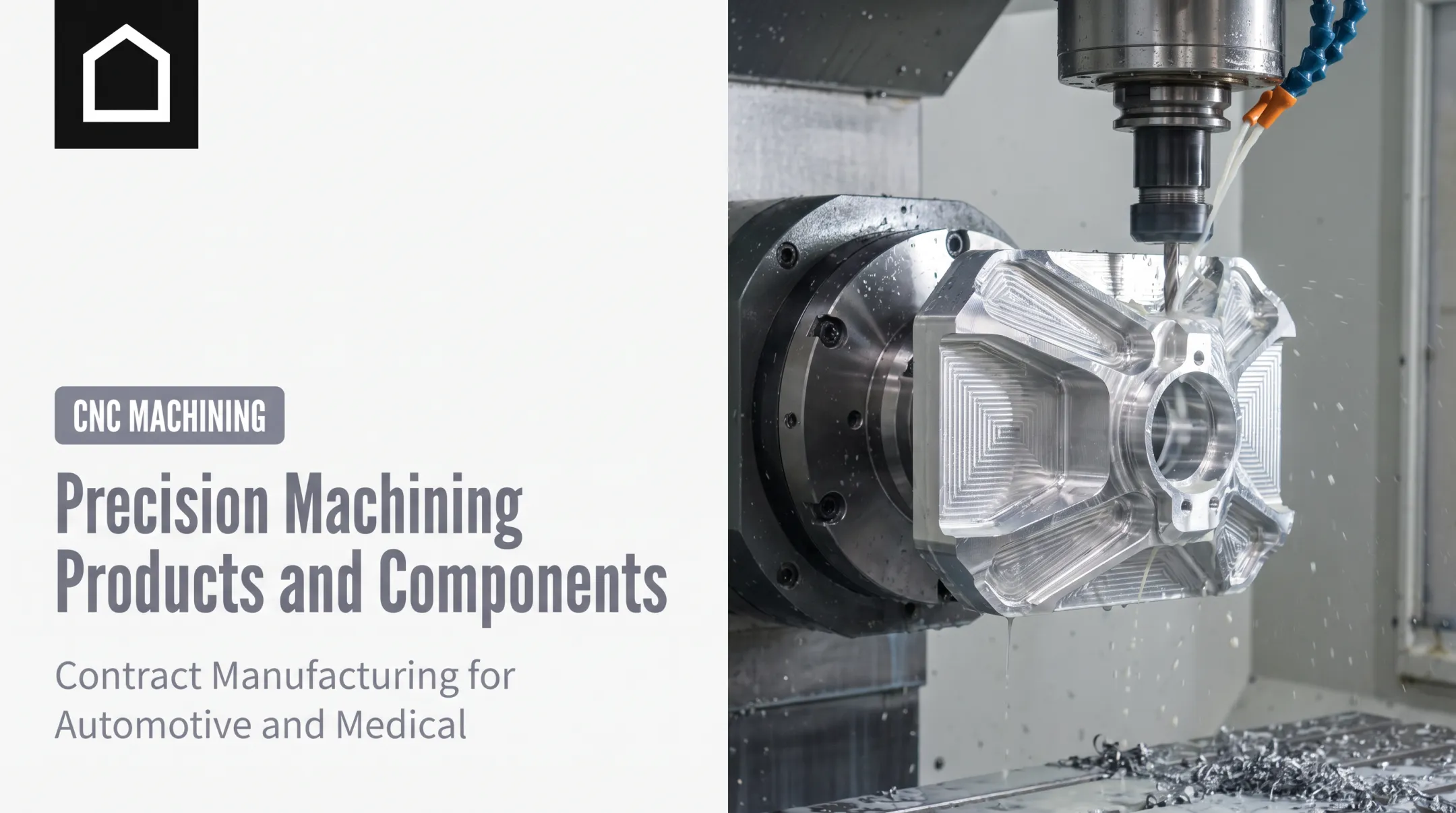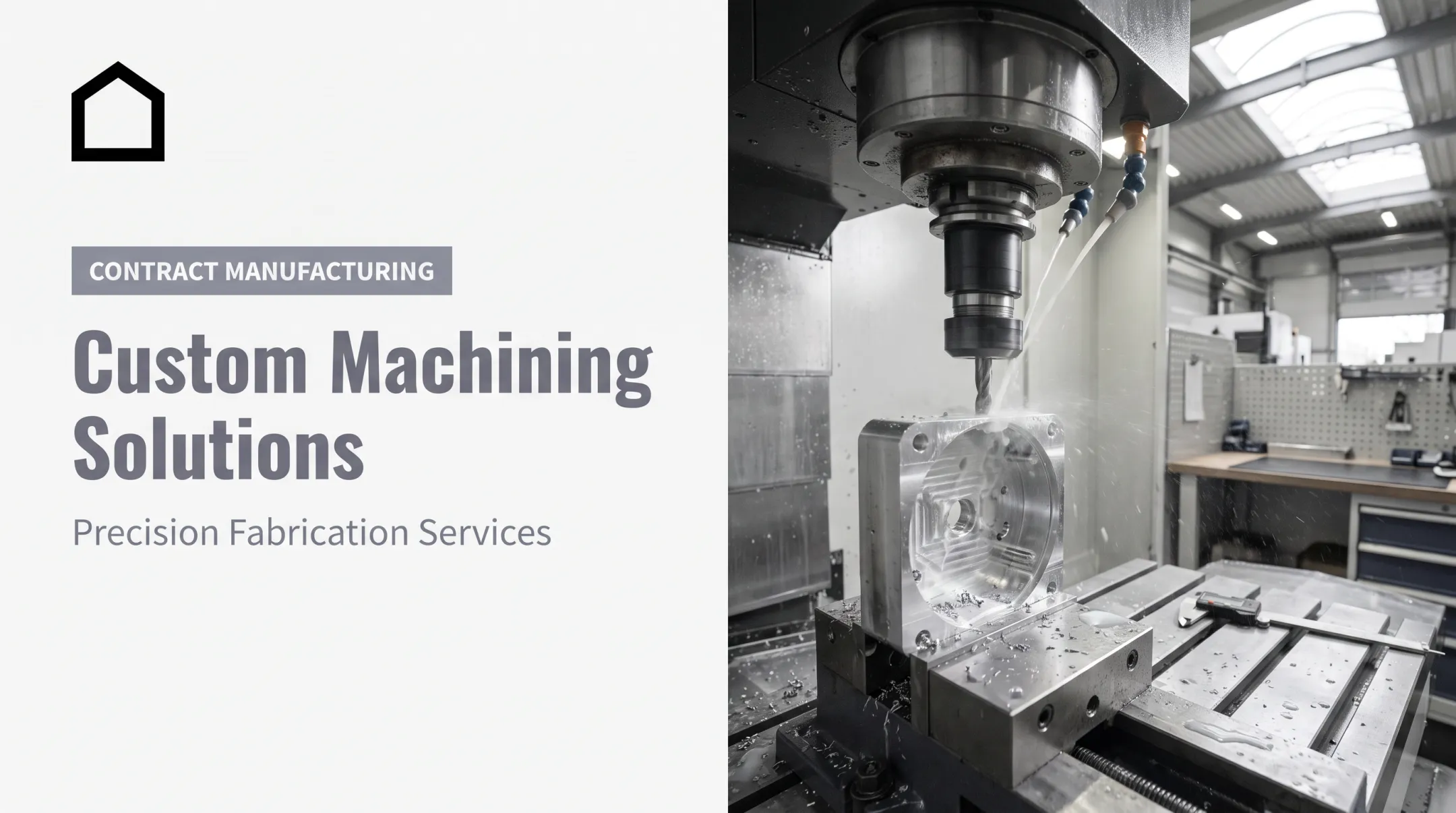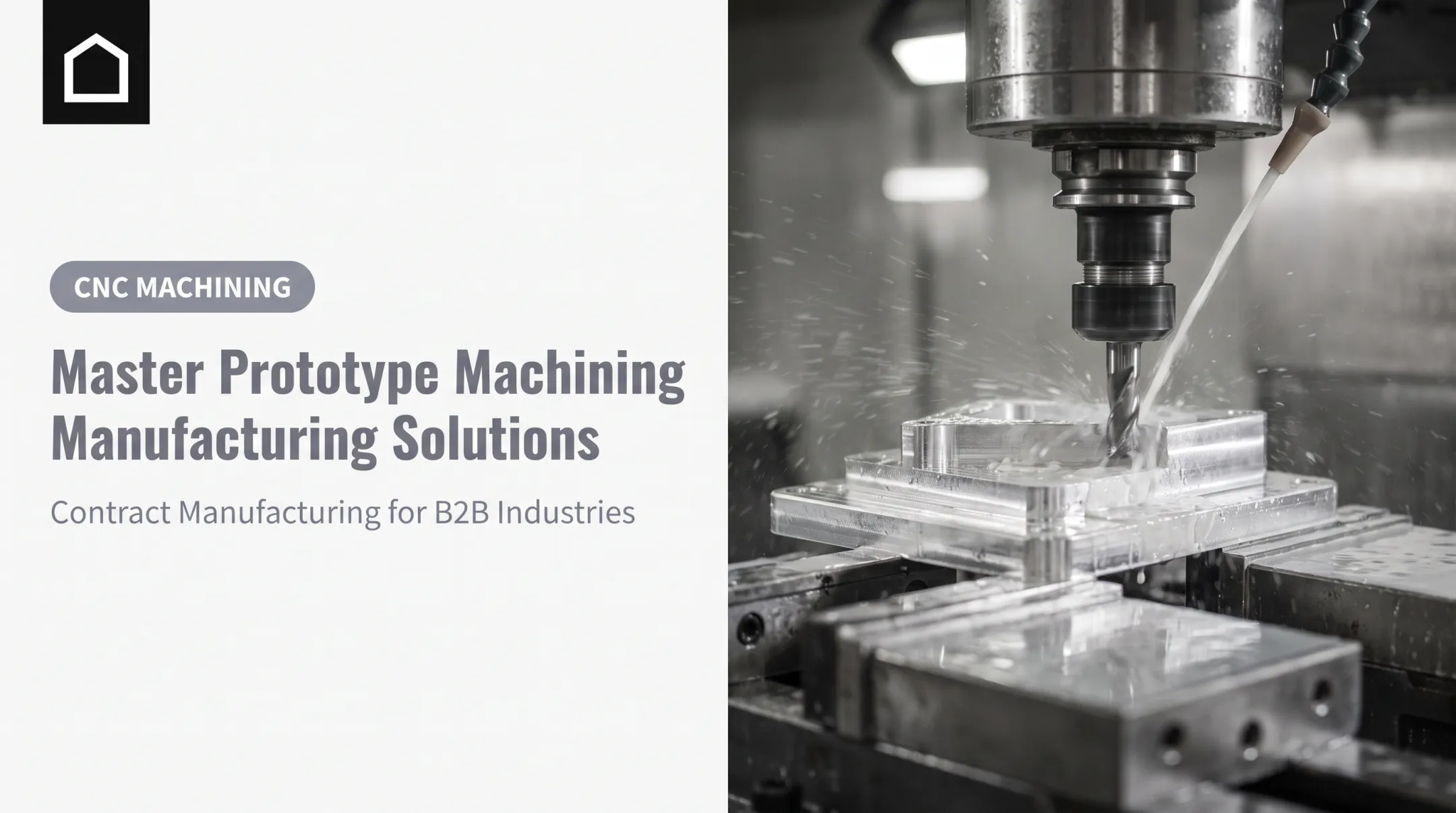

A single orthopedic implant that's off by a few thousandths of an inch can mean a failed surgery. An automotive fitting that's slightly out of spec can mean a recall. This is why precision CNC machining exists, and why buyers across automotive, defense, electronics, and dental and orthopedic industries treat it as non-negotiable. Precision machining now touches nearly every product category you can think of: dental implants, orthopedic surgical tools, engine components, military-grade housings, and the connectors inside your phone. Before sourcing a manufacturing partner, buyers usually want answers to the same handful of questions: What tolerances are actually achievable? What drives cost? And how do you pick a partner who won't create bottlenecks between design and production? This article covers all of it, definitions, machining methods, tolerance ranges, cost drivers, and what to look for in a manufacturing partner.
Key Takeaways
- Precision
CNC can hold ±0.0005 inch on select features; standard work is closer to ±0.005 inch
- Swiss-type lathes and precision grinding deliver the tightest results—often below 10 microns
- Tighter tolerances and complex geometry raise machining cost in lockstep
- Defense and dental/orthopedic industries typically require documented tolerance verification, not just tight specs
- One full-service partner cuts vendor handoffs from prototype through production
What Is Precision Machining?
Precision machining is a subtractive, CNC-controlled manufacturing process. A machine removes material from a solid block or bar stock, cutting, drilling, or grinding it down until it matches an exact digital design. The result is a part with tight tolerances and, often, geometry too complex to produce by hand.
The Workflow, From Design to Finished Part The process follows a consistent sequence:
- CAD design — the part is modeled digitally
- CAD-to-CAM conversion — software generates toolpaths, then a postprocessor converts them into machine-readable G-code and M-code
- Machine setup — the operator loads material, tooling, and fixtures
- Execution — the CNC machine cuts the part according to the program
- Post-processing and inspection — parts are deburred, finished, and measured against the drawing

G-code was standardized internationally as ISO 6983, but machine-to-machine portability is still often inconsistent. That is why toolpath simulation and on-machine verification remain standard practice according to NIST research.
What Does a Precision Machinist Actually Do?
A precision machinist doesn't just push a start button. The role includes:
- Programming
CNC equipment based on CAD/CAM files
- Reading blueprints and interpreting GD&T callouts
- Calibrating machines and setting up tooling
- Performing in-process and final quality inspections
Accuracy vs. Precision: They're
Not the Same Thing This trips up a lot of buyers. According to NIST, accuracy describes how close a measurement is to the true, intended value. Precision refers to repeatability: how consistently a machine produces the same result across multiple parts. NIST is explicit that the two terms shouldn't be used interchangeably. "Absolute precision" in the strict sense (zero deviation) doesn't exist in physical manufacturing. What manufacturers actually deliver is a defined tolerance band plus a documented measurement method. Delivering those tolerances still depends on the full process above. Finine Design and Manufacturing runs that workflow in-house—from initial CAD modeling through finished CNC-machined parts—for clients in regulated industries including defense and dental/orthopedic work.
What Are the Different Types of Precision Machining?
Not every part needs the same machine. Here's how the major methods break down:
- CNC Milling — rotating cutting tools carve pockets, slots, and contoured surfaces.
Standard for parts with flat and angled features.
- CNC Turning/Lathes — the workpiece rotates against a fixed tool, ideal for cylindrical parts like shafts and fittings.
- Swiss-Type Machining — built for small, intricate parts with high length-to-diameter ratios.
A sliding headstock supports slender geometry that would flex or chatter on a standard lathe. Modern Machine Shop documents its use for titanium bone screws and bone nails.
- Multi-Axis Machining Centers — 4- and 5-axis systems cut complex geometries without repositioning the part, reducing setups and improving accuracy for turbine blades and orthopedic implants.
- Precision Grinding and EDM — final surface finishes and hard-to-machine metals. Michigan’s C&S Machine Products reports holding grinding tolerances of 0.00005 inch, about 1.25 microns.

The right method depends on part complexity, material, and industry requirements. A dental implant and an automotive gear housing rarely call for the same machine.
How Precise Can a CNC Machine Be?
Understanding Tolerances High-precision CNC machining means holding parts to very tight dimensional tolerances—often thousandths of an inch or microns. Published benchmarks vary by provider and process:
| Tolerance Level | Typical Range | Standard CNC | ±0.005 in (0.13 mm) | | --- | --- | | Precision/production | ±0.002 in (0.051 mm) | High-precision (reamed holes) | ±0.0005 in (0.0127 mm) |

These figures come from published machining tolerance guidance, but they're provider-specific benchmarks, not universal limits.
The Four Common Tolerance Types
- Unilateral — variation allowed in only one direction from the target
- Bilateral — variation allowed above and below the target
- Compound — stacked with another dimension’s tolerance
- Limit dimensions — maximum and minimum allowable sizes for a feature
What's the Most Precise CNC Machine?
Swiss-type lathes and multi-axis grinding systems tend to hold the tightest tolerances. A Citizen Machinery case involving defense-related telecom components reports reliably achieving drawing tolerances below 10 microns on a twin-spindle sliding-headstock machine, including during unattended production runs. Capability is only half the story. Tighter tolerances raise cost through:
- More complex setups and fixturing
- Specialized tooling and slower cycle times
- Longer inspection and documentation Specify tight tolerances only where they are functionally necessary—one of the easiest ways to control your machining budget. Military and dental/orthopedic programs often still require certified, documented verification as part of formal quality control.
That adds cost, but it is typically non-negotiable for regulated products.
Key Benefits of Precision
CNC Machining Precision CNC machining improves quality, speed, and shop-floor economics in ways manual methods rarely match:
- High repeatability across large production runs, which cuts defect rates and rework
- Faster turnaround than manual machining, since automation reduces secondary finishing passes
- Lower labor costs and improved safety, since
CNC systems minimize manual handling near cutting zones According to Xometry's CNC machining benefits overview, automotive engine components can take 3 to 8 minutes per part on a CNC machining center versus 30 to 60 minutes with manual production. That throughput gap is why CNC is the default for anything beyond one-off prototypes. Precision isn't automatic over time, though. Thermal expansion and tool wear can drift a machine off spec during long runs, which is why ongoing calibration and in-process inspection matter as much as the initial setup.
Industries and Applications of
Precision CNC Machining Precision CNC machining shows up across a wide range of sectors, each with its own priorities:
- Automotive — engine components, gears, and axle parts where fit and function tolerances are strict
- Military & Defense — rugged, mission-critical components built to exacting specifications, often with documented traceability
- Consumer Electronics — enclosures, connectors, and micro-scale features
- Dental and Orthopedic — sub-millimeter tolerances for implants, surgical instruments, and sales or educational models

Dental and orthopedic machining carries added regulatory weight. The FDA's Quality Management System Regulation, effective February 2026, incorporates ISO 13485 requirements directly into federal rules. The FDA clarifies that ISO 13485 certification alone doesn't exempt a manufacturer from inspection, so tolerance and quality documentation still needs to trace back to the actual device design and validation. Finine Design and Manufacturing has built particular specialization here, pairing CNC machining with 3D printing and injection molding to support dental and orthopedic sales and educational products. Clients get machining precision and product-development speed from one partner.
How Much Does
CNC Machining Cost, and How to Choose a Partner There's no universal price sheet for
CNC machining. Cost depends on a handful of interacting factors:
- Material selection — harder, less machinable alloys mean longer cycle times and more tool wear
- Tolerance requirements — tighter tolerances demand more setup time, specialized tooling, and inspection
- Part complexity — deep cavities, thin walls, and small internal radii all add machining time
- Machine type — 3-axis versus multi-axis equipment changes setup and cycle costs
- Production volume — larger batches spread fixed setup costs across more parts, lowering per-unit price Tighter tolerances can raise machining costs, so it pays to look at your drawing critically. If a dimension isn't functionally critical, loosening it can cut your quote without sacrificing how the part performs.
Why a Single Manufacturing Partner Simplifies Everything Moving from prototype to production usually means touching multiple vendors: one for
CAD, another for machining, another for finishing. Every handoff adds time and risk of miscommunication. Finine Design and Manufacturing combines CAD modeling, CNC machining, urethane casting, injection molding, and production painting under one roof at its San Diego facility. Design refinement, prototype fabrication, and finishing stay in one continuous workflow instead of bouncing between separate suppliers. That cuts coordination overhead and keeps development schedules intact.
Frequently Asked Questions
How much does CNC machining cost?
Cost varies based on material, tolerance requirements, part complexity, and production volume. There's no fixed price point; a simple bracket and a tight-tolerance titanium implant will price very differently.
What is precision machining?
It's CNC-based subtractive manufacturing that removes material from stock to produce parts with tight tolerances and complex geometry. It relies on a digital workflow from CAD through CAM-generated toolpaths to finished, inspected parts.
What does a precision machinist do?
A machinist programs and operates CNC equipment, reads CAD/CAM blueprints, sets up tooling and fixtures, and inspects finished parts against the drawing's specifications.
What is high precision CNC machining?
It refers to machining held to very tight tolerances, often within thousandths of an inch or even microns. Exact figures depend on the process, material, and equipment used.
How precise can a CNC machine be?
Standard CNC work typically holds around ±0.005 inch, while precision production tolerances reach ±0.002 inch or tighter. Specialized processes like Swiss turning or precision grinding can achieve single-digit micron accuracy in documented cases.
What does absolute precision mean?
Absolute precision would mean zero deviation from a target dimension, which doesn't exist in physical manufacturing. In practice, precision is defined by a specified tolerance band plus a documented measurement method.