
Introduction
The best 3D printing material for your prototype depends entirely on what that prototype needs to prove. A part built to check visual appearance has different requirements than one tested for impact resistance, heat exposure, or repeated flexing.
Pick the wrong material and you get misleading results: parts that look right but fail under load, dimensions that shift after printing, or assemblies that simply don't fit. That rework costs time and money you didn't budget for.
This 2026 guide compares common FDM filaments, SLA resins, and Nylon-based processes by what they actually accomplish for product developers. No single "best" material exists here. Instead, you'll find recommendations organized around your prototype's actual job.
Key Takeaways
- PLA suits fast, low-cost concept models and form-and-fit checks
- PETG adds toughness and chemical resistance for functional use
- ABS and Nylon handle demanding functional prototypes with tight heat, moisture, and warp control
- SLA resins win on fine detail, smooth surfaces, and presentation quality
- Match material properties to test conditions, not color or brand
Overview of 3D Printing Materials for Prototyping in the US Market
Matching a material to a prototype means lining up mechanical, thermal, chemical, and visual properties with the specific question you're trying to answer. A gear needs wear resistance. A dashboard mockup needs good looks. Rarely does one material do both well.
Three process families dominate US prototyping work:
- FDM/FFF (fused deposition modeling): Thermoplastic filament, layer by layer. Lower cost, moderate accuracy, widest material range.
- SLA/DLP/LCD (photopolymer resin): UV-cured liquid resin. Fine detail, smooth surfaces, tighter tolerances.
- SLS/MJF (powder-bed Nylon): Laser or inkjet-fused powder. No support structures needed, strong isotropic parts, higher cost.

Each process trades off strength, surface finish, accuracy, and design freedom differently.
Those tradeoffs matter more as additive manufacturing investment climbs across US industries that rely on rapid iteration. In defense alone, the FY2026 budget request for Department of Defense additive manufacturing projects reached $3.3 billion, with the Rapid Prototyping Program growing from roughly $69 million to nearly $275 million year over year.
That's program-level funding, not proof any specific polymer is approved for a given application. It does signal how central prototyping has become to product development timelines in regulated and high-stakes industries alike.
Top 3D Printing Materials for Prototyping in 2026
Before comparing materials, define your criteria. Weigh these factors against your prototype's purpose:
- Strength and stiffness under expected load
- Impact and wear resistance
- Heat and chemical exposure
- Dimensional accuracy and surface finish
- Printability and post-processing effort
- Cost and potential transition to production material
PLA
PLA remains the default starting point for early concept models. It prints easily, holds fine detail, comes in nearly every color imaginable, and warps less than almost anything else on this list. For color-coded design reviews or quick form-and-fit checks, it's hard to beat.
Manufacturer data backs up its accessibility. Polymaker's PolyLite PLA lists a 52.3 MPa X-Y tensile strength and a 190-230°C nozzle range, requiring no special enclosure or heated chamber. Its toughened PLA Pro variant reports a notably higher 17.1 kJ/m² notched Charpy impact strength versus 3.3 kJ/m² for standard PolyLite PLA, though tensile strength stays similar between the two grades.
The catch: PLA is brittle, heat-sensitive, and prone to creep under sustained load. UltiMaker's technical sheet flags applications above roughly 59°C as unsuitable and calls the material brittle outright. None of the cited data sheets establish long-term creep behavior, so don't rely on PLA for parts that will sit under stress for weeks.
| Factor | PLA Summary |
|---|---|
| Best uses | Concept models, color reviews, form-and-fit checks |
| Strengths | Easy printing, fine detail, low warping |
| Limitations | Brittle, heat-sensitive, poor for impact/long-duration tests |
| Printer needs | No heated enclosure required |
| Move on when | You need impact resistance, heat tolerance above ~60°C, or sustained load performance |
PETG
PETG sits between PLA and ABS: tougher, more chemically resistant, and still reasonably easy to print. It's often the practical choice when PLA fails a drop test or shows cracking under moderate stress.
Manufacturer data shows how much grade affects results. eSUN's PETG reports 34.77 MPa X-Y tensile strength and 4.86 kJ/m² notched Izod impact strength, while UltiMaker's PETG shows 38.5 MPa tensile stress at break with 7.9 kJ/m² Charpy impact and a notably higher 76.2°C HDT. These aren't directly comparable since they use different impact test methods, which is exactly the point: "PETG" isn't one number, it's a category.
Trade-offs to plan for:
- Stringing between features, requiring retraction tuning
- Higher nozzle temperatures (230-260°C typical)
- Moisture absorption; eSUN recommends drying at 60°C for 8+ hours before printing
- Strong layer adhesion that can also mean harder-to-clean supports
Don't assume PETG beats toughened PLA grades in every metric. Strength depends on print orientation, infill geometry, and the specific grade tested. Compare current data sheets for your exact filaments before drawing conclusions.
ABS
ABS earns its place for impact-resistant housings, automotive-style components, and anything that will see more heat than PLA tolerates. Polymaker's PolyLite ABS lists a 100°C HDT at 0.45 MPa, while its modified ABS Max grade pushes that to 118.1°C, though notched Charpy impact actually drops from 18.0 kJ/m² to 10.51 kJ/m² in that higher-heat formulation. Higher heat tolerance doesn't automatically mean tougher parts.
Practical challenges:
- Warping without a heated bed (90-100°C) and enclosed chamber
- Fumes requiring ventilation during printing
- Layer splitting if cooling isn't managed properly
- Post-processing like acetone vapor smoothing adds time and handling steps
Prusa's own guidance lists warping and fumes among ABS's main downsides for hobbyist-grade printers. If your facility can't maintain a heated, enclosed print environment consistently, PETG or Nylon often deliver more reliable results for similar functional goals.
| Factor | ABS Summary |
|---|---|
| Best uses | Impact housings, heat-exposed parts, automotive mockups |
| Heat tolerance | ~100-118°C HDT depending on grade |
| Requirements | Heated bed, enclosure, ventilation |
| Consider instead | PETG (easier printing) or Nylon (higher strength) |
Nylon / Polyamide
For gears, snap-fits, living hinges, and wear parts, Nylon is often the most realistic functional-prototype material available. It flexes without cracking and holds up to repeated cycling better than PLA, PETG, or standard ABS.
FDM Nylon and powder-based SLS/MJF Nylon behave differently. Markforged's data shows unfilled Nylon at 1.7 GPa tensile modulus, jumping to 2.4 GPa with chopped carbon fiber reinforcement (their Onyx material). On the SLS side, Formlabs' comparison of Nylon 11 versus Nylon 12 shows 40% versus 11% elongation at break and 70 versus 32 J/m Izod impact strength — a reminder that even within "Nylon," powder chemistry changes outcomes significantly.

The controls that matter most:
- Dry before printing. Nylon absorbs moisture aggressively; Polymaker's PA6-CF20 sheet specifies storage below 20% relative humidity.
- Expect higher processing temperatures than PLA, PETG, or ABS.
- Budget for warping without a controlled print environment.
- Test the actual grade. Fiber-reinforced Nylon stiffens the part but doesn't automatically improve layer bonding in the Z direction.
| Process | Best for | Watch for |
|---|---|---|
| FDM Nylon | Functional prototypes, low-to-mid volume | Moisture, warping, print setup |
| SLS/MJF Nylon | Complex geometry, no support structures | Higher per-part cost |
| Reinforced Nylon | Stiffness-critical parts | Z-axis bonding still needs testing |
SLA Resins
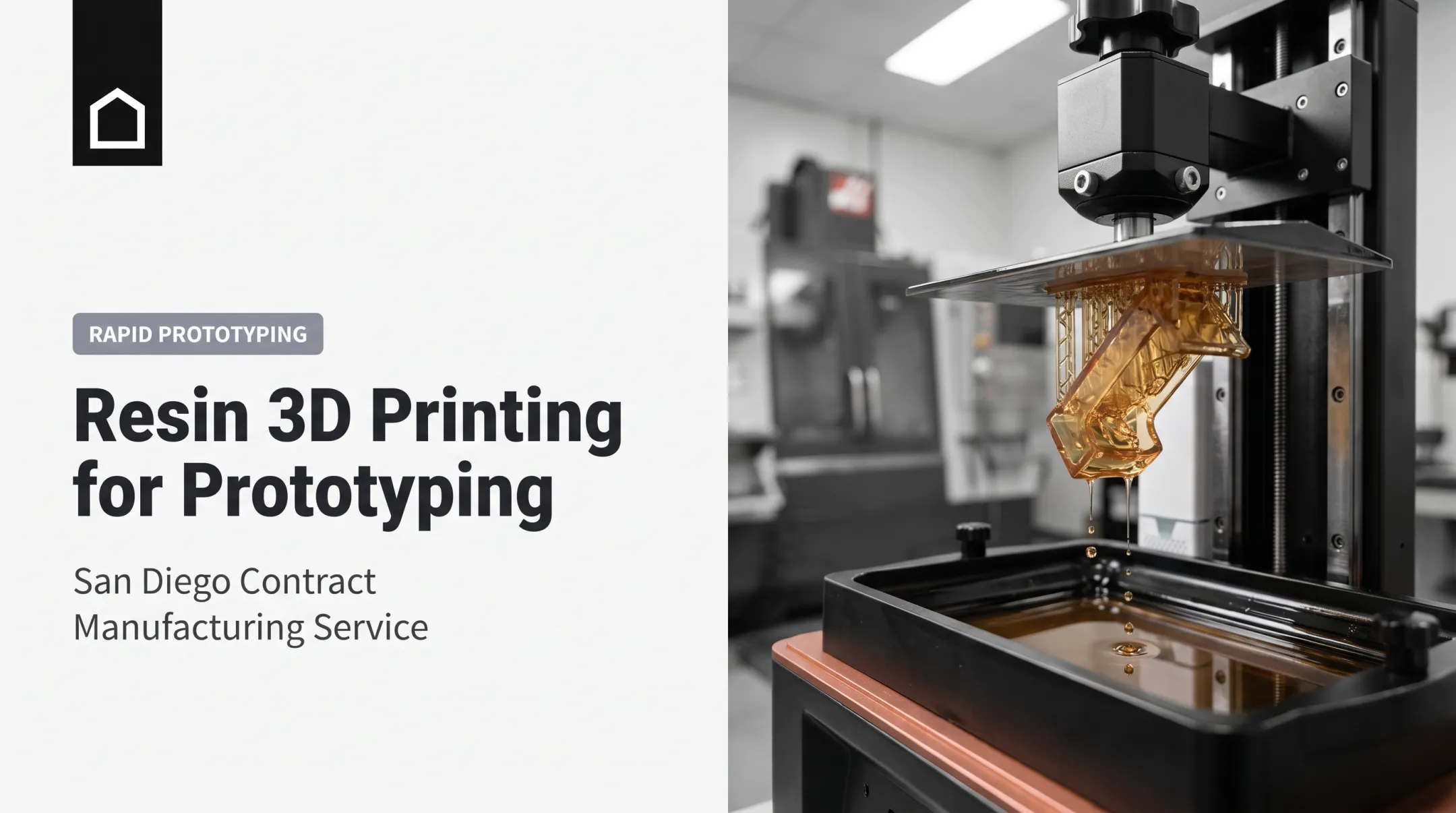
When a prototype needs to look and feel finished, SLA resin usually wins. Formlabs' 2025 materials library lists Clear Resin V5 and Grey Resin V5 at up to 60-62 MPa tensile strength post-cure, suited to presentation models, lighting concepts, and general form-and-fit checks.
Engineering resins expand the range further:
- Tough 1500 V2: 34 MPa tensile strength, 155% elongation (snap fits, compliant enclosures)
- Durable Resin: 55% elongation, 41°C HDT (squeezable, low-friction parts)
- Flexible 80A: Shore A 80 hardness (cushioning, seals, grips)
Limitations worth planning around: resin brittleness or flexibility varies by formulation, UV exposure degrades some resins over time, and every print requires washing, curing, and support removal. A 2024 university study on aged methacrylate specimens found extended UV curing increased tensile strength and stiffness while reducing strain at break, meaning post-processing choices change the final part's behavior, not just its appearance.
For anatomical or dental reference models, resin's detail resolution is tough to match with FDM. Formlabs markets Model Resin for crown, bridge, and diagnostic models specifically. Model-use listings, though, don't themselves establish clearance for direct patient contact.
| Resin Category | Best Objective | Trade-off |
|---|---|---|
| Standard/Clear | Visual review, presentation | Lower impact resistance |
| Tough/Durable | Functional snap-fits, enclosures | More post-processing |
| Flexible | Seals, grips, cushioning | Lower dimensional precision at scale |
| Dental/Model | Anatomical reference models | Not a clinical-use claim |
How We Chose the Best 3D Printing Materials
Material selection should follow the prototype's stage, not a generic "best overall" ranking. Finine Design and Manufacturing's own development lifecycle moves through prototype, bridge production, and final production. Each stage asks different questions of the material.

Organize decisions by stage:
- Concept and visual review: prioritize speed, cost, color options, and iteration ease
- Form and fit: prioritize dimensional accuracy, tolerances, and assembly behavior
- Functional testing: prioritize strength, fatigue resistance, heat tolerance, and anisotropy
- Pre-production validation: prioritize similarity to the intended production material and repeatable results
Common mistakes to avoid:
- Treating tensile strength as the only measure that matters
- Ignoring print orientation when comparing published data
- Comparing unlike grades (standard filament versus reinforced, or different test methods)
- Overlooking moisture absorption, especially with Nylon
- Assuming color or brand determines strength
- Using food-contact or medical claims without verifying the exact material and process meet applicable US requirements
ASTM F3489-23 covers static mechanical testing for material-extrusion polymers. It notes that build orientation and plate location influence results, so you still need to confirm adequacy for your specific application.
A practical validation workflow:
- Print representative test coupons alongside the actual geometry
- Condition parts consistently (temperature, humidity, time)
- Document print settings and build orientation
- Test under the loads and temperatures the part will actually face
- Compare results against the intended production process before finalizing material choice
This is where many internal prototyping efforts fall short: printing once, testing once, and assuming the result generalizes. It usually doesn't.
Conclusion
Match the material to what your prototype needs to prove next:
- PLA for fast early iterations
- PETG as a versatile middle ground
- ABS or Nylon for tougher functional demands
- SLA resins when detail and appearance matter most The right choice depends on the design decision your prototype must support, the environment it will face, and how much evidence you need. The highest number on a spec sheet is rarely the deciding factor. If you're choosing between 3D printing, CNC machining, or urethane casting for your next prototype, Finine Design and Manufacturing covers CAD modeling, prototyping, and the full path to production—including injection molding and finishing. Reach out to discuss what your prototype needs to prove next.
Frequently Asked Questions
What is the best filament for prototyping?
It depends on the prototype's job. PLA fits inexpensive early iterations; PETG balances toughness and printability; ABS handles impact and heat; Nylon suits demanding functional testing.
Is PETG or PLA+ stronger?
Strength varies by formulation, print settings, orientation, and test method. Compare current technical data sheets for your exact PETG and PLA+ grades rather than assuming a universal winner.
What is the strongest PLA color for prototyping?
Color doesn't determine strength. Pigments, additives, and manufacturer quality do. Compare data sheets for the exact color and product you're using, not general color assumptions.
Can I drink out of a PETG cup?
Not automatically. FDA requires specific authorization for food-contact substances. Printed parts also raise concerns around nozzle contamination, layer gaps, and cleanability beyond the base material’s rating.
Is Nylon better than PETG for functional prototypes?
Nylon typically outperforms PETG for wear, repeated flexing, and impact-heavy parts. PETG is often more economical and easier to print for moderate-load applications. Nylon's moisture sensitivity demands more careful handling.
Which 3D printing material is best for high-detail prototypes?
SLA resin is usually the better choice for fine detail, smooth surfaces, and presentation-quality parts. Choose a tough or engineering resin grade if the prototype also needs to survive functional testing, not just look good.