
Introduction
Ordering a mold before you know if a product will sell is a gamble. Many manufacturers face this exact problem: demand is uncertain, the design might still change, and a six-figure tooling investment feels premature.
Low-volume manufacturing solves this by producing limited batches of functional, customized, or bridge-production parts without committing to full-scale tooling upfront.
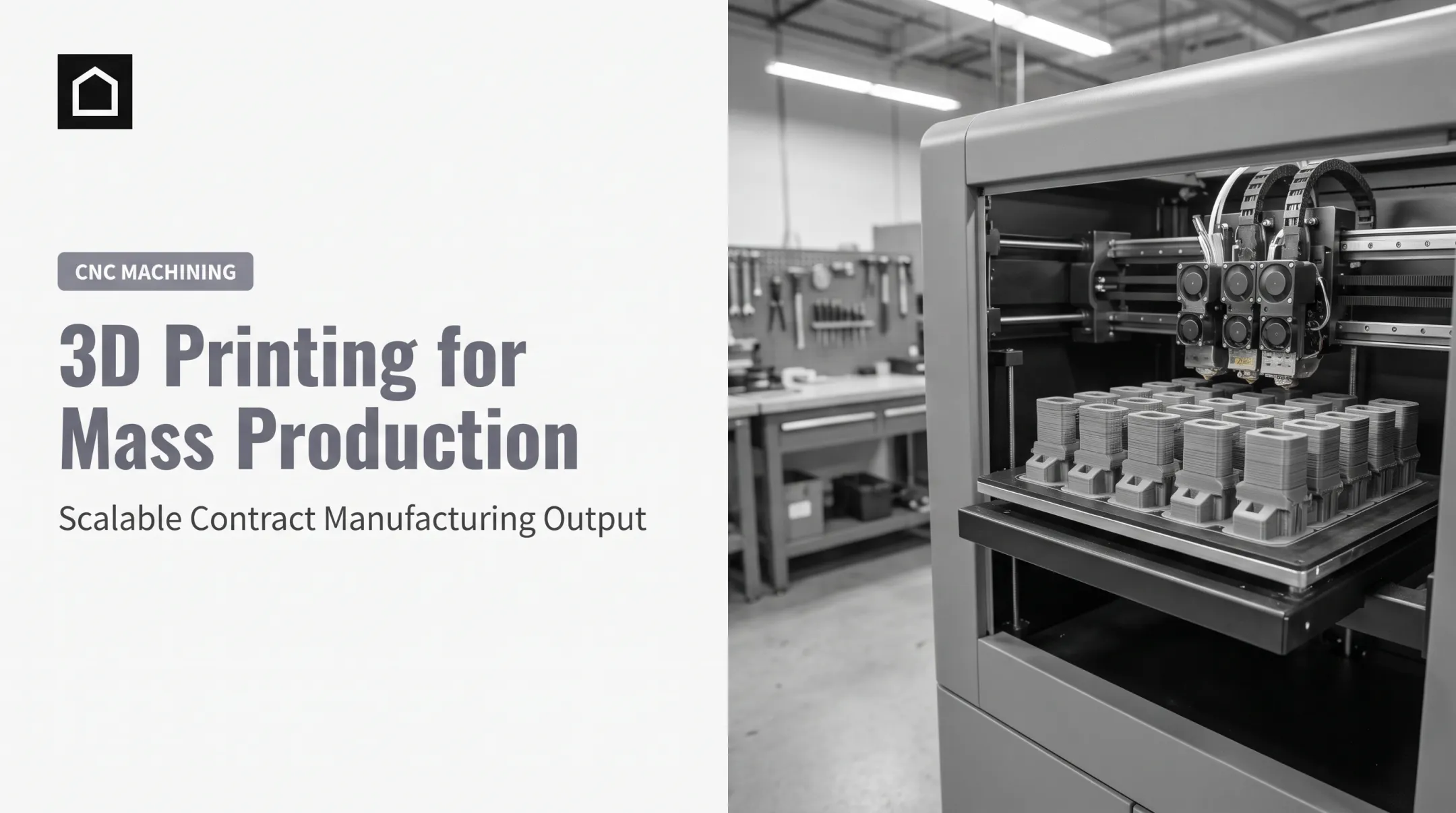
3D printing fits this gap well. It skips mold fabrication, adapts quickly to design revisions, and gets parts into your hands without waiting on machine setup or tooling lead times.
This article covers when 3D printing makes sense for low-volume runs, how to choose the right process and material, what quality control looks like in practice, and how total cost compares with injection molding and CNC machining.
Key Takeaways
- 3D printing fits best when volumes stay low, designs keep changing, or speed beats unit cost
- Process selection should follow part requirements: strength, finish, accuracy, heat resistance, and end use
- Fair cost comparisons include tooling, inventory, inspection, and delay costs, not just per-part price
- Use it across the full lifecycle: prototypes, bridge production, end-use parts, spares, and production aids
What Is Low-Volume Manufacturing With 3D Printing?
There's no single quantity that defines "low volume." The right number depends on part size, geometry, material, and how certain you are about demand. A 50-unit run of a complex medical housing and a 5,000-unit run of a simple bracket can both qualify as low volume in their respective contexts.
Low-volume manufacturing isn't the same as prototyping. Prototypes exist to test a concept. Low-volume parts go further: they get used for market testing, pilot production, customer delivery, or regular field replacement.
Why Tooling Investment Is Hard to Justify at Low Volumes
Injection molding requires a dedicated mold before you can produce a single part. Formlabs documented a real production case where a two-cavity mold for a mixer latch cost $3,600 before any molded parts shipped (Formlabs, 2024). That's one real example, not a universal mold price, but it illustrates the problem:
- Design changes often require tooling modifications or a new mold entirely
- Minimum order quantities can tie up capital in inventory you may not sell
- Lead times for tooling delay your ability to respond to market feedback
Comparing the Three Main Options
| Factor | 3D Printing | CNC Machining | Injection Molding |
|---|---|---|---|
| Tooling required | None | Fixtures only | Dedicated mold |
| Design changes | Fast, digital | Moderate | Slow, costly |
| Geometry freedom | High (internal channels, lattices) | Limited by tool access | High, but mold-dependent |
| Material properties | Varies by process | Isotropic, matches stock material | Consistent, resin-dependent |
| Best fit | Complex geometry; low or uncertain volume | Tight tolerances, engineering materials | High, stable volume |
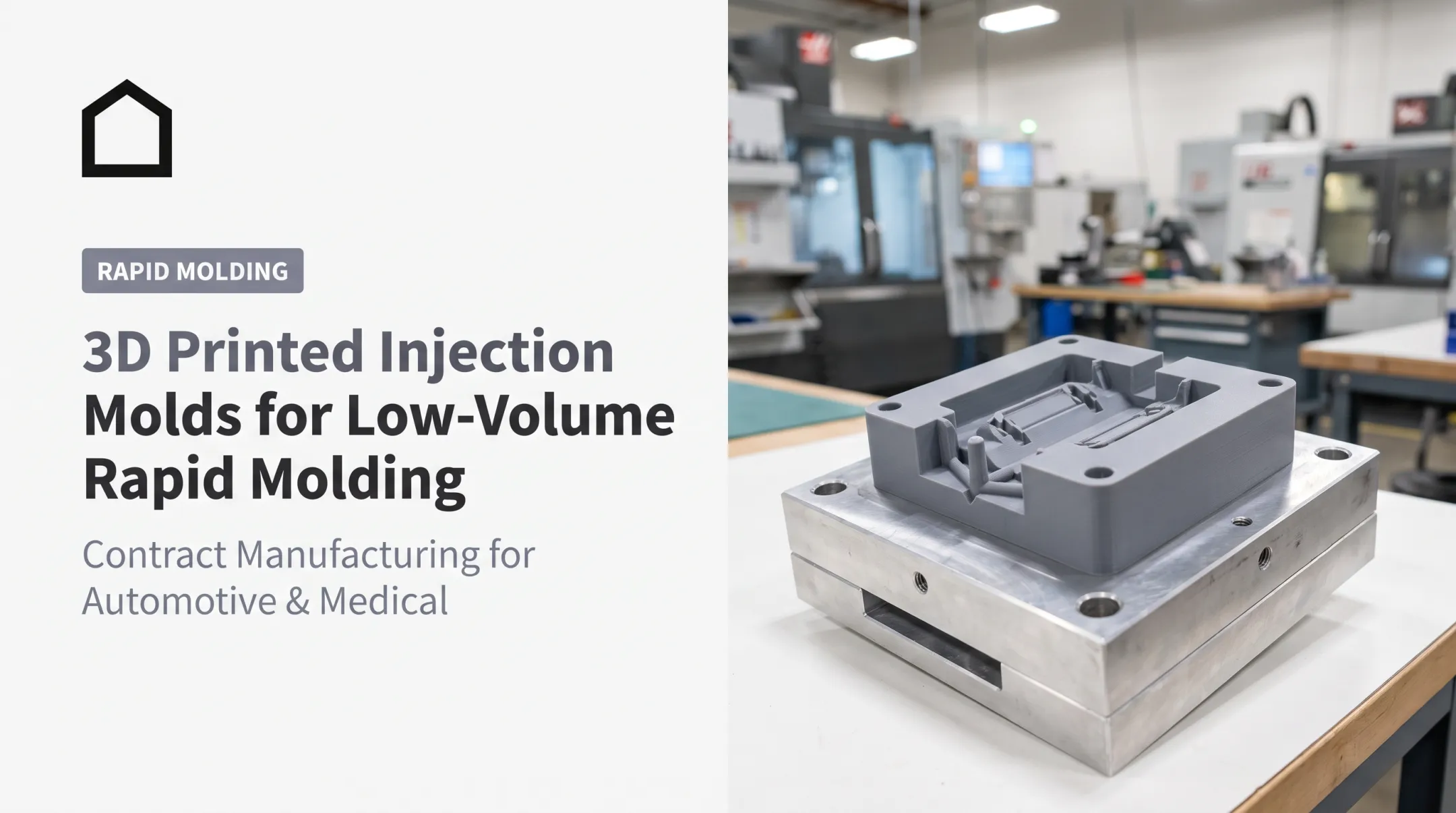
Bridge manufacturing sits between these options. It lets a company use 3D-printed parts while validating demand or refining a design, before committing to long-term tooling. Finine Design structures product development around this progression—prototype, bridge production, then full production—so clients can advance without locking into a mold too early.
Choosing the Right 3D Printing Technology and Material
Picking a process starts with understanding how each one actually builds a part.
SLA, SLS, and FDM in Plain Language
Stereolithography (SLA) cures liquid resin layer by layer with a laser or light source. It delivers fine detail and smooth surfaces, making it a strong fit for cosmetic prototypes and parts needing tight dimensional accuracy. The tradeoff is post-processing: parts typically need supports, washing, and post-curing before use.
Selective Laser Sintering (SLS) fuses nylon powder with a laser. Surrounding powder acts as its own support, so complex geometries can build without separate support structures. Formlabs' Fuse 1+ 30W, for example, has a 165 x 165 x 300 mm build envelope with 110-micron layers (Formlabs specifications).
Fused Deposition Modeling (FDM) extrudes melted thermoplastic filament. It's the most accessible of the three and handles engineering-grade materials like ABS and ASA well, especially on industrial systems like the Stratasys F770, which supports soluble supports for complex cavities.

Beyond the Big Three
Multi Jet Fusion (MJF) and industrial resin printing fit well when you need:
- Batch production of complex nylon parts
- Smoother out-of-the-box surfaces than standard SLS
- Higher repeatability across a build
HP's Jet Fusion 5200 offers a 380 x 284 x 380 mm build envelope (HP, 2024), useful context when comparing batch size against other platforms. No single process wins across every application. Verify current specifications directly with the manufacturer or service provider before committing a design.
Material Selection Checklist
Once the process shortlist is clear, match material properties to the job:
- Tensile and impact strength for the load case
- Stiffness versus flexibility targets
- Temperature exposure in use and shipping
- Chemical and UV exposure over the part life
- Moisture resistance and wear tolerance
- Electrical insulation or conductivity needs
- Cosmetic, structural, or fully functional end use
Regulated and Safety-Critical Applications
For medical, dental, orthopedic, or defense parts, a technical datasheet is not finished-part validation.
The FDA recommends evaluating biocompatibility on the final finished device, including the effects of post-processing, cleaning, sterilization, and build orientation (FDA guidance, 2017). Those steps can change real-world part properties.
Finine Design and Manufacturing supports dental and orthopedic product development with prototype parts for design evaluation. Regulatory qualification for end use remains the client program's responsibility.
Designing and Managing the Low-Volume Production Workflow
A low-volume print job moves through several stages. Skip one, and defects, delays, or scrap usually show up downstream.
The Standard Workflow
- CAD review and design-for-additive assessment to catch geometry issues before they become print failures
- Build preparation, including orientation, support placement, and nesting
- Printing through the full build cycle
- Cleaning or curing (resin wash and UV cure, or powder removal for SLS)
- Finishing such as sanding, painting, or other secondary operations
- Inspection against defined acceptance criteria
- Assembly and delivery
Design Decisions That Affect Cost and Reliability
Several choices made early determine whether a part succeeds the first time:
- Keep wall thickness at or above the process minimum to limit warping and breakage
- Avoid unsupported overhangs that can deform in-build, especially with resin
- Set build orientation for surface finish, strength direction, and support load
- Add drain holes early so enclosed cavities do not trap powder or resin
- Plan secondary machining when tight tolerances or threads must hit spec
Part consolidation is one of the strongest cost levers in additive. Lattice structures, internal channels, and integrated features can replace multi-part assemblies with a single print, cutting assembly labor and joint-related failure points.
That only works when the design follows process-specific guidance. Geometry that prints cleanly on one machine may fail on another.

Production Planning Practices
Before recurring production starts:
- Keep revision-controlled CAD files so every reprint matches the approved design
- Record material lot and print parameters for full traceability
- Define acceptance criteria before the first part leaves the build plate
- Run a first-article or pilot batch to catch issues before full production
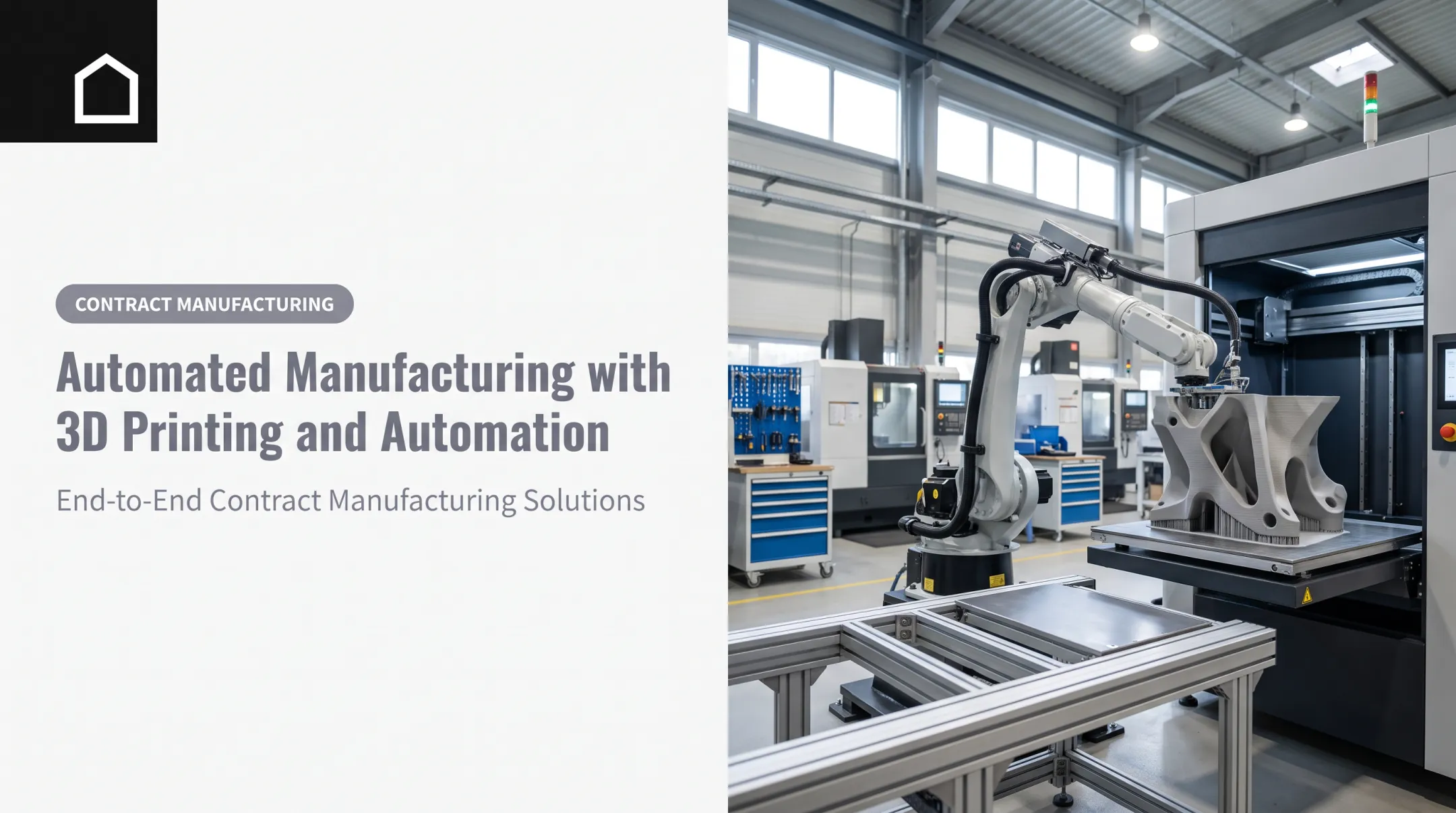
Coordinating that chain is easier with one manufacturing partner. Finine Design and Manufacturing covers CAD modeling, 3D printing, CNC machining, urethane casting, injection molding, and production painting in-house, so parts do not change vendors between prototype, bridge production, and tooling-ready runs.
How Much Does Low-Volume 3D Printing Cost?
"No tooling" doesn't mean "free." Printed parts still carry real costs, and sometimes they add up to more than people expect.
Cost Components to Account For
- Engineering and CAD preparation
- Machine time and material
- Build setup and supports
- Labor for cleaning, curing, and finishing
- Inspection, packaging, and shipping
- Any assembly or secondary machining
Large, solid parts printed in inefficient orientations can rack up material and machine-time costs quickly. Tight tolerances or a highly finished surface add labor on top of that.
A Documented Cost Comparison
Formlabs compared printed and molded versions of the same mixer-latch component (Formlabs, 2024):
| Approach | Cost at 1,000 units | Notes |
|---|---|---|
| 3D printed parts | $600 | No tooling |
| Outsourced molding | $3,920 | Includes $3,600 mold |
| Crossover point | ~13,050 parts | Where molding becomes cheaper |

That's one part and one costing method—not a universal rule. AMETEK Brookfield saw cost drop from $25 to $3 per part after switching a machined electronics clip to SLS, a result tied to that part's geometry and prior machining cost (Formlabs, 2024).
What Moves the Crossover Point
- Part size and geometry (large or solid builds consume more material and machine time)
- Order volume and likelihood of repeat runs
- Nesting density per build versus cavities per mold
- Surface finish and tolerance requirements
- Demand stability versus forecast uncertainty
Quotation Checklist
Those variables are why two similar-looking parts can quote very differently. When you request a quote, provide:
- Production-ready CAD file
- Expected quantity and batch schedule
- Material and color requirements
- Critical dimensions and tolerances
- Surface finish and intended use
- Testing and assembly requirements
- Delivery target
Applications, Benefits, and Limitations
Where Low-Volume Printing Fits
- Bridge production while tooling is being built or demand is confirmed
- Custom or variant-heavy products where every unit differs slightly
- Aftermarket and spare parts, including discontinued components
- Production aids and fixtures used internally rather than sold
- Medical and dental development, including anatomical models and training aids
- Automotive components and display models
- Defense-related low-volume parts, with appropriate qualification
- Consumer electronics housings and enclosures
Finine Design works across several of these categories directly, producing custom plastic parts for automotive, military, and consumer electronics clients, plus anatomical models and training aids for dental and orthopedic programs.
Real-World Proof: Bridge Production in Action
When a supplier failed to deliver, AMETEK Brookfield used industrial SLS printing to produce 30 nylon spring retainers in under two weeks, testing them for life cycle, heat, and shipping durability before putting them into use (Formlabs, 2024). It's a documented fix for a specific missing part, not evidence that every component is a good printing candidate.
Benefits Worth Weighing
- Faster design iteration without waiting on tooling changes
- Lower inventory exposure since parts print on demand
- Digital storage of designs instead of physical warehousing
- Easier customization across product variants
- Fewer dependencies on dedicated tooling timelines
Limitations to Plan Around
- Throughput lags behind injection molding at high volumes
- Material properties vary by process and even by build orientation
- Some parts need significant post-processing to hit spec
- Tolerances and finish may require secondary machining
- Functional performance still needs validation for the intended use
Decision Checklist
Ask these questions before committing to a process:
- How certain is the volume, and is the design still changing?
- How complex is the geometry?
- What material performance does the application demand?
- What finish and tolerance does the part require?
- Does the part need regulatory or qualification sign-off?
- Will this part eventually transition to CNC machining, urethane casting, or injection molding?
Frequently Asked Questions
What are SLA, SLS, and FDM?
SLA cures liquid resin for fine detail and smooth surfaces. SLS fuses nylon powder, producing unsupported complex parts. FDM extrudes thermoplastic filament for accessible prototypes and functional parts when ultra-fine detail is not required.
Which is stronger, PLA or PETG?
Neither is universally stronger. PLA is stiffer but more brittle, while PETG handles impact and heat better in most comparisons. Always check the specific material datasheet against your part's actual requirements.
Is PETG safe for food-contact or fluid-handling parts?
Not by default. Food-contact safety depends on printer cleanliness, nozzle contamination, layer gaps, and whether the specific material and process are certified for food contact—not just the material's chemistry alone.