
Rapid prototyping solves the first problem. It lets teams test design assumptions in days, not months, using 3D printing, CNC machining, or urethane casting. Small batch production solves the second: it turns a validated design into a limited run for functional testing, pilot sales, or specialized, lower-volume demand.
This guide covers what separates the two approaches, when to use each, and how to move from CAD file to repeatable production without unnecessary rework.
Key Takeaways
- Rapid prototyping tests design assumptions; small batch production builds limited runs of production-ready parts.
- The right process depends on quantity, material, geometry, tolerances, and how stable the design already is.
- DFM reviews, inspection, and documented feedback between batches catch costly problems early.
- A single development and manufacturing partner can simplify the handoff from prototype to production.
What Are Rapid Prototyping and Small Batch Production?
Rapid prototyping is the quick creation of physical parts from digital design data: CAD models, scans, or sketches converted into something you can hold. The goal is to evaluate form, fit, function, ergonomics, assembly, and manufacturability before committing to tooling.
Small batch production sits between a one-off prototype and full-scale manufacturing. It's a limited run of parts built using production-representative materials and processes.
Formlabs' development-stage framework offers useful volume benchmarks: early validation builds typically run 20 to 50 units, and later-stage builds often reach 50 to 200 units before a production-process check at 500-plus units. These figures are illustrative benchmarks, not universal thresholds.

How the Two Stages Connect
Prototypes answer design questions. Small batches answer production questions:
- Does the part perform consistently when built with the actual material?
- Does the process repeat accurately across multiple units?
- How do real customers or testers respond?
- Is demand strong enough to justify scaling further?
Rapid Prototyping vs. Small Batch vs. Mass Production
| Factor | Rapid Prototyping | Small Batch Production | Mass Production |
|---|---|---|---|
| Primary objective | Validate design assumptions | Validate process and demand | Maximize throughput and unit economics |
| Tooling investment | Minimal to none | Low to moderate (soft tooling, bridge tools) | High (hardened steel tooling) |
| Flexibility | Very high | Moderate | Low |
| Repeatability | Not the goal | Developing | High and consistent |
| Tolerance for design changes | Expected and encouraged | Possible, but costlier | Difficult once tooling exists |
Small batch production isn't always a stepping stone. For niche, replacement, customized, or specialized industrial parts, including many dental and orthopedic products, it can be the permanent manufacturing approach rather than a bridge to higher volume.
Why Use Rapid Prototyping and Small Batch Production?
Rapid prototypes surface problems while they're still cheap to fix. Finding issues before tooling exists saves far more than finding them after.
Common catches include:
- Dimensional mismatches
- Ergonomic issues
- Mechanism interference
- Assembly conflicts
- Material behavior that doesn't match simulation
Small batches extend that validation into real-world conditions:
- Pilot builds for internal or customer testing
- Preparation for certification or compliance testing
- Early sales to gauge actual demand
- Limited runs for specialized or lower-volume applications
The Cost Trade-Off
That early validation is valuable, but it comes with a cost structure you need to plan for.
Lower upfront commitment often means a higher per-unit cost. Setup time, tooling (even soft tooling), material selection, and inspection all get divided across fewer parts. ASME's guidance on low-volume manufacturing notes that setup and tooling costs can dominate the economics when annual quantities sit in the range of 10, 100, or 1,000 units rather than millions.
The right call depends on your geometry, material, and order size — not a fixed rule.
Industry Requirements Shape the Process
Different industries bring different documentation and testing expectations:
| Industry | What typically applies |
|---|---|
| Automotive | IATF 16949 framework plus PPAP against design records |
| Military & defense | MIL-STD-810H environmental testing, tailored to service conditions |
| Consumer electronics | IPC-A-610 acceptance criteria for PCB assemblies |
| Dental | ISO 20795-1 for denture-base polymers, where applicable |
| Orthopedic | Alloy- and process-specific material standards (e.g., wrought vs. powder-bed-fused titanium) |
Matching materials, tolerances, and documentation to the actual application matters more than following a generic checklist.
A dental appliance and a military housing don't face the same scrutiny. Treating them identically wastes time on one and risks under-testing the other.
From Prototype to Small Batch: Process and Method Selection
Defining the Project Before You Build Anything
Start by naming the highest-risk assumption in your design. Is it fit? Function? Material behavior under load? Then define:
- Required quantity: prototype run size and anticipated batch volume
- Intended use: demonstration, functional testing, or customer trial
- Performance criteria: what "pass" looks like
- Material, finish, and tolerance needs
- Delivery timeline and acceptance criteria
CAD Preparation and DFM Review
Before anything gets cut, printed, or molded, run a design-for-manufacturability (DFM) review. Catching issues on screen is cheap; fixing them in metal is not.
Check for:
- Wall thickness consistency (uneven walls drive warping)
- Draft angles, radii, and ejection-friendly geometry
- Part orientation and machining access
- Features that complicate molds, fixtures, or finishing
Matching the Method to the Validation Goal
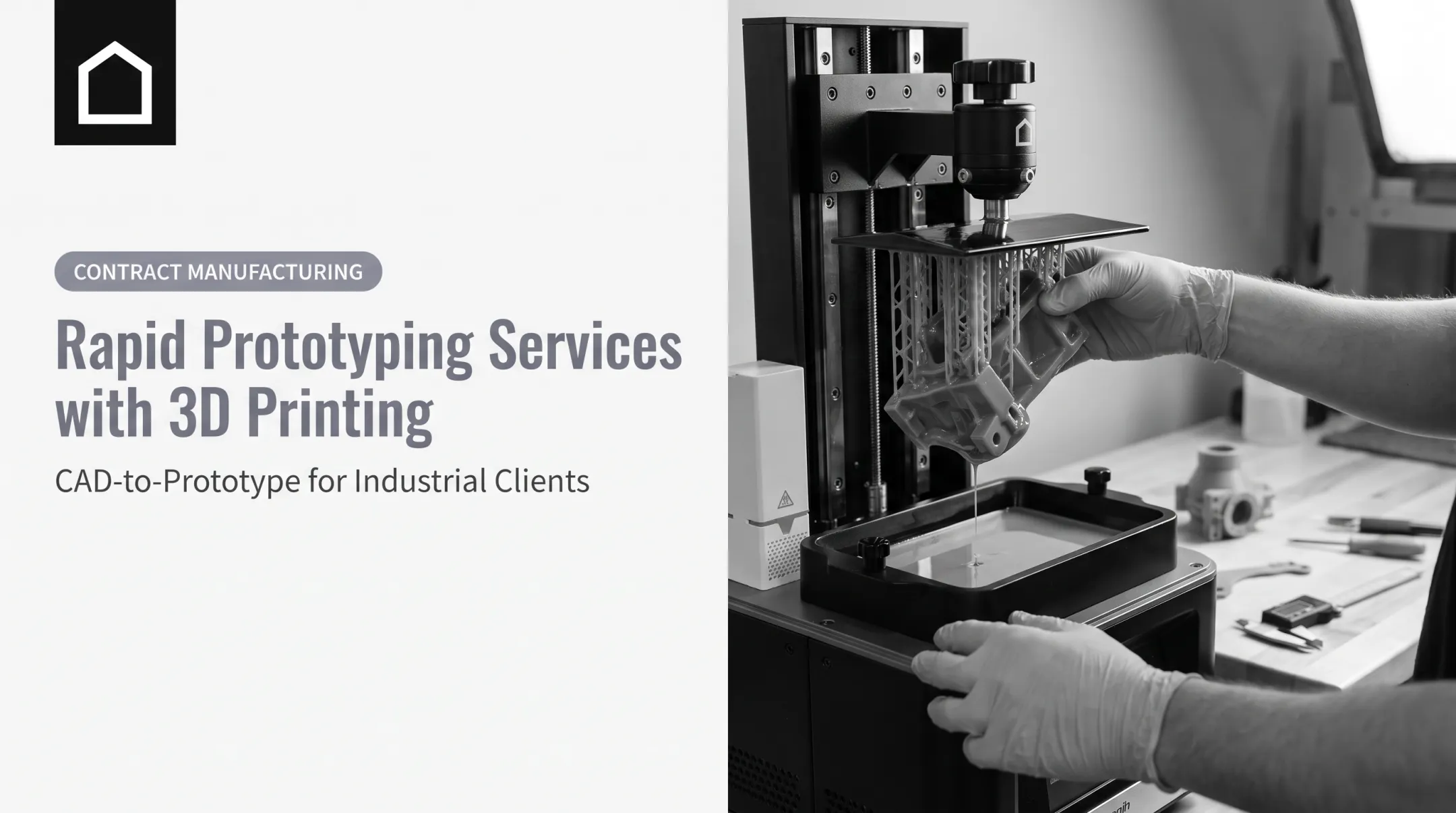
- 3D printing: fast iteration for form, fit, and complex geometry
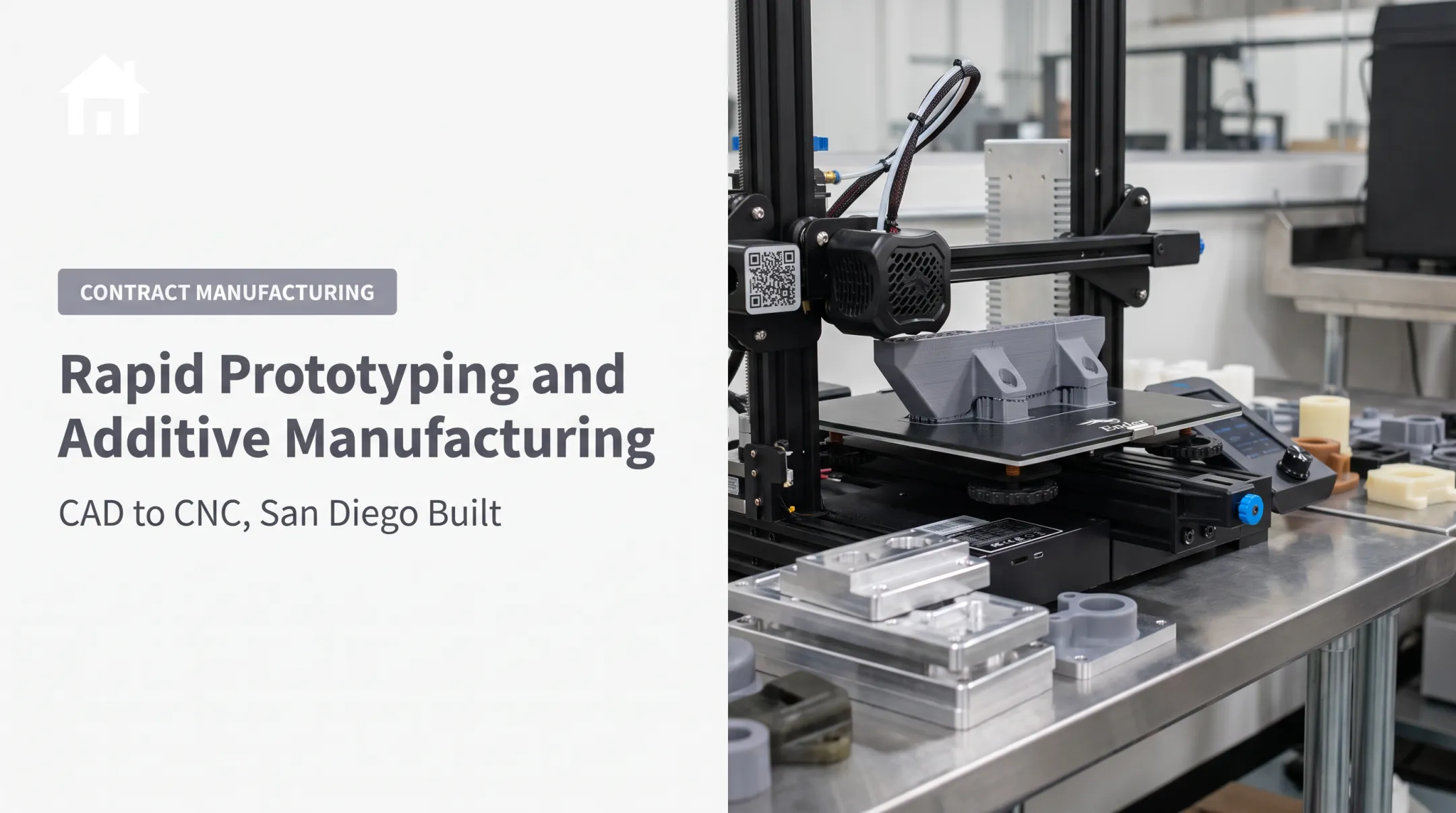
- CNC machining: precision and production-like materials for functional testing
- Urethane casting: multiple parts with representative look or mechanical performance, from a silicone mold made off a 3D-printed master
Comparing the Core Processes
| Method | Tooling Needed | Material Options | Finish & Dimensional Control | Best For |
|---|---|---|---|---|
| 3D printing | None | Limited (process-specific resins, nylons) | Varies by geometry and material | Early iteration, complex shapes |
| CNC machining | None (fixturing only) | Broad — engineering-grade metals and plastics | High, feature-dependent | Precision parts, functional tests |
| Urethane casting | Silicone mold from a master | Rigid, flexible, transparent urethanes | Reproduces fine detail and undercuts | Cosmetic parts, bridge production |
| Injection molding | Machined mold (aluminum or steel) | Production thermoplastics | Tightest, most repeatable | Repeatable volume production |
A silicone mold for urethane casting typically yields around 50 cast parts before quality drops. That range works well for bridge production, but it is not a substitute for hard tooling once volumes climb.
Transitioning Into Small Batch Production
Once prototype validation confirms the design, small-batch planning turns those results into a repeatable build path:
- Process selection based on quantity and material requirements
- Fixture or soft-tool planning where it reduces per-part cost
- Pilot parts and first-article or sample approval
- Inspection against the drawing's critical dimensions
- Functional testing and documented acceptance
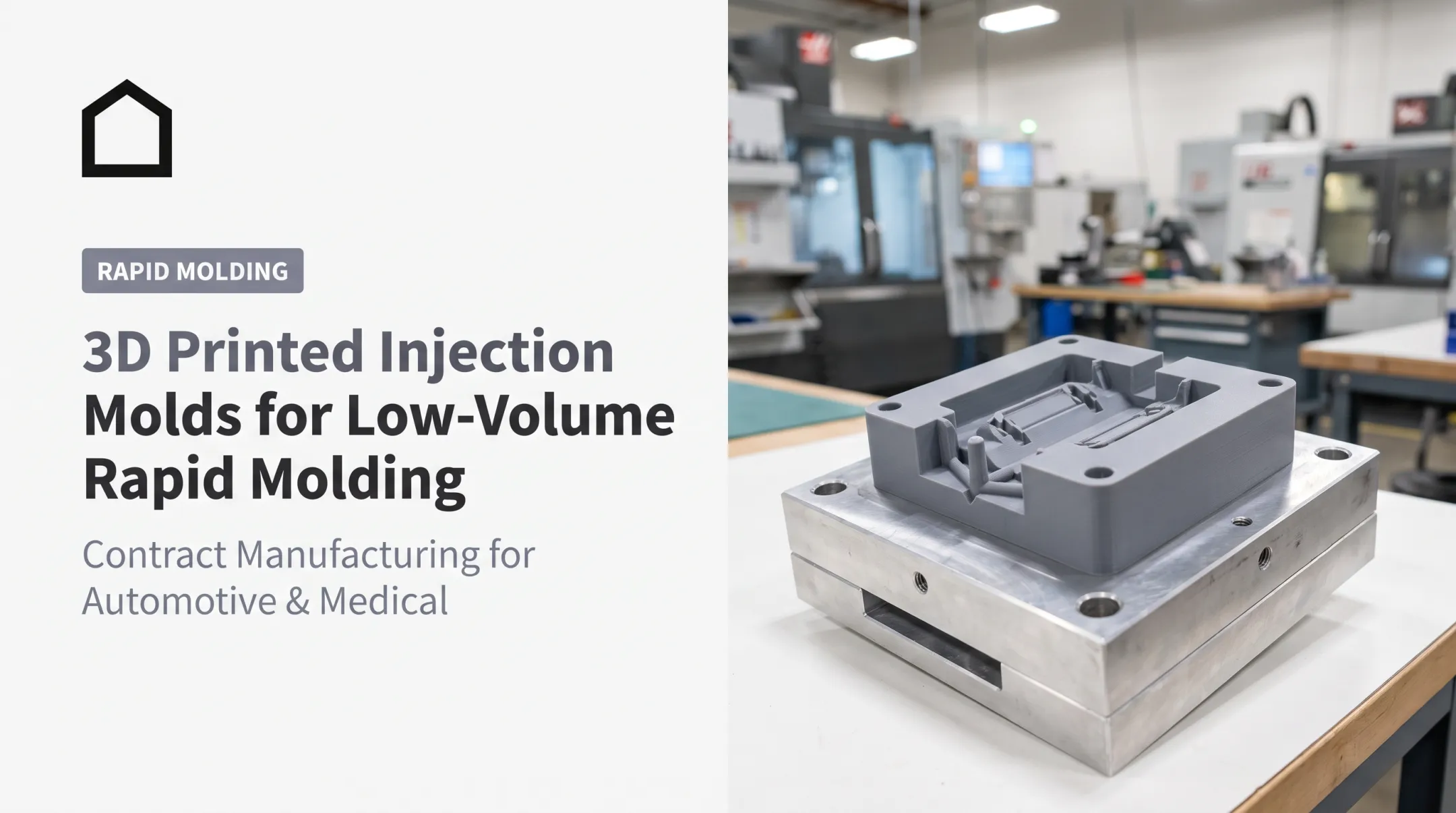
Finine Design and Manufacturing keeps CAD modeling, 3D printing, CNC machining, urethane casting, injection molding, and production painting under one roof in San Diego.
That integration matters most at the prototype-to-limited-production handoff. Fewer vendor transitions mean fewer chances for a critical detail to get lost between teams.

Planning Quality Between Batches and Choosing a Partner
Controlling Design and Quality Information
Before ordering a small batch, lock down the paperwork that prevents confusion later:
- Controlled CAD files and drawings with revision histories
- Bills of materials and material specifications
- Inspection criteria for critical features
- Approval records from the prior stage
Using the First Batch as a Learning Cycle
Treat your first small batch as a diagnostic run. Record every defect and test result. Then separate the causes:
- Design issues: geometry, tolerance stack-up, material choice
- Process issues: machine settings, mold wear, operator variation
Prioritize fixes by impact, confirm the revision, and only then release the next run. Skipping this step is how the same defect shows up three batches later.
Planning for Scale
Before committing to tooling or a long-term supplier relationship, review:
- How often repeat orders are likely to occur
- Inventory holding risk if demand is slower than expected
- Whether the design is stable enough to freeze
- Supplier capacity to expand if volume grows
What to Look for in a Partner
When evaluating a rapid prototyping and small batch manufacturing partner, ask about:
- CAD and engineering support, including DFM review
- Material and finishing options across processes
- How revisions and change requests are controlled
- Quote scope: tooling, setup, materials, inspection, packaging, and shipping
Request a manufacturing review using your actual CAD files rather than a generic capability list. That's the fastest way to see how a shop actually thinks about your part.
Finine Design and Manufacturing is a San Diego-based company serving clients across the United States in automotive, military, consumer electronics, dental, and orthopedic product development.
In-house capabilities cover CAD modeling, CNC machining, urethane casting, injection molding, and production painting. Confirm those against your project's requirements before you commit.
Conclusion: Build a Lower-Risk Path From Concept to Production
Rapid prototyping and small batch production work best as connected stages, not isolated events.
- Test the highest-risk assumption first
- Refine the design based on what you learn
- Validate production-ready parts in a small batch
- Scale only when evidence supports it, not optimism
Before requesting an engineering review or quote, gather:
- CAD files
- Target quantities
- Material requirements
- Testing needs
- Delivery dates
Walking in prepared shortens quote cycles and cuts avoidable revision loops.
Frequently Asked Questions
What is manufacturing prototyping?
Manufacturing prototyping is creating a physical part to evaluate design, function, fit, materials, or manufacturability before full production. It answers specific design questions with real, tangible parts.
What does small-batch production mean?
Small-batch production means a limited run of parts: more than a single prototype, but less than full production volume. Exact quantity varies by process and project.
What are the main types of prototypes?
Common types include appearance prototypes (how it looks), functional prototypes (how it works), and engineering or production-representative prototypes that combine both.
What is an example of batch manufacturing?
A limited run of CNC-machined aluminum housings for endurance testing, or a short run of molded dental training components built before scaling to full production, are both typical examples.
What is another name for rapid prototyping?
Quick-turn prototyping and digital prototyping are sometimes used interchangeably, though they aren't always exact synonyms. Additive manufacturing, or 3D printing, is one process within rapid prototyping, not a stand-in for the whole category.