
Introduction
Product teams face a tough balancing act. They need parts that look and perform like the real thing, but they can't justify six figures in tooling before a design is even finalized.
Many teams struggle with this exact problem: how do you validate a product, test with real users, or fill a short production gap without betting the budget on hard tooling too early?
Urethane casting often gets filed under "prototyping" and forgotten. That's a mistake. Beyond early prototypes, it supports design validation, functional testing, bridge production, and select end-use parts.
This article covers three practical advantages: lower tooling and part costs, faster development and turnaround, and broad flexibility in design, materials, and finish.
Key Takeaways
- Delivers production-like polyurethane parts from a master pattern and silicone mold—built for prototypes and low-volume runs
- Soft tooling costs far less upfront than hard tooling, making design iteration more affordable
- Moves projects from design approval to usable parts faster than hard-tooling routes
- Resin options span rigid plastics to flexible rubber-like materials, including color and texture choices
- Choose resin, geometry, volume, and tolerances that match the application to lock in reliable results
What Is Urethane Casting (Brief Context)
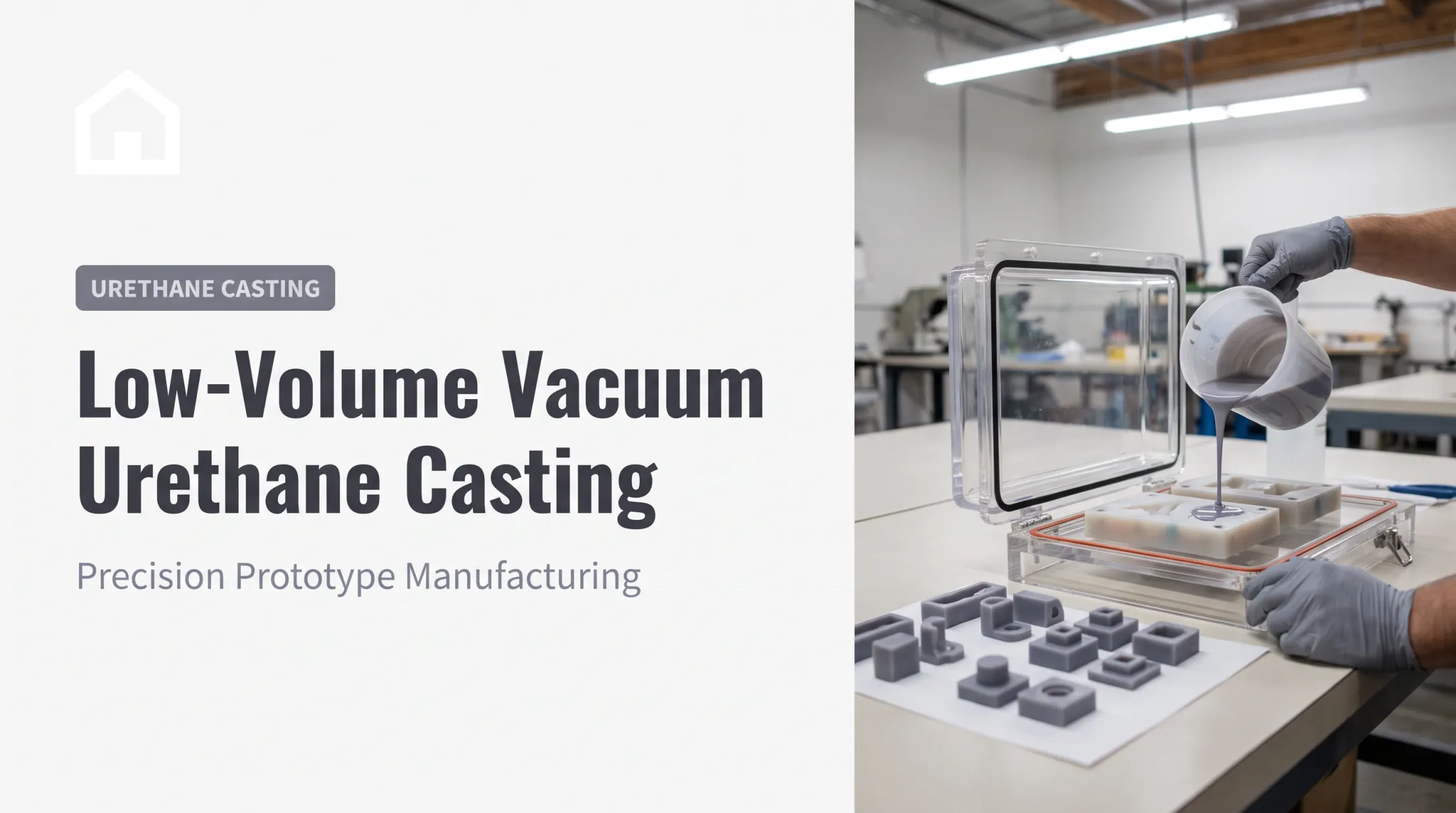
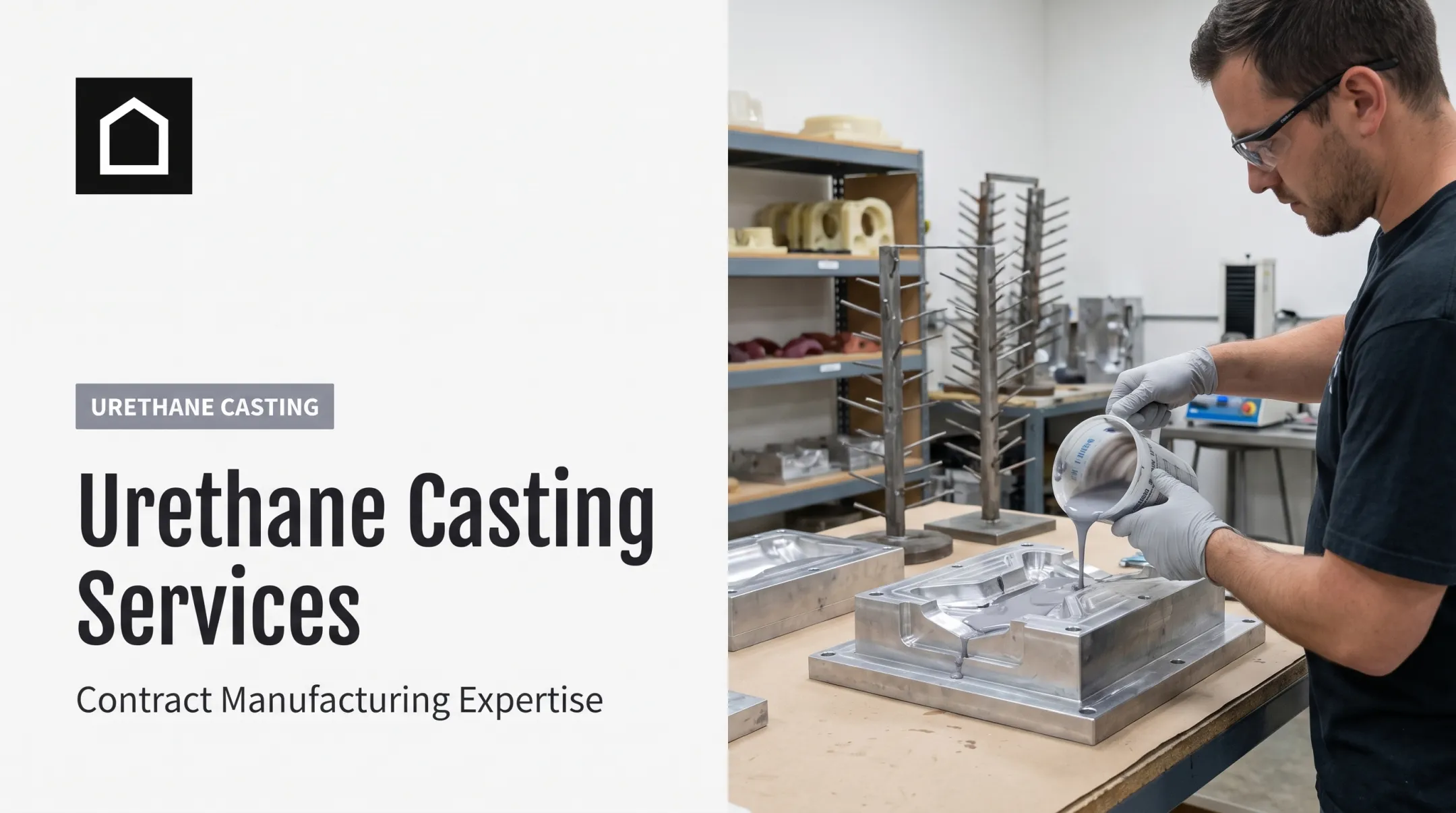
Urethane casting starts with a master pattern, usually produced from CAD data. That master gets used to form a silicone mold, which is then filled with liquid polyurethane resin.

The typical workflow looks like this:
- Build or 3D-print the master pattern
- Create a silicone mold around it and degas as needed
- Mix and pour (or inject) the urethane resin
- Cure the part
- Complete secondary operations such as trimming, sanding, drilling, or painting
At Finine Design and Manufacturing, this process often starts with a 3D-printed master, which proves out geometry before mold work begins. That sequencing catches design issues early, before they turn into mold rework.
Common Applications
Urethane casting is used across several stages of product development:
- Functional prototypes for engineering and user testing
- Pre-production builds and bridge production
- Replacement parts and product demonstrations
- Low-to-medium volume production runs
One caveat: urethane casting isn't a universal replacement for injection molding, 3D printing, or CNC machining. It's one tool among several, and the right choice depends on volume, material, and timeline.
Key Advantages of Urethane Casting
Weigh each benefit against measurable project outcomes: tooling cost, development time, design risk, part performance, and expected volume.
Advantage 1: Lower Tooling and Part Costs
Silicone molds cost a fraction of what hard metal tooling costs. According to Fictiv's comparison of urethane casting and injection molding, silicone tooling typically costs several hundred to several thousand dollars, while injection molds require substantially more capital.
That lower entry point changes the math for early-stage projects. Fictiv frames urethane casting as a fit for roughly 1 to 100 parts, while injection molding typically serves 100 to 100,000 parts—though these are process-selection guidelines, not a strict cost crossover.
This advantage matters most when:
- The design is still evolving and may need revisions
- Demand hasn't been proven yet
- You need a small batch for bridge production
- The part is custom or low-volume by nature
| Factor | Soft Tooling (Urethane Casting) | Hard Tooling (Injection Molding) |
|---|---|---|
| Upfront cost | Several hundred to several thousand dollars | Significantly higher capital investment |
| Typical volume fit | 1–100 parts | 100–100,000+ parts |
| Per-part cost at scale | Higher | Lower |
| Design change cost | Low (remake mold cheaply) | High (recut steel) |
A separate Fictiv cost analysis found injection molding more economical at around 500 parts in one example. That figure is not universal. Actual pricing depends on part size, complexity, resin selection, quantity, and finish, so get a project-specific quote rather than relying on a general benchmark.

At Finine Design, urethane casting quotes account for part size and complexity, resin, finishing, run quantity, and how many parts a silicone tool can yield before it wears out.
Advantage 2: Faster Iteration and Production Turnaround
Building a master pattern and silicone mold takes a fraction of the time needed for hard tooling. Xometry estimates a master and mold can come together in as little as 1 to 2 days, though a full production-level casting order usually runs 3 to 4 weeks.
Treat first-part availability and full-batch delivery as two different timelines when you plan the schedule.
Why speed matters here:
- Teams can evaluate physical parts sooner and catch problems early
- Fit, assembly, and usability issues surface before committing to larger tooling
- Urethane casting can bridge the gap between a validated prototype and production-ready tooling
Bridge production is often the highest-value use case. Parts can ship for fit checks, functional testing, or limited market release while injection tooling is still being built, so development and tooling overlap instead of running strictly in sequence.
Hard tooling is not always slower. Fictiv, for instance, offers injection-molded samples in as little as two weeks through its rapid service. Soft tooling still removes the long lead time usually tied to cutting steel, which matters most while the design is still changing.
KPIs affected by this advantage:
- Design-cycle time
- Number of revision cycles before design freeze
- Time from design approval to usable parts
- First-article timing
Advantage 3: Design, Material, and Finish Flexibility
Flexible silicone molds can accommodate undercuts and complex geometries that would need more elaborate tooling strategies in injection molding. Feasibility still depends on the specific design, so a mold-maker's review before you commit is essential.
Material range spans a wide spectrum:
- Rigid plastics with high tensile strength
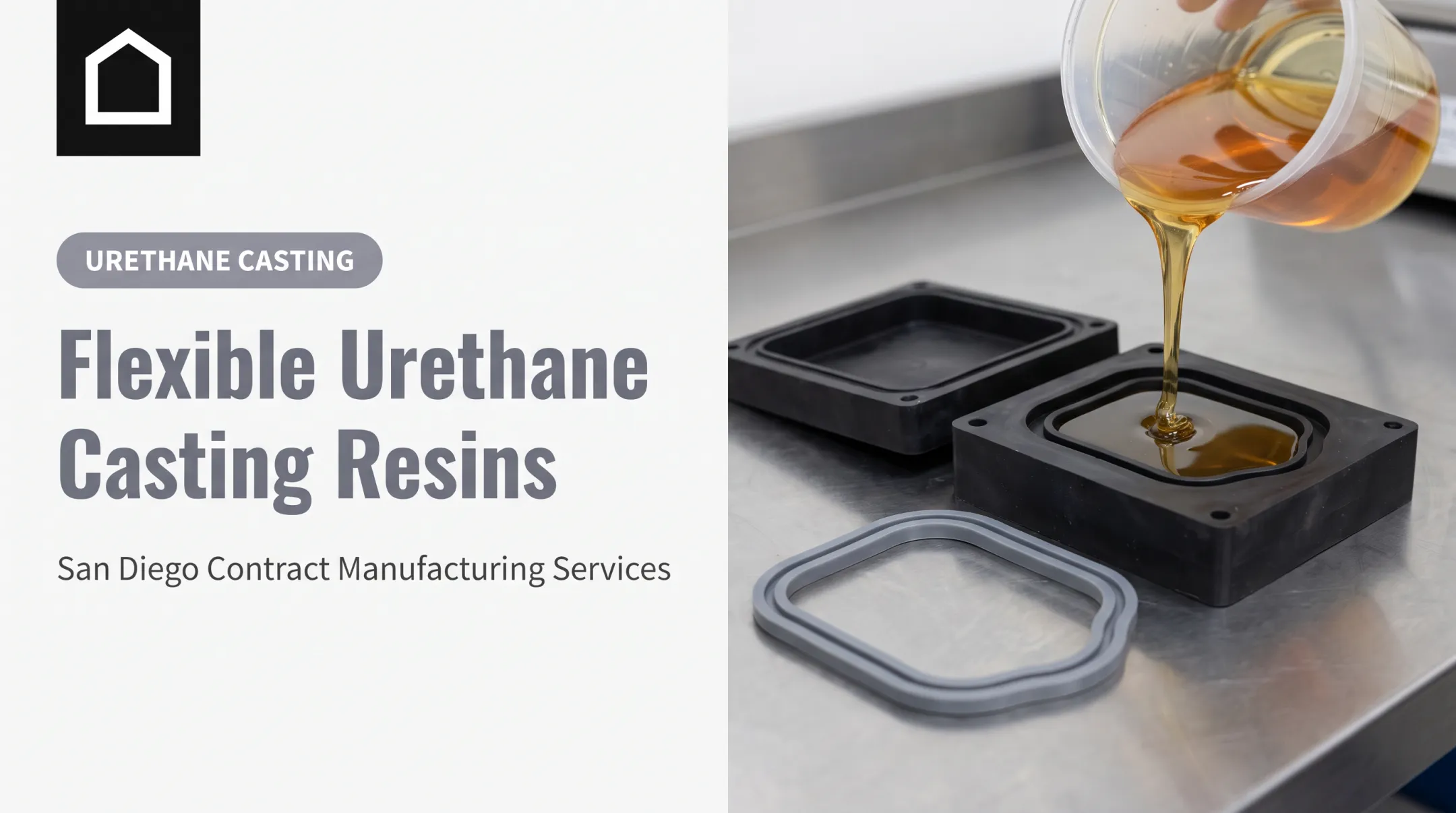
- Soft, elastic rubber-like formulations
- Clear or translucent resins
- Custom hardness, color, and fill specified per project
Manufacturer data sheets show how wide the range gets. BJB's F-105 elastomer runs around 5 Shore A with elongation over 1,000%, while Polytek's Poly-Optic 17-series clear urethanes reach 70 to 80 Shore D. Shore A and Shore D measure different material behaviors, so always check the resin's technical data sheet instead of assuming one hardness range.
Dimensional accuracy matters too. SyBridge's design guidelines cite a typical tolerance of about ±0.015 inches, or ±0.003 inches per inch, whichever is greater—subject to part geometry and supplier review. That's useful context, but it's not a guarantee for every design.
Finishing options commonly available:
- PMS or RAL color matching
- Smooth or custom surface textures
- Hardware installation
- Production painting and labeling
At Finine Design, urethane cast parts move through in-house production painting, product graphics, and labeling, so a single supplier handles the part from mold to finished component.
That flexibility supports side-by-side material testing and realistic appearance models. A part can carry the intended hardness, flex, and surface finish, not just its shape.
Those uses show up across the industries Finine Design serves, including automotive components, military and defense hardware, consumer electronics housings, and dental or orthopedic product development. Regulated or safety-critical applications still need their own material qualification, testing, and compliance review. Urethane casting supports that validation work; it does not replace it.
What Happens When Urethane Casting Is Missing or Ignored
Choosing a manufacturing process without weighing tooling cost, volume, material performance, and design maturity creates expensive problems down the road.
Common consequences of mismatched process selection:
- Committing to hard tooling before the design has stabilized, leading to costly rework
- Building prototypes in materials that don't represent how the final product will actually behave
- Selecting a process that can't hit the required finish or geometry, forcing a restart
Urethane casting has its own limits worth planning around. Silicone molds have a finite life. Industrial vacuum-casting research places typical mold life around 10 to 50 cycles, with 20 cycles being a commonly reported figure.
As a mold ages, resin components absorb into the silicone, surfaces roughen, and demolding gets harder. That wear can introduce dimensional drift.
Urethane casting is not automatically the right choice for very high volumes, extremely tight tolerances, or applications that require a specific production-grade thermoplastic with a fully validated production process.
Other practical constraints to factor in:
- Dimensional variation can increase as a mold wears toward end of life
- Resin selection must account for flame, skin-contact, or environmental requirements before production starts
- Quality control procedures need to be agreed upon per project, since tolerances aren't standardized across every part geometry
Skipping this evaluation step risks wasted spend and can delay a launch if a redesign becomes necessary mid-program.
How to Get the Most Value from Urethane Casting
Urethane casting delivers the most value when it's planned around the part's function, development stage, quantity, and downstream manufacturing path—not chosen by default.
Before requesting a quote, provide:
- Accurate CAD files and a 2D drawing marking critical dimensions
- Target quantities and intended use
- Preferred finish, color, and any hardware or insert requirements
- Testing or compliance requirements tied to the application
Ask your supplier to review:
- Draft angles and undercuts
- Wall thickness and parting lines
- Gate and vent placement
- Shrinkage allowances and tolerances
- Secondary operations needed after casting
Compare the full project cost, not just the per-part price. Factor in:
- Master-pattern creation and mold fabrication
- Resin, finishing, inspection, and shipping
- Additional molds as tools wear out or volume increases
Choosing a supplier that can carry a project into the next manufacturing stage matters too. Finine Design and Manufacturing operates as a single development partner across CAD modeling, 3D printing, urethane casting, CNC machining, injection molding, and production painting.
That continuity lets teams move from casting into injection molding as volume grows, without switching vendors mid-program.
Before authorizing a larger run, review first articles against documented acceptance criteria for dimensions, appearance, material properties, and functional performance. That review catches problems while they're still cheap to fix.

Conclusion
Urethane casting's value comes down to three things: lower soft-tooling investment, faster iteration and turnaround, and flexibility across design, materials, and finish.
The process earns its place when a design is still evolving, required volume is limited or uncertain, and the team needs realistic, functional parts before committing to production tooling.
It won't be the right fit for every project. Evaluate urethane casting alongside 3D printing, CNC machining, and injection molding based on your actual requirements (geometry, volume, material, and timeline) rather than picking a process on price or speed alone.
Frequently Asked Questions
How much does urethane casting cost?
Cost depends on the master pattern, part size and complexity, mold design, resin, quantity, finishing, and shipping. Share your application details for a project-specific quote instead of using a generic price point.
How does urethane casting differ from injection molding?
Urethane casting uses low-cost silicone molds and liquid polyurethane, best suited for smaller runs. Injection molding uses durable metal tooling and injected thermoplastics, offering more material options at higher volumes.
What are the benefits of urethane casting?
Choose urethane casting when you need lower tooling and part cost at low-to-mid volumes, faster development cycles, and flexible geometries, materials, colors, and finishes before committing to hard tooling.
What are the properties of urethane?
Urethane formulations range from soft and flexible (around 5 Shore A) to rigid (70–80 Shore D), with options selected for impact resistance, elasticity, or surface appearance. Always check the specific resin's technical data sheet before specifying.