
A single bad bracket can ground a fleet. A misdiagnosed turbine blade can end far worse. That's the reality behind aircraft and aerospace parts manufacturing — an industry where tolerances are measured in thousandths of an inch and there's no margin for "close enough." The US aerospace parts manufacturing market was valued at roughly $21 billion in 2024, with projections reaching $30 billion by 2035. That growth is driven by commercial aviation demand, defense modernization, and space programs — all of which require components that perform flawlessly under extreme stress, heat, and vibration. This guide breaks down what goes into aerospace parts: the materials, the manufacturing processes, the certifications that separate qualified suppliers from the rest, and how to evaluate a manufacturing partner for complex, regulated programs.
Key Takeaways
- Aerospace parts span engine turbine blades to avionics housings, each demanding different tolerances and validation
- Material choice — titanium, aluminum, or nickel superalloys — directly determines strength, weight, and heat resistance
- CNC machining, casting, forging, and 3D printing are often combined, not used in isolation
- AS9100D, ISO 9001, and ITAR compliance are mandatory for regulated aircraft and defense parts
- A single-source manufacturing partner cuts vendor handoffs and shortens time-to-market
What Is Aircraft and Aerospace Parts Manufacturing?
Aerospace parts manufacturing covers the design, engineering, and production of components for aircraft, spacecraft, and defense systems. It includes actuators, valves, gears, fuel and oil system parts, fittings, and optical systems, among others. Common part categories include:
- Engine components — turbine blades, casings, compressor parts
- Structural parts — brackets, fuselage sections, load-bearing frames
- Fasteners — bolts, rivets, and specialty hardware built to exact spec
- Avionics housings — enclosures protecting sensitive electronics
- Cabin interior parts — trim, seating hardware, panel components
Tolerances vary by function, not by a universal aerospace standard.
Standard CNC capability runs around ±0.005 inches, with precision work down to ±0.002 inches, and select reamed holes reaching ±0.0005 inches, according to Protolabs. Tighter tolerances mean more machining time, more scrap risk, and higher cost. Tolerance should always be spec'd to the part's actual function, not defaulted to the tightest number available.

Common Industries Served
Aerospace manufacturing overlaps heavily with automotive, device, and military/defense production. The connection isn't identical technical requirements - it's shared quality-system discipline. Automotive runs on IATF 16949, devices operate under the FDA's QMSR (built on ISO 13485), and aerospace uses AS9100D. All four frameworks share DNA: document control, corrective action processes, calibration records, and supplier oversight. That transferable rigor is why manufacturers serving multiple regulated industries often adapt well to aerospace work. Finine Design and Manufacturing, for instance, applies this same document-control and quality-oversight discipline across its automotive, military, and dental/orthopedic work - though certifications themselves are never interchangeable.
Materials Used in Aerospace Parts Manufacturing
Material selection determines whether a part survives its service life. Strength-to-weight ratio, heat tolerance, and corrosion resistance all trace back to the alloy or composite chosen. Common aerospace materials include:
- Titanium: Used in compressor blades, casings, and engine mounts. Roughly 45% lighter than steel at comparable strength, per Carpenter Technology. NASA data on forged, heat-treated Ti-6Al-4V blades puts ultimate strength in the 140,000–150,000 psi range.
- Aluminum alloys: Dominate lightweight housings, brackets, and structural panels where weight savings matter more than extreme heat resistance.
The Aluminum Association cites aluminum's mix of strength, low weight, and design flexibility as why it remains a staple in aircraft structures.
- Nickel-based superalloys: Handle the hottest zones, including turbine disks and combustion-adjacent parts, where creep resistance at extreme temperatures sets engine performance limits.
- Carbon-fiber composites: Gaining ground on programs like the Boeing 787, where composite body and wing structures support fuel-efficiency gains through weight reduction. They demand tight control over fiber orientation, resin systems, and inspection—and are not a drop-in metal replacement.

Core Manufacturing Processes for
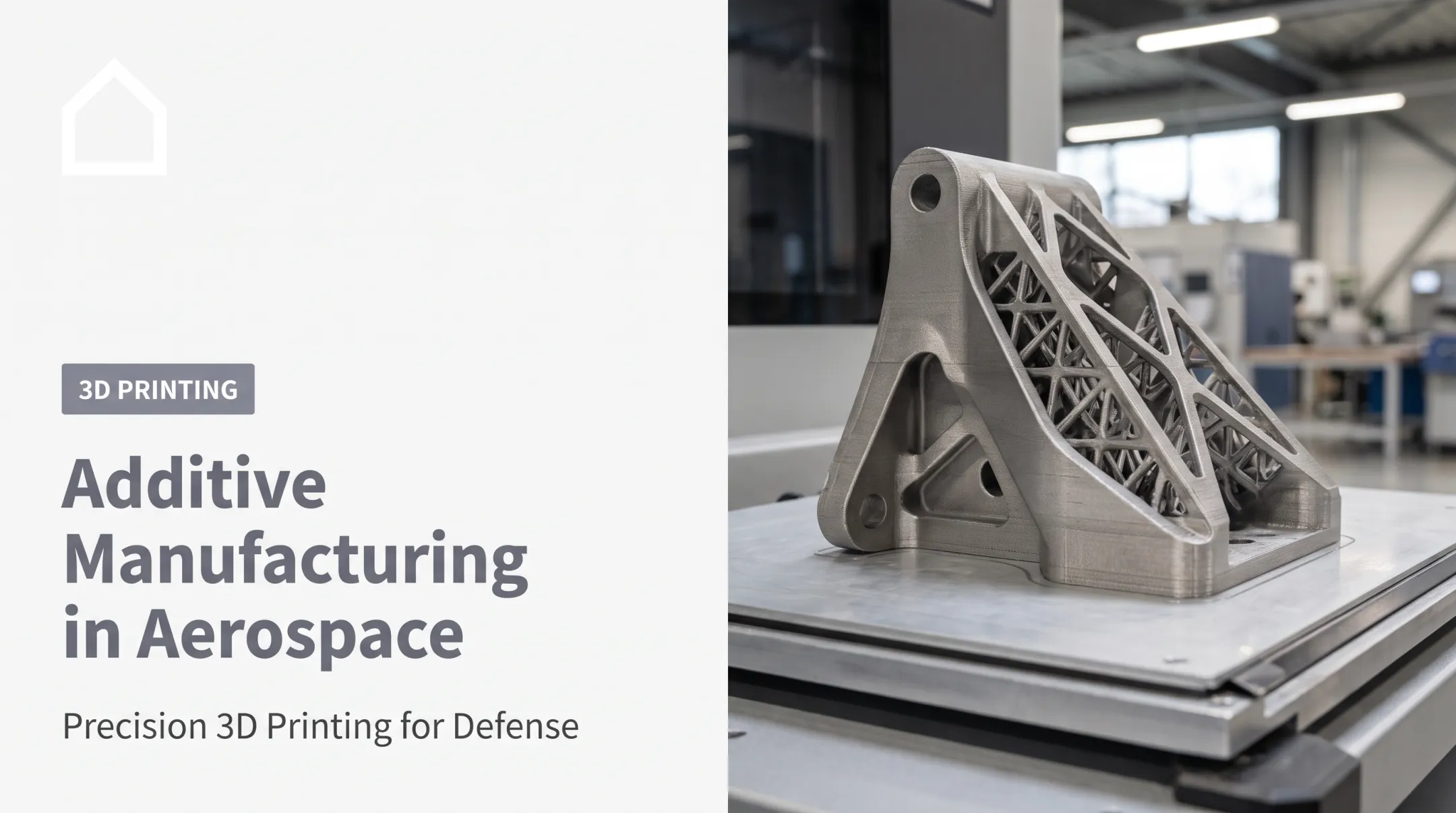
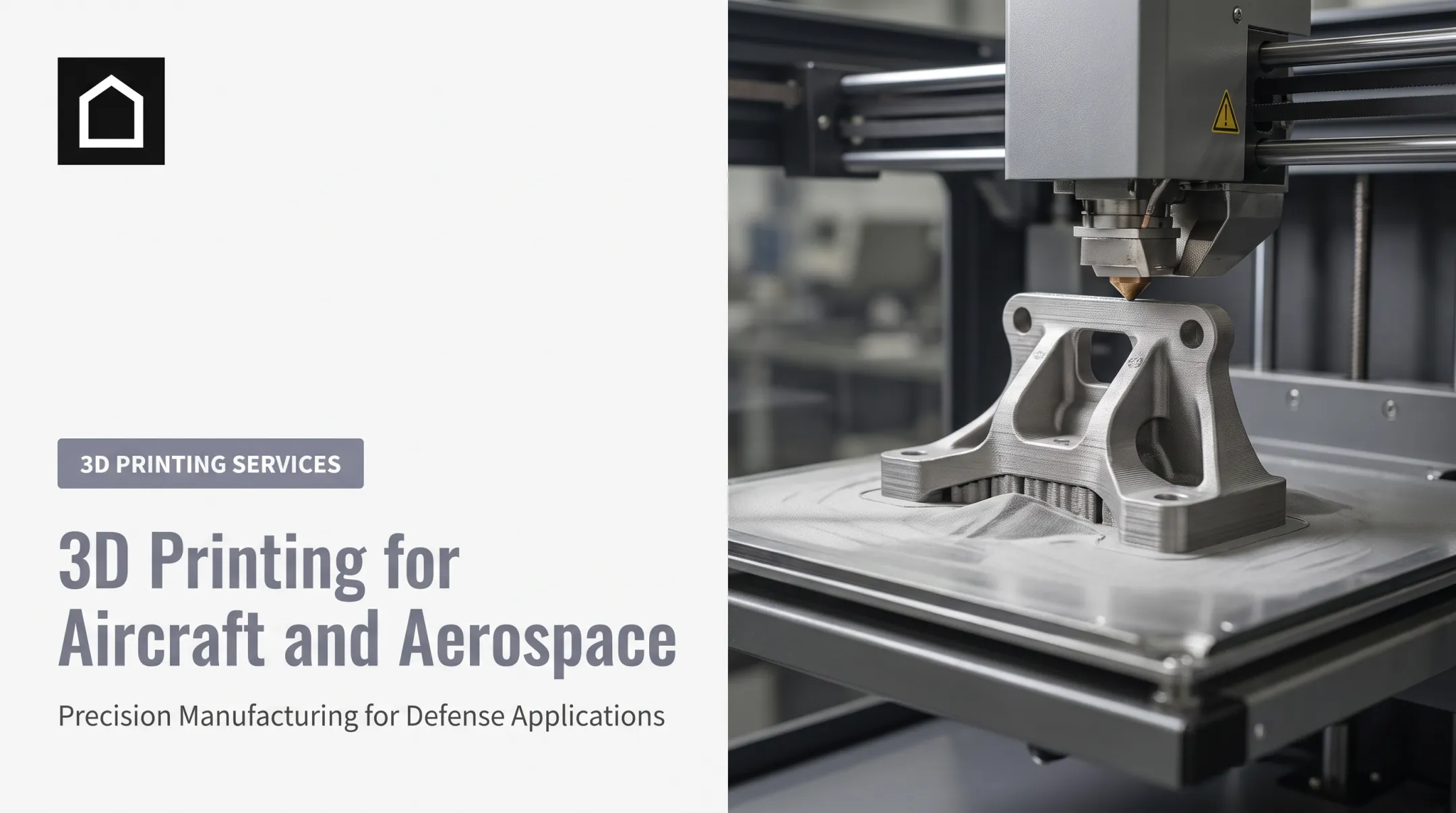
Aerospace Components Most aerospace parts don't come from a single process. They're built through combinations tailored to geometry, volume, and material. CNC machining is the workhorse for fasteners, shafts, and brackets needing tight, repeatable tolerances. It's subtractive: material is cut away from a solid block until the final geometry emerges. Investment casting produces complex, near-net-shape parts like turbine blades. A wax pattern gets coated in ceramic, the wax is melted out, and molten metal fills the resulting cavity. This approach suits intricate shapes that would be costly to machine from scratch. Forging shapes metal under high compressive force, typically in a die. Most aerospace metal components are hot forged, which improves strength, ductility, and fatigue resistance through grain refinement. Additive manufacturing (3D printing) is expanding for complex geometries that reduce overall part count. NIST and NASA both flag qualification and consistency as ongoing challenges for flight-critical parts, but the Aerospace Industries Association updated its AM certification guidance in October 2025, showing the industry is moving toward clearer standards.

Finishing operations matter just as much as forming:
- Heat treatment to achieve required mechanical properties
- Anodizing for corrosion protection on aluminum (per MIL-A-8625)
- Passivation to remove free iron from stainless components
- Coatings for wear and corrosion resistance
For prototyping through low-volume production, combining CNC machining with urethane casting or injection molding lets teams validate designs before committing to expensive tooling. That same workflow applies across regulated and non-regulated industries alike.
Quality Control and Certification Standards
Aerospace quality control decides whether a part flies safely or fails in service. AS9100D is the aerospace industry's quality management backbone. It builds on ISO 9001:2015 and layers in aviation, space, and defense-specific requirements. Where customer or regulatory requirements conflict with the standard, SAE International confirms those requirements take precedence. ITAR compliance governs any part tied to defense articles under the US Munitions List. Per the State Department's DDTC, manufacturers of defense articles must register, even if they never export. Manufacturers must generally secure approval before any export, reexport, or retransfer, unless a specific exemption applies. Traceability documents the full production chain:
- Material heat and lot identification
- First article inspection (FAI) records per AS9102
- Process and inspection documentation
- Nonconformance history Every part should be traceable from raw material to finished shipment. Without that paper trail, there's no way to isolate a failure's root cause, or prove compliance during an audit.
Choosing the Right Aerospace
Parts Manufacturing Partner Juggling separate vendors for CAD design, prototyping, machining, and finishing multiplies risk. Every handoff is a chance for miscommunication, schedule slippage, or a spec getting lost in translation. A single-source partner handling design through production eliminates those gaps. One team owns the part from CAD file to finished shipment, which shortens feedback loops and speeds up time-to-market on complex programs. Cross-industry expertise matters too. Manufacturers serving automotive and military clients bring transferable precision habits and regulatory fluency, even when the specific aerospace certification isn't yet in hand. That experience in tightly controlled environments (tight tolerances, material traceability, documentation discipline) doesn't disappear when the application changes. Finine Design and Manufacturing, based in San Diego, illustrates this integrated model. The company offers CAD modeling, 3D printing, CNC machining, urethane casting, injection molding, and production painting under one roof. It serves clients across military and automotive sectors. For teams evaluating manufacturing partners, that breadth cuts the number of vendors between concept and production. That matters when schedules are tight and specs are unforgiving. Before signing with any partner, confirm:
- Applicable QMS certification and scope
- FAI and material traceability policy
- ITAR registration status, if defense-related
- Process range — can they handle prototype through production volume?
- Track record with comparable part geometries and materials
Frequently Asked Questions
What does OEM mean in aerospace?
OEM stands for Original Equipment Manufacturer: companies that design and produce parts or systems under their own type certificate. This differs from aftermarket suppliers or PMA (Parts Manufacturer Approval) holders, who produce replacement parts under a separate FAA approval.
What certifications should an aerospace parts manufacturer have?
Look for AS9100D certification, ISO 9001 as its foundation, and ITAR registration if the work touches defense articles. These three credentials together signal a supplier built for regulated aerospace production.
What materials are most commonly used in aerospace parts manufacturing?
Titanium for high strength-to-weight structural and engine parts, aluminum for lightweight housings and brackets, nickel superalloys for high-heat engine components, and carbon-fiber composites for weight-critical airframe sections.
What is the difference between casting, machining, and forging for aerospace parts?
Casting pours molten metal into a mold for complex near-net shapes such as turbine blades. Machining removes material for precise, repeatable geometry. Forging compresses solid metal in dies to improve strength and fatigue resistance, and is often followed by a final machining pass.
Why is traceability important in aerospace manufacturing?
Traceability links every part back to its raw material, processing history, and inspection records. That chain of documentation supports safety investigations, quality audits, and regulatory compliance across the part's entire lifecycle.
How do I choose the right aerospace parts manufacturing partner?
Verify certifications (AS9100D, ITAR if applicable), confirm the range of in-house processes available, and check their ability to scale from a single prototype to full production volume without switching vendors mid-program.