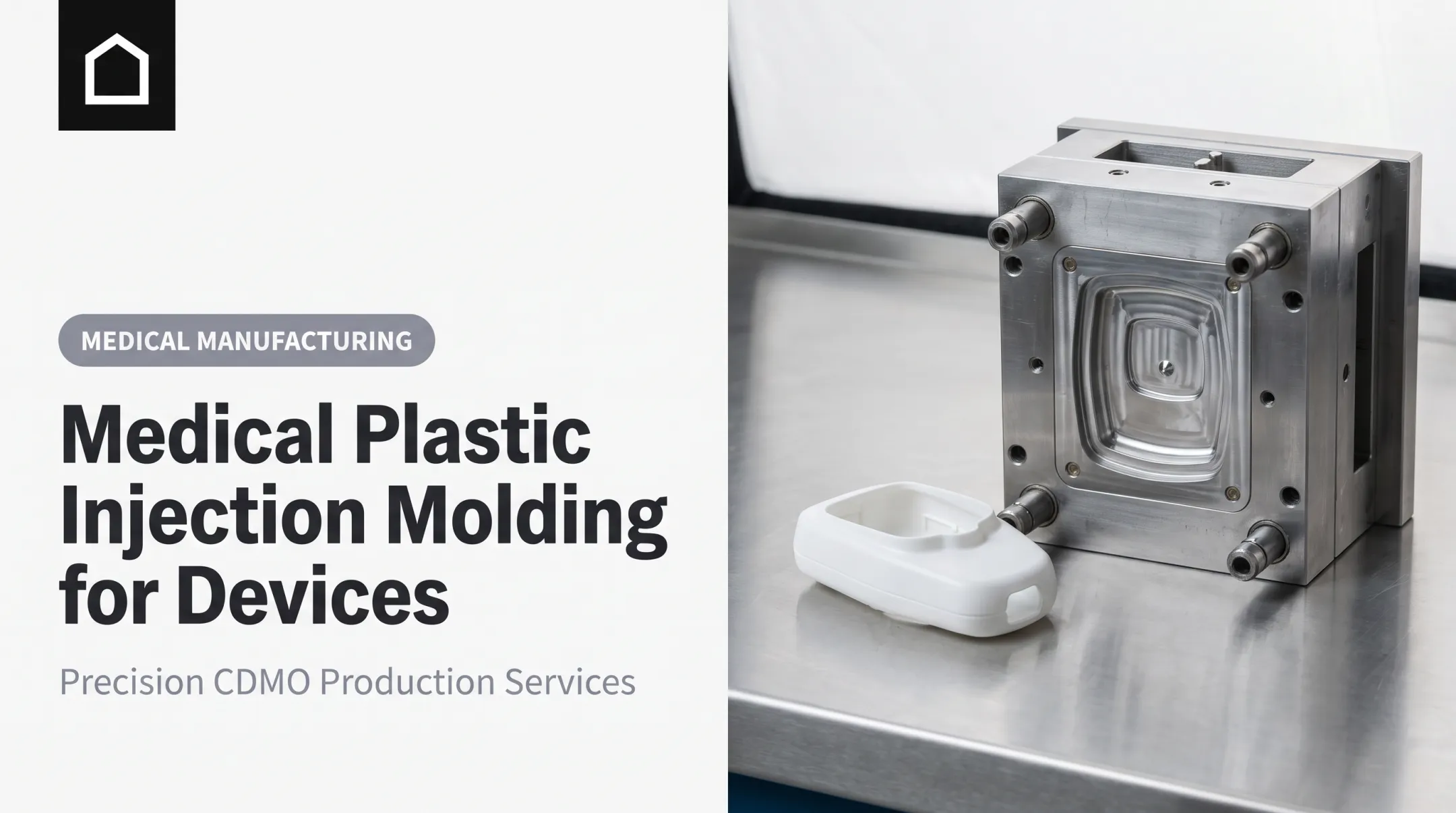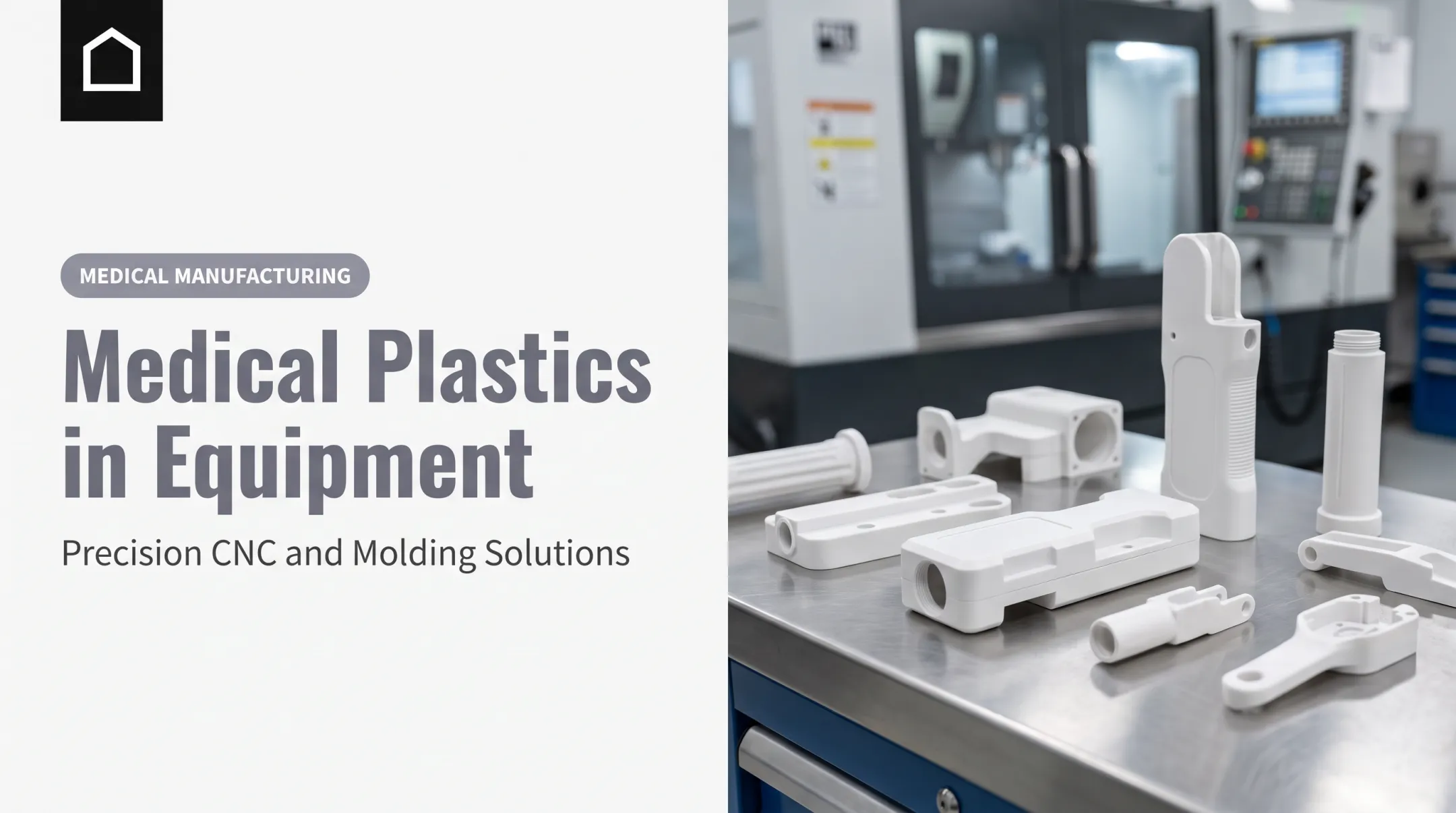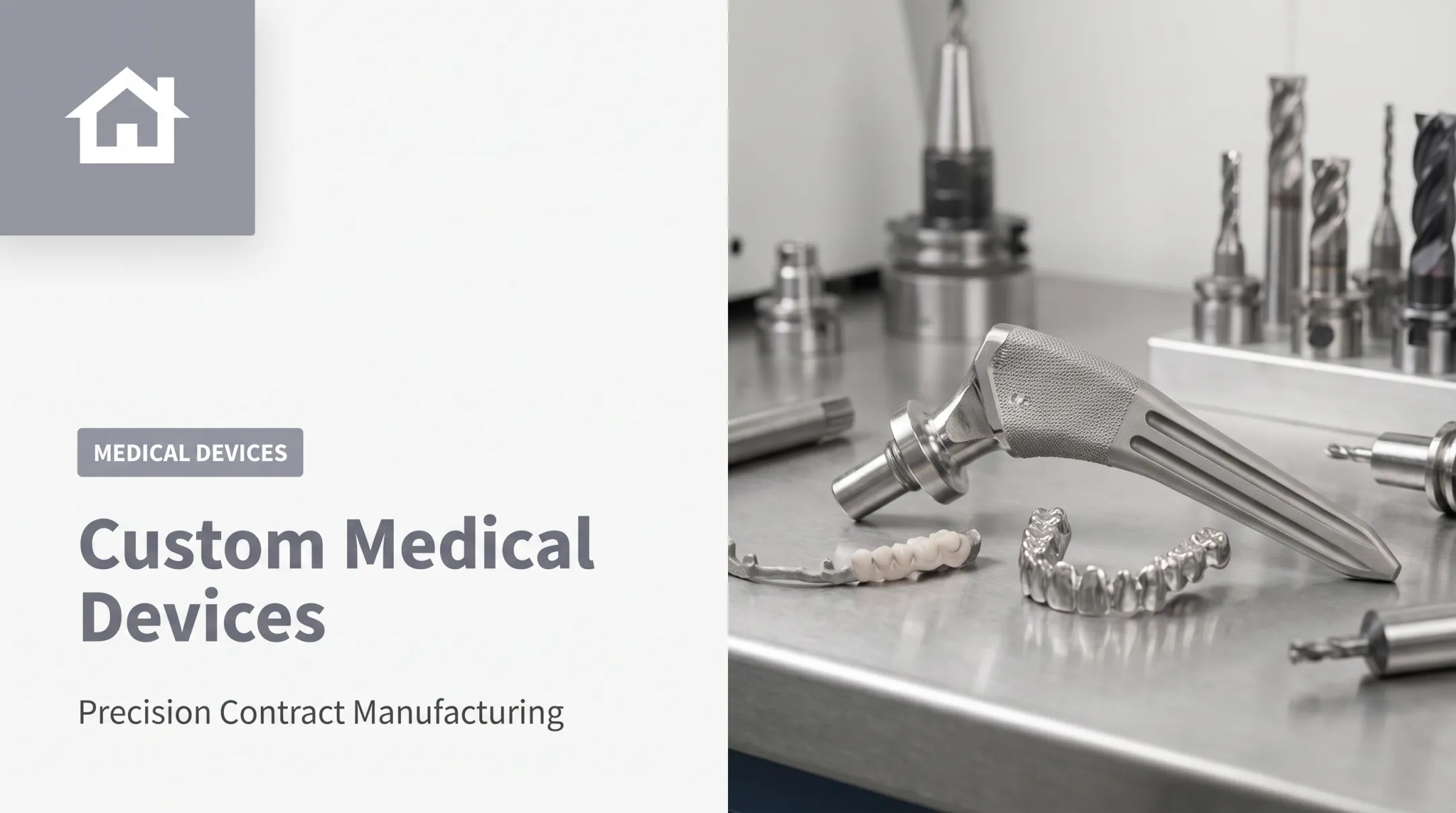

That combination creates a unique development challenge. A prototype has to prove the electronics work. But it also has to prove the device is comfortable enough to actually wear, accurate enough to trust, safe enough for repeated skin contact, and buildable at the volumes a business actually needs.
Many product teams struggle with exactly this gap between "it works on the bench" and "it works on a body." This article walks through where prototyping fits into medical wearable development: common applications, the build stages, the engineering and regulatory considerations, and what it takes to get a design ready for manufacturing.
Key Takeaways
- Let the medical application drive sensor choice, form factor, wear location, and validation—not the reverse.
- Use rapid prototyping to catch ergonomic, electronic, and assembly failures before tooling spend.
- Treat working prototypes as design and regulatory input, not clinical validation or FDA clearance.
- Keep design, prototyping, and manufacturing under one roof to cut concept-to-production handoffs.
Medical Wearable Applications That Benefit From Prototyping
Every wearable application asks different questions of a prototype. A chest-worn ECG patch and an insole pressure sensor share almost nothing in terms of form factor, wear duration, or failure modes.
Before sketching an enclosure, define:
- What the device needs to sense
- How often data needs to be captured
- Who wears it and for how long
- Whether the output supports research, self-management, or clinician review
Getting these answers early prevents redesigns that show up later, after tooling decisions are already made.
Continuous Health and Vital-Sign Monitoring
Wearables that track heart rate, temperature, oxygen saturation, respiration, or blood pressure face a shared set of prototype challenges:
- Sensor placement relative to skin, bone, and movement
- Motion artifacts from daily activity disrupting signal quality
- Skin contact consistency over hours or days of wear
- Battery life matched to the monitoring duration
- Data transmission reliability during normal use
Take the ATsens AT-Patch, a skin-attached device cleared by the FDA in 2022 for ambulatory ECG recording up to 14 days. Its 510(k) summary is worth studying for what it documents.
The filing covers electrical safety testing under IEC 60601-1 and IEC 60601-2-47, electrode performance under ANSI/AAMI EC12, adhesion persistence over the wear period, and biological evaluation of the skin-contacting materials.
Notably, the summary does not include a diagnostic-accuracy claim. The real-time display exists so users can confirm the recording is working, not to make clinical interpretations. Passing bench and safety testing is not the same as proving diagnostic performance—and claims should never outrun the evidence behind them.

Rehabilitation, Mobility, and Orthopedic Applications
Braces, straps, insoles, and body-mounted sensors that track range of motion, gait, posture, or muscle activity carry a different tension: secure, consistent placement versus freedom of movement.
A prototype in this category needs to hold its position through walking, bending, and daily activity without becoming a nuisance. That means testing:
- Adjustability across different body sizes
- Comfort during extended daily wear
- Ease of cleaning between uses
- Fit with the patient's actual routine, not just a clinical setting
A device that performs well in a lab but shifts during a patient's normal day will produce inconsistent data regardless of how good the sensor is.
Patches, Smart Garments, and Research Wearables
Flexible patches, stretchable sensors, and smart textiles solve a problem rigid enclosures can't: low-profile, long-duration contact for sweat, skin, or motion data.
| Format | Strength | Limitation |
|---|---|---|
| Patches | Low profile, good skin conformity | Often single-use, limited electronics protection |
| Wrist-worn devices | High user acceptance, reusable | Motion artifact exposure, limited sensing sites |
| Smart garments | Large sensing area, comfortable for long wear | Manufacturing complexity, washability concerns |
| Rigid enclosures | Strong electronics protection | Lower conformity, potential pressure points |
No format wins across every category. Choose based on wear duration, reusability, and how much electronics protection the sensing task actually needs—then prototype that tradeoff on-body before locking the design.
Medical Wearable Prototype Development Process
Medical wearable development isn't a single build. It's a sequence of controlled iterations, each answering a narrower set of questions than the last.
Build types usually progress in this order:
- Proof of concept — does the core sensing idea work at all?
- Functional prototype — does it work in a form close to the final device?
- Design verification prototype — does it meet documented specifications?
- Production-intent prototype — does it behave like the final manufactured product?

FDA's long-standing Design Control Guidance frames the same discipline as a sequence:
- User needs
- Design inputs
- Design process
- Design outputs
Define intended use, target user, wear location, operating environment, and success criteria before physical design work starts. That upfront scope prevents a lot of wasted redesign later.
Requirements, Risk, and System Architecture
Document these before touching CAD:
- Sensor performance targets
- Mechanical dimensions and wear duration
- Power and connectivity needs
- Ingress protection and cleaning requirements
- Materials, data security, and serviceability
Pair this with an early risk assessment covering inaccurate readings, skin reactions, detachment, overheating, battery failure, data loss, and foreseeable misuse. Then split the product into functional layers: sensing, electronics, firmware, enclosure or wearable interface, power, communications, and companion software. Separate systems from day one make later troubleshooting far simpler.
CAD, Electronics, and Early Proof-of-Concept Builds
CAD modeling and electronics proof-of-concept work test component placement, enclosure volume, sensor alignment, and attachment methods before anyone commits to final materials. At Finine Design and Manufacturing, this stage usually runs through CAD modeling and design refinement before physical builds.
Depending on what needs validating, teams might use:
- Breadboard or development-board circuits for early sensor testing
- Custom PCBs once the circuit is proven
- Flexible interconnects for wearable-specific routing
- 3D-printed housings or soft goods for fit checks
Design review checklist before moving forward:
- Overall dimensions and assembly access
- Tolerance stack-up across mating parts
- Sensor-to-skin contact consistency
- Charging access and user controls
- Replacement path for consumable or wearable elements
Rapid Prototyping and Iterative User Testing
3D printing, CNC machining, and urethane casting let teams compare multiple form factors fast, without committing to tooling. Early concepts move through fit, form, and functional validation before any production tooling is cut.
Two kinds of testing matter here, and they're not interchangeable:
- Bench testing checks function and repeatability under controlled conditions
- Formative user testing reveals discomfort, confusing controls, fit problems, and workflow friction that bench testing never catches
A 2024 study on a continuous glucose monitoring prototype shows why. In formative testing, users had to remove the applicator and check the inserted sensor fiber before attaching the detector. Seven of 15 participants struggled with that step, risking fiber damage during attachment.
The team did not fix it with training. They changed the product so users no longer needed to check the fiber at all. That is the value of catching a usability problem in prototyping instead of after launch.
Design for Manufacturing and Prototype Refinement
Lessons from early builds need to become manufacturable features: draft angles, wall thickness, fastener strategy, seals, tolerances, part count, and assembly sequence. Production-intent prototypes should use materials and assembly methods that match the real process, especially when testing durability, fit, and thermal behavior.
Handoff documentation should include:
- Controlled CAD files and drawings
- Bills of materials
- Assembly instructions and inspection criteria
- Test records and revision history
Finine's workflow follows the same path: 3D printing and CNC prototypes, urethane-cast refinement, bridge production, then injection molding and cosmetic finishing.
Engineering, Testing, and Regulatory Considerations
A medical wearable's real-world performance comes from the interaction between the body, sensors, electronics, enclosure, and user behavior. No single sensor spec guarantees good data.
The required testing and regulatory pathway depend on intended use, claims made, risk classification, and whether the product is a medical device or a general wellness product. That means this section covers categories, not a one-size-fits-all checklist.
Ergonomics, Usability, and Skin-Contact Materials
Fit, weight distribution, pressure points, breathability, and donning/doffing ease all affect whether a patient actually wears the device as intended. Human-factors testing exists specifically to catch foreseeable use errors: confusing alerts, poor display readability, awkward charging, incorrect placement.
FDA's guidance on Applying Human Factors and Usability Engineering to Medical Devices addresses exactly this, as does the international standard IEC 62366-1 for usability engineering processes. For patient-contacting materials, biological risk evaluation frameworks like ISO 10993-1 guide how materials get assessed relative to intended tissue contact.
Fi9's custom silicone molding work requires clients to specify silicone grade, biocompatibility, and skin-contact requirements in writing before production. That's a practical reflection of a broader rule: prototyping doesn't guarantee compliance on its own. Material selection and testing against the right standard remain the client program's responsibility.
Sensor Accuracy, Signal Integrity, and Power Management
Motion artifacts, ambient interference, and anatomical variation all affect raw sensor output before it ever becomes a clinically meaningful number. PPG-based wearables illustrate this well: research on stretchable PPG sensors found that motion artifacts stem partly from shifting sensor-skin contact and light scattering as the sensor moves relative to the skin.
Power management introduces its own risks. Research on skin-interfaced electronics flags excessive heat from batteries and nearby components as a possible skin-injury mechanism, and battery charging circuits typically monitor temperature to suspend charging outside safe ranges.
Testing should cover, at minimum:
- Realistic movement and anatomical variation
- Temperature, humidity, and sweat exposure
- Repeated bending and wear cycles
- Expected battery conditions across the product's life
Flexible PCB handling, shielding, and thermal management all need attention during electronics design, not after a prototype fails bench testing.
Connectivity, Cybersecurity, and Data Handling
Choosing between BLE, Wi-Fi, cellular, or local storage comes down to range, power budget, latency tolerance, and how much data the device generates. Each choice carries tradeoffs in reconnection behavior, store-and-forward design, and time synchronization.
A few things worth flagging early:
- The HIPAA Privacy Rule applies to covered entities and business associates, not automatically to every device manufacturer
- FDA's cybersecurity guidance recommends threat modeling throughout design, covering interoperation risks across connected devices
- Encryption, authentication, and software update paths all need design-phase attention, not a late addition
A prototype demonstrating a Bluetooth connection is not the same thing as a validated, secure clinical data system. That gap needs its own testing plan.
Verification, Validation, and Regulatory Planning
Verification asks whether the device meets its documented specifications. Validation asks whether it meets user needs and intended-use requirements. They're different questions, and both need their own evidence.

A staged evidence plan typically includes:
- Component checks and bench testing
- Environmental testing and usability studies
- Electrical safety and EMC assessment
- Software testing and biocompatibility evaluation
- Clinical or performance studies where required
Regulatory pathway depends heavily on device risk:
| Pathway | When it applies |
|---|---|
| 510(k) | Substantial equivalence to an existing predicate device, typically lower to moderate risk |
| De Novo | Novel, lower to moderate risk devices with no predicate |
| PMA | Independent safety and effectiveness evidence for higher-risk devices |
(Source: FDA's 510(k) Clearance Process overview)
A working prototype can inform which pathway makes sense, but it doesn't settle the question on its own. Developers should get qualified regulatory advice before making market or clinical claims.
Preparing a Medical Wearable Prototype for Manufacturing
What you build next—a research sample, engineering prototype, pilot run, or production-intent unit—depends on which questions are still unanswered. If fit and function are proven but durability isn't, the next build should stress-test durability. If the design is stable but manufacturability is unproven, a production-intent run makes more sense. Supplier-readiness checklist:
- Controlled design files and material specifications
- Component availability confirmed
- Inspection points and test fixtures defined
- Assembly sequence documented
- Packaging, cleaning, and labeling requirements set
- Traceability plan in place Cost and schedule on medical wearables tend to move on a few predictable levers:
- Custom tooling and flexible electronics
- Low-volume components and manual assembly steps
- Testing scope
- Design changes between builds None of these have a universal price tag. They depend on the specific device. Finine Design supports several of these stages directly through CAD modeling, 3D printing, CNC machining, urethane casting, injection molding, and production painting. The product lifecycle moves from Prototype to Bridge Production to Production, so teams can go from a 3D-printed proof of concept to production-representative parts without switching vendors mid-project. Finine Design does not claim FDA registration, ISO 9001, or ISO 13485 certification. Prototype parts are for development and evaluation; confirming medical, quality, and regulatory requirements for the end product stays with the client program.

Turning a Wearable Concept Into a Testable Medical Product
The strongest medical wearable prototypes share a few traits:
- Clearly defined use case
- Reliable sensing
- Comfortable human factors
- Secure data handling
- A manufacturing plan that's realistic rather than aspirational
Staged prototyping exists to surface design risks early, when they're cheap to fix, instead of after tooling or clinical work is already underway. Skipping stages to save time upfront tends to cost more later.
If you're starting this process, define your intended use and open prototype questions first. Gather any requirements and CAD or concept materials you already have, then talk with a development and manufacturing partner such as Finine Design and Manufacturing about which build stage makes sense next.
Frequently Asked Questions
What is a medical wearable prototype?
A medical wearable prototype is an early physical or functional version of a device, built before final production. Teams use it to test form, fit, electronics, sensing, software, usability, or manufacturability—not as a finished clinical product.
What are the most common applications of medical wearables?
Common applications include vital-sign monitoring, rehabilitation and mobility tracking, orthopedic support, dental and anatomical products, remote patient monitoring, and physiological research. Each application shapes different sensor and form-factor requirements.
How long does it take to develop a medical wearable prototype?
Timing depends on device complexity, custom electronics, materials, testing depth, number of iterations, and regulatory requirements. There's no fixed timeline that applies across all wearable types.
How much does a medical wearable prototype cost?
Major cost drivers include industrial design, custom electronics, tooling, materials, software, testing, low-volume manufacturing, and required documentation. Costs vary too widely by project to quote a general figure.
Does a prototype need FDA approval?
Prototypes built for development aren't automatically FDA-cleared. The applicable regulatory pathway depends on the device's intended use, claims, risk classification, and whether it will be commercially distributed.
What should I provide to a medical wearable development partner?
Share intended use, target users, wear location, required measurements, CAD or concept drawings, performance goals, quantities, materials, timeline, and any regulatory or clinical needs. Clearer inputs upfront mean fewer redesigns later.