
Introduction
Professional 3D printing services let manufacturers and product teams turn digital designs into physical prototypes, tooling, and low-volume production parts without buying a single printer.
Many product teams struggle with slow design cycles, expensive tooling commitments, and limited access to specialized materials. Problems often surface only after a mold commitment is already locked in.
For US manufacturers, outsourcing 3D printing means:
- Faster design iteration between CAD revisions and physical testing
- Reduced tooling investment before committing to injection molds
- Access to specialized materials and processes without capital equipment
- One partner who can carry a part from concept through production
This guide compares leading US 3D printing services. It covers how to evaluate process capability, materials, quality controls, turnaround, post-processing, design support, and production scalability.
Use it to choose the right partner for your specific part—not only the biggest name.
Key Takeaways
- Match the service to material, geometry, tolerance, quantity, and end use—not provider size.
- Provider models vary: digital marketplaces, printer specialists, regulated medical manufacturers, and integrated product developers.
- Confirm process capability, materials, inspection docs, post-processing, and IP protections before ordering.
- Finine Design and Manufacturing unites CAD, 3D printing, and production under one product-development partner.
Overview of 3D Printing Services in the US Market
Professional 3D printing services outsource additive manufacturing so you do not need printers on site. A provider takes your CAD files or design requirements and handles printing, finishing, inspection, and delivery. You skip equipment cost, the learning curve, and material inventory that come with owning machines in-house.
Common Service Categories
Most US buyers shop across these process types:
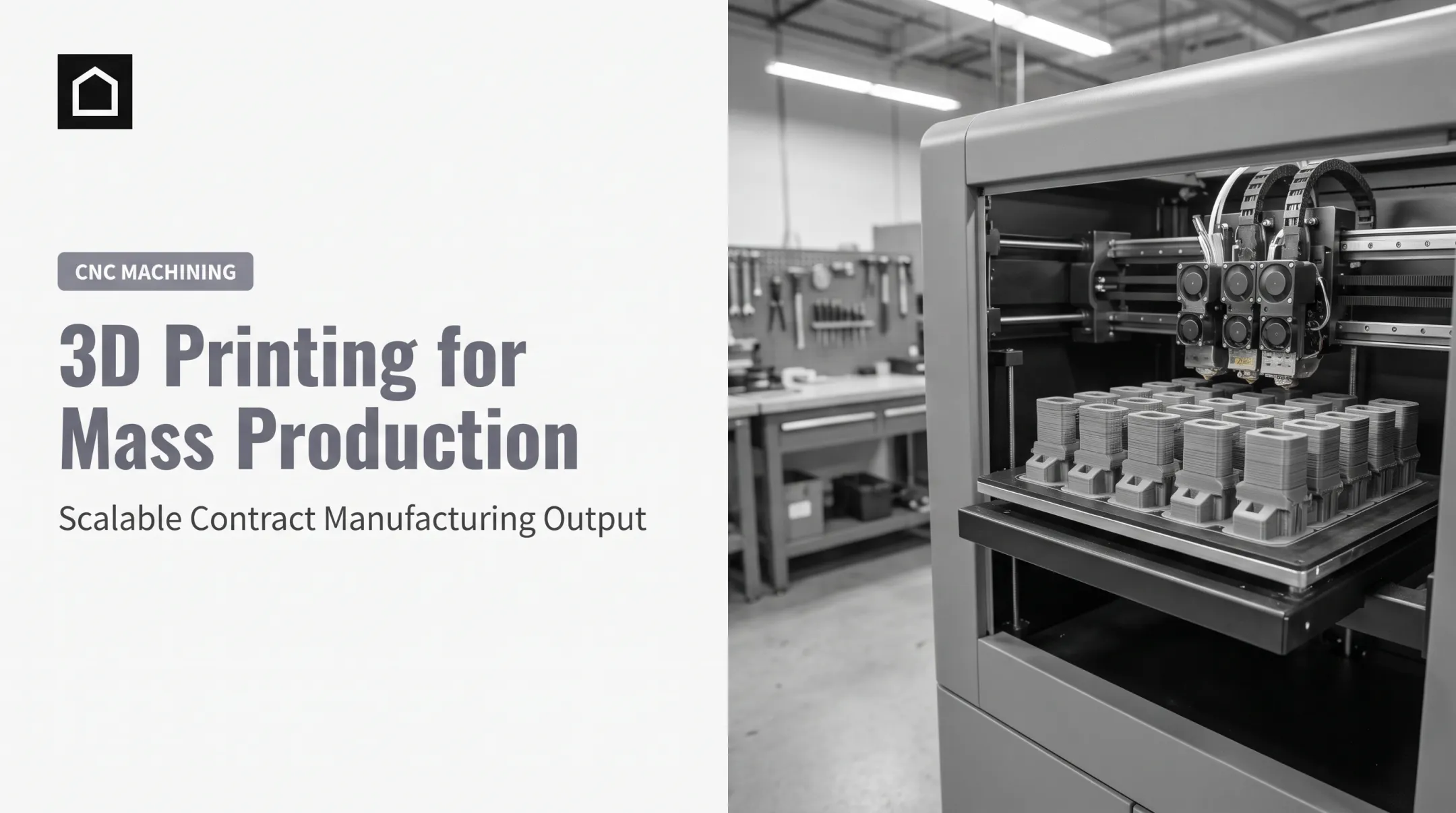
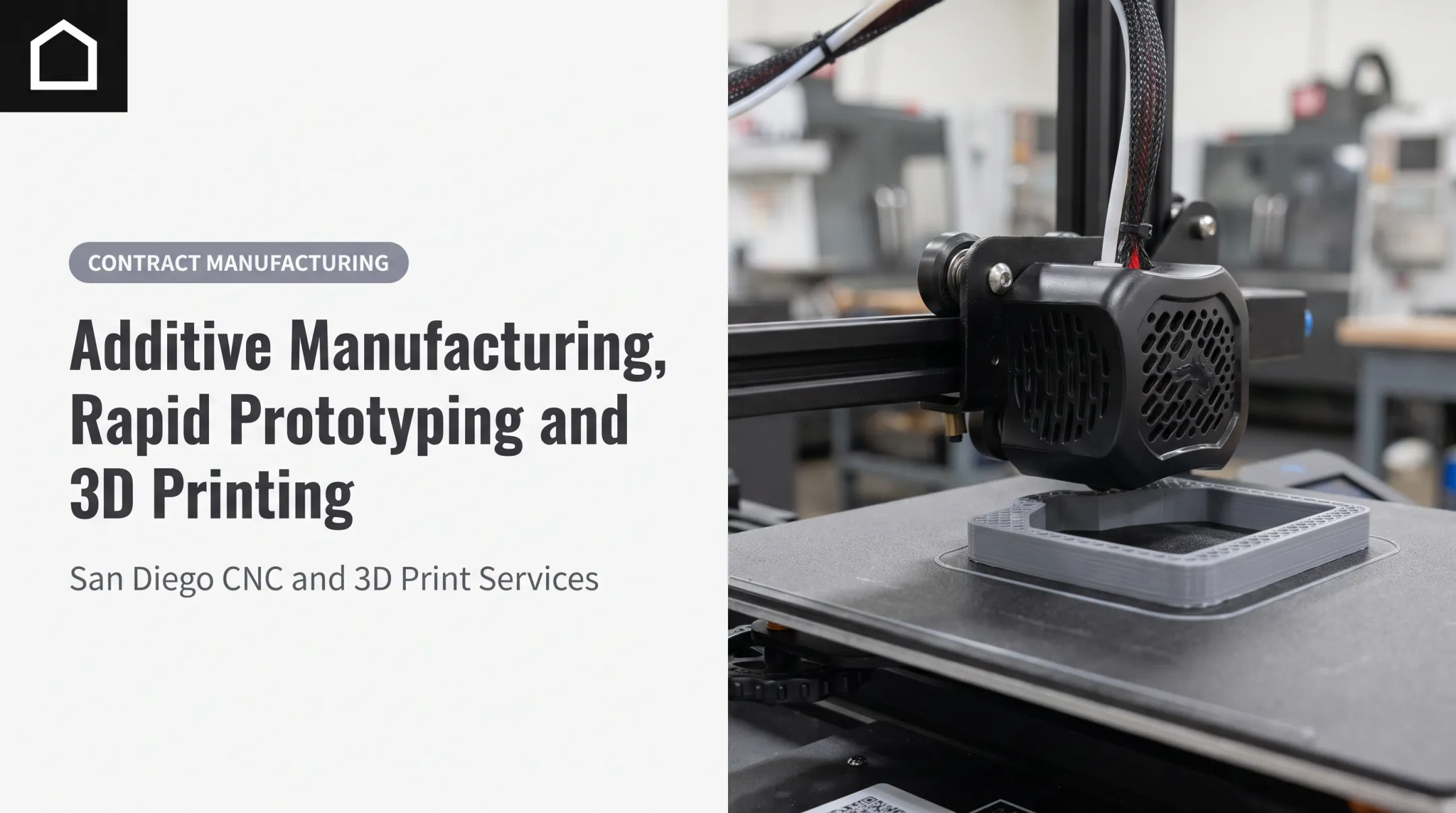
- FDM/FFF: thermoplastic extrusion for functional prototypes and jigs
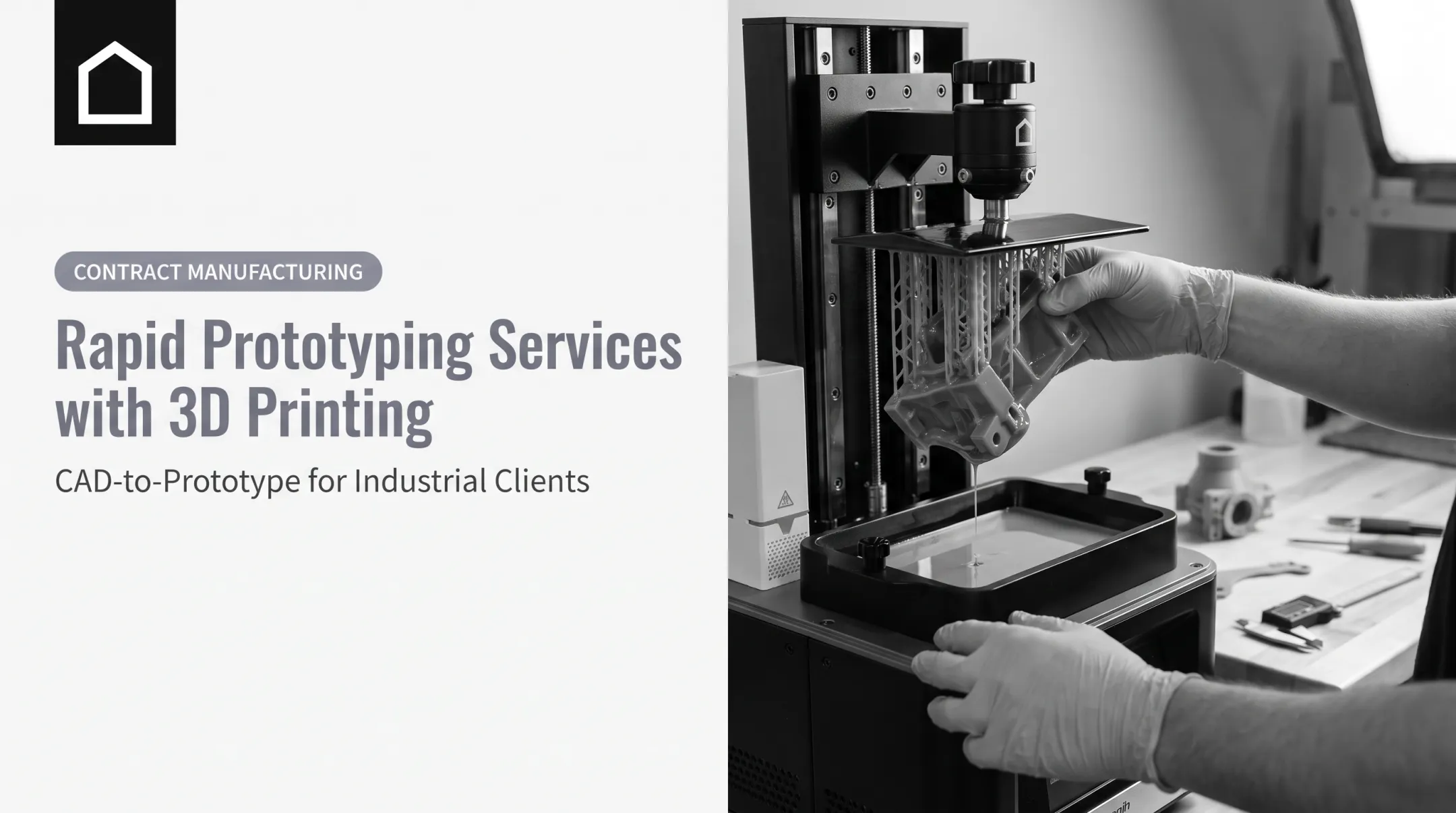
- SLA/resin printing: vat photopolymerization for smooth, detailed visual models
- SLS: laser-sintered polymer powder for durable, complex geometries
- Metal additive manufacturing: direct metal laser sintering or binder jetting for end-use metal parts
- Large-format printing: oversized components or tooling masters
- Design-for-additive-manufacturing support: engineering feedback before you print
Each process fits different use cases. A visual prototype for stakeholder review rarely needs the same process as a jig that must hold tolerance on a production line, or a dental model that must match patient anatomy precisely.
Market Context
Global additive manufacturing activity reached $21.9 billion in 2025, growing 9.1% year over year, according to ASTM's Wohlers Report 2025. That figure covers the global industry broadly. It is not a US-only outsourced-service number, so treat it as a directional signal of industry momentum rather than a benchmark for comparing individual providers.

The companies below represent different business models and strengths. Capabilities, pricing, and availability change often, so confirm current details directly with each provider before placing an order.
Top 3D Printing Services in the US
When comparing providers, weigh:
- Process and material range
- Engineering support and design feedback
- Quality systems and documentation
- Industry experience
- Turnaround time and post-processing options
- Ability to scale from prototype to production
Here's how five established US providers stack up.
Finine Design and Manufacturing
Finine Design and Manufacturing is a San Diego-based product development and manufacturing company offering CAD modeling, 3D printing, CNC machining, urethane casting, injection molding, and production painting, all from one facility.
That matters for teams that don't want to manage five vendors across a product's life cycle. A part can move from a 3D-printed prototype into urethane-cast bridge production, then into injection-molded high-volume production, without switching suppliers or re-explaining design intent at each handoff.

Finine's process selection weighs geometry, material, quantity, application, schedule, and budget rather than defaulting to whichever machine happens to be free. The company supports automotive, military and defense, consumer electronics, dental, and orthopedic product development, with particular depth in dental and orthopedic medical products.
| Attribute | Details |
|---|---|
| Location | San Diego, CA |
| Core services | CAD modeling, 3D printing, CNC machining, urethane casting, injection molding, production painting |
| Target industries | Automotive, military/defense, consumer electronics, dental, orthopedic |
| Workflow | Prototype → bridge production → full production, all in one facility |
| Best fit for | Teams wanting fewer vendor handoffs and one point of contact from concept through production |
One project contact typically stays with the job from initial CAD review through production painting, so design intent does not get lost between departments.
Protolabs
Protolabs runs a digital manufacturing platform combining 3D printing with CNC machining, injection molding, and sheet-metal fabrication under one quoting system. Customers upload CAD files to its ProDesk platform and receive an interactive quote along with manufacturability feedback, distinguishing optional design suggestions from changes the platform requires before printing.
Its 3D printing service page names FDM among its processes and lists materials including ABS, PETG, ASA, PEI, nylons, polypropylene, and TPU. Parts are advertised "in as fast as 1 day" as a best-case figure, not a guarantee.
Production-oriented work can add AS9102 first-article inspection reporting and dimensional reports when customers need documented quality.
| Attribute | Details |
|---|---|
| Availability | US-based, online quoting |
| Processes | Multiple 3D printing technologies plus CNC, injection molding, sheet metal |
| Materials | ABS, PETG, ASA, PEI, nylons, polypropylene, TPU |
| Quality options | AS9102 first-article reports, dimensional inspection |
| Best fit for | Rapid prototypes and bridge-to-production runs needing fast digital quoting |
Xometry
Xometry operates as a digital manufacturing marketplace rather than a single print shop. Customers upload a CAD file, get an AI-generated quote within seconds, and Xometry routes the job to a vetted supplier within its US and global network.
Its 3D printing capabilities page lists eight processes: SLS, FDM, SLA, direct metal laser sintering, PolyJet, Carbon DLS, metal binder jetting, and HP Multi Jet Fusion. That breadth is a genuine advantage for buyers who need multiple processes without opening multiple accounts.
The trade-off: quality and communication style can vary depending on which network supplier fulfills your order.
Xometry's Quality Assurance Lab holds ISO 9001:2015, ISO 13485:2016, and AS9100D certifications plus ITAR registration, but that does not guarantee every network supplier carries the same credentials. Ask which supplier is printing your part and what inspection level applies before you commit.
| Attribute | Details |
|---|---|
| Model | Marketplace connecting buyers to a vetted supplier network |
| Processes | SLS, FDM, SLA, DMLS, PolyJet, Carbon DLS, metal binder jetting, MJF |
| Quality options | Standard inspection, dimensional/CMM reports, AS9102 first-article reports |
| Best fit for | Buyers needing process variety and fast quoting who can specify inspection requirements upfront |
3D Systems On Demand Manufacturing
Here's a correction many buyers miss: 3D Systems sold its general-purpose On Demand Manufacturing bureau in 2021. That business now operates independently as Quickparts. If you search for 3D Systems' "On Demand" service expecting the old catalog, you'll land somewhere different.
Today, 3D Systems' manufacturing activity centers on medical devices: surgical planning, patient-matched implants and instrumentation, and contract manufacturing at two FDA-registered, ISO 13485-certified facilities.
Its Application Innovation Group helps teams move from concept to commercialization, including metal-part parameters tied to ASTM mechanical-property standards.
| Attribute | Details |
|---|---|
| Current focus | Medical device design and manufacturing, not a general-purpose bureau |
| Facilities | FDA-registered, ISO 13485-certified device facilities |
| Best fit for | Regulated medical/orthopedic programs needing design-through-manufacturing support |
| Note | General prototype and bridge-production bureau work now sits with Quickparts |
Stratasys Direct Manufacturing
Stratasys Direct is Stratasys' contract-manufacturing division, built around its own printer technology. The active catalog is polymer-heavy—FDM, PolyJet, SAF, SLS, P3 DLP, SLA, MJF, and VCJ—covering engineering thermoplastics, nylon powders, photopolymers, and flexible or full-color materials. Metal printing is not listed.
Typical process fit:
- PolyJet for aesthetic models
- FDM for functional prototypes and production parts
- SAF for higher-volume end-use components
- SLA for prototypes and large concept models
The company holds ISO 9001, ISO 13485, AS9100, and ITAR registration. Finishing options include smoothing, polishing, coatings, and painting.
| Attribute | Details |
|---|---|
| Processes | FDM, PolyJet, SAF, SLS, P3 DLP, SLA, MJF, VCJ |
| Metal printing | Not listed in current active service catalog |
| Certifications | ISO 9001, ISO 13485, AS9100, ITAR |
| Best fit for | Polymer prototypes, tooling, jigs/fixtures, and functional end-use parts |
How We Chose the Best 3D Printing Services
No single provider ranks first for every job. The right fit depends on your part's risk level, quantity, and stage in the product life cycle. Here's what actually matters when comparing options.
Process, Materials, and Design Support
Check whether the provider supports your required technology, build size, layer resolution, and dimensional tolerance. A process name alone doesn't guarantee a tolerance.
Stratasys Direct's FDM tolerance guide organizes default tolerances by material and layer thickness, not a single industry-wide number. Ask for material-specific tolerance data, not a generic spec sheet.
Technical fit only goes so far without design review. Good providers check your CAD file and flag design-for-additive-manufacturing issues before printing: wall thickness problems, unsupported overhangs, and draft angles. The strongest partners also tell you when 3D printing isn't the right process and recommend CNC machining or urethane casting instead.

Quality, Documentation, and Total Cost
The purchase specification should cover part definition, feedstock, finished-part characteristics, and acceptance criteria. This is the basis of ISO/ASTM 52901:2017, the standard governing requirements between additive manufacturing buyers and suppliers. Ask specifically about:
- Certificates of conformance
- Material traceability documentation
- First-article inspection reports
- Confidentiality and IP terms (often unpublished; confirm in writing)
Documentation protects quality; total cost decides whether the quote holds up. Compare more than the build price and factor in:
- Setup fees and material costs
- Finishing and post-processing
- Shipping and potential rework
- The cost of transitioning a successful prototype into CNC machining, urethane casting, or injection molding later
Scalability, Communication, and Common Mistakes
Can the provider support a one-off prototype today and a 500-unit bridge production run six months from now? Consistent communication and a single point of contact matter more here than most buyers expect.
Even strong vendors fall short when buyers skip due diligence. Avoid these common mistakes:
- Choosing solely on lowest quoted price
- Confusing printer specifications with actual service capability
- Overlooking post-processing costs and time
- Failing to confirm tolerances before production
- Assuming a prototype material performs the same as an end-use part
Conclusion
The right 3D printing service is the one that matches your part's technical requirements, budget, timeline, and production path.
When requesting a quote, provide complete information:
- CAD files and dimensions
- Quantity and intended use
- Material requirements and tolerances
- Finish and inspection needs
- Delivery date and confidentiality constraints
If you need CAD modeling, 3D printing, and downstream manufacturing support from one partner, Finine Design and Manufacturing provides a single point of contact from concept through production. Contact Jaime at Jaime@fi9design.com or 1.858.900-9787 to review fit for your next quote.
Frequently Asked Questions
What should I look for in a 3D printing service?
Look for process and material capability matched to your part, documented quality controls, design support, post-processing options, realistic lead times, and clear communication. Total project cost matters more than the quoted build price alone.
How much do professional 3D printing services cost?
Pricing depends on process, material, part geometry, quantity, finishing, inspection, and urgency. Request quotes from multiple providers using identical specifications so you're comparing like for like.
Which 3D printing process is best for prototypes?
It depends on the prototype's purpose. Visual models often suit SLA or PolyJet, while functional or fit-testing prototypes typically need FDM or SLS for better mechanical properties.
Can 3D printing services produce functional or end-use parts?
Yes, but material performance, layer orientation, environmental exposure, and inspection requirements must be evaluated first. Not every prototype material holds up under production conditions.
How long does a 3D printing service take?
Turnaround depends on design readiness, process, build size, material availability, finishing, and shipping. Print time alone is only part of the full quote-to-delivery timeline.
Can a 3D printing company help with CAD design and manufacturing?
Some providers do. Finine Design and Manufacturing, for example, offers CAD modeling, 3D printing, CNC machining, urethane casting, injection molding, and production painting as one integrated service.