
Common pain points hold most teams back:
- High upfront tooling costs that make budgeting hard
- Uncertainty about picking the right batch size
- Finding a manufacturing partner who can scale with you instead of forcing a vendor change mid-project
This guide covers the injection molding process, why it fits batch production, how to size your volume tier, key design considerations, and what to look for in a manufacturing partner.
Key Takeaways
- Injection molding produces consistent, repeatable parts at scale — ideal for batch orders
- Batch size (low, mid, high-volume) determines mold material, tooling cost, and lead time
- Wall thickness, draft angles, and material choice directly affect part quality and cost
- A one-stop-shop manufacturing partner cuts vendor complexity and speeds time-to-market
What Is the Production Process for Injection Molding?
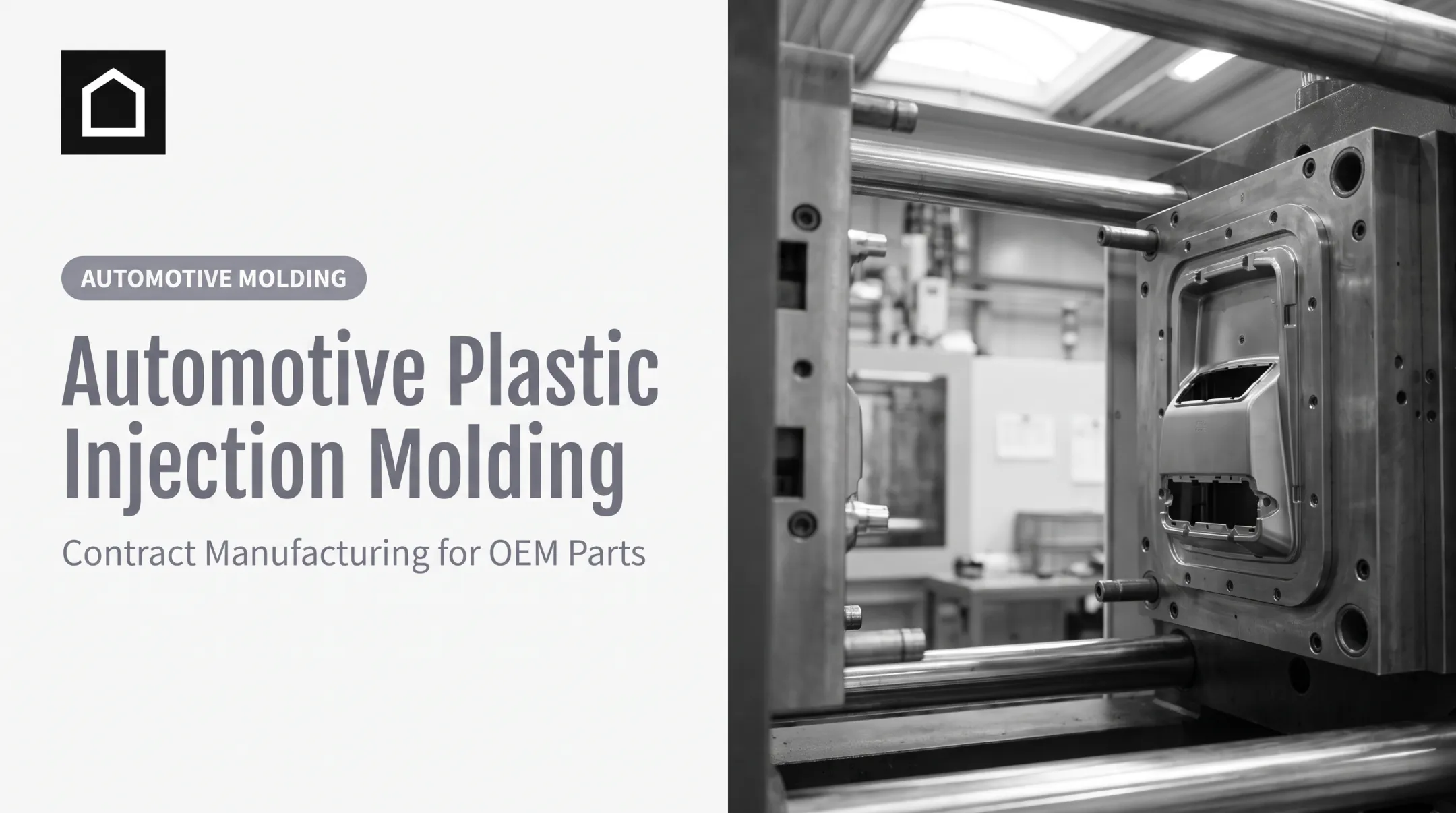
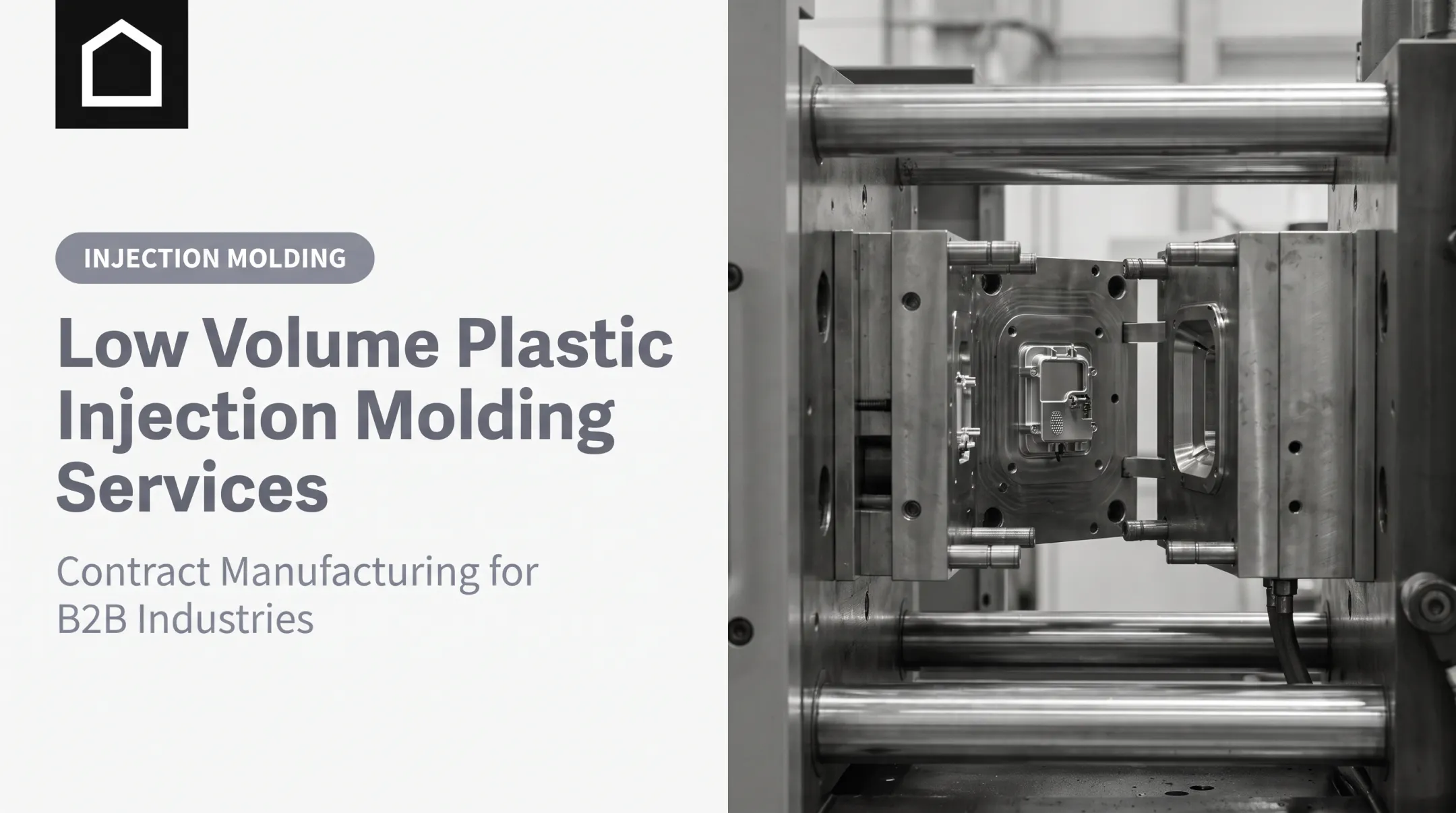
Injection molding injects molten material into a mold cavity, cools it, then ejects the finished part. That cycle repeats thousands of times per batch.
The full process breaks down into five steps:
- Mold design and fabrication — the cavity is engineered to mirror the final part's geometry, tolerances, and surface finish
- Material preparation — resin pellets are heated until molten
- Injection under pressure — molten material fills the cavity
- Cooling — the part solidifies into its final shape
- Ejection — the finished part is pushed out and the cycle restarts

According to Xometry's injection molding guide, total cycle time generally ranges from seconds to minutes depending on part geometry, material, mold design, and machine capability.
Cooling typically eats up the largest share of that cycle, which is why wall thickness and mold cooling design matter so much for throughput.
Automation Drives Repeatability
Automated cycle control is what makes injection molding well suited to batch production. Machines repeat the same clamp-inject-cool-eject sequence with minimal variation, so part number 1 and part number 5,000 come out nearly identical.
Why Injection Molding Is Well-Suited for Batch Production
Uniform, mold-based production means every part in a batch matches in dimension and finish. That consistency matters most in regulated industries like devices or automotive, where dimensional drift isn't an option.
Economies of scale kick in fast. Per-unit cost drops as volume increases because the upfront mold design and machining costs get spread across more parts.
Protolabs notes that a single tool can produce up to 25,000 parts or more. Multi-cavity molds (two, four, or eight cavities) push piece price down further at higher volumes.
Other advantages stack up:
- Cuts post-processing labor as parts emerge near-finished
- Supports commodity thermoplastics through engineering-grade resins across industries
- Lowers QC burden through automation and precise molds that reduce rework and scrap
Protolabs reports that its process delivers consistent parts from the first run through the hundredth. That repeatability is what makes batch molding reliable at scale.
Choosing the Right Batch Volume: Low, Mid, and High-Volume Molding
Matching batch size to mold type controls both cost and lead time. Here's how the tiers typically break down, based on published supplier examples:
| Tier | Volume | Tooling | Example Cost | Lead Time |
|---|---|---|---|---|
| Low | Under 500 units | 3D printed or aluminum | ~$100 mold, ~$4/part | 1-3 days |
| Mid | 500-10,000 units | Aluminum | ~$3,000 mold, ~$2.60/part | 3-4 weeks |
| High | 5,000+ units | Steel | ~$20,000+ mold, ~$1.70/part | 4-8 weeks |

Figures sourced from Formlabs' injection molding cost guide; actual quotes vary by geometry, cavity count, and resin.
Mid and high ranges overlap on purpose: between roughly 5,000 and 10,000 units, aluminum or steel can both make sense depending on part complexity and expected lifetime volume.
Low-Volume Molding
3D-printed molds are cheap and fast, but they wear out quickly. Printed molds are often limited to around 100 shots. This tier works best for pilot runs and market testing, not committed production.
Mid-Volume Molding
Aluminum tooling balances cost and durability. It can support many thousands of shots, making it the go-to for short-run batch orders where you need more than a pilot but aren't ready for full-scale commitment.
High-Volume Molding
Steel tooling costs more upfront (~$20,000–$50,000+) but lasts millions of cycles. As volumes move from several thousand into the tens of thousands—and especially toward 100,000+ units—the lower per-part cost justifies the investment.
Match batch size to your goal. Testing demand? Start with low-volume tooling. Confirmed repeat orders? Move to steel.
Design and Material Considerations for Batch Runs
Small design decisions compound across thousands of units. Get them wrong, and you'll see the same defect on every single part in the batch.
Wall Thickness
Consistent wall thickness prevents sink marks and warping, not just on one part, but across the entire run. Industry guidelines recommend keeping ribs and bosses at roughly 40-60% of the adjacent wall thickness to avoid sink. Typical ranges:
- ABS: 0.045–0.140 in.
- Polycarbonate: 0.040–0.150 in.
- Polypropylene: 0.035–0.150 in.

Draft Angles
Draft angles let parts release cleanly from the mold, cycle after cycle. A common starting point is 2 degrees for most surfaces. Vertical faces can work with as little as 0.5 degrees, while textured or shutoff surfaces need 3 degrees or more.
Material Trade-Offs
- Commodity resins (polypropylene and similar): best for cost-sensitive batches, packaging, and consumer parts
- Engineering resins (polycarbonate, ABS): better durability for automotive or defense applications
Minor design tweaks are easier to make between batch runs with injection molding than with many other methods. That gives you room to iterate on a product without starting from scratch.
Partnering With a Full-Service Manufacturer for Batch Production
Running batch production across multiple vendors (one for CAD, another for tooling, a third for finishing) adds delays and communication gaps at every handoff. A single provider covering the whole chain removes that friction.
Finine Design and Manufacturing, based in San Diego, CA, covers that full path under one roof:
- CAD modeling and design refinement
- 3D printing and CNC machining
- Urethane casting and injection molding
- Production painting
A product can move from concept sketch to finished, painted part without switching companies mid-project.
Finine's team works across regulated and demanding industries, including:
- Dental and orthopedic products
- Automotive
- Military and defense
- Consumer electronics
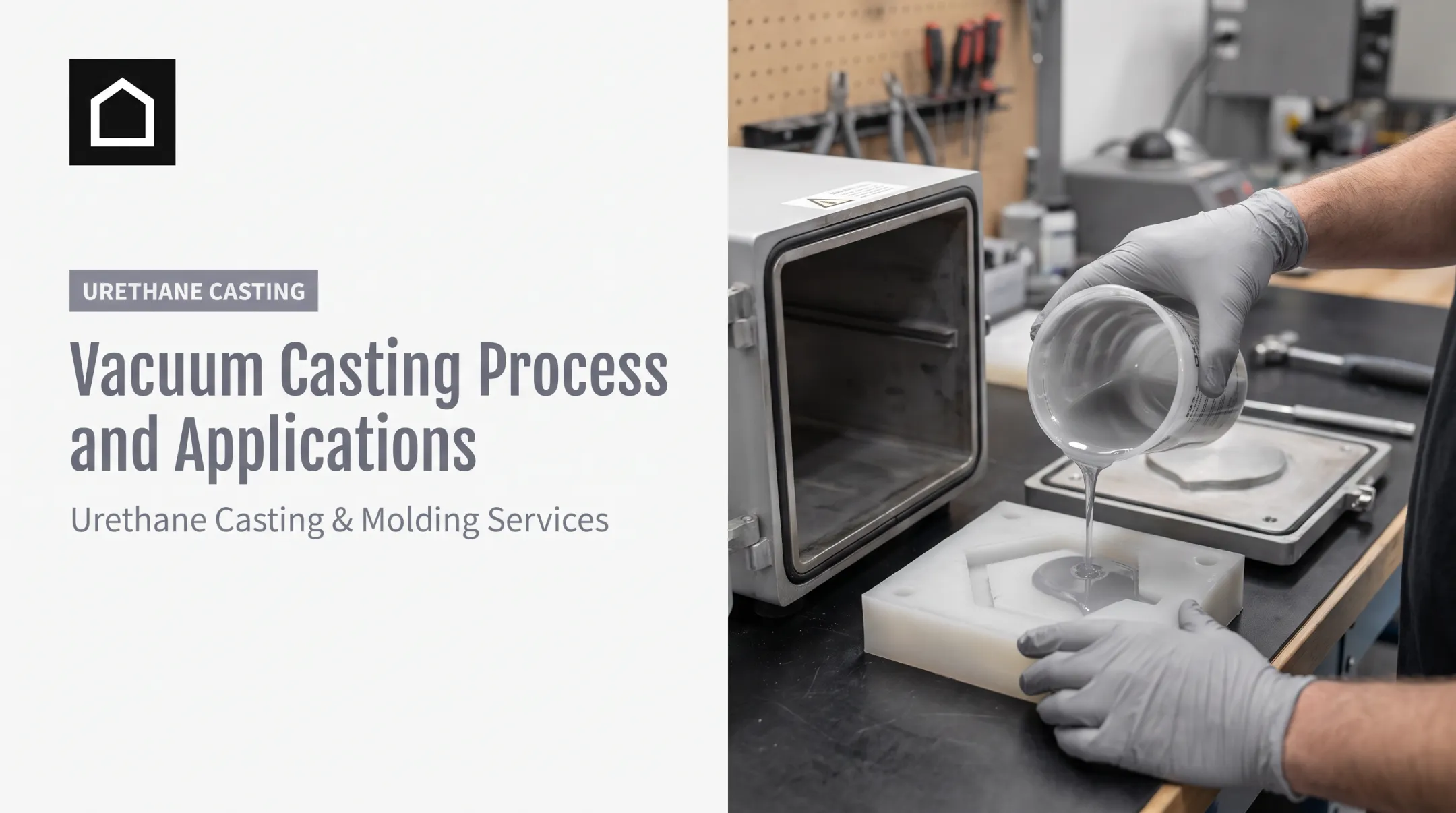
For batch orders specifically, urethane casting bridges the gap between prototyping and full injection molding. It suits low-to-medium volume runs before you commit to production tooling. As demand grows, that same partner can move you into higher-quantity injection molding and align tooling and material choices with your production requirements.
Working with one partner as your volume scales means you're not re-explaining specs or requalifying a new vendor every time your order size changes.
Frequently Asked Questions
What is the production process for injection molding?
Injection molding involves designing the mold, melting and injecting material into the cavity, cooling the part, and ejecting it. This cycle repeats continuously to produce identical parts in volume.
What is the minimum order quantity for injection molding?
MOQs vary by mold type. With 3D-printed or aluminum tools, runs can start around 50–500 units; steel production molds usually suit higher volumes.
How much does an injection mold cost?
Mold costs range widely: from around $100 for a simple 3D-printed mold to $50,000 or more for a complex steel tool. Cost depends on material, cavity count, and part geometry.
Is injection molding cost-effective for small batch production?
Yes, especially with aluminum or 3D-printed molds designed for smaller runs. These options keep upfront tooling costs low while still delivering consistent parts.
What materials work best for batch production parts?
Common choices include ABS for toughness and finish, polypropylene for chemical resistance and low cost, and polycarbonate for strength and clarity. Selection depends on your part's requirements.
How long does it take to get parts from an injection mold?
Lead times range from a few days with 3D-printed molds to 4-8 weeks with steel tooling, depending on volume and mold complexity.