
The challenge? Finding a manufacturing partner who understands both the engineering precision and the regulatory weight behind every part. A tolerance miss on an industrial bracket is an inconvenience. A tolerance miss on a surgical instrument handle is a liability.
This guide covers how medical injection molding works, the materials and molding types used most often, what tooling costs and mold lifespan actually look like, and how to choose a manufacturing partner that won't slow you down.
Key Takeaways
- Injection molding delivers precision and repeatability at volumes standard prototyping can't match
- Material choice (PP, PC, PE, PEEK, silicone) depends on sterilization method, body-contact duration, and mechanical load
- Mold costs range widely — from roughly $15,000 for simple tools to $500,000+ for complex, high-cavity tooling
- A single-source partner across design, tooling, and molding cuts vendor handoffs and speeds time-to-market
What Is Medical Plastic Injection Molding?
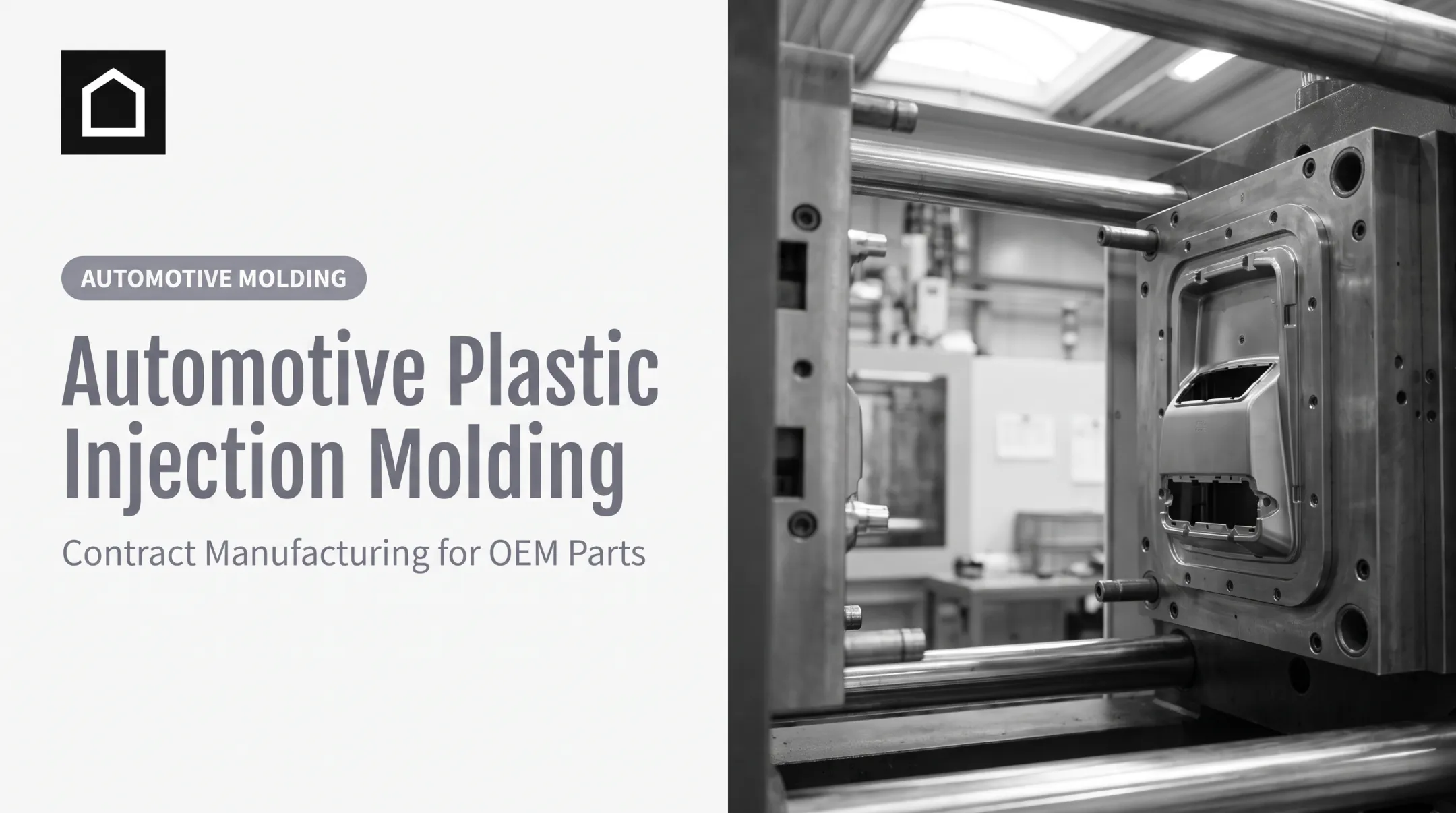
Medical plastic injection molding injects molten medical-grade thermoplastic into a precision mold cavity, where it cools and solidifies into a finished part. The physics match industrial molding: melt, inject, cool, eject. Medical work diverges in the controls wrapped around that cycle.
Molders add controlled material sourcing, documented process validation, inspection protocols, and traceability records that industrial buyers rarely require. For dental, orthopedic, and diagnostic components, this matters because tolerances are tighter and failure consequences are higher.
The process typically starts long before the mold is cut:
- CAD design: model and refine part geometry for manufacturability
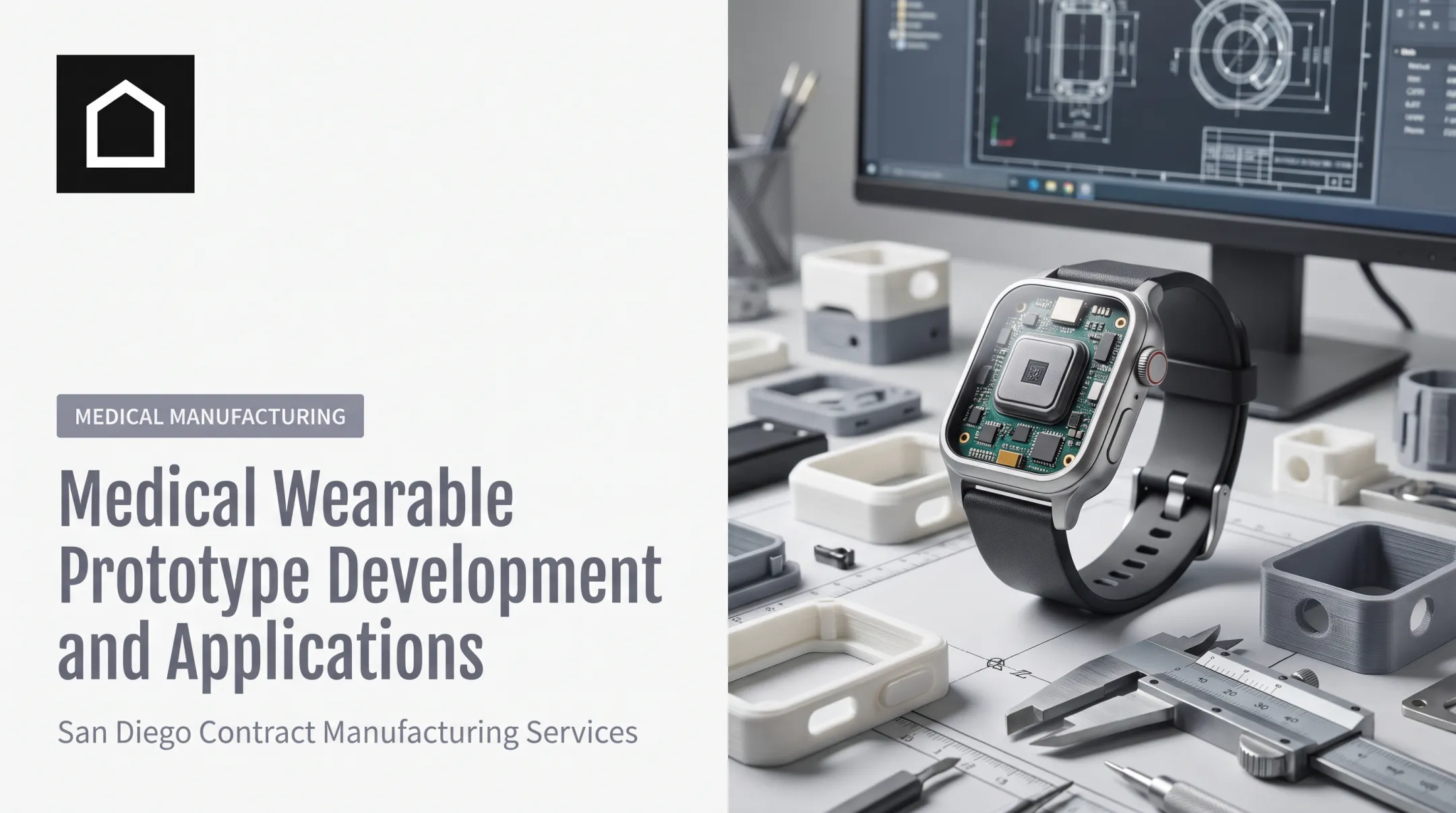
- Prototyping: test early iterations via 3D printing or low-volume casting
- Tooling: build a production-grade mold once the design is locked
- Production: run the mold at volume with quality checks built in

Skipping the prototyping stage is one of the most common (and costly) mistakes medical device companies make. Committing straight to hard tooling before validating fit and function usually means expensive mold rework later.
What Are Injection Molded Medical Devices?
Medical injection molding shows up across nearly every corner of the medical device world. Common examples include:
- Surgical instrument handles and housings
- Diagnostic equipment casings
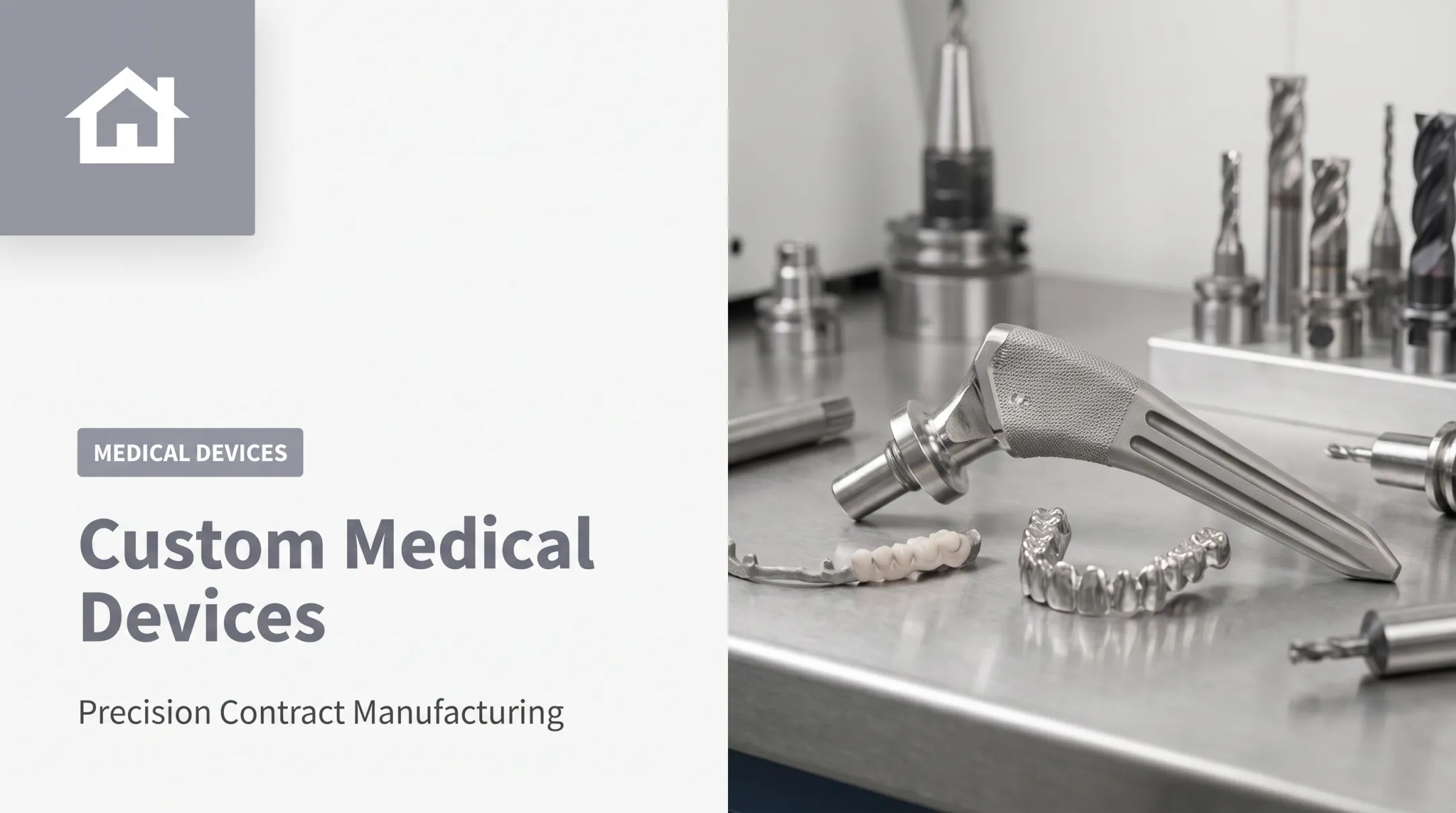
- Orthopedic implant components and surgical instrumentation
- Dental trays, models, and clamps
- Drug delivery medical device parts, such as connectors and housings
One documented case involved a tendon-and-ligament repair medical device requiring 13 plastic components across five separate mold tools, produced in a controlled cleanroom environment (Crescent Industries). That kind of multi-tool complexity is typical for orthopedic surgical systems, not the exception.
The 5 Steps of the Medical Injection Molding Process
Medical molding follows the same fundamental sequence as any injection molding job, with added scrutiny at each stage.
- Clamping: The two mold halves are pressed together under controlled pressure to prevent flash or leakage during injection.
- Injection: Molten plastic is forced into the mold cavity under precise pressure and temperature control.
- Cooling: The part solidifies inside the mold. Cooling time and uniformity directly affect dimensional accuracy.
- Ejection: Once cooled to the correct temperature, ejector pins release the finished part.
- Post-processing and inspection: Parts are inspected, trimmed, and often packaged in a controlled environment before shipment.

According to Texas Injection Molding's process breakdown, packing and dwelling pressure is added during cooling to compensate for volumetric shrinkage. That control is critical for tight-tolerance geometries: without it, sink marks or warping can fail dimensional inspection.
For medical programs, this fifth step often includes documented inspection records and, depending on the medical device, cleanroom packaging before the part ever leaves the facility.
Types of Injection Molding Used in Medical Manufacturing
Not every part is molded the same way. The right process depends on part size, material, and function.
- Thin-wall molding: Produces lightweight, compact housings for diagnostic medical devices and handheld equipment. Some liquid silicone applications achieve wall thicknesses under 0.10 mm (Trelleborg).
- Insert molding: Encapsulates a pre-placed metal or plastic component during the molding cycle, commonly used for needle hubs and connector assemblies.
- Overmolding: Adds a second material layer over a substrate, giving surgical tool handles an ergonomic, non-slip grip.
- Liquid silicone molding (LSR): Mixes two liquid components that cure inside a heated mold in seconds, producing flexible, biocompatible parts like tubing, seals, and gaskets.
- Micro-molding: Handles extremely small, high-precision components. Some suppliers report positional accuracy as tight as ±1.5 microns, suited for catheter tips and microneedles (Nissha).

Most dental and orthopedic programs use a mix of these — rigid overmolded handles paired with insert-molded metal components, for instance.
Choosing the Best Plastic Material for Medical Devices
Material selection isn't a preference call. Three factors drive the decision:
- Sterilization method the medical device must survive
- How long the part contacts the body
- Mechanical stress the part will face in use
| Material | Typical Use |
|---|---|
| Polypropylene (PP) | Multi-use, repeatedly sterilized medical devices; syringes, connectors |
| Polycarbonate (PC) | Clear or translucent housings, tubing, small instruments |
| Polyethylene (PE) | Flexible tubing, containers, sterile packaging |
| PEEK | High-strength orthopedic implants and prostheses |
Biocompatibility isn't optional. Materials intended for body contact must be evaluated against ISO 10993 and, where applicable, USP <88> biological reactivity testing.
FDA's 2023 guidance on ISO 10993-1 uses a risk-based process to decide whether more testing is needed based on contact type and duration (FDA). That is not a blanket approval for an entire polymer family. Always confirm the exact resin grade and its current certification.
Dental and orthopedic medical products often need extra wear resistance for repeated mechanical loading. Finine Design and Manufacturing applies dental and orthopedic development experience when matching resin grades to those demands.
Injection Molding Machines, Costs, and Mold Lifespan
Machine Types
Three machine categories dominate production. For medical device work, the choice affects cleanroom fit, shot-to-shot repeatability, and energy use on validated lines:
- Hydraulic — Reliable and strong, but less energy-efficient; consumes power even while idle
- Electric — Servo-driven for precise, repeatable motion and cleaner operation; one comparison found electric processes used roughly half the energy of hydraulic equivalents (Rodon Group)
- Hybrid — Combines hydraulic force with electric precision for a middle-ground option
What Tooling Costs
Mold pricing swings widely based on complexity, cavity count, and steel selection. Industry benchmarks range from about $15,000 for a simple single-cavity mold to over $500,000 for large, complex, high-cavity tooling (Crescent Industries).
U.S.-built tooling typically runs 20–40% higher than offshore alternatives. Many companies accept that premium for tighter oversight and faster communication.
Mold Lifespan
Expect anywhere from 1,000 to 5,000 cycles for low-volume prototype tooling, up to over a million cycles for hardened, high-volume production molds. Resin abrasiveness, cavity count, and maintenance schedule all affect how long a tool lasts.

Locking manufacturability early—design through production with one accountable partner—cuts redesign loops and expensive tooling revisions before volume ramps.
Why Partner With an End-to-End Manufacturer for Medical Injection Molding
Juggling separate vendors for CAD modeling, prototyping, tooling, and molding creates friction. Every handoff is a chance for miscommunication, delay, or a design detail getting lost in translation.
Finine Design and Manufacturing offers CAD modeling and design refinement, 3D printing, CNC machining, urethane casting, injection molding, and production painting under one roof at its San Diego facility.
That setup matters for dental and orthopedic medical device work in particular—one of Finine's specialized medical product development areas, with additional experience across automotive, military, and consumer electronics.
Benefits of a single-source approach:
- One point of contact across the entire development timeline
- Faster iteration between prototype and tooling decisions
- Manufacturing strategy matched to your actual volume and budget, not a one-size-fits-all quote
For medical device companies moving from concept to production, one San Diego-based partner across design, prototyping, tooling, and molding cuts vendor handoffs and the months often lost to coordination.
Frequently Asked Questions
What is medical injection molding?
It's the process of injecting molten medical-grade plastic into a precision mold to produce medical components. It combines standard injection molding physics with added controls for material traceability, inspection, and process validation.
What are injection molded medical devices?
Examples include surgical instrument handles, diagnostic equipment housings, orthopedic implant components, dental trays and clamps, and drug delivery medical device parts.
What are the 5 steps of medical injection molding?
Clamping, injection, cooling, ejection, and post-processing/inspection. Medical production typically adds documented quality checks and sometimes cleanroom packaging at that final stage.
How much does a plastic injection mold cost?
Costs vary widely, from roughly $15,000 for simple tooling to over $500,000 for complex, high-cavity molds. Complexity, material, and location all affect the final quote. Get a custom estimate for your specific part.
How long does an injection mold last?
Low-volume prototype molds may last 1,000-5,000 cycles, while hardened production tools can exceed a million cycles. Steel choice, resin abrasiveness, and maintenance all factor into actual lifespan.
What is the best plastic for medical devices?
There's no single "best" material; it depends on the application. PP suits repeatedly sterilized medical devices, PC works well for clear housings, and PEEK handles high-strength orthopedic implants.