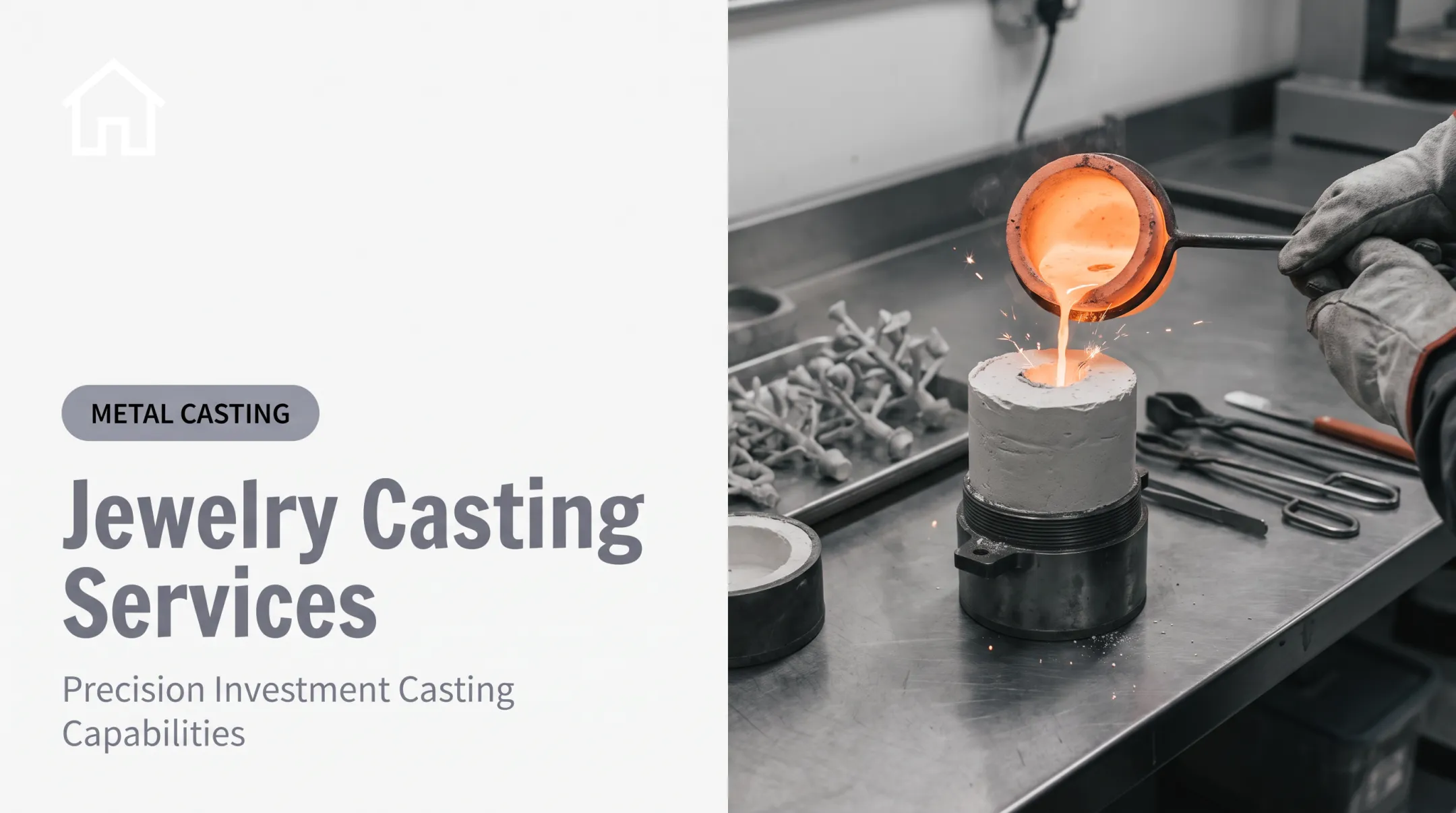

This guide covers metal vacuum investment casting equipment only, not vacuum casting of polyurethane or other plastics used in prototyping work.
We'll walk through how these machines operate, what separates vacuum melting from vacuum pouring, which components and specifications are worth scrutinizing, where the process actually pays off, and how to decide whether buying equipment makes sense versus working with an outside foundry.
Key Takeaways
- These machines melt, hold, and pour metal in a controlled vacuum or low-pressure environment
- Lower oxygen and gas exposure still requires sound shell design, correct metallurgy, and inspection
- Machine selection hinges on alloy chemistry, melt capacity, part geometry, and production volume
- Buy equipment when vacuum processing is recurring, strategic, and hard to outsource affordably
What Is a Vacuum Investment Casting Machine?
Traditional investment casting (the lost-wax process) builds a ceramic shell around a wax pattern, burns out the wax, then pours molten metal into the cavity in open air.
A vacuum investment casting machine adds controlled-atmosphere hardware to one or more stages of that sequence. The metal never fully contacts ambient air during melting, pouring, or both.
Three Ways Vacuum Enters the Process
Equipment suppliers typically describe three distinct functions, and they aren't interchangeable:
- Vacuum melting — melts the alloy inside an evacuated chamber to limit gas pickup and unwanted reactions
- Vacuum pouring — transfers molten metal into the preheated ceramic shell while the chamber stays under vacuum
- Mold evacuation or vacuum-assisted filling — uses a pressure differential to help metal reach thin sections and fine detail
ASM International documents vacuum induction melting (VIM) as a refining method that removes trace elements and degasses nitrogen and hydrogen. Mold evacuation is sometimes paired with inert gas pressure over the melt to drive filling.
Melting under vacuum doesn't automatically mean the mold is filled under vacuum too. These are separate engineering decisions, and the right machine depends on which problem you're solving.
Single-Chamber vs. Dual-Chamber Systems
Some furnaces handle melting and pouring in one chamber. Others split those steps across two chambers.
Consarc's vacuum precision investment casting (VPIC) design, for example, separates melting and mold chambers with an isolation valve. The mold chamber evacuates before the valve opens and the mold moves toward the melt. Dual-chamber layouts let operators load and unload molds without breaking the melt furnace's atmosphere—critical when every heat has to stay clean.
What Vacuum Can't Fix
Vacuum processing reduces oxidation and gas-related porosity. It does not guarantee a defect-free casting. Final quality still depends on:
- Shell permeability and strength
- Wax pattern and gating design
- Pouring temperature and solidification control
- Alloy selection appropriate to the application
- Post-cast inspection, including radiographic testing where required
| Factor | Air-Melt Equipment | Vacuum-Capable Equipment |
|---|---|---|
| Atmosphere | Open air during melt and pour | Evacuated chamber for melt, pour, or both |
| Alloy suitability | Stable, non-reactive alloys | Reactive and high-value alloys (titanium, superalloys) |
| Defect risk | Higher oxidation, gas porosity | Lower gas pickup; still shell- and process-dependent |
| Equipment complexity | Simpler, fewer subsystems | Chambers, pumps, valves, interlocks, atmosphere control |
| Operating cost | Lower | Higher (energy, maintenance, consumables) |
| Typical use | General industrial castings | Aerospace, medical, defense-grade components |
How Does Vacuum Investment Casting Work?
The upstream steps look familiar to anyone who knows lost-wax casting: build or print a wax pattern, assemble patterns onto a tree, apply the ceramic shell, dewax, and preheat the mold. Vacuum changes what happens from that point forward.
Charge Preparation and Chamber Evacuation
Operators load a measured, pre-alloyed charge into a crucible compatible with that alloy chemistry, checking for contamination and maintaining traceability before the melt starts. Once sealed, pumps remove air and moisture from the chamber.
Required vacuum levels vary by pump type and process stage. A 2020 Investment Casting Institute technical paper cites typical ranges during melting:
- Mechanical roughing pumps: around 10⁻² mbar
- Oil-vapor boosters: around 10⁻³ mbar
- Diffusion pumps: 10⁻⁴ to 10⁻⁵ mbar
These ranges reflect pump design, not guarantees for every furnace. That same paper argues a dynamic leak-up-rate test matters more than a single vacuum-level reading, since slow leaks can undermine the whole process even when the gauge looks fine.
Inert gas, usually argon, may be introduced afterward for backfilling, stirring, transfer, or pressure control. Exactly when and how much depends on the specific machine and alloy. It is not a one-size-fits-all backfill step.
Melting, Pouring, and Solidification
Induction coils heat the charge to pouring temperature while operators monitor melt condition and temperature. From there, the method of getting metal into the mold varies by machine design:
- Tilt-and-translate pouring: the induction coil and crucible tilt to pour directly into a positioned mold chamber
- Vacuum-assisted or countergravity filling: mold and melt chambers are evacuated, then inert gas pressure over the melt drives metal upward through a fill pipe
- Gravity or bottom pouring: less commonly documented for vacuum systems; confirm with the specific equipment supplier before assuming either is supported
After solidification, the chamber returns to atmospheric pressure, the shell is removed, and the casting moves to finishing and inspection, including non-destructive testing for critical applications.
Process note: leaks, outgassing, inaccurate temperature readings, weak shell integrity, or incorrect pressure control can all compromise a casting even when vacuum is used correctly elsewhere in the cycle.

Machine Components and Specifications to Evaluate
A vacuum investment casting furnace carries more hardware than an air-melt setup. Core components include:
- Vacuum chamber and induction coil
- Crucible and ceramic-shell fixture
- Vacuum pumps, valves, and pressure sensors
- Thermocouples or pyrometers, plus the control system
- Cooling circuit
Specifications Worth Requesting From Suppliers
Published equipment data shows how widely capacity varies by model.
ALD's VIM-IC line lists maximum nickel-base cast weights from roughly 5 kg to 500 kg across variants, with typical operating vacuum between 0.05 and 5 Pa.
Consarc's vertical VPIC furnaces list casting weights from 25 kg to 200 kg, mold diameters from 550 mm to 1,000 mm, and melting power from 125 kW to 325 kW.

That spread is why generic brochure specs fall short. Ask suppliers directly for:
- Usable melt capacity and charge size for your alloy and part family
- Supported alloy families and compatible crucible materials
- Achievable vacuum range, leak rate, evacuation time, temperature range, and chamber dimensions
- Electrical, cooling-water, ventilation, gas, floor-space, and foundation requirements
Maximum rated capacity and practical production capacity aren't the same thing — build in margin rather than buying to the brochure number.
Safety and Compliance
Vacuum furnaces introduce high-temperature, electromagnetic, and gas-handling hazards. US-based operations should address:
- Lockout/tagout procedures under OSHA 1910.147 for energy control during servicing
- PPE hazard assessments (1910.132) and eye/face protection (1910.133) for molten-metal exposure
- Electrical safe-work practices (1910.333) around induction systems
- Operator training and documented preventive maintenance schedules
Benefits and Applications of Vacuum Investment Casting
Vacuum processing reduces gas pickup, limits oxidation, and lowers the risk of gas-related porosity and inclusions. It also improves repeatability and protects reactive alloying elements that would otherwise burn off or react in open air.
None of this promises a defect-free casting. It narrows the risk window when shell design, gating, and thermal control are handled correctly too.
Vacuum-assisted filling specifically helps metal reach thin walls, fine details, and sharp transitions that would otherwise freeze prematurely or trap gas pockets.
Which Alloys Benefit Most
- Nickel-based superalloys: SAE AMS5399 calls for vacuum-melted and vacuum-cast nickel-base investment castings; not every nickel alloy needs this by default
- Titanium and titanium-aluminide alloys: High-purity titanium reacts with oxygen and nitrogen, so vacuum melting is common for complex or thin-wall parts
- Cobalt-based alloys: Used in countergravity vacuum casting with nickel superalloys, though not every cobalt composition requires it
- Stainless and aluminum alloys: Vacuum-capable equipment can run these, but vacuum adds less value when the alloy already casts well in air
Where the Process Earns Its Keep
Vacuum processing fits best where performance, corrosion resistance, weight, or regulatory compliance outweigh added cost:
- Aerospace and defense structural or propulsion hardware
- Energy turbine hot-section components
- Medical implants and other failure-critical parts
Automotive and consumer work rarely justifies vacuum unless a specific alloy or certification demands it.
Decision checkpoint: Vacuum earns its cost when alloy reactivity, part criticality, wall thickness, or defect sensitivity outweigh capital and operating expense. If a part casts reliably in air, vacuum adds cost without adding value.
The tradeoffs are real:
- Higher capital and operating costs
- More maintenance and slower setup cycles
- Operators who need specialized training
For regulated or failure-critical parts, qualification requirements add further time and expense before production begins.
How to Choose a Vacuum Investment Casting Machine
Start with the part, not the equipment brochure. Define these requirements before you compare machines:
- Alloy chemistry and any customer or industry specs
- Part envelope, wall thickness, and casting weight
- Annual volume, target yield, and dimensional requirements
Match Configuration to Requirements
- Decide the function needed — vacuum melting, vacuum pouring, mold evacuation, or a dual-chamber arrangement
- Size the machine to real production needs — chamber size, crucible capacity, temperature range, and pump performance should match current and near-term volume, not just peak capacity
- Confirm shell and gating compatibility — verify the machine can handle your ceramic shells, gating arrangements, inserts, and transfer method
Calculate Total Cost of Ownership
Purchase price is only one line item. Factor in:
- Shipping, installation, and facility upgrades
- Electrical and cooling infrastructure
- Inert gases, crucibles, and consumables
- Pump maintenance and calibration
- Training, tooling, and inspection
- Labor and planned downtime
Buy or Outsource?
Buying equipment generally makes sense when:
- Demand is steady and predictable
- In-house process knowledge already exists
- Utilization will stay high enough to justify the investment
- Schedule control or IP protection matters strategically
Outsourcing tends to fit better for occasional production runs, uncertain demand, highly specialized alloys, or heavily qualification-dependent parts where the capital risk is hard to justify.

Before you commit to specialized casting equipment, validate the design itself. At Finine Design and Manufacturing, we help clients use CAD modeling, 3D printing, and CNC machining to prove geometry, fit, and function before tooling or casting is locked in. That step catches issues early—when they are still cheap to fix—rather than after a vacuum furnace purchase.
Supplier Due-Diligence Checklist
- Application references and sample parts matching your alloy and geometry
- Process-development and installation support
- Warranty terms and spare-parts availability
- Service response times and software/controls documentation
- Qualification assistance for regulated applications
Request a process trial or engineering review. Compare documented porosity, chemistry, dimensional capability, and yield—not headline specifications alone.
Frequently Asked Questions
Is vacuum investment casting expensive?
It generally costs more than air-melt casting due to specialized equipment, energy use, maintenance, and atmosphere control. The exact cost depends on alloy, part complexity, and qualification requirements rather than a fixed price.
How does vacuum investment casting work?
The process builds and preheats a ceramic shell, then evacuates the melt and/or mold chamber. After induction melting, metal is poured or vacuum-filled into the mold, then solidified, shaken out, finished, and inspected.
What is a vacuum investment casting machine?
A vacuum investment casting machine melts and/or pours metal under vacuum or a controlled atmosphere. That limits oxygen and gas contamination and improves casting integrity for sensitive alloys.
What metals can be cast in a vacuum investment casting machine?
Titanium alloys and nickel- or cobalt-based superalloys are commonly processed this way. Actual capability depends on furnace design, crucible compatibility, and supplier-validated temperature range.
What is the difference between vacuum melting and air melting?
Vacuum melting limits oxidation and gas pickup for reactive alloys but adds equipment complexity and cost. Air melting is simpler and cheaper, suited to alloys that don't react significantly with atmosphere.
Should I buy a vacuum investment casting machine or outsource casting?
Buying fits steady, high-volume demand when you already have process expertise and available capital. Outsourcing suits occasional runs, specialized alloys, or heavily regulated parts where qualification risk outweighs owning the equipment.