
Manufacturers face real pressure: faster iteration cycles, lower tooling costs, and geometries that CNC machining or injection molding simply can't produce economically. Traditional processes require expensive tooling before you make part one.
This article covers how 3D printing actually works, the main technologies manufacturers rely on, where it fits into a production workflow, and how to decide between buying a printer or working with a partner like Finine Design and Manufacturing.
Key Takeaways
- 3D printing builds parts layer by layer, unlike subtractive (CNC) or formative (injection molding) methods
- Covers tooling, jigs, fixtures, and low-to-mid volume production—not just prototypes
- Match technology (SLA, SLS, FDM, metal) to strength, finish, and volume needs
- Pairing 3D printing with CNC, casting, and molding creates the fastest path from concept to finished product
What Is 3D Printing and How Does It Fit Into Manufacturing?
The ISO/ASTM 52900 standard defines additive manufacturing (AM) as joining materials from 3D-model data, usually layer by layer, as opposed to subtractive methods. That definition separates manufacturing into three clear categories:
- Additive — builds geometry by adding material layer by layer
- Subtractive (CNC machining) — removes material from stock to reach final geometry
- Formative (injection molding) — shapes material with force, heat, or a mold
In production environments, 3D printing supports rapid tooling, jigs and fixtures, bridge production, and mass customization—not prototypes alone.
Step-by-Step: How the Process Works
Every industrial 3D printing job follows the same basic sequence:
- Design and slice — Convert a CAD model into layer-by-layer instructions the printer can follow
- Print — The printer builds the part layer by layer, using the chosen material and technology
- Post-process — Remove supports, finish surfaces, and inspect or heat-treat parts as needed
In industrial workflows, printed parts often aren't the end product. They become molds, patterns, or investment casting templates that feed a downstream process for the final part.
Types of 3D Printing Technologies Used in Manufacturing
Not all 3D printing is the same. Choosing the right technology means matching it to your strength, finish, and volume requirements.
| Technology | Best for | Trade-off |
|---|---|---|
| FDM/FFF | Low-cost concept models, fixtures | Anisotropic parts; layer adhesion can be inconsistent |
| SLA/resin | High-detail prototypes, molds, dental models | Limited resin durability for functional loads |
| SLS | Functional nylon parts, bridge production | Rougher surface finish than resin processes |
| Metal (DMLS/SLM) | Aerospace, defense, implants | High value but requires heat treatment, support removal, inspection |

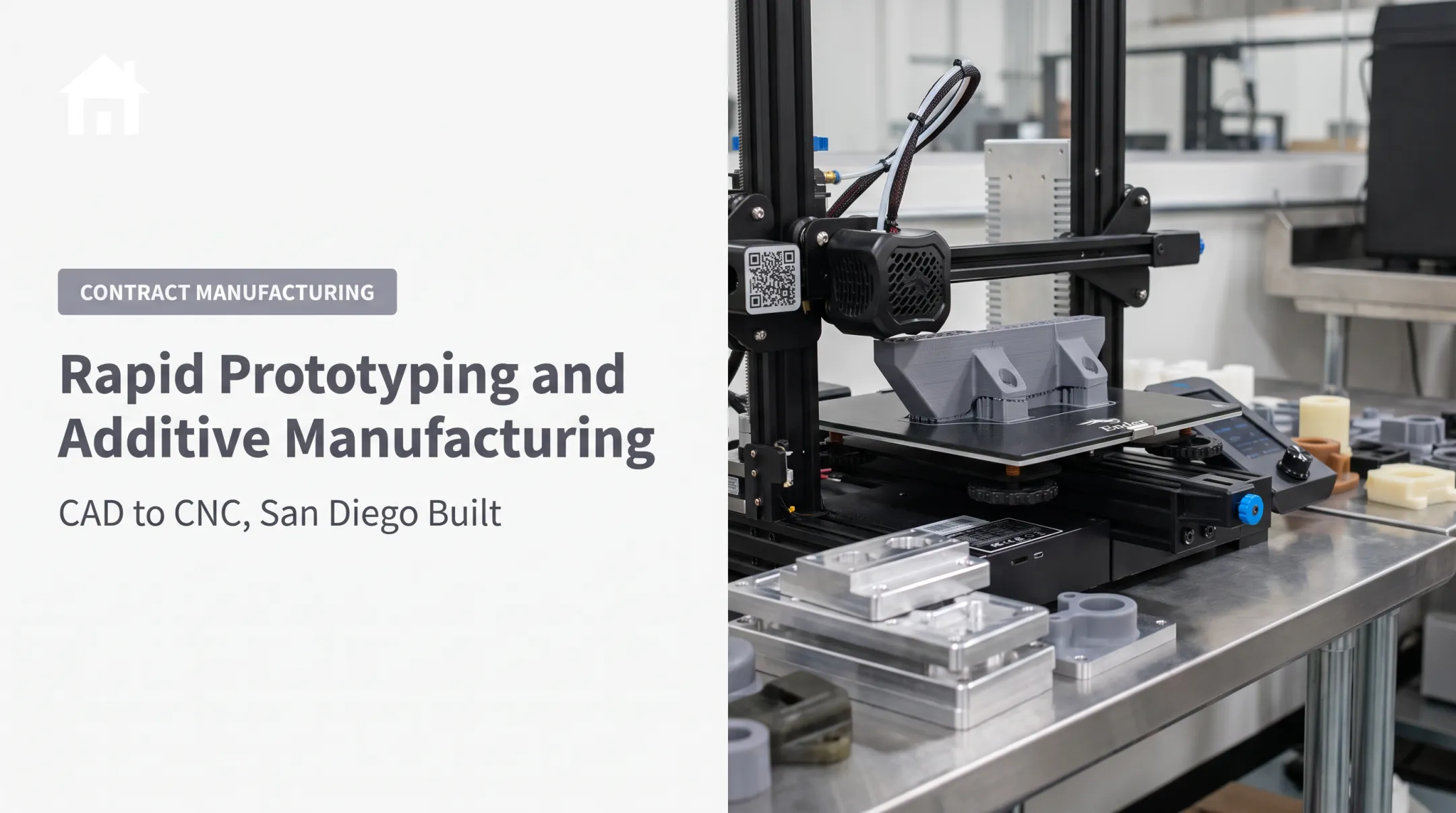
FDM/FFF is the workhorse for jigs, low-cost fixtures, and quick concept checks. It's accessible and affordable, but layer lines can create weak points.
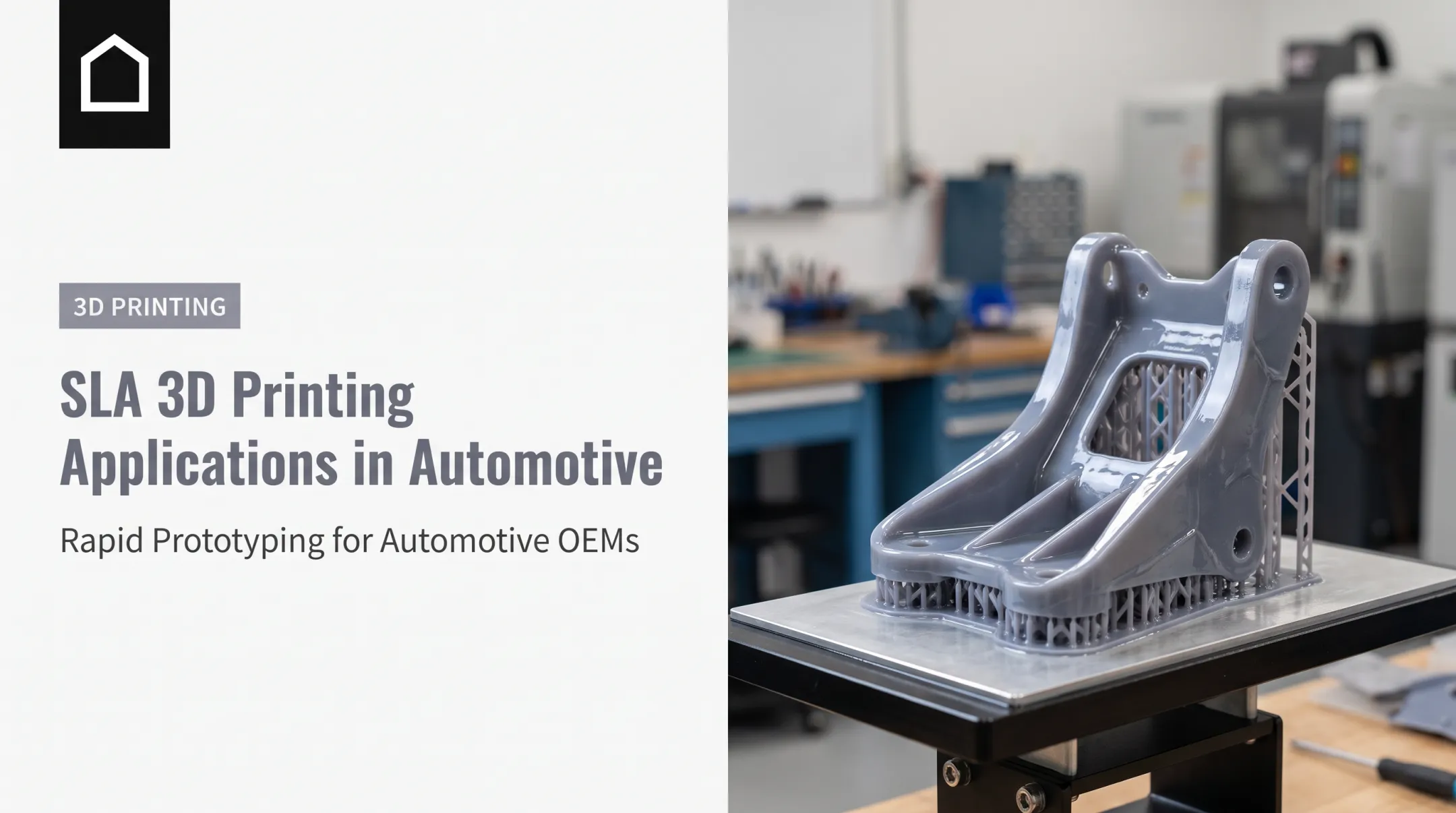
SLA/resin printing shines when detail matters. Dental models, casting patterns, and clinical mockups benefit from its smooth surfaces and tight tolerances.
SLS/powder bed fusion produces genuinely functional parts. Because unfused powder supports the build, there's no need for support structures, and parts hold up well mechanically.
Metal 3D printing (DMLS/SLM) supports the highest-value applications. EOS notes that DMLS-produced metal parts can achieve properties comparable to conventional casting or forging. That reliability matters for aerospace and orthopedic implants.
The Role of 3D Printing in the Manufacturing Workflow
Here's where AM stops being a novelty and starts changing how products actually get built.
Faster Tooling, Fewer Bottlenecks
Stratasys reports that printed jigs and fixtures can be made in as little as 24 hours, compared to days or weeks for machined tooling, and that printed workholding can cut machine setup time by 80%. Treat those as vendor claims worth validating on your own floor, but the direction is clear: printed tooling moves faster.
Large-scale tooling is catching up too. Oak Ridge National Laboratory's 2025 battery-enclosure mold project used wire-fed additive manufacturing to build stainless-steel dies, cutting material waste to roughly 10% compared to up to 98% removed when forging conventional tool steel.

Bridge Production and Mass Customization
3D printing fills the gap while injection molds are being built, producing enough functional parts to validate fit and demand before you commit to higher-volume tooling.
The same process supports individualized production at scale. Dental crowns, orthopedic guides, and cranial implants are all listed by the FDA among devices commonly produced with additive manufacturing. Customization here doesn't remove regulatory obligations: design controls, validation, and quality systems still apply.
One Vendor, Fewer Handoffs
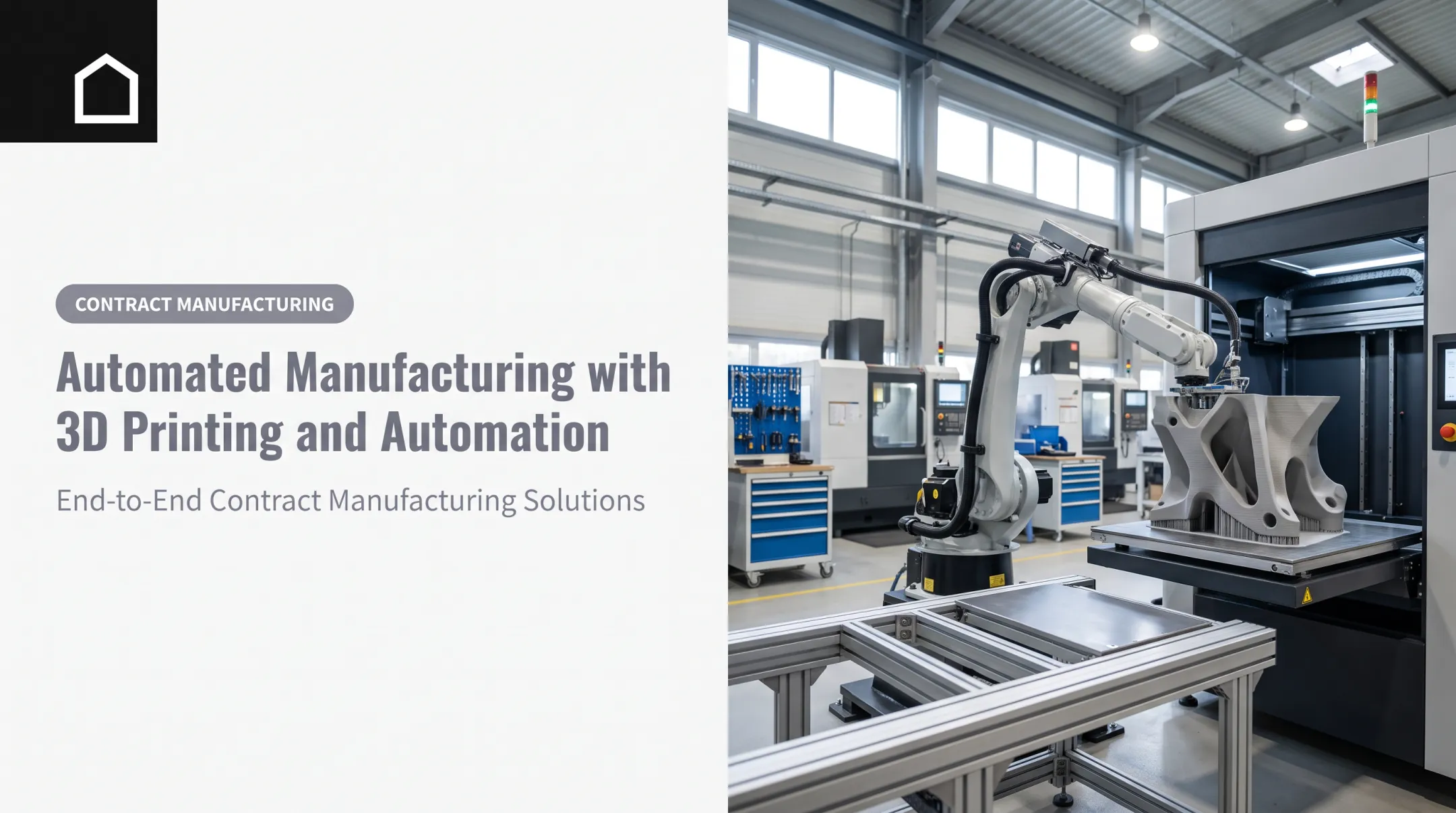
Combining 3D printing with CNC machining, urethane casting, and injection molding under one roof removes a common friction point: vendor handoffs. Finine Design and Manufacturing operates this way from its San Diego facility, covering CAD modeling, 3D printing, CNC machining, urethane casting, injection molding, and production painting.
Process selection with one partner usually turns on:
- Part geometry and material
- Quantity and end-use application
- Schedule and budget
That keeps decisions in one place instead of splitting them across four vendors.

Industry Applications of 3D Printing in Manufacturing
Manufacturers across automotive, electronics, and defense use 3D printing for tooling, prototypes, and low-volume parts when speed and customization matter most.
Automotive
Jigs, fixtures, functional prototypes, and lightweight brackets. Printed tooling shortens the loop between design change and part-in-hand testing.
Dental
Surgical guides, orthopedic models, and custom devices. This is an area where Finine Design has built specific expertise, supporting dental and orthopedic sales and educational products alongside development work.
Consumer electronics
Enclosures, housings, and rapid iteration of form/fit prototypes. HP and Jabil's well-documented case study reported completing 19 design iterations in the time traditional manufacturing would take for one.
Military & defense
Durable, low-volume specialty components and replacement parts. The U.S. Army has tested field-based additive manufacturing for vehicle repair parts. Urethane-cast production parts can bridge development and full-scale output for defense clients needing quantities below high-volume thresholds.

What 3D Printing Can't (or Shouldn't) Do
3D printing isn't a universal replacement for traditional manufacturing. Know the boundaries.
Not cost-effective at high volume. Formlabs modeled 1,000 parts at roughly $600 for in-house printing versus $3,920 for outsourced injection molding, but that comparison flips as volume climbs into the tens of thousands. There's no universal crossover number; it depends on geometry, material, and labor.
Some things just can't be printed well:
- Parts requiring extreme mechanical isotropy in every direction
- Very large monolithic metal structures
- Materials that haven't been qualified for additive processes
Legal and liability questions matter. Copyright generally doesn't protect the mechanical function of a useful part, though separable artistic features can be protected.
For regulated products such as devices and defense components, the manufacturer carries liability for part safety and IP compliance. Export-controlled technical data under ITAR covers CAD files and build parameters, not just finished parts. Defense work needs careful data handling regardless of who prints it.
In-House Printer vs. a Full-Service Manufacturing Partner
The right answer depends on your volume, capital tolerance, and how often your parts change.
In-house printer works when:
- You have steady, predictable demand for one application
- You can dedicate someone to manage the process
- You need iteration speed more than access to multiple technologies
A manufacturing partner works when:
- Demand is sporadic or project-based
- You need metal printing, regulated production, or unusual materials
- You want to avoid capital risk on equipment that may sit idle
A Formlabs vendor study found in-house SLS production at $4.23 per part versus $8.98 outsourced for a bike pedal. That math assumed the printer was already paid for and excluded amortization. Run your own utilization numbers before deciding.

Finine Design and Manufacturing offers another path: CAD, 3D printing, CNC machining, urethane casting, injection molding, and production painting under one roof. Clients in automotive, consumer electronics, and military projects get multiple technologies without owning equipment or juggling separate vendors for each stage.
Frequently Asked Questions
How much does it usually cost to 3D print something?
Cost depends on part size, material, technology, and post-processing needs. For production-level parts, a manufacturing partner can provide an accurate quote based on your actual specs rather than generic estimates.
How does 3D printing work step by step?
The process follows three stages: design and slice a CAD model, print it layer by layer, then post-process (support removal, finishing, inspection). Industrial workflows often use the printed part as an intermediate step toward molds or castings.
Can 3D printing be used for manufacturing?
Yes. It's used for tooling, jigs and fixtures, bridge production, and end-use parts, often alongside CNC machining and injection molding rather than replacing them.
What cannot be printed on a 3D printer?
Very large monolithic metal structures, parts that need uniform strength in every direction, and materials not yet qualified for additive processes are poor fits. High-volume mass production is usually cheaper with injection molding.
Is it illegal to 3D print copyrighted or restricted items?
It depends on the item. Copyright usually doesn't cover mechanical function, but artistic features and defense-related technical data can be restricted—defense teams should get legal review before production.
What is the latest 3D printing technology?
Recent advances include faster resin systems (Formlabs' Form 4 claims up to 5× faster printing) and multi-laser metal platforms from EOS. Multi-material printing can also combine rigidity, flexibility, and color in a single build.