
You've got a CAD file for a tiny bracket with a tolerance that keeps your engineers up at night. Or maybe it's a dental abutment that has to fit perfectly, every single time. Now you need someone who can actually machine it — accurately, and without a three-month lead time. This is where a lot of product developers get stuck. Quality varies wildly between shops. Vetting suppliers eats weeks you don't have. And finding a partner who balances speed with real precision feels harder than it should be. This guide breaks down what precision machining actually means, how components get made, which industries depend on it most, common materials, and what to look for in a manufacturing partner.
Key Takeaways
- Precision machining delivers target-dimension accuracy and repeatability across every part in a run
- Automotive, military, electronics, and dental and orthopedic teams rely on these parts for safety-critical performance
- Modern
CNC equipment holds tolerances as tight as 0.0002 to 0.0005 inch on demanding features
- A one-stop-shop partner from design through production cuts vendor complexity and speeds your timeline
What Is Precision Machining?
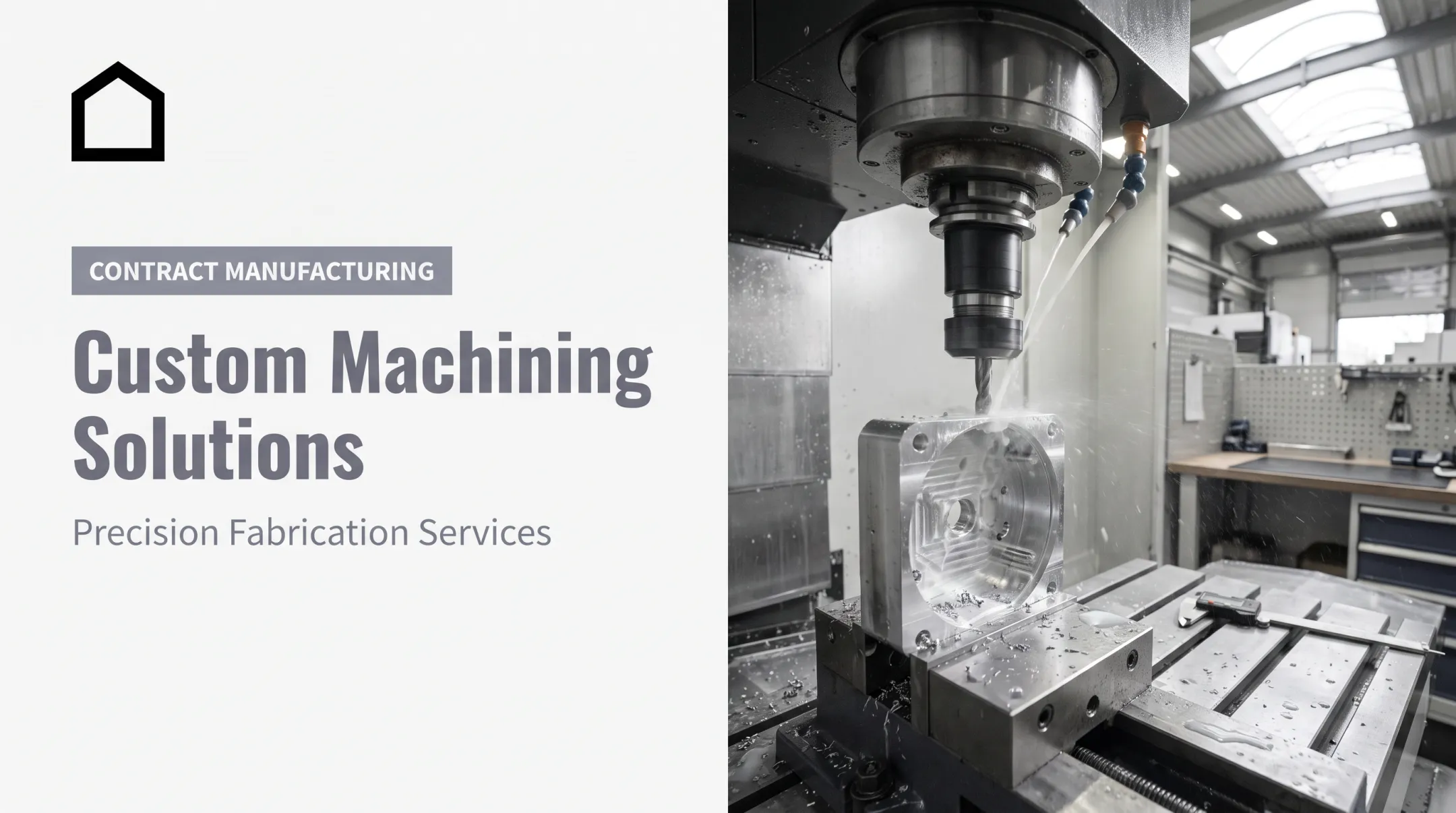
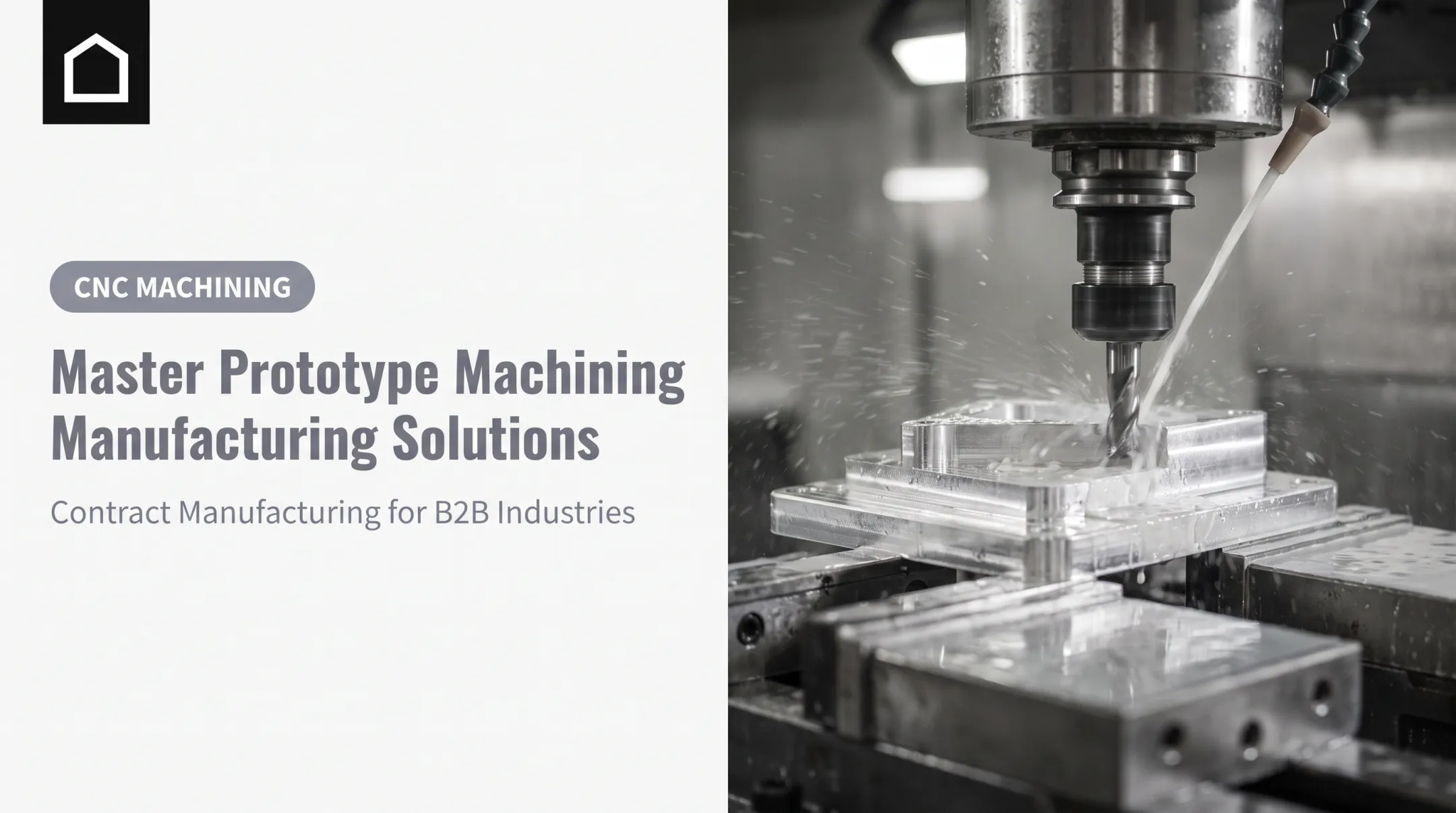
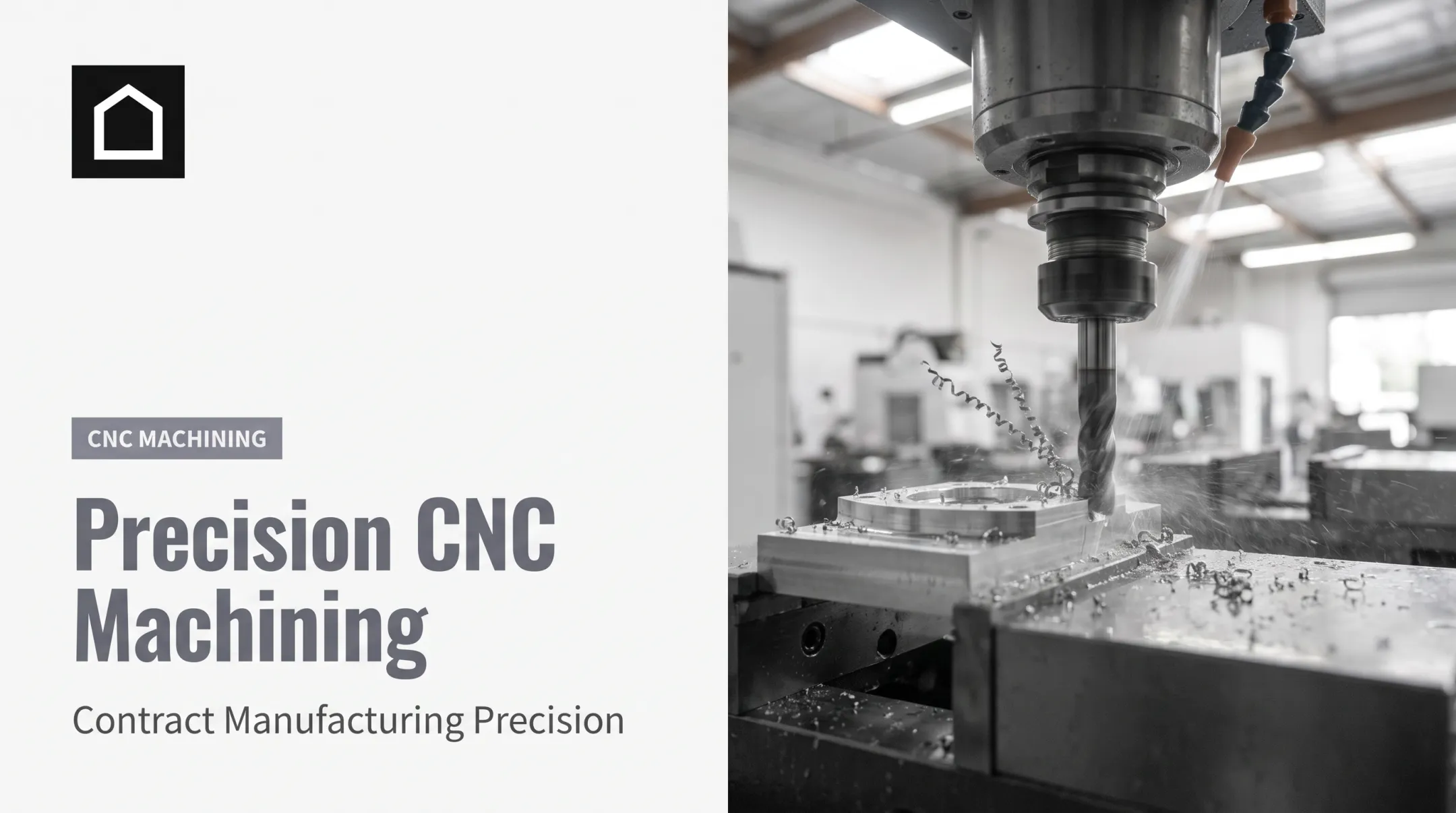
Precision machining is a subtractive manufacturing process. CNC milling, turning, and grinding remove material from a solid block or bar stock until the part matches an exact digital specification. Nothing gets added. Material is only cut away. Accuracy and precision aren't the same thing, even though people use them interchangeably. Accuracy means a part hits the target dimension. Precision means every part in the batch hits that same dimension, consistently. A machinist could cut a part that's slightly off-target but still repeatable across 500 units. That's precise but not accurate. The goal is both: a part described as precision machined consistently meets its dimensional and tolerance requirements across the full production run, not just the first sample.
How Tight Can CNC Machines Actually Get?
Tolerance capability depends heavily on the feature, material, and machine condition. According to Modern Machine Shop's reporting on tight-tolerance machining, typical holding ranges break down like this:
- ±0.002 to 0.005 inch: Easy to hold consistently
- ±0.001 to 0.002 inch: Still manageable on most well-kept machines
- Tighter than ±0.001 inch: Genuinely difficult
- ±0.0002 to 0.0005 inch: Achievable for some shops, but only with extra process control — not a default guarantee

Quality systems matter here too. Frameworks like ISO 9001 provide structure for calibration, nonconformance handling, and continuous improvement, which helps shops maintain consistency run after run. If a supplier can't explain how they control and verify their process, treat that as a red flag before you commit.
How Precision Machined Components Are Made The path from concept to finished part usually looks like this:
- CAD design — the part is modeled digitally, with tolerances and critical features flagged
- CAM programming — toolpaths are generated and simulated before anything touches metal
- Setup and fixturing — the workpiece is secured to control location precisely during cutting
- Cutting or turning operations — milling, turning, or grinding removes material to final geometry
- Post-process inspection — finished parts are measured against the drawing

Multi-axis CNC machines can reach multiple faces of a part in a single setup, which reduces the number of times a part gets re-clamped. Fewer setups mean better dimensional consistency, because every re-clamp risks shifting the reference point. Tooling rigidity and automatic tool changers matter just as much. A rigid setup resists deflection during cutting, and automatic tool changers let a machine move through roughing, drilling, and finishing without manual intervention, which cuts the chance of human error mid-job. Inspection typically involves calipers, micrometers, or a coordinate measuring machine (CMM) for tighter-tolerance features. That check catches out-of-spec parts and confirms the process itself is stable. At Finine Design and Manufacturing, CNC machining runs alongside in-house CAD modeling and 3D printing, so a part can move from digital model to prototype to machined component without switching vendors mid-project. That matters most when you're iterating quickly and can't afford to wait on a new supplier every time a design changes.
Examples of Precision Machined Components
Precision machining shows up in far more places than most people realize. Common examples include:
- Engine components and valves
- Connectors and fasteners
- Gears and bearings
- Structural brackets and housings
Within Finine Design and Manufacturing's core industries, the applications get more specific:
- Dental and orthopedic hardware: implant components, surgical instruments, and precision-fit devices
- Automotive parts: brackets, housings, and functional components requiring repeatable fit
- Military and defense hardware: rugged, reliable parts built to exacting specs
- Consumer electronics housings: compact enclosures and connectors with tight alignment needs Small, complex geometries (screws, pins, tiny connectors) are especially well-suited to
CNC processes because the machine can hold tolerance on features too small for manual work. A precision machined component is any part that requires tight tolerance, repeatable geometry, and functional reliability across every unit produced.
Industries That Rely on
Precision Machining Precision machining supports industries where part failure is costly or dangerous:
- Dental and orthopedic:
Tolerances often down to microns, with biocompatible materials safe for use inside the body. A poorly toleranced implant is a patient safety risk.
- Automotive and military/defense: Repeatable, high-volume production of rugged components that withstand stress, vibration, and temperature extremes. Consistency across thousands of units matters as much as each part's spec.
- Consumer electronics: Small, precise enclosures and connectors where alignment and cosmetic finish matter alongside dimensional accuracy.
Materials Commonly Used in
Precision Machining Material choice depends entirely on the application: strength, weight, biocompatibility, and corrosion resistance all factor in. Common metals:
- Aluminum (lightweight, machinable, widely used in housings and enclosures)
- Stainless steel (corrosion and wear resistant)
- Titanium (high strength-to-weight, used in aerospace and implant work)
- Brass (easy to machine, good for fittings and hardware)

Common plastics:
- ABS (cost-effective, easy to machine, good for prototypes)
- Nylon (wear resistant, low friction, ideal for gears and bearings)
- Polycarbonate (impact resistant, dimensionally stable)
- PTFE (chemical resistant, non-stick, high heat tolerance) No single material works for every job.
A titanium implant component and an ABS housing prototype need different machining strategies, tooling, and finishing approaches.
Understanding CNC Machining Costs CNC machining cost depends on four interconnected factors:
- Material type and grade
- Part complexity and geometry
- Tolerance requirements
- Order volume Tighter tolerances cost more because they demand slower cuts, more inspection, and sometimes specialized tooling. Higher volumes usually lower the per-part price; complex geometries and harder materials push cost the other way. Quotes vary widely from shop to shop and job to job. There's no universal per-part price that applies across materials and geometries.
The only reliable way to get an accurate number is to submit your CAD file and specs for a custom quote. Partnering with a single provider from prototyping through production can reduce total spend by avoiding markups from multiple vendors at different project stages.
Why Choose a One-Stop-Shop Precision Machining Partner Combining CAD modeling,
3D printing, CNC machining, and production painting under one roof cuts vendor cycles. Instead of shipping a design out for prototyping and again for machining, the full process stays in one pipeline. That integration delivers clear operational gains:
- Fewer handoffs between shops
- Fewer delays waiting on outside queues
- Fewer chances for miscommunication on revisions
Finine Design and Manufacturing runs this integrated pipeline from its San Diego, CA facility. The company specializes in dental and orthopedic products and also serves automotive, military, and consumer electronics clients. Projects move from concept through production with Jaime as a single point of contact. For teams already managing multiple vendors, that structure means one accountable partner from prototype to finished parts, and a faster path into production.
Frequently Asked Questions
How much does it cost to get a part CNC machined?
Costs vary based on material, part complexity, tolerance requirements, and order quantity. There's no flat rate. Request a custom quote from your CAD file and specs.
What is considered precision machining?
Precision machining is work that consistently holds tight tolerances and repeatable results, then verifies them with inspection tools such as calipers or a CMM.
What does "precision machined" mean?
It means the part meets exact dimensional specs on every unit, not only on a single sample, so geometry stays consistent across the full production run.
What are precision machined components?
Parts made via CNC processes that require tight tolerances and consistent geometry, such as implant hardware, automotive parts, or electronic connectors.
What are some examples of precision components?
Surgical screws, engine parts, valves, and electronic connectors are common examples across regulated and high-performance industries.
How precise are most CNC machines?
Most shops comfortably hold ±0.002 to 0.005 inch, with tighter work down to ±0.001 inch being common. Some specialized processes achieve ±0.0002 to 0.0005 inch, but that requires extra process control.