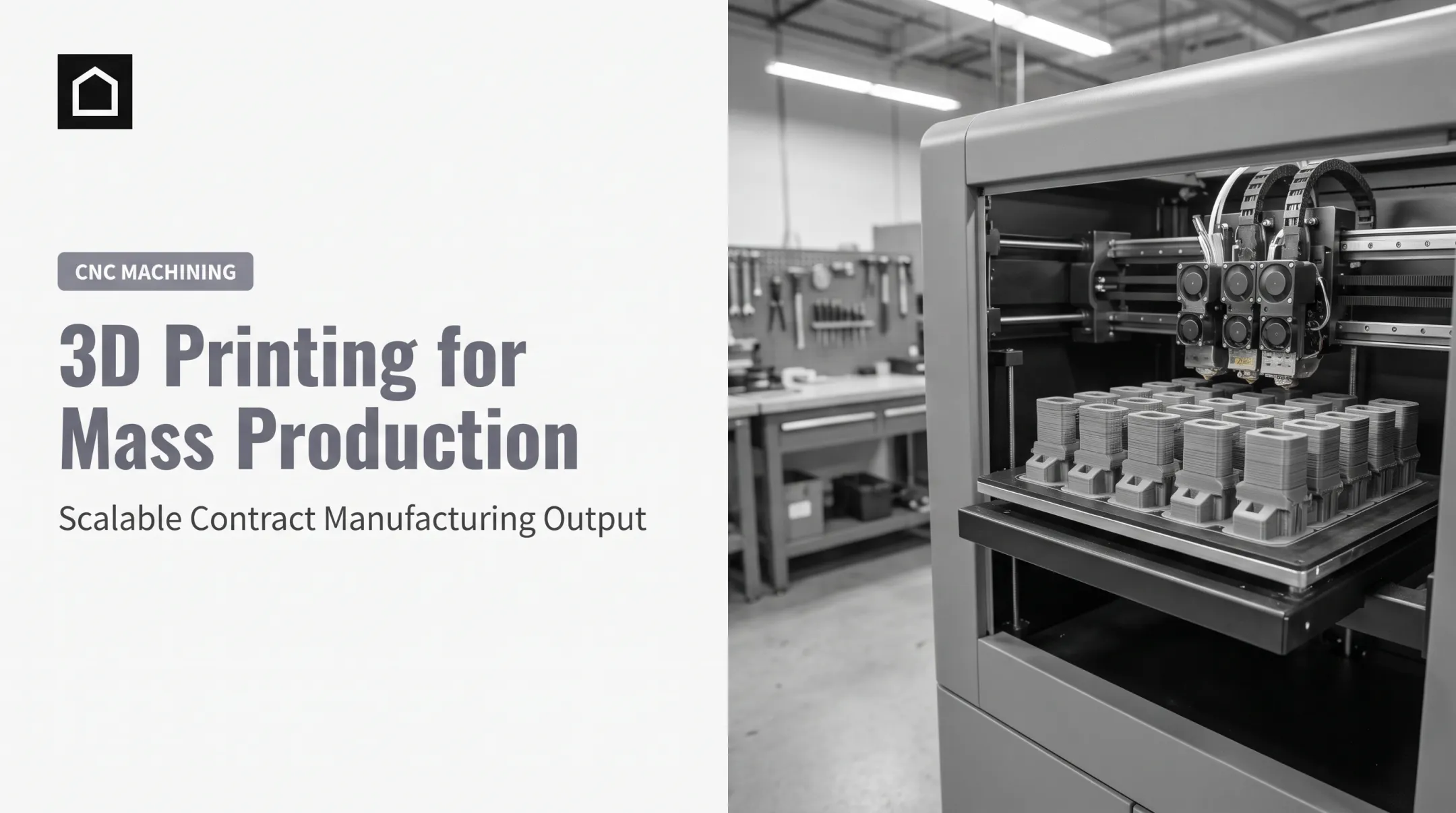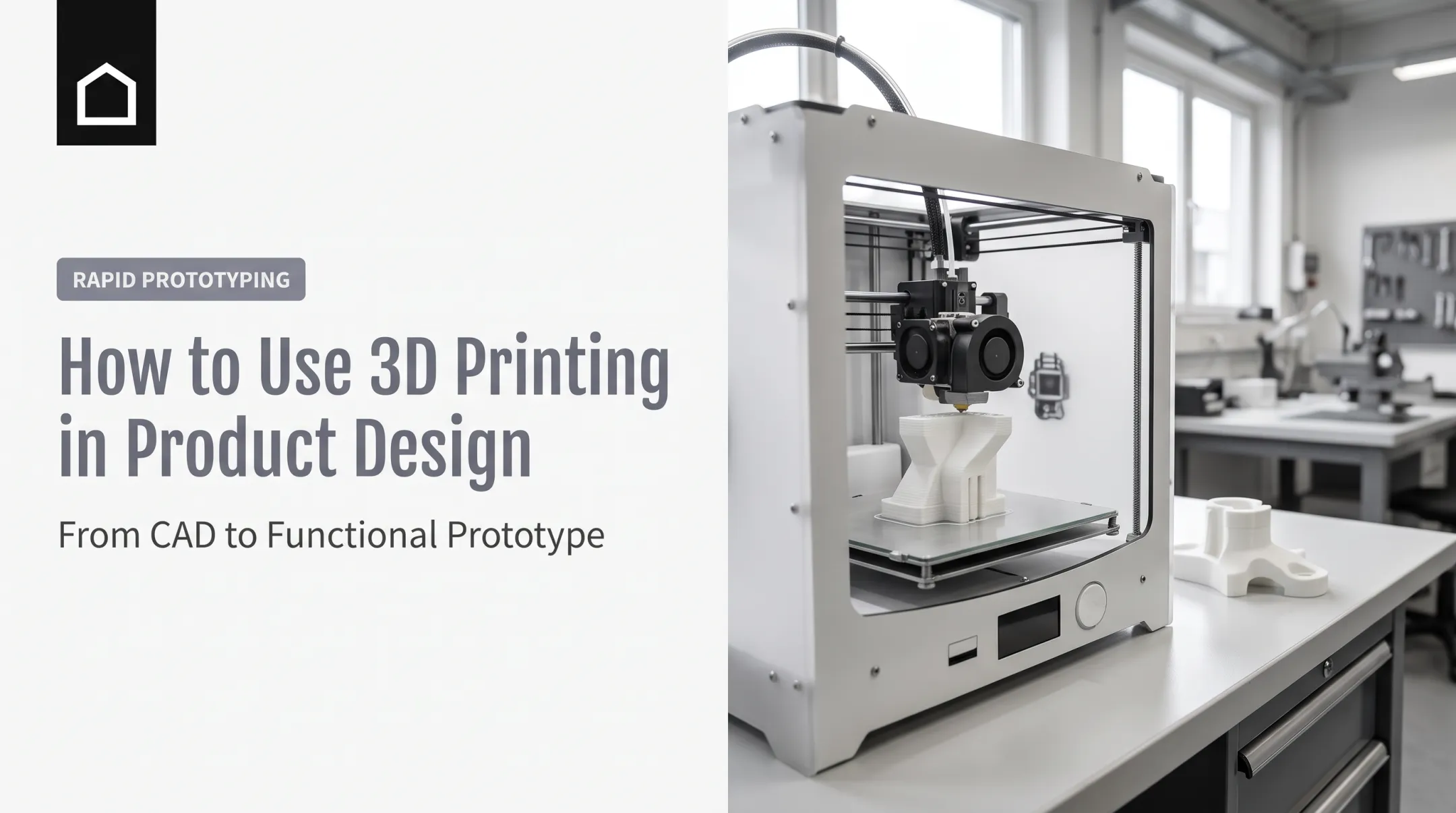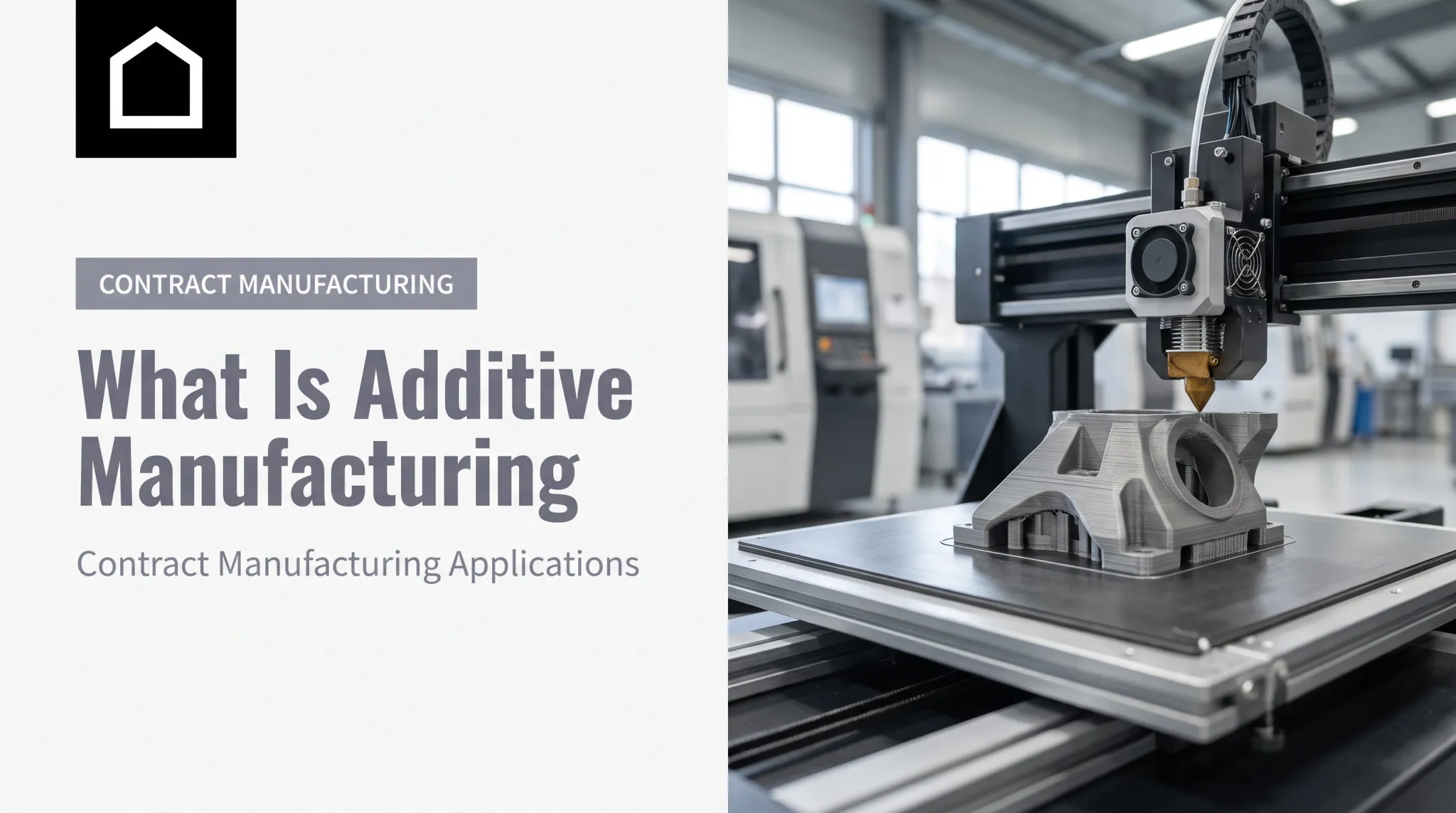

Today, additive manufacturing produces custom eyewear, replacement appliance parts, running shoe midsoles, and limited-run accessories that never touch a traditional mold. The global 3D-printed shoes market alone is projected to grow at an 18.6% compound annual rate from 2024 to 2030, reaching an estimated $5.38 billion — a sign that printed end-use goods are becoming a real product category, not just a prototyping shortcut.
The real question isn't whether a product can be 3D printed. Almost anything can, technically. The question is whether it should be — given your volume, budget, material needs, and timeline. This article walks through where 3D printing fits in consumer goods, how the workflow actually works, and how to decide if it's the right path for your product.
Key Takeaways
- 3D printing works best for customized, low-volume, or rapidly iterating consumer products, not mass production.
- Match technology and material (FDM, SLA, SLS, MJF) to the product's strength, finish, and volume needs.
- Hybrid workflows that combine printing with CNC machining, molding, or casting often beat an all-print-only approach.
- Products touching skin, food, or safety-critical loads require validated materials, not just any consumer-grade print.
3D-Printed Consumer Products and Goods
Certain product traits make additive manufacturing a strong fit: individualized fit, complex internal geometry, low-to-moderate production volumes, and frequent design revisions. A product that needs 50,000 identical units with no variation is usually a poor fit. A product that needs 50 units tailored to 50 different customers is a strong one.
Two categories often get blurred together:
- Fully 3D-printed products — the finished item comes straight off the printer, maybe with light finishing.
- Products that use 3D-printed components — printed molds, tooling, jigs, or prototypes support a part that's ultimately made another way.
Both show up across consumer categories—from custom-fit wearables to electronics accessories and short-run spares.
Custom-fit and personalized products
Custom-fit is where 3D printing pays off. Individualized geometry beats traditional tooling when each unit differs:
- Eyewear, earphone tips, and hearing-related products
- Insoles and orthotics
- Jewelry and personalized accessories
- Custom automotive interior trim
Superfeet, for example, sells ME3D insoles built from a customer's own foot scan, using scan data to shape a support cap for that specific foot. Scan data, parametric CAD, and a print file replace generic shoe sizes with a one-person fit.
One caution here: products worn on or inside the body need appropriate material validation and professional oversight. Not every consumer-grade printer or resin is suitable for skin contact, let alone medical or dental use.
Consumer electronics and smart-device accessories
Phone cases, device stands, cable organizers, grips, and custom enclosures are a natural fit for printing because they're easy to iterate and don't need massive volumes to justify the cost.
Additive manufacturing handles things injection molding struggles with cheaply:
- Internal cavities and consolidated parts (fewer screws, fewer assembly steps)
- Unusual, non-rectangular forms
- Small-batch runs without a mold investment
A well-known example: engineer Ken Pillonel's 3D-printed case lets AirPods charge via USB-C instead of Lightning. Formlabs reported the project generated thousands of orders, with a single SLS printer capable of producing hundreds of parts a day . That volume shows printing can meet real demand for a niche electronics accessory without conventional tooling.
That said, the electronics inside (batteries, circuit boards, connectors) still mostly come from conventional manufacturing. 3D-printed circuit boards and embedded electronics exist, but they remain an emerging capability, not a mainstream solution for most products on shelves today.
For teams commercializing accessories or enclosures, pairing print iteration with broader product-development support (CAD, prototyping, and later-stage production methods) keeps the path from concept to small-batch release practical.
Sports, footwear, and performance goods
Footwear midsoles, helmet liners, protective padding, golf components, and bike parts increasingly rely on lattice structures that would be nearly impossible to mold conventionally.
Adidas's 4DFWD line uses a 3D-printed lattice midsole engineered to convert impact energy into forward motion. When the original 4DFWD launched, adidas claimed it delivered 23% more cushioning than the earlier 4D Run 1.0 midsole (a claim tied to that release, not necessarily a current-model figure).
Lattice geometry can tune cushioning, airflow, and weight when design and material get proper testing before launch, not after.
Home, lifestyle, fashion, and creative products
Lighting fixtures, furniture components, cosmetic applicators, kitchen accessories, decorative objects, and musical instrument parts all benefit from printing's ability to create organic textures and internal structures that traditional tooling can't produce affordably at small volumes.
Production realities still apply:
- Printed parts rarely come off the machine retail-ready.
- Painting, sanding, assembly, and finishing are part of the real production cost.
- Limited editions and seasonal designs are easier to justify when there's no mold to amortize.
Replacement parts and short-run products
Discontinued knobs, brackets, mounts, and covers are a strong use case because demand is intermittent and unpredictable. Instead of warehousing thousands of spare parts that may never sell, a company keeps a digital file and prints on demand.
A 2026 appliance-industry study modeled this tradeoff across 100 sample spare parts and found 49 of them were lower-cost candidates for 3D-printed supply than conventional inventory (a modeled comparison, not a universal rule).
Printed replacement parts still need dimensional, durability, and compatibility checks before they go into anything load-bearing or safety-related.
How 3D Printing Turns a Product Idea Into a Finished Good
The path from idea to finished product usually follows the same arc:
- Define requirements and build the CAD model
- Prepare the print file, manufacture, and finish
- Inspect, assemble, and ship
Early choices on wall thickness, build orientation, support strategy, tolerances, and part consolidation matter most. Fixing them after a failed print burns time you rarely get back.
Most successful consumer products don't rely on printing alone. They pair it with machining, casting, molding, painting, or electronics assembly as volume grows.

Selecting the most suitable 3D-printing technology
Different processes serve different product goals. No single technology wins every category.
| Technology | Best suited for |
|---|---|
| FDM/FFF | Functional enclosures and iterative prototypes without mold tooling |
| SLA (resin) | Appearance-critical parts needing fine detail and a smooth surface |
| SLS | Complex nylon components where surrounding powder eliminates the need for support structures |
| MJF | Batches of functional polymer parts needing finer finish and faster output than typical SLS runs |
The right choice depends on surface detail, strength, flexibility, heat resistance, and batch size — not on which process sounds newest.
Matching materials to product requirements
Material selection drives performance as much as the printing process does. Common families include:
- Thermoplastics such as ABS for housings and enclosures
- Photopolymer resins for appearance models and prototypes (rarely for durable end-use parts)
- Elastomers like TPU for flexible cases and sleeves
- Nylon powders (PA12) for eyewear frames and other functional parts
Match the grade to strength, flexibility, temperature resistance, and surface feel. One resin does not cover every job.
Safety note: Food contact, skin contact, children's products, electrical insulation, and load-bearing parts each carry their own material and regulatory requirements. Verify the material against the application before production.
Prototyping, testing, and iteration
Printed prototypes let a team evaluate form, fit, ergonomics, assembly clearance, and visual appeal before committing to tooling. An appearance model and a functional prototype aren't the same thing, and testing should reflect that distinction.
A practical pre-production checklist:
- Confirm the design revision matches the latest requirements.
- Set print orientation based on load direction and surface finish needs.
- Define tolerances before printing, not after measuring.
- Plan post-processing (sanding, painting, assembly) as part of the build.
- Inspect dimensionally against the CAD model.
- Collect user feedback under realistic conditions, not just on a desk.
Scaling from prototypes to production
3D printing makes sense for one-off products, pilot batches, customized goods, spare parts, and low-volume runs. Once volume climbs or tolerances tighten, other processes often become more economical:
- CNC machining for precision metal or plastic parts in moderate quantities
- Urethane casting for production-representative parts before hard tooling
- Injection molding for high-volume repeatability once design is locked
That handoff is where a single development partner helps. Finine Design and Manufacturing, based in San Diego, supports CAD modeling and 3D printing through prototyping.
As volume and requirements change, the same team can move qualifying products into CNC machining, urethane casting, injection molding, or production painting without a mid-project vendor switch.
Why Companies Use 3D Printing for Consumer Goods
Companies adopt additive manufacturing for consumer goods because it shortens design cycles. Teams can create, test, and revise physical parts without waiting weeks for tooling, so validation happens earlier and development risk drops.
Other business drivers include:
- Faster iteration between design reviews and physical samples
- Lower upfront commitment before hard tooling is cut
- On-demand or distributed production from the same digital files
- Earlier proof of fit, finish, and function with real buyers
Digital files make distributed production practical. Logistics, quality control, and consistency across print runs still need active management—not just a file sent to a printer.
Personalization without conventional tooling changes
Changing a digital design file is far simpler than cutting a new mold for every variation. This is what makes mass customization possible: personalized fit, color, surface pattern, engraved text, or geometry, all without new hard tooling.
At scale, personalization still needs real operational infrastructure:
- Reliable customer data capture (scans, measurements, preferences)
- Design automation that applies customer inputs correctly
- Order verification before printing
- Repeatable finishing so every unit matches the promised quality
Design freedom and product performance
Printing allows designers to consolidate multiple parts into one, build lattice or hollow structures, and create shapes that machining or molding can't economically produce. That freedom translates into lighter products, better ergonomics, improved airflow, and more efficient material use.

Design freedom doesn't replace engineering discipline, though. Every lighter or more complex design still needs durability testing, tolerancing, and quality inspection before it ships.
Supply chain, inventory, and sustainability considerations
On-demand printing can help with obsolete parts, unpredictable demand, and small or localized markets. It is not automatically cheaper or greener; those claims need case-by-case evidence.
Plan for these practical risks:
- Material waste from failed prints
- Post-processing waste (support material, excess resin)
- Energy use that varies significantly by process and part size
- Limited recyclability for some print materials
- Secure handling of digital design files, since a leaked file is effectively a leaked product
Teams that already run CAD, prototyping, and production under one roof can absorb those controls more cleanly—from print-ready files through finishing—without adding extra handoffs between vendors.
How to Decide Whether 3D Printing Is Right for a Consumer Product
Before choosing a printer, material, or supplier, build a written specification covering:
- Product volume and degree of customization
- Required performance, target cost, and desired finish
- Material requirements and production timeline
- Regulatory obligations and expected product life
Often the best path is a hybrid plan. Printing handles prototypes or specific components while other processes handle the rest.
Questions to ask before production
Work through these before signing off on a manufacturing plan:
- What's the intended use, and what loads or exposure will the part see?
- What are the dimensions, tolerances, and acceptable surface finish?
- What's the expected annual demand, and how much variation is acceptable?
- Who owns the design files, and how is that data protected?
- How will the part be assembled, packaged, repaired, or disposed of at end of life?
Ask potential manufacturing partners for sample parts, process documentation, material data sheets, and quality procedures before committing. If a supplier can't produce those on request, treat that as a risk signal.
Conclusion: Using 3D Printing Strategically in Consumer Product Development
3D printing earns its place when a product needs customization, complex geometry, rapid iteration, low-volume production, or on-demand replacement. It's not the default answer for every consumer good, and treating it that way usually leads to disappointment on cost or finish.
Use this sequence:
- Start with a defined use case
- Build or refine the CAD model
- Print and test a real prototype
- Choose the production method — printing, machining, casting, or molding — based on what the testing actually showed
Pick the process the evidence supports, not the one that seems most impressive.
Frequently Asked Questions
What common items are 3D-printed?
Common examples include prototypes, housings, protective cases, custom eyewear, insoles, jigs, replacement parts, jewelry, and personalized accessories. Some are fully printed; others are components in a larger assembly.
What are the most common technologies used in 3D printing?
FDM/FFF, SLA and other resin-based processes, SLS, and MJF are the most widely used. The right choice depends on the product's material, detail, strength, production volume, and finish requirements.
What 3D-printed items are hot right now?
Personalized accessories, custom-fit wearables like insoles, footwear components, electronics enclosures, replacement parts, and limited-run consumer products are seeing the most active development.
What are the newest technologies in 3D printing?
Faster resin printing, multi-material and conductive printing, improved scan-to-print workflows, AI-assisted design tools, and advanced polymer and metal materials are emerging developments. Some, like faster resin printers, are commercially available now; others remain in earlier research stages.