
Bringing a new product to market used to mean waiting weeks for a machined tool just to see if a design worked. Today, automotive, defense, and electronics teams print a physical part in hours instead. Traditional tooling and long lead times still slow down plenty of product programs. Every design revision meant a new mold, a new quote, a new multi-week wait — and that cost real money and market position. This guide covers what rapid prototyping and additive manufacturing actually mean, the technologies behind them, and how to pick a manufacturing partner that won't slow you down.
Key Takeaways
- Turn CAD files into testable parts in days—not weeks—with additive manufacturing (3D printing)
- Choose FDM, SLA, or SLS based on need: concept models through functional test parts
- One end-to-end manufacturing partner cuts vendor complexity from concept to production
Is Additive Manufacturing the Same as Rapid Prototyping?
No — and mixing these up leads to confusion when you're sourcing a manufacturing partner. Additive manufacturing (AM) is the technology: building objects layer by layer from a digital model. Rapid prototyping is one application of that technology, not the technology itself. ISO/ASTM 52900:2021, the industry's terminology standard, defines AM as processes that join material successively to create physical objects from 3D model data. That distinction matters because AM now reaches far beyond prototypes.
- BMW uses additive processes to produce functional components tested in dynamic and crash testing, not just visual mockups
- Stratasys notes that selective laser sintering (SLS) now produces both prototypes and functional end-use parts
- AM-built bridge tooling and fixtures support real production runs before permanent tooling is finished Why the confusion exists: Early 3D printers could only manage rough, low-strength parts.
That limitation stuck the "prototyping only" label on the technology long after materials and processes improved. The terminology just hasn't fully caught up with the capability.
What Is Rapid Prototyping in Manufacturing?
Rapid prototyping is the process of turning a digital design into a physical part fast enough to test, learn, and iterate without waiting on tooling.
The Core Workflow A typical rapid prototyping loop looks like this:
- Design in CAD — engineers model the part digitally
- Prepare the file — software generates print layers, machining toolpaths, or mold patterns
- Build the physical part — 3D printing, CNC, or casting produces the prototype
- Test the part — fit, function, or aesthetics get evaluated in the real world
- Iterate the design — feedback flows back into CAD, and the cycle repeats

This loop can run several times in the span it once took to cut a single steel tool.
Why Physical Beats Digital-Only Testing A CAD model can look perfect on screen and still fail in your hand.
Physical prototypes catch problems that simulations miss: awkward ergonomics, tolerance stack-ups, assembly conflicts. There's no substitute for holding the part. The cost and time gap is real. Stratasys documented one case where a prototype was produced in four days for roughly $800: an 87% lead-time reduction and 92% cost savings compared to machining tooling. Results vary by part complexity and material, but the direction is consistent: less tooling investment, faster answers.
Not All Prototypes Are the Same Product teams generally move through four categories as a design matures:
- Proof-of-concept — validates that the idea works at all
- Looks-like — shows the intended appearance, without full function
- Works-like — demonstrates core function, even if it doesn't look final
- Engineering prototype — combines form and function, built toward manufacturability Each stage answers a different question. Knowing which one you need keeps you from over- or under-building.

Types of Additive Manufacturing Technologies
Not every 3D printing process behaves the same way. Choosing the wrong one wastes time and money.
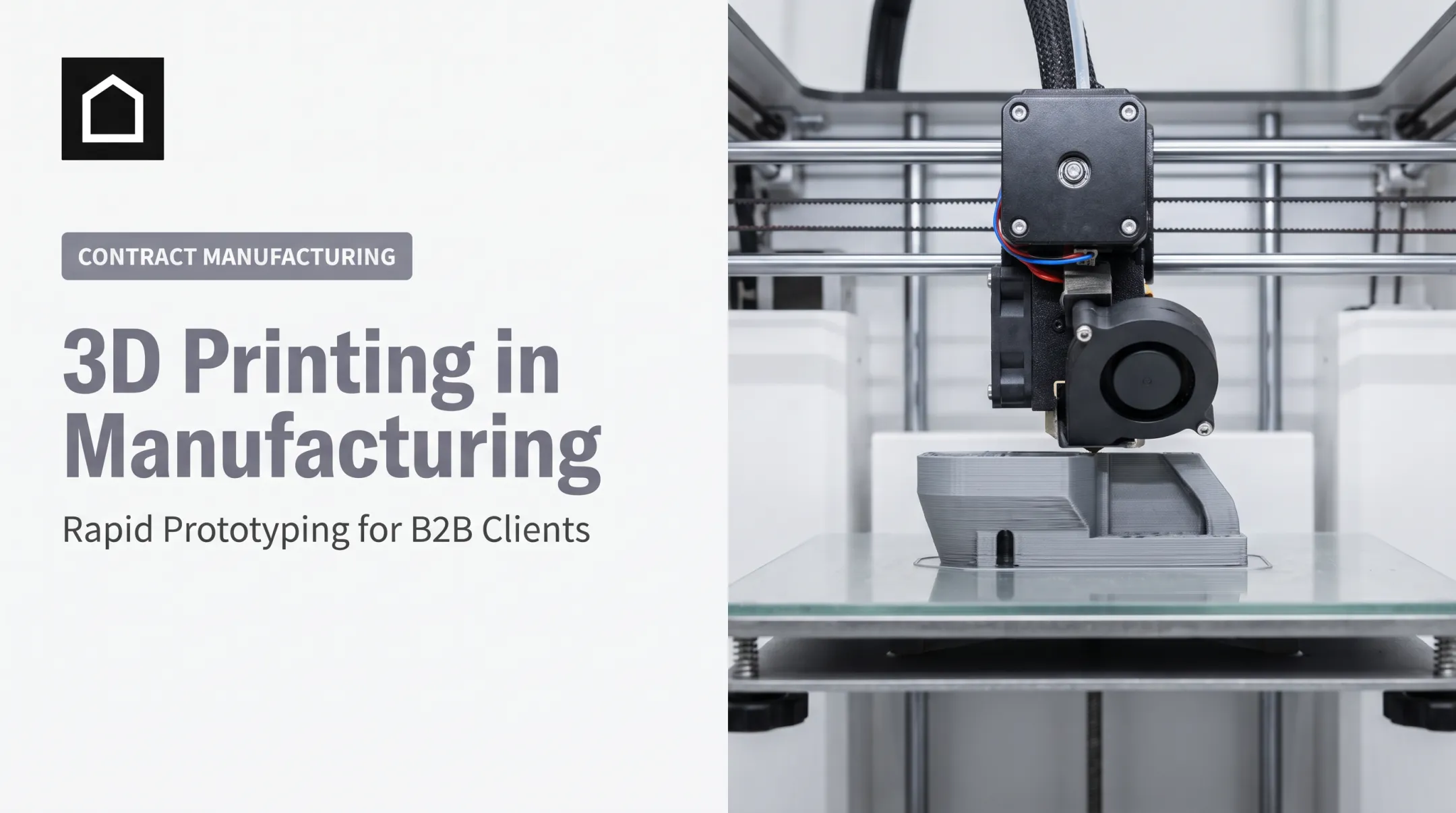
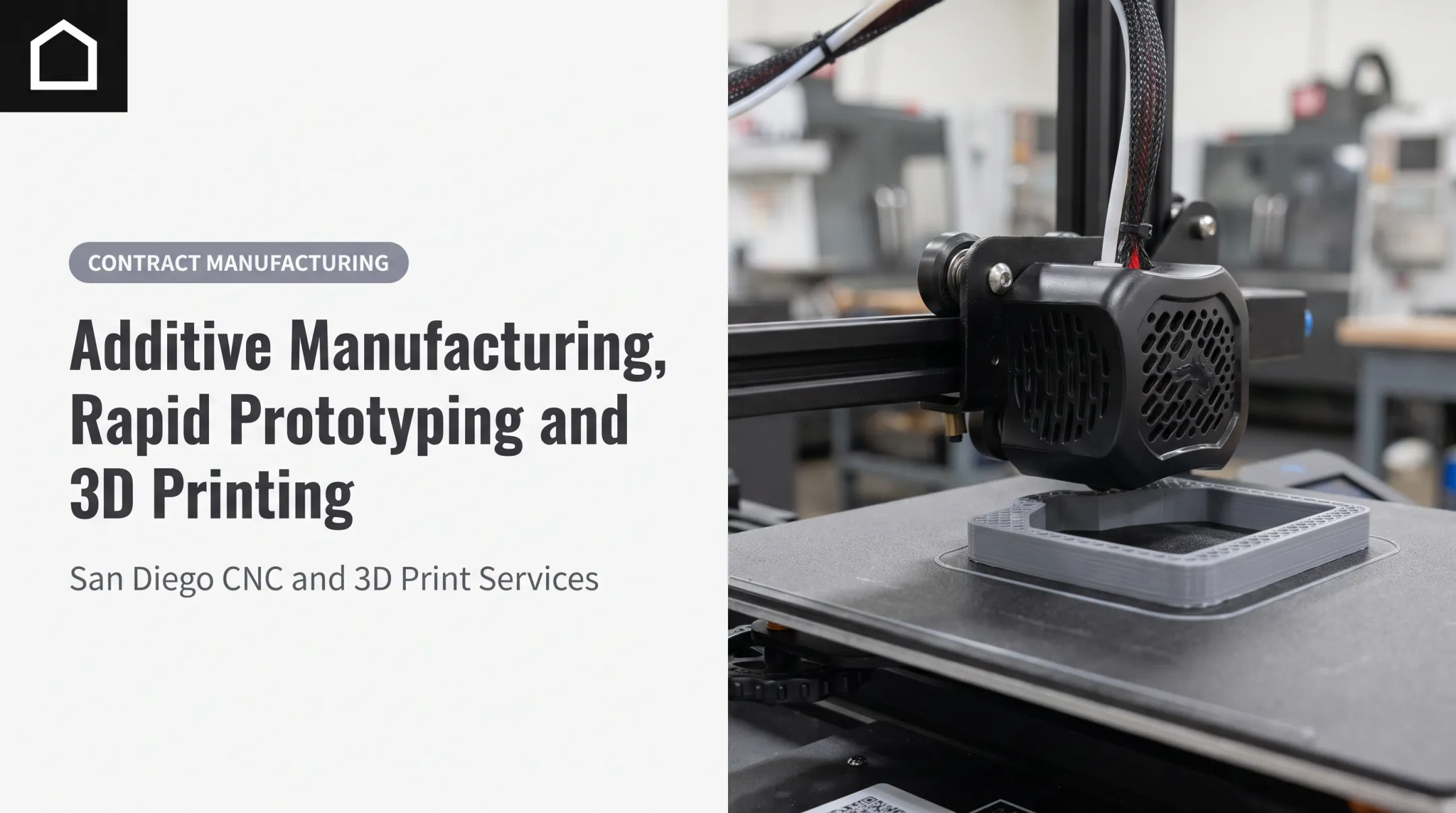
Fused Deposition Modeling (FDM) FDM works by
extruding melted thermoplastic filament through a heated nozzle, building parts layer by layer. It's the workhorse for:
- Low-cost concept models
- Fixtures and simple jigs
- Parts where visible layer lines are acceptable
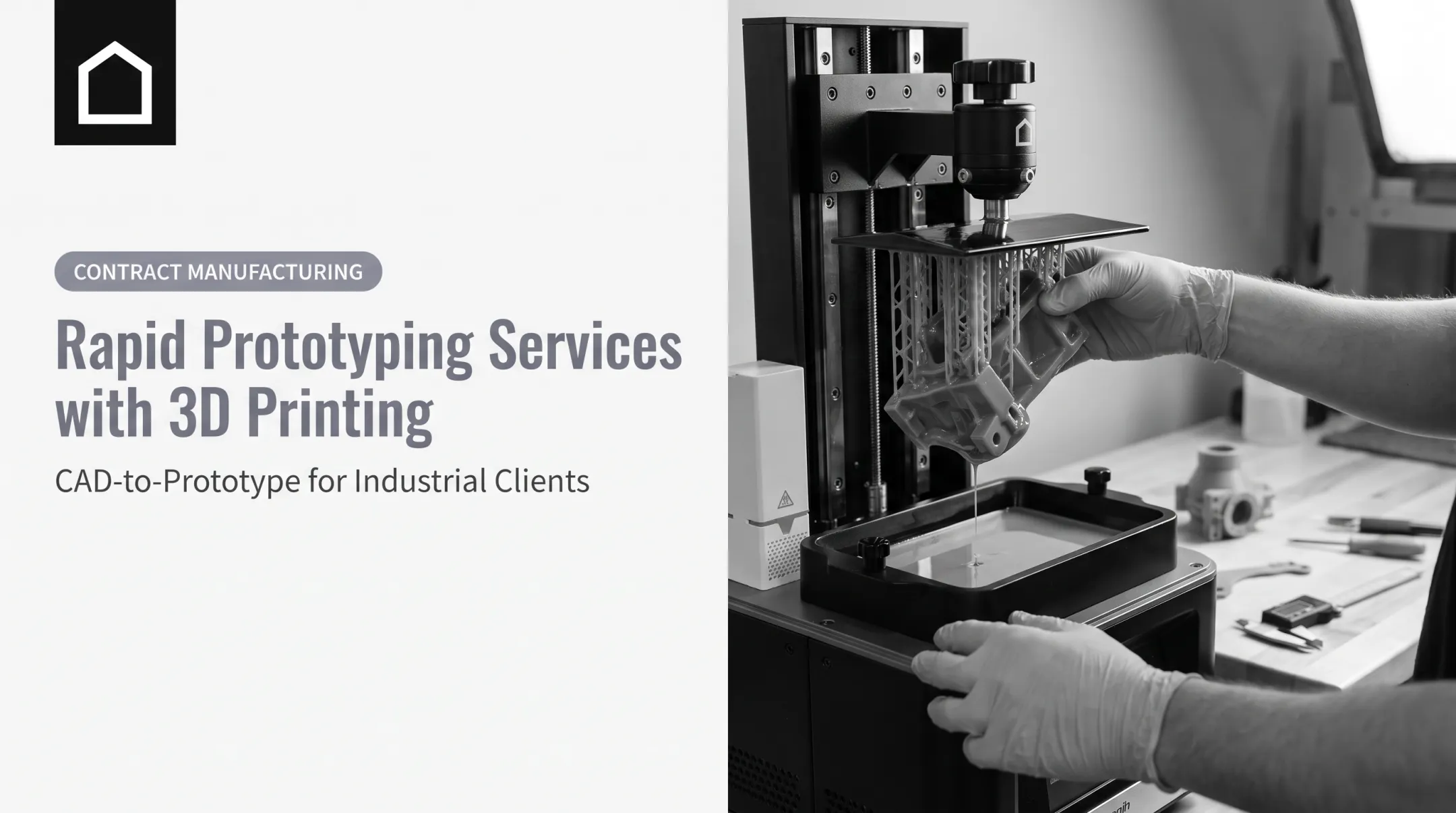
Stereolithography (SLA) SLA cures liquid resin with a
UV laser, layer by layer. 3D Systems notes it's particularly useful for precise casting patterns in injection molding and vacuum processes. Best for:
- High-detail, smooth-finish prototypes
- Parts where surface quality matters more than raw strength
- Master patterns for urethane casting and short-run tooling checks
Selective Laser Sintering (SLS) SLS fuses powdered material with a laser.
Stratasys describes it as producing both prototypes and functional end-use parts. Ideal for:
- Complex geometries that would be hard to mold or machine
- Functional testing under real mechanical loads
- Durable nylon parts that need no support structures
Other AM Categories Worth Knowing Beyond FDM, SLA, and SLS, the broader AM family includes:
- Material jetting (Polyjet) — jets photopolymer droplets for multi-material, multi-color detail
- DMLS / metal powder bed fusion — builds metal parts for aerospace, defense, and orthopedic implants
- Binder jetting — deposits a binding agent onto powder, useful for larger parts at lower cost
Material choice matters as much as process choice. Match the material to what the part must prove:
- ABS / PLA — fast form-and-fit checks on a budget
- Nylon — tougher functional tests and living hinges
- Resins — fine detail, smooth surfaces, and casting patterns If the prototype needs load-bearing strength, chemical resistance, or production-like finish, choose the process and material pair that can demonstrate that—not just the cheapest print.

Additive vs. Subtractive Manufacturing:
Choosing the Right Process Subtractive manufacturing, or CNC machining, removes material from a solid block instead of building up layers. It's the other half of the prototyping equation. Where CNC wins: Ultimaker's comparison notes that CNC-machined parts typically have superior strength and smoother surfaces, without the layer lines inherent to AM. Tolerances are tighter, and the material behaves consistently in every direction (no anisotropy). Where AM wins: Setup costs stay low, and AM remains cost-stable even as geometry gets complex. CNC setups multiply with complicated shapes.
| Factor | Favors AM | Favors CNC | Quantity | 1-10 parts | 100+ parts | Geometry | Internal channels, organic shapes | Simple, accessible geometry | | --- | --- | --- | | Finish | Post-processing accepted | Smooth finish out of the machine | Strength | Good enough for testing | Full material properties | |

Those tradeoffs are why many product programs use both. A prototype might start as a 3D-printed concept model, then move to CNC machining once dimensional accuracy and material performance matter more than speed. Finine Design and Manufacturing often structures automotive, military, and dental/orthopedic projects this way—pairing 3D printing for rapid iteration with CNC machining for precision parts in the same development cycle.
Industry Applications of Rapid Prototyping and
Additive Manufacturing From shop-floor fixtures to shipboard spare parts and dental/orthopedic sales models, industries put rapid prototyping and additive manufacturing to work in different ways.
Automotive Concept models, custom fixtures, assembly jigs, and rapid replacement parts all benefit from
AM's speed. BMW's central campus printed more than 300,000 parts in 2023 alone, including a topology-optimized robot gripper built in 22 hours that was 25% lighter than its predecessor.
Military and Defense Defense programs need rugged functional prototypes and low-volume specialty components on short timelines.
The Navy has permanently installed a metal 3D printer aboard a ship to fabricate stainless steel parts on demand, so crews can produce replacements at sea instead of waiting on shore supply chains.
Consumer Electronics Electronics teams use
AM for enclosure fit checks, connector mockups, and short-run housings before committing to hard tooling. Fast iteration helps validate ergonomics, assembly clearances, and cosmetic finishes while designs are still changing.
Dental and Orthopedic Precision and documentation both matter here.
Renishaw's work with titanium acetabular cups shows how AM supports orthopedic implants through inline monitoring and validation.

Sales and educational products bring a different set of needs: realistic models, durable finishes, and fast sample turnaround for trade shows and training. Finine Design and Manufacturing specializes in this work, designing and producing dental and orthopedic sales and education products for B2B clients.
Why Partner with a Full-Service Manufacturing Provider Coordinating CAD design,
3D printing, CNC machining, urethane casting, injection molding, and painting across multiple vendors is its own project. Every handoff adds delay and risk of miscommunication. A single-source partner removes that friction. Finine Design and Manufacturing offers CAD modeling, 3D printing, CNC machining, prototype and production urethane casting, injection molding, and production painting under one roof at its San Diego facility. That means:
- One point of contact across the entire concept-to-production timeline
- Fewer file-transfer errors and version-control headaches between vendors
- Faster turnaround because parts don't ship between separate shops for each step
This matters most for automotive, military, and consumer electronics clients, where design changes happen fast and delays compound quickly. Regulated-industry experience matters just as much. Military and dental/orthopedic work often comes with documentation, traceability, and quality expectations that a general-purpose prototyping shop may not be set up to handle. A partner who's worked across dental, orthopedic, and defense projects understands that a fast prototype still needs to hold up to scrutiny later in the process.
Frequently Asked Questions
Are additive manufacturing and rapid prototyping the same?
No. AM is the underlying technology; rapid prototyping is one common use of it. The terms get used interchangeably, but AM also covers tooling and end-use production parts.
What are the 7 types of additive manufacturing?
The ISO/ASTM standard defines seven categories: material extrusion (FDM), vat photopolymerization (SLA), powder bed fusion (SLS/DMLS), material jetting, binder jetting, directed energy deposition, and sheet lamination.
What is rapid prototyping in manufacturing?
It's the process of using CAD files and 3D printers to quickly produce a physical, testable part, then iterating the design based on what you learn from it.
How much does rapid prototyping cost compared to traditional tooling?
Rapid prototyping typically costs far less than traditional tooling because it skips molds and dies entirely. One documented case saw a 92% cost reduction and 87% faster turnaround versus machined tooling.
How long does it take to get a rapid prototype made?
Turnaround ranges from hours to a few days, depending on part complexity, size, and the AM process used. Simple FDM parts often print fastest; detailed SLA or SLS parts take longer.
Which industries benefit most from rapid prototyping?
Automotive, defense, consumer electronics, and dental and orthopedic markets see the biggest gains
- all industries where design iteration speed and specialty parts matter most.