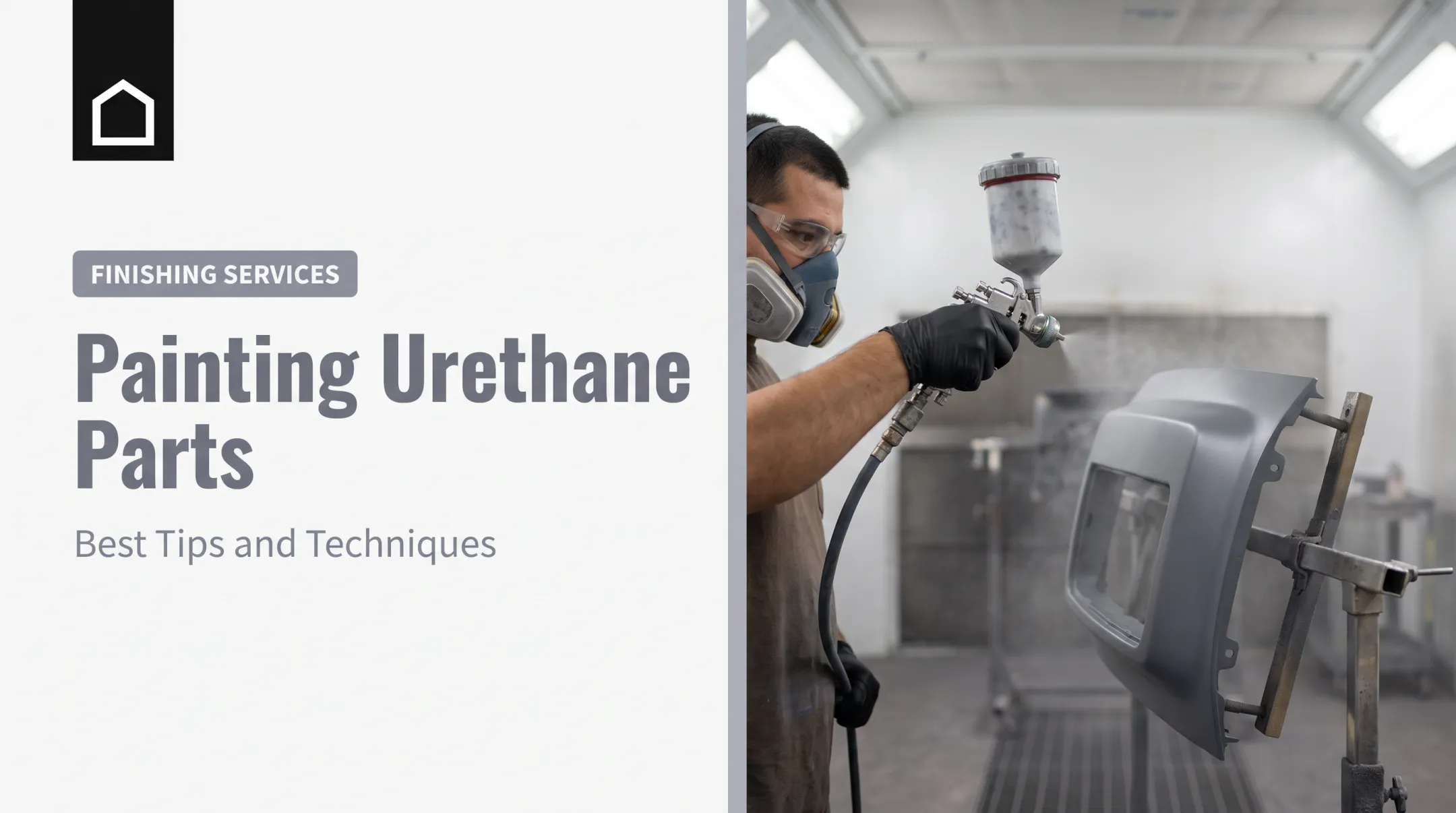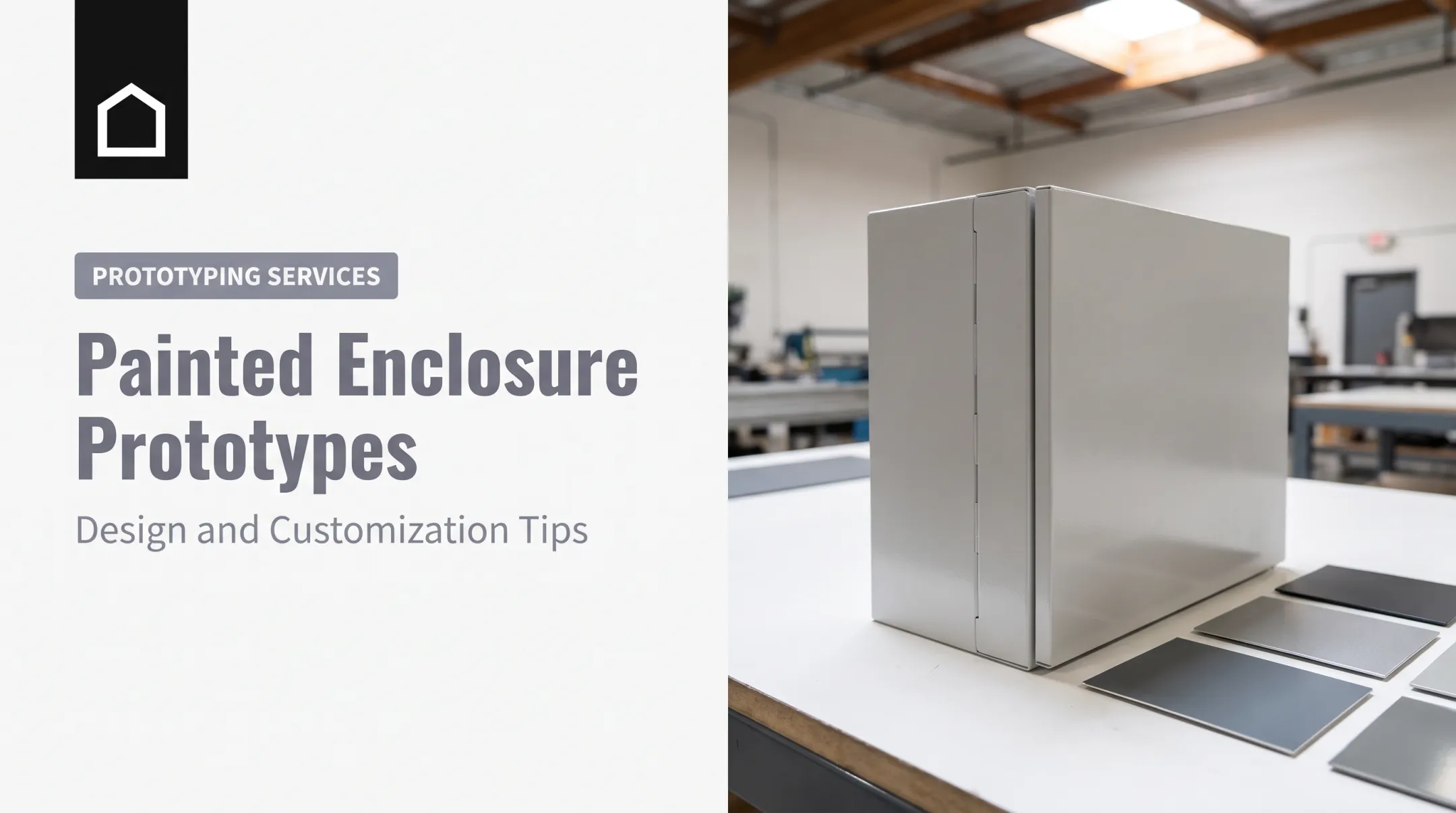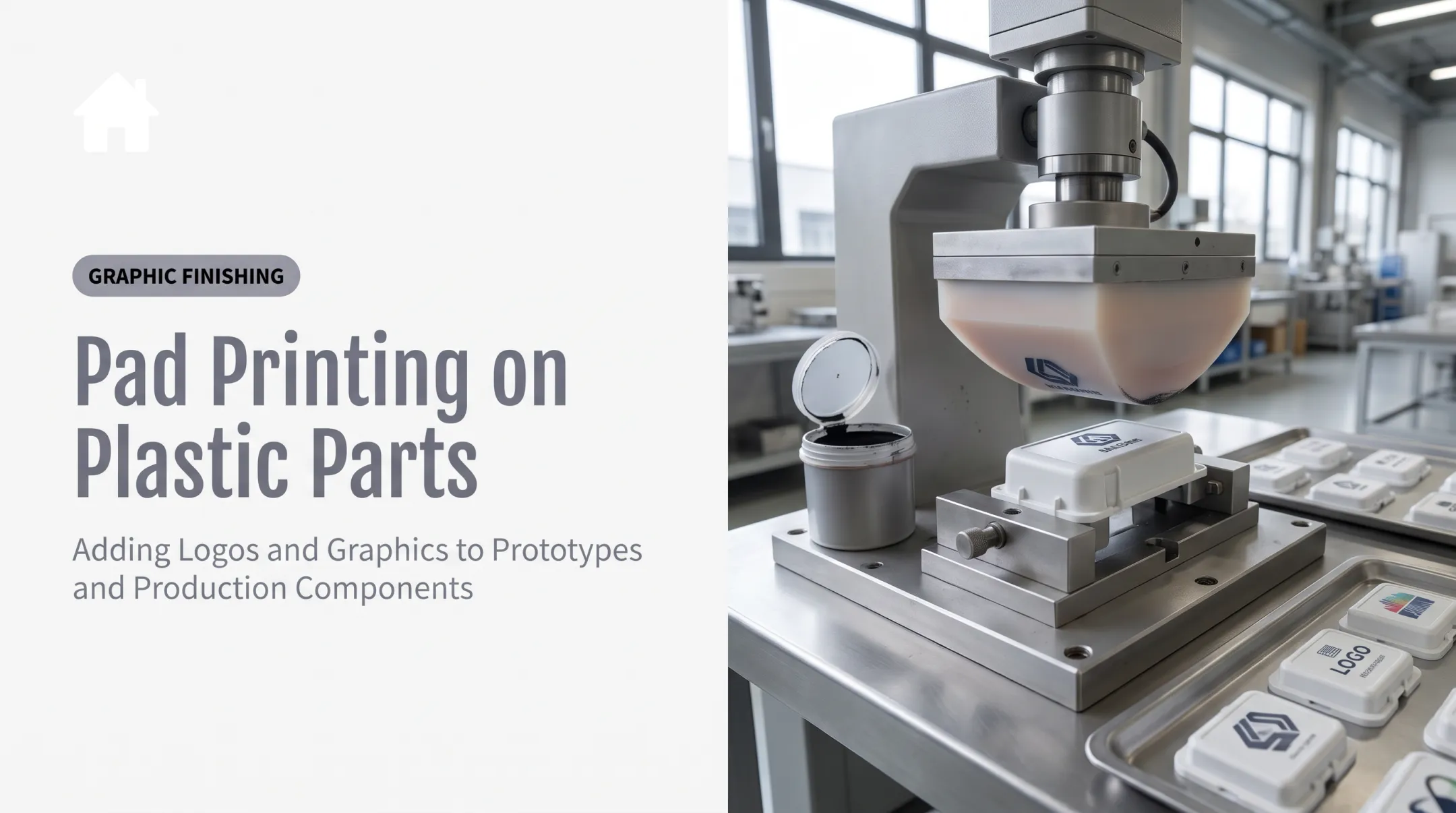

This matters most to product designers, engineers, manufacturers, and purchasing teams working in automotive, defense, electronics, dental, and orthopedic product development — fields where a part's appearance is often part of the spec, not an afterthought. Many teams discuss "cosmetic painting" as if it were one process. It isn't. The operational choices determine whether a painted part looks like the approved sample or like a rejected batch.
This article covers how the process actually works, the finish options available, where painting gets used across prototype and production stages, common defects, and what to check before choosing a supplier.
Key Takeaways
- Cosmetic painting delivers a specified visual finish, with surface protection only when the coating is chosen for it.
- Reliable results depend on substrate prep, compatible primers, controlled application, curing, masking, and inspection.
- Prototype painting validates appearance and customer perception before tooling commitments are locked in.
- Finish choice should match material, environment, visual standard, and function, not just color preference.
- Painting decisions belong in the design phase, not bolted on after the part is already built.
What Is Cosmetic Painting and Why Is It Used?
Industrial cosmetic painting is a finishing operation applied after a part has already been fabricated (machined, molded, cast, or 3D-printed). The goal is a defined appearance: specific color, gloss level, texture, opacity, branding, and visual consistency from part to part.
Cosmetic painting differs from finishes that look similar but work differently:
- Powder coating — dry particles deposited electrostatically, then heat-cured into a film
- Anodizing — converts aluminum's surface into an oxide layer rather than depositing a film
- Plating — deposits actual metal onto a substrate
- Molded-in color — resin pigmented before molding, no post-mold paint step
- Hydrographics and decorative film — printed graphics transferred or molded onto a part's surface
Each mechanism carries different adhesion behavior, wear characteristics, and design constraints. A metallic look achieved through pigment, plating, or anodizing will not perform the same way, even if it looks identical on day one.
Prototypes get painted to validate industrial design decisions, test color and finish under realistic lighting, support customer or investor presentations, and catch design issues before tooling is finalized.
Production parts get painted to hold consistent appearance across batches, support styling across a product family, and meet a customer-approved visual standard.
Critical caveat: cosmetic paint is not automatically structural, wear-resistant, corrosion-resistant, or medical-grade. Those claims require coating-specific testing and validation against the applicable requirements. Paint doesn't earn a performance label just by looking tough.
Why Cosmetic Painting Matters Across Product Categories
Appearance requirements shift by industry:
- Automotive — color consistency and durability across interior and exterior surfaces
- Electronics — clean surfaces and precise masking around ports, buttons, and seams
- Defense — specified low-visibility or camouflage finishes, not generic color matching
- Medical — material compatibility, cleanability, and documented process control
The defense sector shows how specific this gets. MIL-DTL-64159C, active as of March 2022, governs the flattened, chemical-agent-resistant camouflage finish required on military tactical equipment, including ground and aviation assets, per the Defense Logistics Agency's specification record.
That is a functional finish requirement, not a paint-color preference. "Camouflage green" alone is not a spec.
Without a defined finish process, problems compound fast:
- Inconsistent color between batches
- Visible contamination defects
- Poor adhesion that shows up months later
- Overspray creeping onto mating surfaces
- Prototypes that look nothing like the parts that eventually ship
How Cosmetic Painting Works: From Part Preparation to Inspection
A standard process flows: design review → substrate assessment → cleaning → surface preparation → masking → priming → paint application → curing → inspection → packaging. That sequence holds regardless of substrate, but the details inside each step change based on what the part is made from. Machined metal, molded plastic, urethane castings, and 3D-printed parts each need different prep:
- Machined metal needs oil, rust, and contamination removed before primer goes on
- Molded plastic often needs surface energy treatment so paint actually bonds
- Urethane castings can carry mold-release residue that blocks adhesion if not cleaned first
- 3D-printed parts typically need sanding to address layer lines and support marks before any primer touches the surface Masking protects the parts of a component that should never see paint: threads, bores, mating faces, identification marks, and electrical contacts. Get this wrong and you've created a part that looks finished but doesn't fit or function.
Step 1: Confirm the Design and Finish Specification
Before anything gets sprayed, lock down the finish specification. That includes:
- Color references
- Gloss or texture targets
- Painted vs. unpainted areas and masking boundaries
- Sample approval requirements
- Rejectable defect criteria Skipping this step is the single most common reason painted parts come back wrong.
Step 2: Prepare and Apply the Coating
Primer and paint have to be compatible as a system: substrate, primer, basecoat, and topcoat all need to work together, not just individually. Layer sequence, coverage, and flash time between coats matter, and they vary by coating system. Environmental conditions during application (temperature, humidity, airflow) affect the result too. Exact settings should always come from the specific coating manufacturer's data sheet rather than a generic rule of thumb.
Step 3: Cure, Inspect, and Document
Curing follows the coating manufacturer's requirements. Rushing this step is how adhesion failures happen later. After cure, inspection covers visual comparison against an approved sample, color and gloss measurement, and adhesion or durability checks where the application calls for them. Prototype and production workflows may use different fixtures or batch sizes, but the appearance target stays the same. At Finine Design and Manufacturing, production painting is the final stage after machining, molding, casting, or urethane casting. Work stays in the same San Diego facility rather than shipping out to a separate finisher between manufacture and delivery.

Finishes and Key Factors That Affect Results
Finish names describe a visual direction, not a guaranteed outcome. Common options include:
- High gloss: maximum reflection and mirror-like surface
- Semi-gloss and satin: reduced reflection, often used to hide minor surface imperfections
- Matte: minimal reflection, flat appearance
- Textured: intentional surface relief for grip or aesthetic
- Metallic and pearlescent: effect pigments that shift appearance with viewing angle
- Translucent: partial light transmission
- Soft-touch: a tactile feel rather than a defined gloss level
The substrate itself shapes what's achievable. Factors that influence which coating system will bond and hold up include:
- Surface roughness and porosity
- Flexibility and heat sensitivity
- Part geometry
Color matching deserves its own attention. Relying on a color name or swatch isn't enough. Approved drawdowns or physical panels, consistent lighting, and defined viewing angles all need to be part of the approval process.
BYK Instruments notes that automotive OEMs treat gloss, reflected-image clarity, and measurable waviness as separate, quantifiable attributes, not just "looks right" judgment calls, particularly when matching gloss harmony between adjacent components from different suppliers.
Process conditions matter just as much as the paint itself:
- Cleanliness of the spray environment
- Humidity and temperature during application and cure
- Airflow and contamination control
- Operator technique and equipment condition
- Part orientation during spraying
Design for painting also affects outcomes. Accessible surfaces, hidden recesses, sharp edges, tight gaps, and drainage all influence masking complexity and final coverage. Parts designed without finishing in mind often create rework and coverage problems in production that could have been avoided at the CAD stage.

Supplier and Workflow Considerations
An integrated supplier reduces handoffs between CAD, prototyping, machining, molding, casting, and painting, which matters most when a design goes through multiple revisions and appearance has to stay consistent each time. Finine Design and Manufacturing coordinates prototyping, CNC machining, urethane casting, injection molding, and production painting under one roof rather than splitting the work across vendors.
Before selecting a painting supplier, confirm:
- Substrate capability and prior experience with your material
- Sample approval procedures and documentation
- Minimum and maximum part size handling
- Masking expectations and rework policy
- Lead time and scalability from prototype to production volume
Where Cosmetic Painting Is Used
Cosmetic painting is used on any visible part where appearance is part of the spec. Common applications include:
- Prototypes, appearance models, and design-verification samples
- Pilot runs, low-volume production, and replacement parts
- Enclosures, bezels, housings, panels, handles, and trim
- Medical product components and product refreshes
Timing in the product lifecycle
Work typically starts after prototype fabrication, continues through design verification and customer or investor samples, then moves into pilot production and repeat runs.
Prototype and production painting prioritize different things:
| Factor | Prototype Priority | Production Priority |
|---|---|---|
| Speed | High — fast iteration | Moderate — predictable scheduling |
| Realism | Visual accuracy for review | Consistency batch to batch |
| Documentation | Light | Detailed, traceable |
| Variation tolerance | Some allowed | Tightly controlled |
Industries and part types
Finine Design and Manufacturing (Fi9) supports automotive, military and defense, consumer electronics, and dental and orthopedic products, where appearance and part readiness both matter.
Typical finishing needs by sector:
- Consumer electronics and automotive: silk screening, rub-on graphics, and other graphic finishes
- Dental and orthopedic: anatomical models, training products, and sales demos finished to a presentation-ready standard
Regulated environments
Painted parts for medical, defense, automotive, or other regulated uses need more than a good-looking coat. FDA guidance on ISO 10993-1 biological evaluation requires assessing the whole finished patient-contacting device, including cases where a coating might separate from the substrate.
An attractive finish is not proof of biocompatibility. Confirm material traceability, cleanability, and qualification review against the product’s specific regulatory path rather than assuming the finish alone is enough.
Common Issues and When Cosmetic Painting May Not Be Appropriate
Most paint defects trace back to one of three root causes: contamination, application or flow problems, and inconsistent process conditions. Common defects and their typical causes include:
- Orange peel — improper solvent choice, thin film, or high viscosity
- Runs or sags — over-reduced paint, heavy coats, or uneven spray distribution
- Fisheyes or craters — oil, silicone, or dust contamination on the surface before paint
- Poor adhesion — inadequate cleaning or difficult substrates like galvanized metal
- Dust inclusions — dirty environment, poor air filtration, or equipment that needs cleaning
- Color variation — inconsistent application or curing across a batch
Defects aren't the only risk. Paint does not hide every surface defect — it often highlights them. A prototype finish does not automatically transfer to mass production without revalidation. And labels like "matte" or "durable" describe a direction, not a guaranteed performance level you can quote without testing.

Painting isn't always the right call. Parts needing extreme wear resistance, very tight mating tolerances, constant chemical exposure, or extreme temperature cycling often perform better with molded-in color, anodizing, plating, or powder coating instead.
Watch for these warning signs that a project needs more engineering review before painting:
- Appearance standards that aren't clearly defined
- Materials with unknown or unverified paint compatibility
- Surfaces that are hard to access for spray coverage
- Adhesion that hasn't been validated for the specific substrate
- Intended use conditions that exceed what the paint system is rated for
When any of these apply, a small test panel or sample run before committing to a full production batch is worth the extra time.
Conclusion
Cosmetic painting gives prototypes and production parts a defined appearance. Where the coating system is validated for it, the finish can also add surface performance beyond looks.
Consistent results depend on early specification, compatible materials, careful preparation, controlled application, proper curing, and inspection against an approved sample.
Choose the process from the part’s real constraints—not by picking a color and hoping the rest falls into place:
- Substrate and material compatibility
- Lifecycle stage (prototype vs. production)
- Performance and durability needs
- Expected volume
- Approved visual standard
If you’re planning a painted prototype or production component, work with a partner that coordinates fabrication and finishing under one roof. Finine Design and Manufacturing reduces the handoff risk that causes appearance mismatches between development and production.
Frequently Asked Questions
Which paint is best for skin?
Skin paint is a cosmetic or theatrical product formulated and tested for human skin contact. Industrial cosmetic paint is made for manufactured parts and must never be applied to skin. The two product types use different ingredients and safety standards.
What is cosmetic painting for prototypes and production parts?
It's the controlled application of a coating to improve a manufactured part's appearance and, where specified, deliver additional surface performance like limited abrasion or moisture resistance.
What materials can be cosmetically painted?
Plastics, metals, urethane castings, composites, and some 3D-printed materials can typically be painted. Adhesion success depends on the specific material, surface condition, and whether the primer and paint system are compatible with that substrate.
How does painting a prototype differ from painting a production part?
Prototype painting usually prioritizes speed and appearance validation during design iteration. Production painting prioritizes repeatability, throughput, documented standards, and scalable fixturing across larger batches.
What finish options are available for painted parts?
Common choices include gloss, satin, matte, textured, metallic, translucent, and soft-touch. The right option depends on appearance goals, handling conditions, substrate, environment, and any functional requirements.
Does cosmetic painting protect a part?
Some coating systems offer limited protection against handling, moisture, abrasion, or chemical exposure. That protection is specific to the coating chosen and should be validated against the part's real use conditions—not assumed from appearance alone.