
Introduction
Jewelry casting takes a wax, resin, CAD file, or 3D-printed model and turns it into a repeatable metal piece. One model becomes ten rings, or a hundred pendants, with consistent detail every time.
Get the process wrong, and fine detail disappears, porosity shows up, or a full batch fails to match the prototype.
Designers and brands bringing a project to a caster typically worry about the same things:
- Will fine detail survive the mold and pour?
- What causes defects, and who pays to fix them?
- Which metal fits the design, budget, and durability needs?
- How do you find a partner who can actually deliver on the specs?
This guide walks through how casting works, what drives cost and quality, and what to ask before you commit to a provider.
Key Takeaways
- Lost-wax casting is the industry standard; results hinge on model quality, sprue placement, investment handling, and finishing.
- Metal choice (gold karat, silver, platinum) changes melting temperature, durability, and equipment requirements.
- Casting is one production stage; polishing, stone setting, plating, and inspection usually follow.
- Ask for quotes that itemize modeling, prototypes, metal, labor, finishing, minimums, revisions, and shipping.
What Is Jewelry Casting?
Jewelry casting is a manufacturing process where molten metal fills a mold cavity shaped from a jewelry model. Investment material surrounds the model, which heat then burns away or melts out, leaving a hollow cavity in its exact shape. As the metal cools, it takes on the model's form.
This is different from fabrication, which builds a piece by cutting, bending, soldering, or assembling sheet metal and wire. Fabrication constructs a piece directly from flat or linear stock. Casting reproduces a three-dimensional form that already exists as a model.
GIA draws a clear line here: the choice changes what a designer hands off to a manufacturer—a finished metal piece versus a model built for casting.
Common Model Inputs
The starting model shapes everything downstream. Common formats include:
- Hand-carved wax — traditional, labor-intensive, best for true one-offs
- Wax injection models — pulled from a rubber mold, ideal for exact repeats
- CAD files — editable, revisable, and repeatable across production runs
- Printed wax or castable resin — produced from CAD on a 3D printer
Rubber molds reproduce an existing master piece-for-piece. CAD, by contrast, lets you edit a design and print a fresh pattern for each revision. If your project needs design changes between runs, CAD-based modeling is the more practical route.
How Does the Jewelry Casting Process Work?
Casting runs through five distinct stages. Skipping steps or rushing any one of them tends to show up as a defect later.
1. Design and Model Preparation
The caster (or you, before handoff) reviews the sketch or CAD file, confirms dimensions and tolerances, and checks wall thickness and stone-setting features. This is also when the team creates or finalizes a wax or printable resin model. Catching a problem here is far cheaper than catching it after the pour.
2. Spruing and Tree Assembly
The caster attaches the model to a central wax "tree" using sprues, channels that let molten metal reach every part of the cavity. Placement isn't arbitrary:
- Poor sprue placement causes incomplete fill in extremities
- Missing feeder sprues at heavy sections leads to shrinkage porosity
- Overly thick sprues create more cleanup work after casting
3. Investment, Vacuuming, and Burnout
The caster encases the tree in investment material, a heat-resistant plaster-like substance. Vacuuming pulls air bubbles out of the mix before it sets. Once cured, the mold goes through a controlled burnout cycle that removes the wax or resin, leaving a clean cavity behind.
4. Metal Preparation and Casting
The caster weighs the required metal, melts it to the correct temperature, and drives it into the mold using centrifugal force, vacuum assistance, or another casting system matched to the piece.
5. Post-Casting Steps
Once the metal solidifies, the caster cools or quenches the piece, breaks away the investment, and cuts individual components from the tree. From there, the work moves to polishing, stone setting, or plating.

One caveat: there's no single universal recipe here. Burnout schedules, temperatures, and handling vary by alloy, investment system, model material, and part geometry. A provider quoting one fixed process for every metal and design hasn't necessarily thought through your specific piece.
Materials, Casting Methods, and Design Considerations
Metal choice drives nearly every other decision in the process, from melting temperature to finishing time.
Comparing Common Casting Metals
| Metal | Typical Use Case | Key Consideration |
|---|---|---|
| Yellow/white/rose gold (10K–18K) | Most fine jewelry | Alloy composition varies by color and karat; white gold may need rhodium plating |
| Sterling silver (925) | Fashion and mid-range jewelry | Copper content adds strength but can tarnish |
| Platinum alloys (such as 950PtCo) | High-end, durable pieces | Higher melting point, often needs specialized equipment |
Gold karat tells you the gold fraction by weight, not hardness or density. GIA notes that two gold alloys of the same color and karat can still have different densities depending on their exact formulation. That's why confirming the specific alloy before quoting matters more than just naming a karat number.
Rose gold typically needs no plating to hold its color, since the copper content creates the hue directly. White gold, depending on the exact alloy, sometimes requires rhodium plating to maintain a bright white finish. Always confirm which recipe a caster is actually using.
Centrifugal vs. Vacuum-Assisted Casting
Both methods push molten metal into the mold cavity, just differently:
- Centrifugal casting spins the mold and crucible, using force to drive metal into the cavity. Works well for individual pieces and small-to-medium batches.
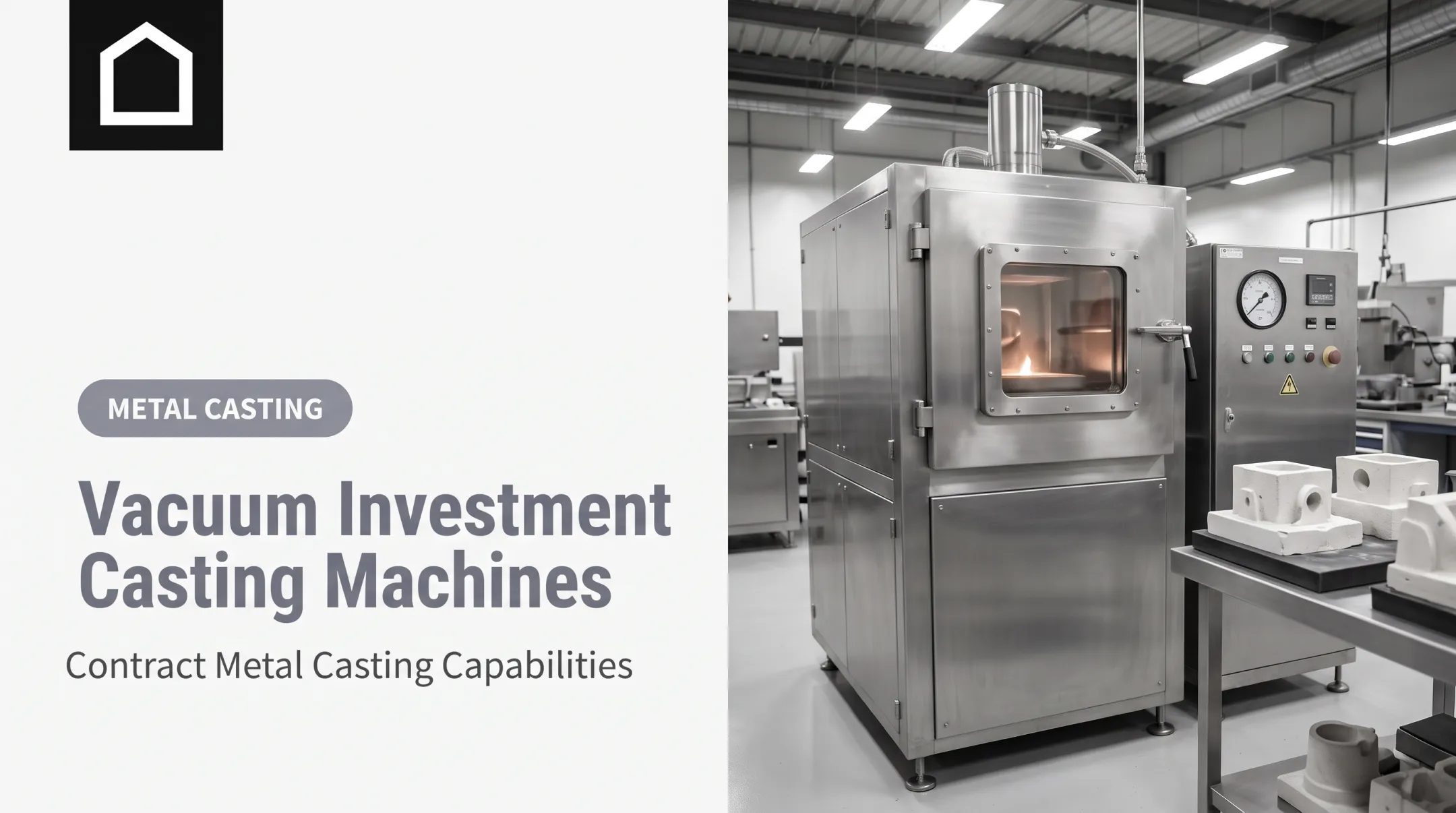
- Vacuum-assisted casting removes air from the cavity before or during the pour, helping fine detail fill completely.
Neither method guarantees a flawless result. The right choice depends on your design's size, delicacy, and the production volume you need.
Design Features That Need Early Review
Flag these before modeling begins, not after a prototype fails:
- Very thin sections or walls
- Deep recesses or sharp internal corners
- Hollow forms
- Delicate prongs or filigree detail
- Fine engraving
- Channels designed for stone setting
Each of these affects how metal flows, how much the piece shrinks on cooling, and how much finishing work it needs afterward.
CAD, 3D Printing, and Revision Control
CAD modeling combined with 3D printing improves repeatability and speeds up revisions. But printed models still need casting-aware design checks. A printed pattern that looks perfect on screen can distort or collapse if walls are too thin for the printing resin, independent of metal-pour issues.
A quick example: a filigree ring designed as a one-off custom piece might tolerate hand-carved wax and some hand-finishing variance.
The same design scaled to a 500-piece production run needs a CAD model built with consistent wall thickness, a rubber mold for repeat wax injections, and tighter tolerance control from the start. Same design, different production strategy.

Common Jewelry Casting Defects and Quality Checks
Even a well-run process can produce defects. Knowing the common defects and their causes helps you ask better questions of a prospective caster.
Defects to Watch For
- Porosity — small pits or gas pockets from overheating, inadequate burnout, or contaminated reused metal
- Shrinkage porosity — voids from incorrect sprue placement, especially at heavier sections that weren't properly fed
- Incomplete filling — thin extremities or prongs that didn't fill, often from temperature or vacuum issues
- Investment inclusions — foreign particles in the metal from investment breakdown
- Cracks — from premature quenching or alloy contamination
- Distortion — a pattern that warps before it's even invested, particularly thin printed resin shapes
Stuller's investment casting guidance lists overheating, poor oven airflow, and inadequate vacuum among the possible causes behind porosity and incomplete fill. The causes overlap, which is why isolating a single fix for a single defect isn't always straightforward.
Quality Checks Worth Requesting
- Inspect the finished casting for surface pits, inclusions, and incomplete fill
- Compare critical dimensions against the approved CAD file or model
- Examine thin sections and stone-setting areas where defects often hide
- Check surfaces under magnification for pitting or investment debris
- Verify the alloy or material certificate against the order specification
Good design review, correct sprue placement, clean burnout, and controlled temperatures all reduce the likelihood of defects. None of that eliminates risk entirely. A provider promising zero-defect casting every time is overstating what the process can guarantee.
How to Evaluate a Jewelry Casting Service
Before you send a design out for quoting, run through this checklist.
Pre-Quote Checklist
- Accepted formats — Do they take CAD files, printed wax, or only physical models?
- Material options — Which gold karats, silver grades, or platinum alloys do they cast?
- Minimum order quantities — Some providers set metal-specific minimums; others advertise none.
- Prototype availability — Can you get a sample before committing to a full run?
- Expected tolerances — What dimensional variance should you plan for?
- Finishing scope — Do they deliver raw castings, or handle polishing and stone setting too?
What Drives the Cost
A casting quote isn't just metal weight times market price. It typically factors in:
- Design cleanup and CAD modeling
- Printing or wax pattern work
- Rubber or silicone mold creation
- Setup and labor
- Metal weight at current market price
- Casting method and finishing level
- Quality inspection and potential remakes
- Shipping and order quantity
Timeline belongs in the same evaluation as price. Lead times vary more than most people expect. Hoover & Strong's published production schedule notes different average production days depending on whether pieces ship raw, mass-finished, or hand-polished. Ask for a stage-by-stage timeline: design review, model approval, casting, finishing, inspection, and shipping. A single end-to-end number hides where delays usually stack up.

Questions Worth Asking Directly
- How are revisions and rejected parts handled?
- What's the process for recasting a flawed piece?
- Can you supply your own metal?
- Who owns the molds and CAD files once the project ends?
- How are approved samples used for future production runs?
Ask for a sample, a portfolio piece, or a process walkthrough tied to your design's complexity. Claims of "precision" or "fast turnaround" mean little without that evidence.
Specialist Caster vs. Integrated Partner
A pure casting specialist may offer deep metal expertise but limited support outside that one step. An integrated product-development partner covers more of the chain, so you coordinate fewer vendors between design, prototyping, and production handoff.
The right fit depends on whether you need only a casting step or broader help from concept to a finished, sellable piece. Either way, confirm jewelry-specific equipment and real casting experience—not just general metalworking capability.
From Prototype to Production With an Integrated Manufacturing Partner
Not every project is pure jewelry casting. Many designers and product teams need broader support getting a concept through prototyping and into production, especially when a piece involves mixed materials, custom packaging, or components beyond precious metal.
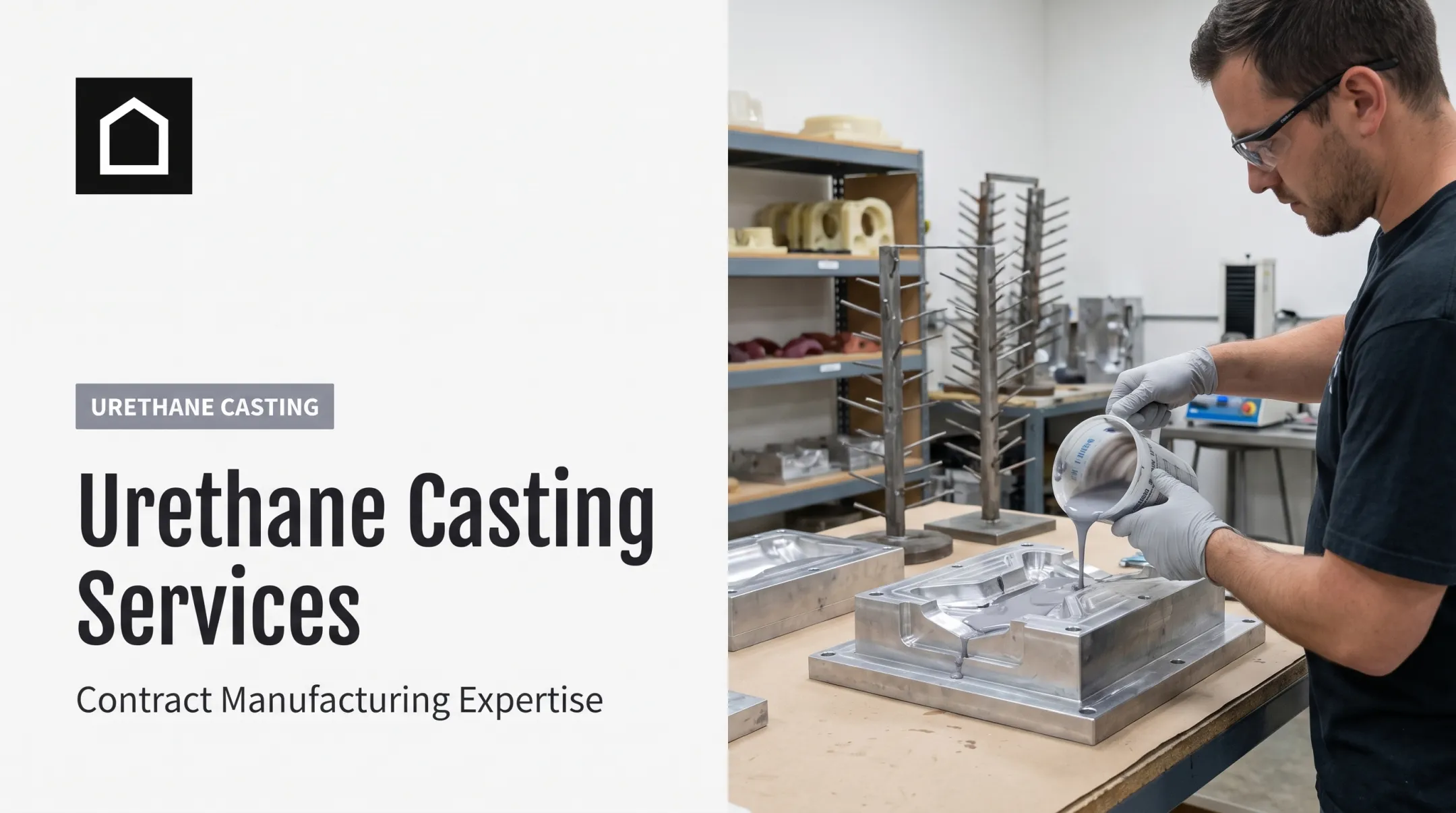
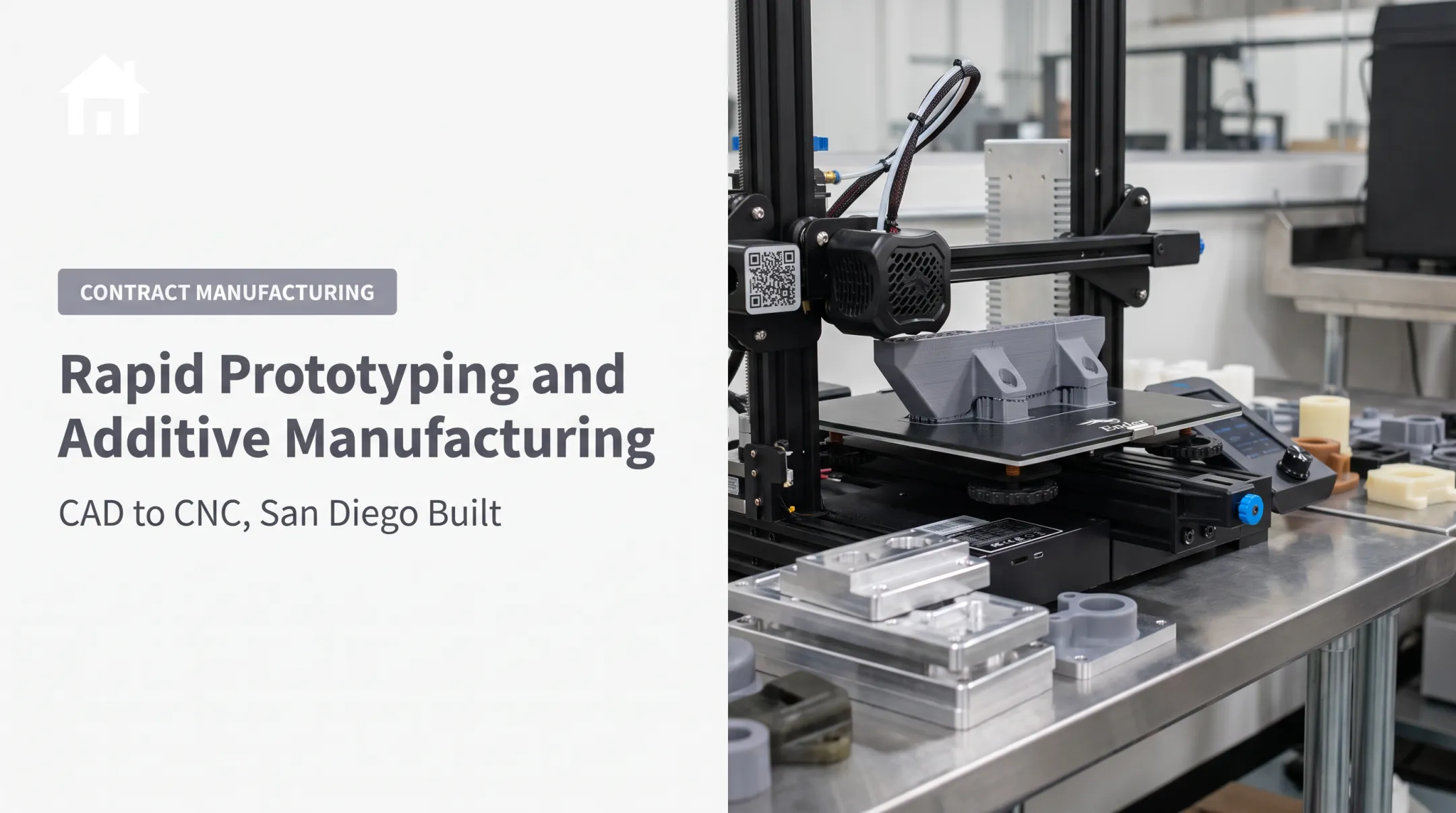
Finine Design and Manufacturing, based in San Diego, CA, works as a product development and manufacturing partner across CAD modeling, 3D printing, CNC machining, urethane casting, injection molding, and production painting.
Models are built by the same team that handles manufacturing, so geometry is shaped around the real production process from the start.
That structure matters when a project needs:
- Concept development and digital modeling
- Prototype review before committing to tooling
- A clear path from an approved prototype into broader production, without switching suppliers mid-project
Finine accepts a 3D CAD model, ideally paired with a 2D drawing noting critical dimensions, tolerances, and materials. Finine quotes each project based on geometry, material, and order volume. There's no published price list, since every project's finishing and tolerance requirements differ.
If you're weighing whether your project needs a jewelry-specific caster, broader prototyping support, or both, talk with the team directly. Jaime is the primary contact for Finine Design and Manufacturing and can confirm project fit, file requirements, materials, and timeline.
Reach Jaime at Jaime@fi9design.com or 1.858.900-9787, Monday through Friday, 9:00 AM to 5:00 PM, with appointments available by request.
Frequently Asked Questions
What is jewelry casting?
Jewelry casting is a manufacturing process where molten metal fills a cavity formed from a wax, resin, or other model. The metal takes on the model's exact shape once it cools and solidifies.
How much does it cost to cast jewelry?
Price depends on several factors:
- Metal type and weight
- Design complexity and modeling work
- Molds, quantity, and finishing level
- Shipping
Request an itemized quote rather than a general estimate.
What metals can be used for jewelry casting?
Common options include gold alloys (10K–18K), sterling silver, and platinum. Availability and alloy specifics vary by provider, so confirm equipment and material capability directly.
How long does jewelry casting take?
The casting step itself is usually fast, but full project timelines include CAD work, prototyping, mold creation, finishing, and inspection. Ask for a stage-by-stage estimate rather than one combined number.
What should I provide to a jewelry casting service for a quote?
Include these details with your request:
- Sketch or CAD file and key dimensions
- Material preference and expected quantity
- Finish requirements and any stone-setting needs
A physical prototype or reference model helps too, if one exists.