
Metal and glass used to dominate medical device design. Not anymore. Plastics now show up in everything from syringe barrels to diagnostic housings to orthopedic implant components, and for good reason: they're lighter, cheaper to mold at scale, and often easier to sterilize repeatedly. But choosing the right medical-grade plastic isn't simple. OEMs and product developers have to balance biocompatibility, sterilization compatibility, and manufacturability, often before a design is even finalized. Get it wrong, and you're looking at costly redesigns or regulatory delays. This guide breaks down the plastic types, the properties that actually matter, and how the right manufacturing partner can keep your project on track.
Key Takeaways
- Medical-grade plastics must pass biocompatibility testing (ISO 10993, USP 88) and hold up under sterilization
- Polypropylene, polycarbonate, ABS, PEEK, and PVC each fit different roles based on strength, clarity, and heat tolerance
- Material selection made early in design prevents expensive rework later
- A single manufacturing partner across prototyping and production cuts vendor complexity and speeds up launch
What Are Medical Plastics?
Medical plastics are polymers engineered and validated for safe use in medical settings, whether that means brief skin contact or years inside the body. What sets them apart is the validation behind them: biocompatibility testing, sterilization compatibility, and documented traceability that ordinary industrial plastics never undergo. Three polymer categories show up repeatedly in medical equipment manufacturing:
- Thermoplastics — can be heated, molded, cooled, and reprocessed (PP, PC, ABS, PEEK, PVC)
- Thermoset elastomers — chemically crosslinked and can't be reshaped once cured (silicone, natural rubber)
- Thermoplastic elastomers (TPEs) — combine rubber-like flexibility with thermoplastic processability, common in tubing and seals The global medical plastics market was valued at $22.26 billion in 2020, growing at roughly 6.1% annually, with the U.S. consuming close to 40% of medical devices produced worldwide, according to a peer-reviewed market analysis. Domestically, U.S. medical equipment and supplies production has stayed well above pre-pandemic benchmarks, reflecting steady demand for plastic-based components.
Is There Actually Such a Thing as "Medical-Grade" Plastic?
Yes, but it's more nuanced than a stamp of approval. The FDA doesn't clear individual materials. Instead, it evaluates the entire finished medical device, including how the material was processed, sterilized, and combined with other components. A resin becomes "medical-grade" when it's backed by biocompatibility data, chemical characterization, and manufacturing traceability for its intended use, not just because a supplier labels it that way. Industrial-grade resin, even one that looks chemically identical, hasn't been through that validation and shouldn't be assumed safe for patient contact.
Types of Plastic Used in
Medical Equipment Different jobs call for different polymers. Here's how the major ones break down:
| Plastic | Common Uses | Why It's Chosen | Polypropylene (PP) | Syringes, connectors, housings | Chemical resistance, easy processing | Polycarbonate (PC) | Equipment housings, surgical tool components | Transparency, toughness, heat resistance | | --- | --- | --- | | ABS | 3D-printed prototypes, structural parts | Rigid, dimensionally stable, disinfectant-resistant | Polyethylene (incl. UHMWPE) | Implants, fluid-handling components | Impact resistance, wear resistance | PEEK | Load-bearing implants, dental tools | High strength, repeated sterilization tolerance | | PVC | Tubing, IV bags, disposables | Flexibility, cost-effective for single-use items | | |

A few specifics worth noting:
- PC shows up in drug-delivery pens, catheter hubs, and manifolds thanks to its clarity and impact strength, according to Covestro's polycarbonate overview
- PEEK has over 20 years of clinical history and more than 15 million implants worldwide, according to manufacturer Victrex. Its flexibility, closer to natural bone than metal, reduces implant loosening risk
- Plasticized PVC works in blood bags and hemodialysis lines, but formulation matters enormously since not all PVC blends are blood-compatible
So What's the "Best" Plastic for Medical Devices?
There isn't one. The right answer depends entirely on:
- Contact duration — a single-use syringe has different requirements than a permanent implant
- Sterilization method — steam, gamma, or EtO each interact differently with polymer chemistry
- Mechanical demands — load-bearing joints need different properties than a diagnostic housing A polymer that's perfect for one application can fail outright in another, even within the same medical device family. Finine Design and Manufacturing works through these tradeoffs daily, guiding dental and orthopedic clients from material selection through injection molding and finishing.
Key Properties That Make a Plastic Medical-Grade
Biocompatibility The material can't trigger toxic, allergic, or inflammatory responses. This gets validated under
ISO 10993, which frames biological evaluation within a broader risk-management process. Depending on contact type, testing might cover cytotoxicity, sensitization, irritation, or genotoxicity. FDA's guidance is clear: endpoint selection depends on the specific exposure — duration, frequency, and anatomical contact all factor in.
Sterilization Resistance Plastics used in reusable medical equipment need to survive repeated sterilization cycles without degrading.
Autoclaving (steam), gamma radiation, and ethylene oxide (EtO) gas are the three most common methods. EtO alone sterilizes roughly 50% of sterile medical devices in the U.S., per FDA data. Compatibility isn't universal across a polymer family:
- PP handles hundreds of steam cycles well but doesn't hold up to gamma
- PC tolerates gamma and EtO but not repeated steam exposure
- PEEK is the rare material that handles all three reasonably well The takeaway: test the actual finished part, not just the resin's general reputation.

Durability and Chemical Resistance Surviving sterilization is only part of the equation. Medical equipment also gets wiped down with disinfectants, exposed to bodily fluids, and handled repeatedly over its service life. The plastic needs dimensional stability through all of it
— no warping, no cracking, no chemical breakdown that could compromise function or introduce contaminants.
Common Medical Equipment and Devices Made from Medical Plastics Plastics touch nearly every corner of modern medical equipment:
- Surgical instruments — blade handles, tool housings, sterilization trays
- Diagnostic equipment housings — enclosures requiring durability and sometimes optical clarity
- Drug-delivery devices — injection pens, inhalers, pump components
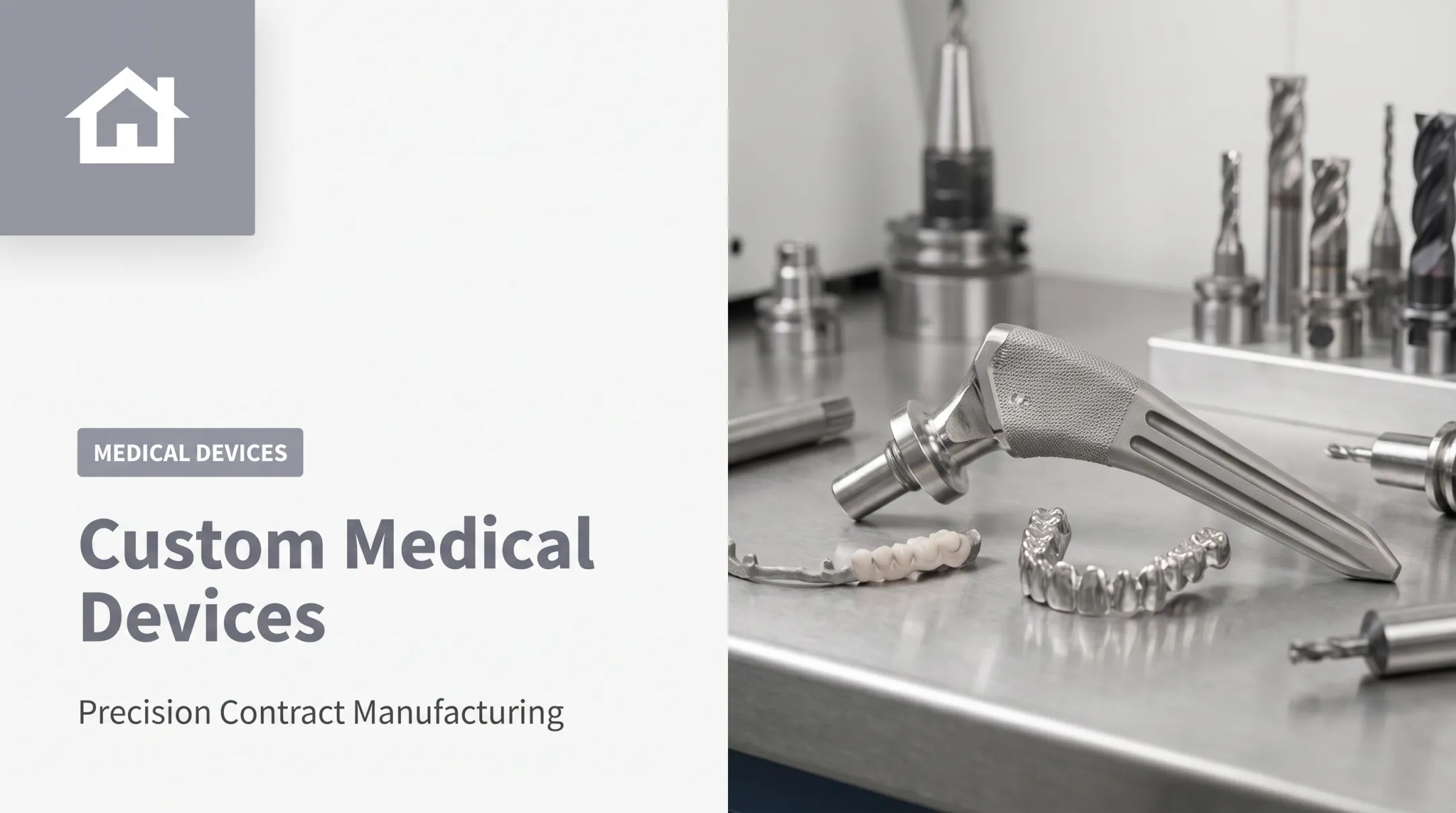
- Dental and orthopedic products — molded dentures, joint-replacement components, sales and educational models
Common examples include syringes, IV bags, surgical trays, tubing, and prosthetics — items patients and clinicians interact with daily. Dental and orthopedic manufacturing deserves its own mention as a specialized corner of medical plastics work. Finine Design and Manufacturing has built specific expertise here. The company supports dental and orthopedic clients through CAD design, prototyping, injection molding, and production painting, helping bring sales and educational products to market. That combination matters in a field where products often need to look production-ready even at the sales-sample stage.
From Concept to Compliant
Product: The Manufacturing Process A typical medical device component moves through a fairly predictable path:
- CAD modeling — converting concepts, sketches, or scans into manufacturable digital models, with design-for-manufacturability adjustments built in
- 3D-printed prototyping — rapid iteration on complex geometries before committing to tooling
- Material selection — matching resin properties to sterilization method, contact duration, and mechanical demands
- CNC machining or urethane casting — for tighter-tolerance prototypes or low-to-medium volume production runs
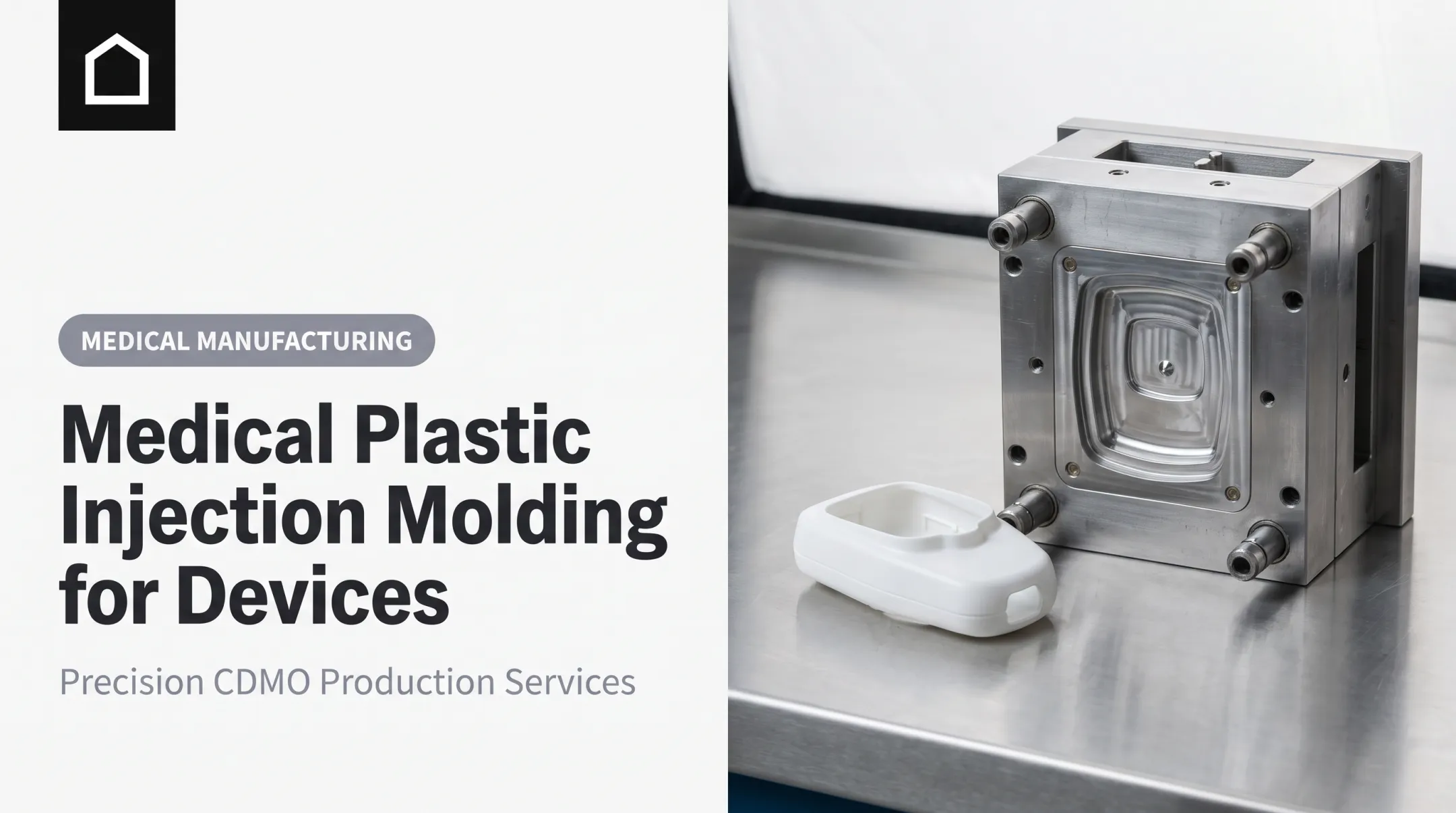
- Injection molding — scaling to repeatable, higher-quantity production once a design is validated
- Finishing — surface prep, production painting, and graphic detailing like silk screening or labeling

Running all six stages through separate vendors introduces delays at every handoff. Each new supplier means re-explaining specs, re-validating tolerances, and waiting on shipping between steps. Working with a single manufacturing partner across CAD, prototyping, molding, and finishing removes most of that friction. Finine Design and Manufacturing, based in San Diego, offers this kind of end-to-end setup: CAD modeling, 3D printing, CNC machining, urethane casting, injection molding, and production painting all under one roof. For companies developing dental or orthopedic medical equipment components, that means fewer vendor handoffs and a shorter path from concept to a production-ready part.
Frequently Asked Questions
What are medical plastics?
Medical plastics are polymers specifically engineered and validated to meet safety, biocompatibility, and performance standards for use in medical devices and equipment. They differ from standard plastics through documented testing and manufacturing traceability.
Is there medical-grade plastic?
Yes. Medical-grade plastics undergo biocompatibility testing and regulatory scrutiny that industrial-grade plastics don't. The FDA evaluates the finished medical device rather than certifying individual materials, so "medical-grade" reflects a validated formulation and process.
What is the best plastic for medical devices?
There's no single best option. The right plastic depends on the application, how long it contacts the body, and which sterilization method the medical device will undergo. A syringe and an implant have completely different requirements.
What medical equipment and disposable products are commonly made from plastic?
Common examples include syringes, IV bags, surgical trays, tubing, and prosthetics. Diagnostic housings and drug-delivery devices also rely heavily on medical-grade polymers.
How do manufacturers choose the right plastic for a new medical device?
Selection depends on biocompatibility requirements, sterilization method, mechanical demands like strength and wear resistance, and the medical device's regulatory classification. Testing the finished, sterilized product is essential before finalizing material choice.
Can medical-grade plastics be recycled?
Most aren't recycled due to contamination risks from patient contact, blood, or bodily fluids. Some unused or pre-sterilized items, like certain sterilization wraps, do enter dedicated recycling streams under strict contamination limits.