
A tank sits at a forward operating base with a cracked bracket. Ten years ago, that vehicle waited weeks for a replacement part shipped from a stateside depot. Today, a soldier can scan the broken piece, send the file to a printer, and have a functional replacement in hours. That shift isn't hypothetical. Direct U.S. Department of Defense spending on additive manufacturing hit $800 million in 2024, up from $300 million the year before, and is projected to exceed $2.6 billion by 2030. Aging equipment, brittle supply chains, and multi-year procurement cycles have long plagued defense logistics. Additive manufacturing won't fix everything, but it's already solving real, expensive problems. This article covers where 3D printing fits across the defense supply chain, the materials and technologies involved, the benefits and hurdles, and how to find a manufacturing partner equipped to handle defense-grade work.
Key Takeaways
- The Army, Navy,
Air Force, and Marines all use additive manufacturing for spare parts, prototyping, and infrastructure, with branch-specific applications
- Lead times that once took months can now shrink to days or hours, with the Navy reporting a 70% reduction in lead time in fleet operations
- Military-grade printed parts still require rigorous testing and certification before deployment; additive manufacturing does not bypass quality control
- Partnering with an experienced product development firm helps smaller defense suppliers move from prototype to compliant production faster
How Is 3D Printing Used in the Defense Industry?
Additive manufacturing lets defense units produce parts on-demand at bases, aboard ships, or in forward-deployed units, instead of waiting on traditional supply chains. Digital scanning captures the exact geometry of a broken or obsolete part, which is critical for sustaining legacy equipment manufacturers stopped producing years ago. A 2015 GAO report found the DoD didn't systematically track additive manufacturing efforts department-wide. Adoption has grown at the unit and branch level, organically, rather than through a single top-down mandate.
Branch-by-Branch Applications Each branch has developed its own approach:
- Army: The 2024 Battle-Damaged Repair and Fabrication (BDRF) initiative assessed more than 40,000 vehicle parts, built over 600 CAD models, and approved temporary parts across nearly four dozen product lines
- Navy: Shipboard printing covers components like eductors and cooling-fan rotors, with NAVSEA reporting an 80% repair-time reduction at its Rota facility
- Air Force: The C-5M program replaced delaminated phenolic fairing blocks with printed thermoplastic parts, restoring mission-capable status faster than legacy suppliers could
- Marines: Deployed personnel train on field printing under a risk-based model where commanders decide if a printed part is fit for use

Beyond repairs, additive manufacturing also shortens prototyping cycles for drones, protective gear, and custom tooling before programs commit to full-scale production.
Core Applications Across the Defense Supply Chain
Spare Parts and Maintenance
This is where additive manufacturing earns its keep. Printed hatch plugs, brackets, filters, and custom tools keep vehicles, aircraft, and ships operational instead of grounded. Some BDRF-produced parts have outperformed the originals and were submitted for consideration as permanent secondary sources.
Prototyping and R&D The Army Research Laboratory's
SPARTA program is a strong example. The two-pound drone airframe can be printed overnight and assembled without specialized tools, then flown for 30-60 minutes. Defense teams use that cycle to try a design, adjust it, and print again in a fraction of traditional development time.
Infrastructure and Construction In January 2025, Fort Bliss opened the
DoD's first 3D-printed barracks: three buildings, each 5,700 square feet, housing up to 56 soldiers. ICON's Vulcan gantry printer laid down proprietary concrete for the structures. The Army has since signed a $62.8 million contract for 10 more.
Clinical and Field Support
Deployed clinical teams have used additive manufacturing for bioactive bandages, surgical instruments, and custom devices. In one notable case, the Navy printed teeth in 2021 to restore a young Marine's ability to eat and speak after jaw reconstruction. Limitations remain, though. Printed instruments can be weaker than stainless steel, and some polymers don't hold up to steam sterilization.
Where Contract Manufacturers Fit In
Not every defense supplier has an in-house additive manufacturing department. Many rely on outside
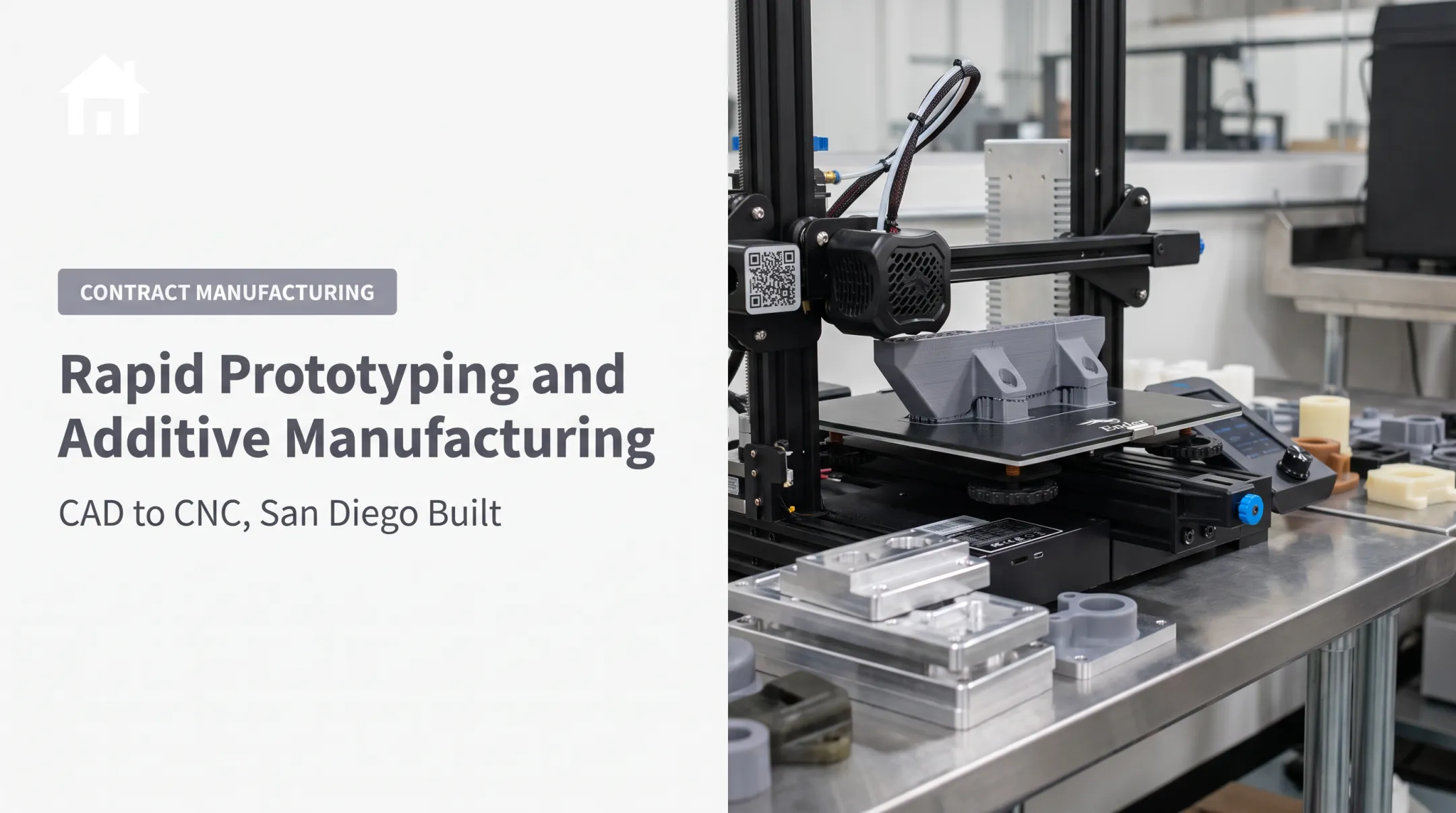
product development partners to bridge that gap. Finine Design and Manufacturing, based in San Diego, is one example of this kind of partner. Their process typically starts with converting a concept, scan, or existing design into a manufacturable CAD model, then moves into 3D printing for rapid iteration. From there:
- CNC machining handles prototypes and low-volume parts needing tighter tolerances or engineering-grade materials
- Urethane casting bridges the gap between prototyping and full production for low-to-medium-volume military components
- Injection molding takes over once a design is validated and volume justifies tooling investment
For smaller defense suppliers without a full manufacturing footprint, this kind of end-to-end support can be the difference between a promising prototype and a compliant, deployable part.

Materials and Technologies Used in Defense 3D Printing Different defense applications call for different additive processes:
FFF/FDM for field-deployable printing of brackets, fixtures, and non-structural replacement parts
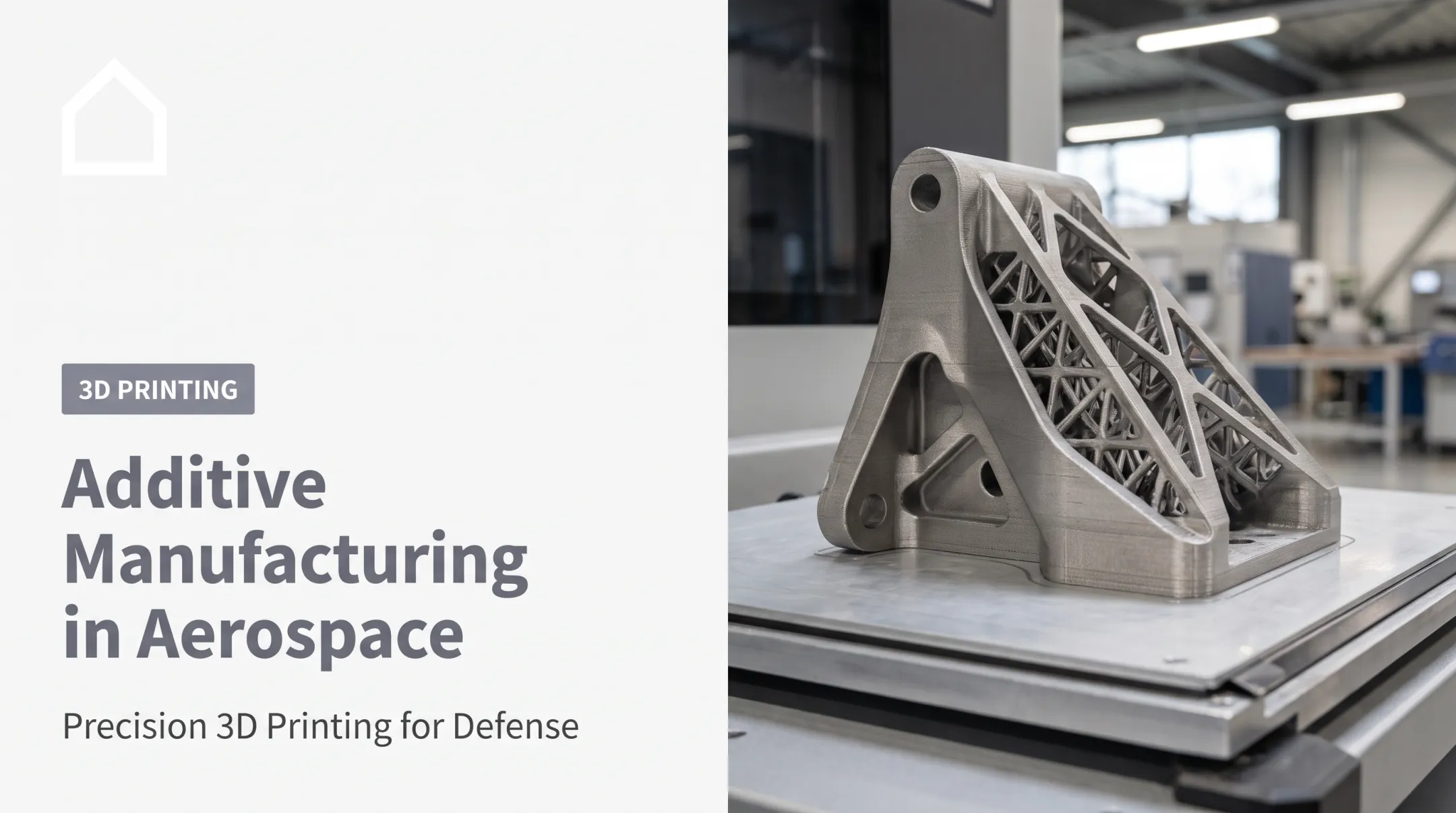
Metal powder bed fusion for structural components requiring strength under load
Large-scale concrete extrusion for barracks, bunkers, and shelters Materials selection follows the same logic:
Reinforced polymers for lightweight, non-critical parts
Titanium and magnesium alloys, including experimental WE43 magnesium tested by Army Research Lab and the University of Central Florida, for strength-to-weight performance in demanding applications
Composites when both durability and weight matter Recycled feedstock is drawing interest for in-theater sustainability. Army researchers explored turning waste plastics and cardboard fiber into usable filament. One concept used roughly 10 empty water bottles to produce a vehicle radio bracket in about two hours.
The approach is still developmental, not standard practice, but it points toward where field printing might head next.
Benefits and Challenges of Military Additive Manufacturing Operational benefits include:
- Faster sustainment of aging platforms without waiting on discontinued suppliers
- Reduced logistics footprint for forward-deployed units
- Weight reduction through part consolidation, especially in titanium components
- Compressed prototyping cycles for new equipment Adoption challenges remain real:
- Qualifying a single non-flight-critical part can take a full year, according to National Defense Magazine
- Universal AM standards still don't exist across the DoD
- Cybersecurity gaps: a 2021 DoD Inspector General audit found five sites failed to secure AM systems, treating printers as shop tools rather than networked IT assets
- Training shortfalls: field personnel need consistent education to operate printers and evaluate output, not occasional exposure

Clearing these hurdles usually comes down to standardized quality assurance and manufacturing partners who already understand regulated industries.
Regulatory and Quality Considerations for
Defense-Grade Parts Military 3D printed components don't go into service without scrutiny. Parts typically undergo X-ray and CT scanning, along with testing against defense specifications, before deployment. DoDI 5000.93, effective since 2021, formalizes qualification for any additive manufacturing part entering the fleet. It requires:
- Risk-informed qualification processes
- Formal certification pathways
- Defined approval authority for each part
Working with a manufacturer that has cross-industry regulated experience helps. Finine Design and Manufacturing, for instance, serves military and automotive clients, sectors where quality expectations and documentation requirements run high, even when formal defense certifications vary by project and part. Beyond U.S. requirements, NATO and allied forces are pushing toward standardization. Efforts include a shared digital library for spare-parts data and joint material-testing frameworks, aimed at making printed parts interoperable across allied logistics chains.
Frequently Asked Questions
Does the military use 3D printing?
Yes. The Army, Navy, Air Force, and Marines all use additive manufacturing today, from spare parts and vehicle repairs to prototyping drones and even 3D-printed barracks at Fort Bliss.
What is illegal to print on a 3D printer?
Printing undetectable firearms or certain regulated weapon components without proper authorization violates federal law. Defense-related designs are also tightly controlled, and copyrighted or restricted technical data packages can't be printed without approval.
Can 3D printing produce aircraft parts?
Yes. The Air Force's C-5M program uses printed thermoplastic fairing components, and GE Aerospace received Air Force approval for a metal-printed engine sump cover. Larger structural metal parts are still an active area of research.
How much does military 3D printing cost compared to traditional manufacturing?
There's no universal savings percentage, but the mechanisms are clear: fewer parts through consolidation, reduced titanium waste, and shorter lead times. The Navy reports a 70% reduction in lead time in some fleet applications, which translates directly into cost and readiness gains.
What materials are used for defense-grade 3D printed parts?
Reinforced polymers, titanium and magnesium alloys, and composites dominate, chosen for their strength-to-weight performance in demanding field and structural applications.
How can a company get started with defense-related 3D printing and manufacturing?
Partnering with an experienced product development firm such as Finine Design and Manufacturing, which offers CAD modeling, prototyping, and a clear path to scalable production, is the fastest way to move from concept to a compliant finished part without building an entire in-house manufacturing operation.