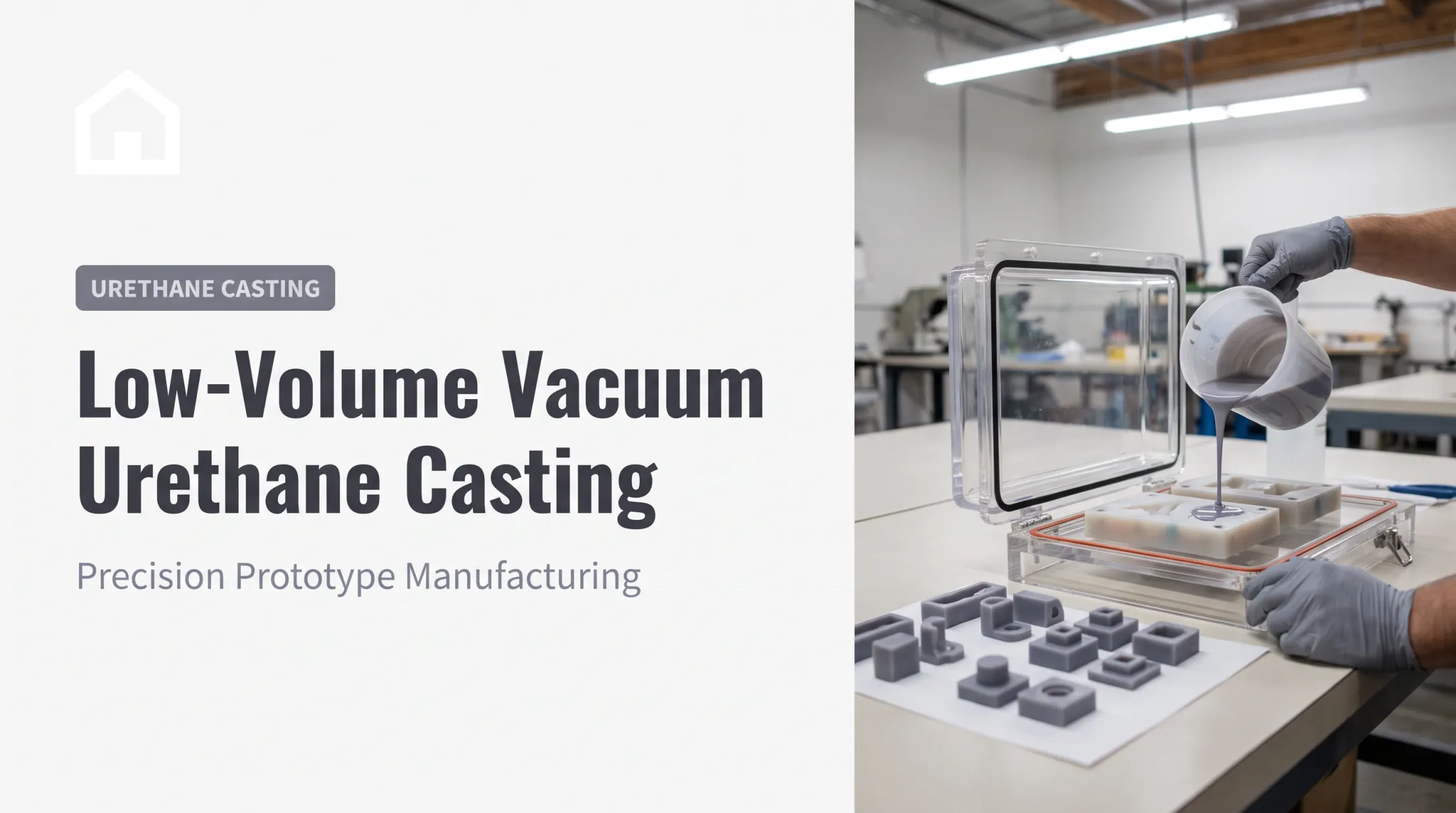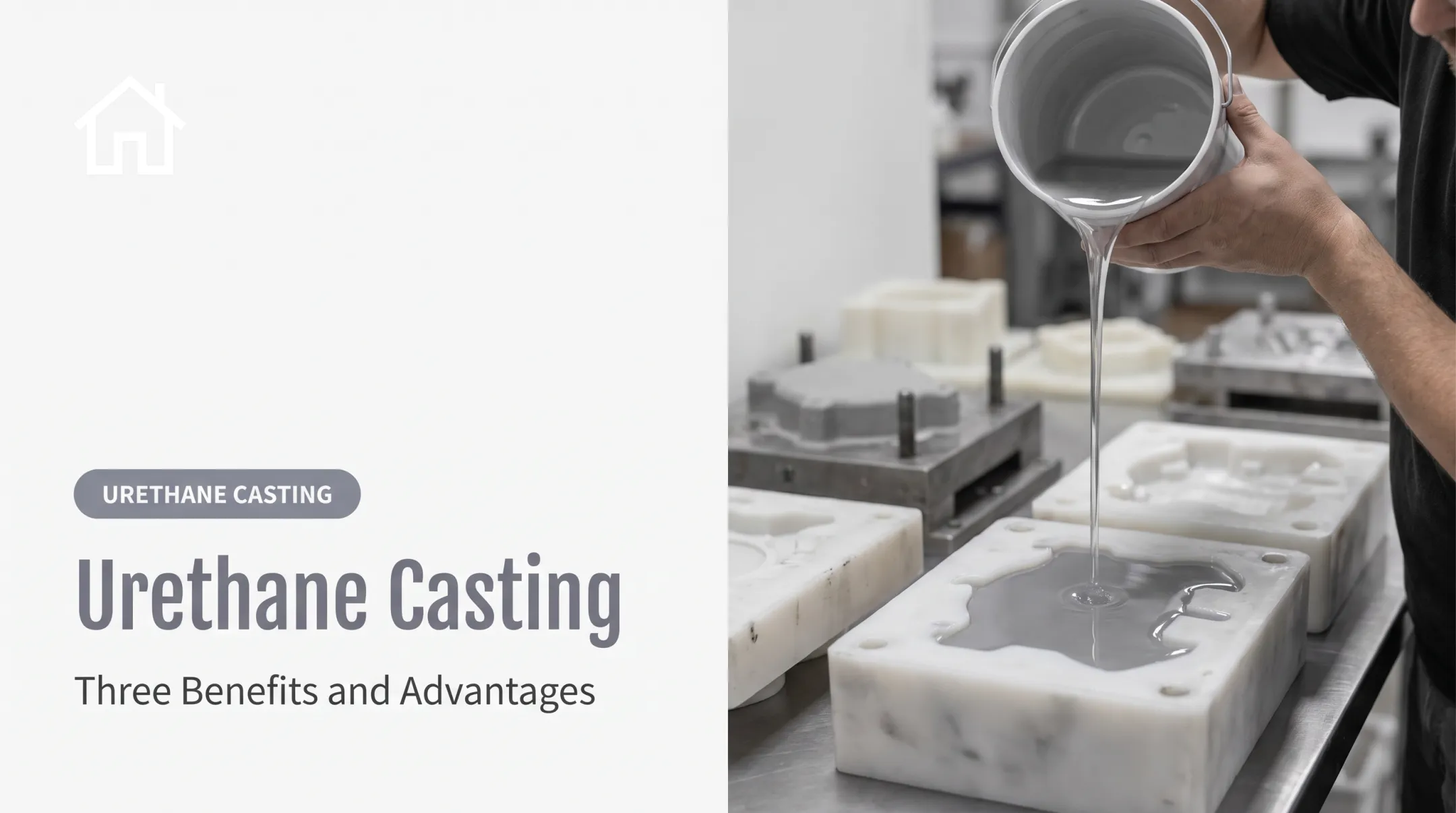

Picture this: your product team needs 50 production-quality parts to hand out for field testing before anyone commits six figures to injection molding tooling. 3D printing won't cut it, the material properties are wrong. Injection molding is overkill for this quantity and timeline. You need something in between. That's exactly the gap urethane casting fills. Urethane casting uses low-cost silicone molds to produce parts that look and perform like production-grade plastic, without the steel tooling investment. This guide covers how the process works, which materials to choose, how it stacks up against injection molding and 3D printing, and how to pick a manufacturing partner that won't slow you down.
Key Takeaways
- Urethane casting bridges the gap between rapid prototyping and full-scale injection molding
- Silicone molds avoid steel-tooling cost and support short-run through bridge-production volumes
- Rigid, flexible, and specialty resins deliver production-like parts that mimic dozens of plastics
- One integrated manufacturing partner cuts handoffs, shortens timelines, and lowers quality risk
What Is Urethane Casting?
Urethane casting, sometimes called vacuum casting or polyurethane casting, pours a two-part urethane resin into a silicone mold built from a master pattern. The result is parts that closely match injection-molded quality—without cutting steel tooling. Here's why teams choose it:
- Low tooling cost: silicone molds cost a fraction of hardened steel tooling
- Fast turnaround: molds can be ready in days, not weeks
- Production-like quality: surface finish and material behavior mimic injection-molded parts
Published industry benchmarks put typical run sizes in the 10–100 unit range per mold. Silicone tooling generally holds up for roughly 20–50 casts depending on part complexity and resin type, according to Formlabs' guide to vacuum casting. Some specialized silicone formulations last longer. Mold life and practical run size still depend on your geometry and resin, so base planning numbers on a quote for the actual part. A common point of confusion: cast urethane and polyurethane are the same base chemistry. "Cast urethane" refers to the process—resin poured into a silicone mold—not a different material. Master patterns for the mold are typically produced through CAD modeling paired with 3D printing or CNC machining. An integrated partner keeps that handoff tight. Finine Design and Manufacturing, for example, handles CAD modeling, 3D printing, and CNC machining in-house, so the master pattern and casting process stay aligned from day one.
The Urethane Casting Process, Step by Step The process moves through four stages:
- Master pattern creation
- Silicone mold construction
- Resin mixing and pouring
- Curing, demolding, and finishing

Step 1: Master Pattern Creation Everything starts with a
master pattern, usually 3D printed or CNC machined. Surface finish, dimensional accuracy, and detail on the master set the ceiling for every cast part that follows. A rough master produces rough parts—defects at this stage carry through the full run.
Step 2: Silicone Mold Construction
Liquid silicone is poured around the master and vacuum-degassed to pull out trapped air. Skip degassing and bubbles stay in the mold cavity, then transfer as defects onto every cast part. Once cured, the mold is cut open and the master is released, leaving a flexible negative cavity.
Step 3: Mixing and Pouring Two-part urethane resin is mixed, pigmented when color matching matters, and poured or vacuum-cast into the mold.
Working time is short—often just minutes—so mix ratios and pour timing have to be exact.
Step 4: Curing, Demolding, and Finishing
Parts cure in the mold, often with heat assistance to speed the reaction. After demolding, finishing covers flash trimming, sanding, and painting when the application needs it. Silicone is the standard mold material because it releases complex geometries and undercuts without damaging the part, and it handles the mild heat of curing. That flexibility is what makes short-run casting practical for intricate designs. Published benchmarks put typical turnaround around 10 days from a finished master to parts in hand, with broader service ranges of about one to three weeks depending on size and complexity (Formlabs). Treat any lead-time promise as an estimate until your supplier quotes your specific part.
Urethane Casting Materials and Properties Material selection starts with the Shore hardness scale:
- Shore A: Softer, flexible materials such as rubber, gaskets, and grips
- Shore D: Harder, rigid plastics such as structural housings and brackets

Rigid Urethane Applications Rigid formulations mimic ABS, polycarbonate, glass-filled nylon, and similar engineering plastics. Common uses include:
- Enclosures and housings
- Structural brackets
- Fit-and-function test parts
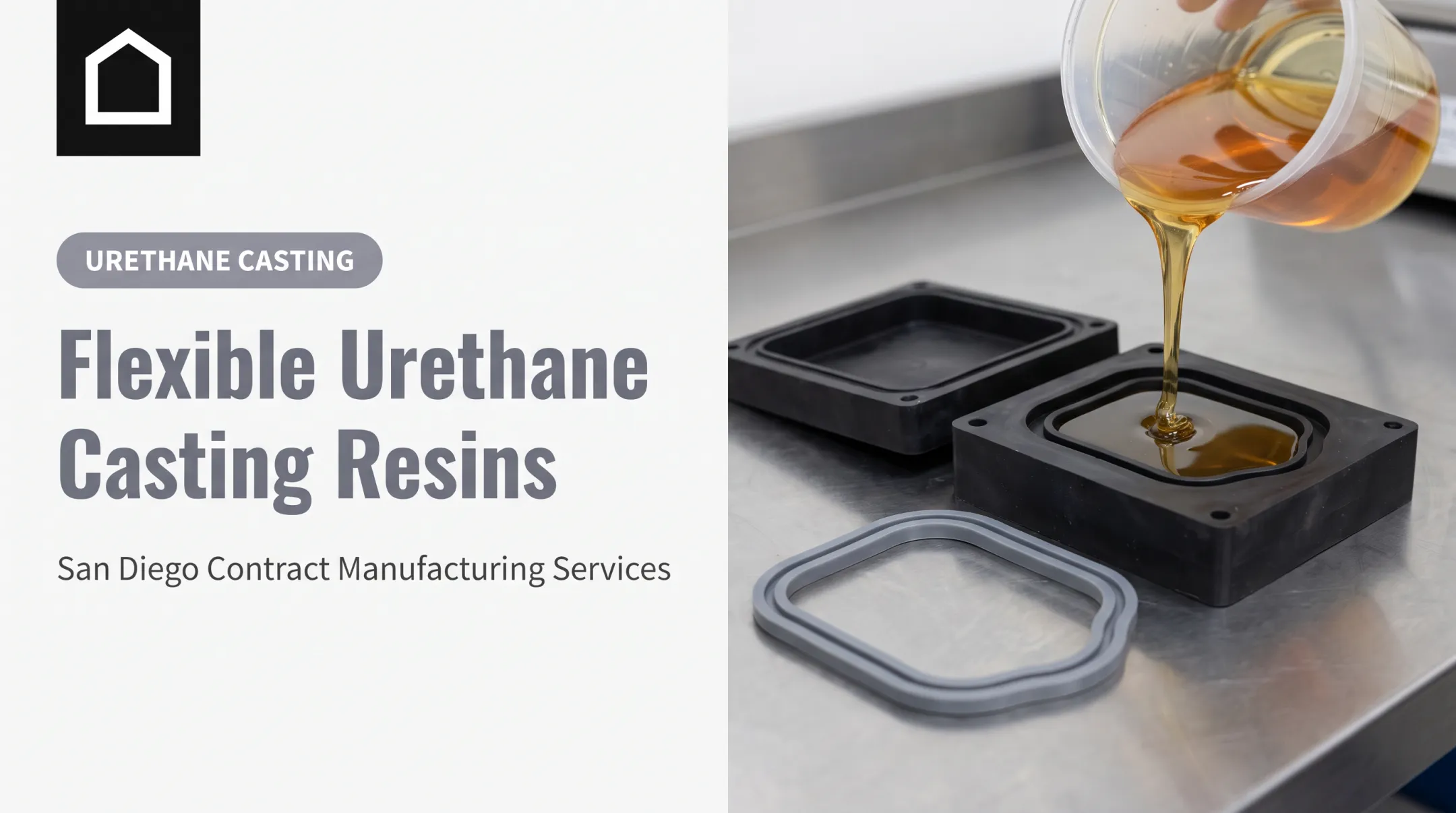
Flexible Urethane Applications Flexible, elastomeric urethanes behave more like TPE or rubber. Common uses include:
- Seals and gaskets
- Soft-touch grips
- Wearable device components
Specialty Formulations Beyond standard rigid and flexible grades, suppliers offer flame-retardant resins tested to standards like
UL 94, plus formulations marketed for FDA-relevant or clinical-contact use. For clinical or safety-critical parts, do not rely on a blanket "clinical grade" label. Confirm:
- The exact resin grade
- Its test certification
- How the finished part will be processed and sterilized
Finine Design and Manufacturing brings particular depth here through its work on dental and orthopedic sales and educational products. In that work, material behavior and finish quality both matter.
Urethane Casting vs. Injection Molding vs. 3D Printing
Choosing the right method comes down to volume, budget, and timeline. Here's how the three compare:
| Factor | 3D Printing | Urethane Casting | Injection Molding | Tooling cost | None | Low (silicone mold) | High (steel mold) | Typical lead time | ~3 days | ~20 days | ~38 days | Volume range | 1-100 units | 1-100 units | 50-1,000,000+ units | | --- | --- | --- | --- | | Surface/material quality | Limited | Production-like | Highest, most consistent | | | |

Benchmarks from Xometry Pro's 2025 vacuum casting comparison. Actual costs and timelines vary by part and supplier.
When to Use Each Method
- Early concept validation → 3D printing gets you a physical part fast, low-cost, and disposable if it's wrong.
- Design verification and small batches → Urethane casting gives you production-representative parts without tooling commitment.
- Confirmed high-volume demand → Injection molding delivers the lowest per-unit cost at scale. Most product teams move through all three stages sequentially. That's where a single-source partner pays off. Bouncing your files, master patterns, and specs between three vendors adds delay and risk at every handoff. Finine Design and Manufacturing offers 3D printing, urethane casting, and injection molding under one roof. The same team that built your prototype can carry it into bridge production and beyond.
Industries and Applications Served
Automotive Urethane casting delivers production-realistic parts before you commit to hard tooling on a new vehicle program. Common applications include:
- Prototype and bridge-production components
- Housings and bushings
- Interior and exterior trim pieces
Dental and Orthopedic Custom-fit models, sales and educational products, and low-volume device components suit casting when accuracy and surface finish matter.
Finine Design specializes in dental and orthopedic sales and educational products—work that depends on both dimensional accuracy and presentation-ready finish.
Consumer Electronics and Military &
Defense Enclosures, connectors, and ruggedized housings often need functional testing before full production. Casting lets teams validate:
- Fit and assembly
- Drop and handling resistance
- Form and function before locking in injection tooling Across these sectors, the payoff is the same: real material behavior and finish at a fraction of injection molding's tooling cost and lead time.

Choosing the Right Urethane Casting Partner Not every casting vendor operates the same way. Look for these capabilities:
- In-house mold-making: outsourced tooling adds a middleman and another delay to every revision
- Engineering and DFM support: a partner who catches design issues before they become mold problems
- Material breadth: access to rigid, flexible, and specialty formulations without switching vendors
- Integrated finishing: trimming, sanding, painting, and graphics handled without a separate shipment Red flags to watch for:
- Mold-making outsourced to a third party you never talk to directly
- A narrow material catalog that forces compromises on your part design
- Vague or shifting lead-time promises
Finine Design and Manufacturing consolidates the entire chain at its San Diego facility: CAD modeling, 3D printing, CNC machining, urethane casting, injection molding, and production painting. That structure removes vendor handoffs and keeps your project moving on one timeline instead of three.
Frequently Asked Questions
What is urethane casting?
Urethane casting pours two-part resin into a silicone mold made from a master pattern. It's ideal for producing low-volume, production-quality parts before investing in injection molding tooling.
Can you cast urethane rubber in a silicone mold?
Yes. Silicone is the standard mold material because it flexes enough to release complex geometries, resists the mild heat of curing, and captures fine surface detail accurately.
What are the key differences between injection molding and urethane casting?
Injection molding requires expensive steel tooling and suits high-volume production, while urethane casting uses low-cost silicone molds for short-run and bridge-production volumes with much faster setup.
What is the difference between cast urethane and polyurethane?
There isn't a material difference. Cast urethane refers to the casting process, using silicone molds, while polyurethane is the resin chemistry itself.
How long does a silicone mold last in urethane casting?
Typical silicone molds hold up for roughly 20-50 casts, depending on part complexity and resin type, though specialized silicone can extend that life significantly.
Is urethane casting suitable for dental or orthopedic products?
Yes. FDA-relevant and clinical-contact urethane formulations exist, though you should verify certification and processing for your specific application. Finine Design and Manufacturing regularly supports dental and orthopedic product development with certified urethane casting.