
Many manufacturers struggle when customization requirements collide with traditional production models built for scale, not variety. Industries like medical devices, aerospace, defense, and consumer electronics increasingly need small batches of highly specific products, not thousands of identical ones.
This is where high-mix low-volume (HMLV) manufacturing comes in. This article covers what HMLV actually means, the industries that depend on it, the operational headaches it creates, and practical strategies to manage it well.
Key Takeaways
- HMLV prioritizes flexibility over standardization—many product variants, small batches
- Medical devices, aerospace, defense, and automotive customization depend on HMLV models
- Top operational challenges: frequent changeovers, quality consistency, and inventory complexity
- Flexible equipment, standard work, and cross-trained staff keep changeovers fast
- A single end-to-end manufacturing partner cuts coordination overhead and speeds delivery
What Is High-Mix Low-Volume (HMLV) Manufacturing?
HMLV manufacturing means producing a wide variety of product designs, each in small quantities. Peer-reviewed research describes it as involving many product numbers, varied routings, job-shop production conditions, and variable cycle times and demand (MDPI's 2023 review). The term has two parts:
- High-mix: A wide range of product designs, specifications, or configurations moving through the same facility
- Low-volume: Small production runs, anywhere from a handful of units to a few thousand, depending on the industry HMLV often overlaps with make-to-order manufacturing, but they're not identical. Make-to-order describes when production starts—triggered by a customer order rather than a forecast, according to Siemens. HMLV describes the mix and volume of what's being produced. A shop can be make-to-order without being high-mix, but the two frequently go hand in hand.
Core Characteristics
HMLV production is defined by:
- Variation — few, if any, identical production runs back-to-back
- Customization — products tailored to specific customer or patient needs
- Flexibility — equipment and staff capable of switching setups quickly
- Adaptability — processes designed to handle unpredictability, not eliminate it Demand for this kind of customization isn't new. NIST has documented strong demand for mass customization driven by product variety and individualization for years. That pressure has only intensified as customers expect products built around their needs—not off-the-shelf options.
Common Industries That Rely on HMLV
Several sectors depend on HMLV because standardized production simply doesn't work for their products:
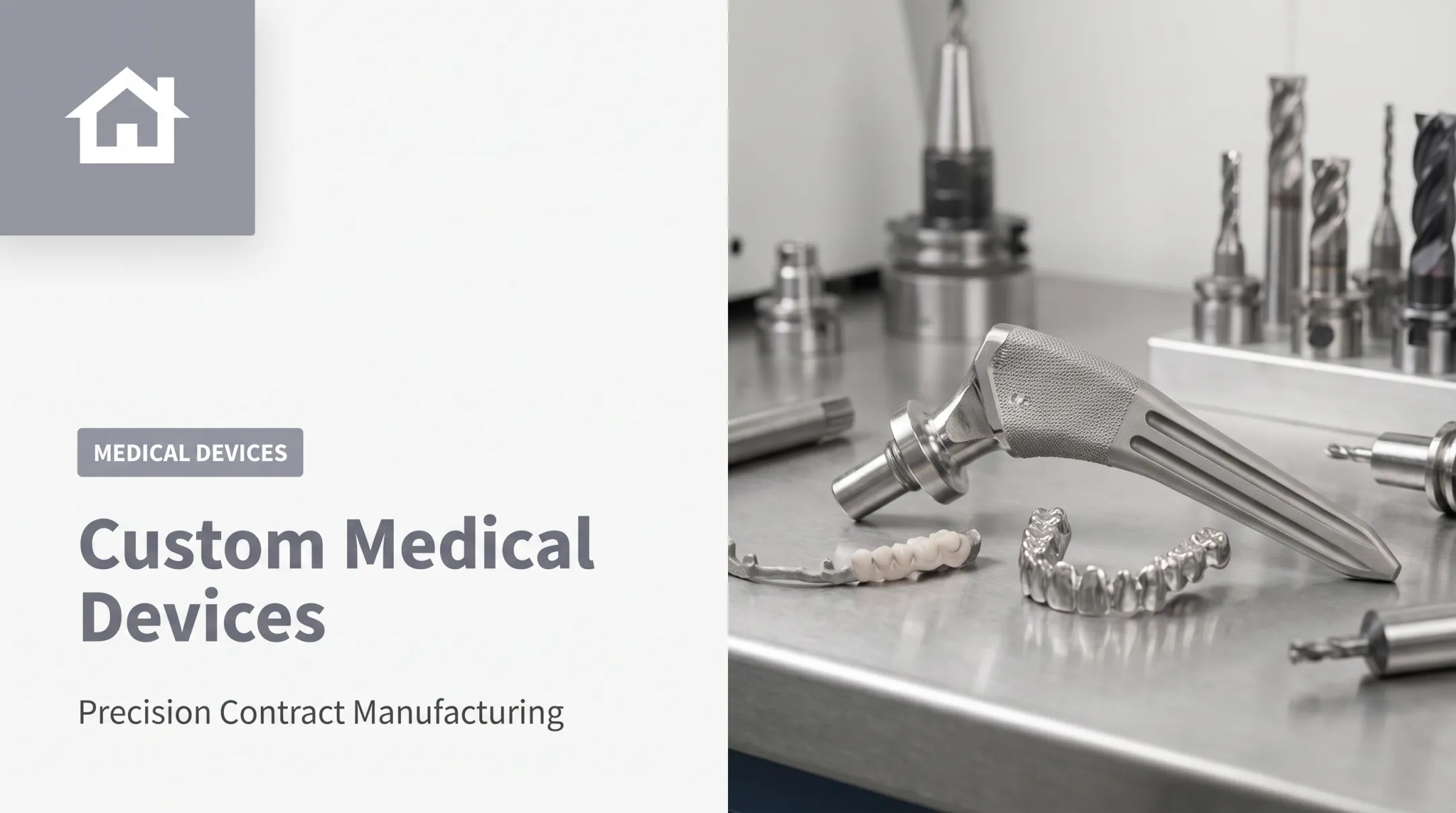
- Medical devices — orthopedic implants and dental aligners often require patient-specific geometry produced in small batches
- Aerospace and defense — complex fabrication, high per-unit costs, and long lead times define these sectors as HMLV (Springer, 2022)
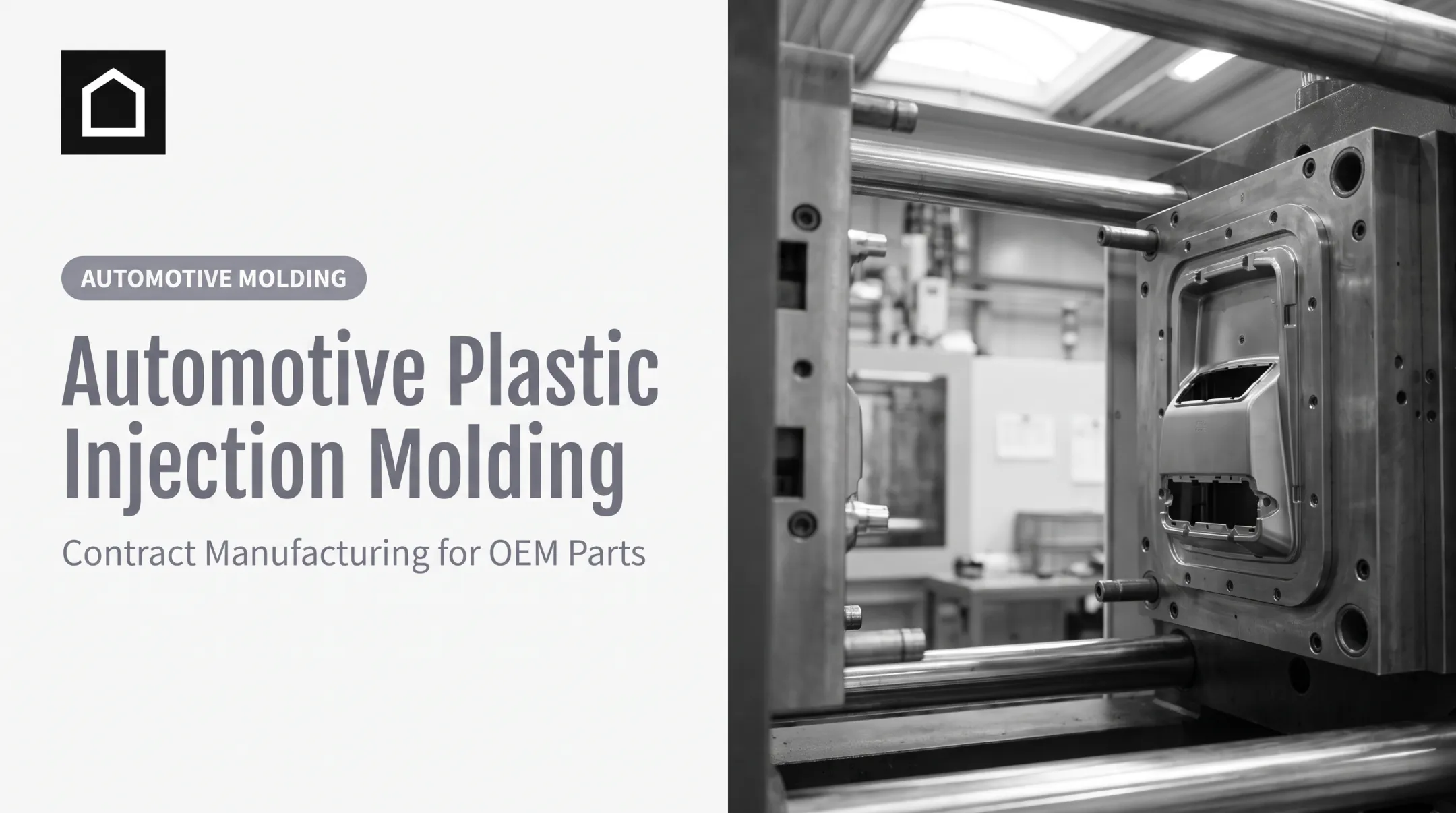
- Automotive — limited-edition and custom vehicle programs run alongside standard mass-production lines
- Consumer electronics — frequent product refreshes and configuration variants create constant small-batch runs Medical and dental products are a strong example. A dental aligner or orthopedic guide is often designed around one patient's anatomy, so it can never be mass-produced. The FDA also classifies devices like the Clear Moves Aligner as regulated Class II products under 21 CFR 872.5470, adding documentation requirements on top of the manufacturing complexity (FDA 510(k) filing).

HMLV vs. High-Volume Low-Mix (Mass Production)
High-volume low-mix, or mass production, is HMLV's mirror image. It focuses on producing large quantities of a single standardized design with minimal variation to capture economies of scale.
| Dimension | HMLV | High-Volume Low-Mix |
|---|---|---|
| Product variety | Many distinct designs | One or few standardized designs |
| Planning approach | Job-shop routing, variable cycle times | Repetitive, capacity-focused scheduling |
| Changeover frequency | Frequent, built into daily operations | Infrequent, spread across long runs |
| Typical industries | Medical, defense, custom automotive | Consumer packaged goods, mass-market vehicles |
Many companies use both models simultaneously. An automotive manufacturer might run a high-volume line for its best-selling sedan while operating an HMLV line for limited-edition or performance trims.
The right model depends on the product, not the company as a whole.
Key Challenges in HMLV Manufacturing
HMLV's flexibility comes at a cost. Here's where manufacturers typically get stuck:
- Production complexity — frequent changeovers between setups create inefficiencies and eat into productive time. NIST notes this kind of task variation directly challenges productivity and equipment utilization.
- Quality assurance — consistent quality across varied, small-batch runs is harder than on a repetitive line, especially when complex geometries mean every part differs slightly.
- Inventory management — stocking dozens or hundreds of unique components in small quantities creates constant risk of overstock or shortage.
- Cost constraints — reduced economies of scale mean higher per-unit costs are baked into the model from the start.
- Workforce adaptability — employees must switch between production tasks without errors, which requires broader skill sets than single-task repetitive roles.
A 2023 review points out that random job-shop routing complicates value-stream mapping, and that inadequate master data quality limits how well ERP and MES systems can plan and control production. In other words, the complexity isn't just physical. It's a data problem too.

Strategies to Overcome HMLV Challenges
Manufacturers that succeed at HMLV invest in a handful of specific practices.
Build in Process Flexibility
Flexible equipment and quick-changeover methods cut the downtime that eats into HMLV productivity. Common tactics include:
- Modular fixturing for faster job swaps
- Standardized clamping systems across product families
- Setup work staged before the previous job finishes
Tighten Quality Control
Precision inspection matters more, not less, when every batch might look different. Manufacturers need inspection methods capable of catching defects across varied product types, particularly for complex geometries that don't lend themselves to simple go/no-go gauges.
Manage Inventory Smartly
Demand forecasting and lean inventory practices help avoid the classic HMLV trap: too much of parts you don't need, too little of parts you do.
Match the production process to actual quantity instead of defaulting to one method:
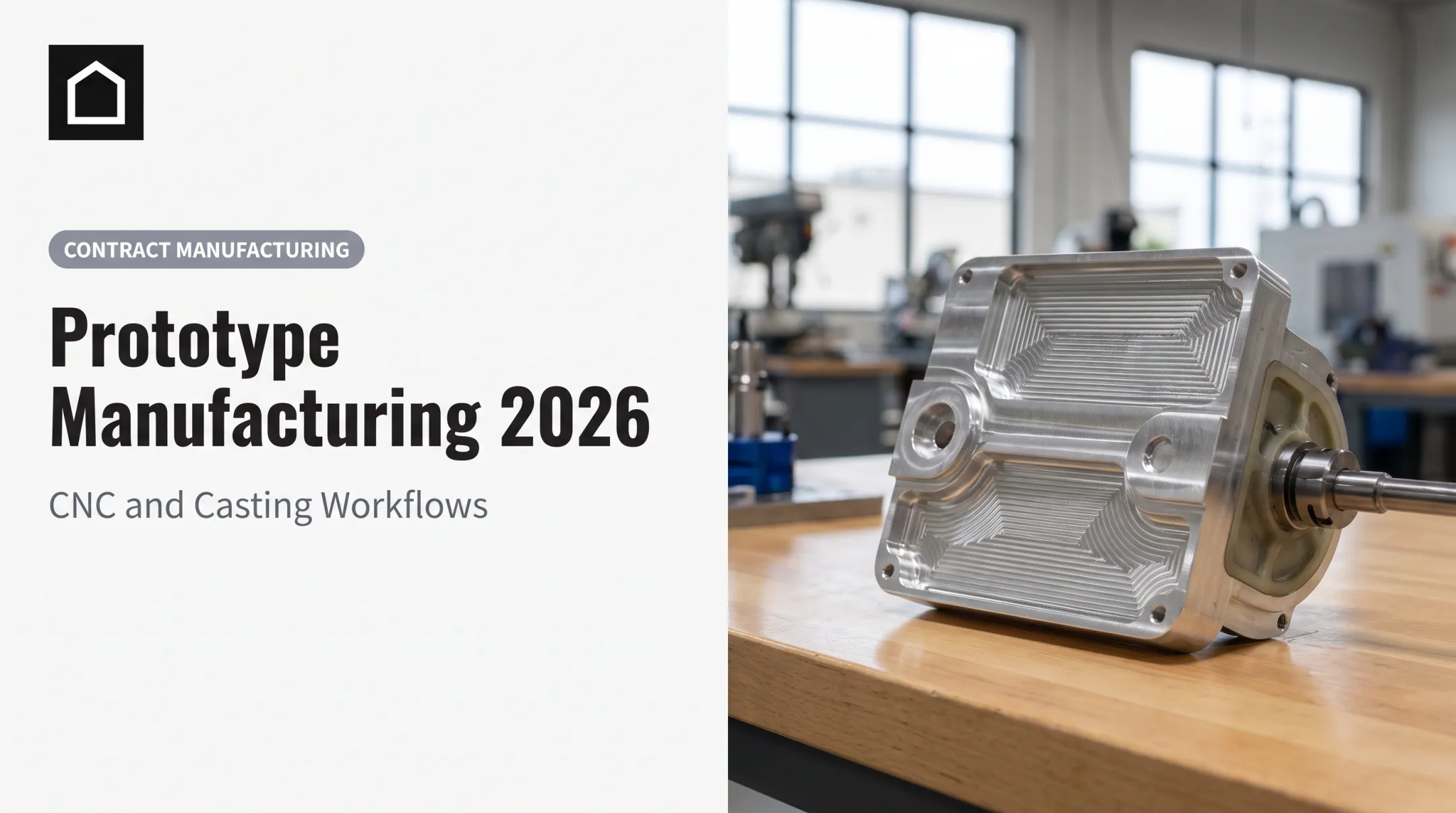
- CNC machining for precision low-volume runs
- 3D printing for fast prototypes and one-offs
- Casting or molding when volume starts to justify tooling
Standardize Where You Can
Even custom orders benefit from documented, repeatable processes. Written work instructions reduce errors and speed up onboarding for new staff, since cross-trained workers can reference a known process instead of relying on memory or experience alone.

Consolidate with a Single Partner
Most HMLV coordination pain gets solved here. One manufacturing partner across CAD modeling, prototyping, machining, and finishing eliminates the vendor handoffs that slow everything down.
Finine Design and Manufacturing's integrated model follows this approach. Instead of juggling separate vendors for design, prototyping, and production, clients get these capabilities under one roof:
- CAD modeling and refinement
- 3D printing and CNC machining
- Urethane casting and injection molding
- Production painting and finishing
For regulated industries like medical and defense, where documentation and precision matter at every stage, fewer vendor transitions mean fewer chances for miscommunication or dropped requirements.
Choosing the Right HMLV Manufacturing Partner
Not every contract manufacturer is built for HMLV work. Here's what to look for:
- Regulated-industry experience — Medical and military work demands precision and documentation a general-purpose shop often can't meet.
- End-to-end services — Design through finished production under one roof cuts handoffs and the delays that follow.
- Turnaround flexibility — Ask how the shop runs small-batch and prototype jobs; responsiveness often decides HMLV success.
Finine Design and Manufacturing's San Diego facility is built as that one-stop shop. Clients in automotive, military, consumer electronics, and medical markets move from CAD and prototyping through CNC, molding, painting, and finishing without juggling multiple vendors.
Frequently Asked Questions
What is high-mix low-volume manufacturing?
HMLV manufacturing produces a wide variety of product designs in small quantities, prioritizing flexibility over standardization. Companies use this approach when customization matters more than economies of scale.
What is considered low volume in manufacturing?
Low volume typically means a few units up to a few thousand, depending on the industry and product complexity. Exact thresholds vary by sector and application.
What does high-volume low-mix manufacturing mean?
This refers to mass production of standardized products with minimal variation, run at large quantities over long periods. It's the opposite approach from HMLV, prioritizing scale over customization.
What industries commonly use HMLV manufacturing?
Aerospace, defense, medical devices, automotive customization, and consumer electronics all rely on HMLV production. Each industry needs variety and precision that standardized lines can't deliver.
What are the biggest challenges in HMLV production?
The biggest challenges are frequent changeovers, inconsistent quality across varied batches, complex inventory management, higher per-unit costs, and the need for a highly adaptable workforce.
How can manufacturers succeed with HMLV production?
Success comes from flexible processes, standardized work instructions, cross-trained staff, and partnering with an integrated manufacturer that handles design through production under one roof.