
Engineering decisions made in week one determine cost, quality, and manufacturability months later. There's no undoing a bad draft angle after the steel is cut.
This process carries real weight in automotive, military, consumer electronics, and medical industries, where a design flaw isn't just expensive — in regulated sectors, it can delay a product's entire market entry. This guide walks through the full plastic product design and development journey, from initial concept through full-scale production, and what to look for in a development partner along the way.
Key Takeaways
- Plastic development moves through concept, prototyping, tooling, and industrialization stages, each gated on the last
- Wall thickness, ribs, draft angles, and radii decisions directly control cost and manufacturability
- Medical, military, and automotive projects need regulatory analysis running alongside design, not bolted on afterward
- A single full-service partner cuts vendor handoffs and shortens time-to-market
What Are the 5 Stages of Product Design and Development?
Plastic product development generally moves through five connected phases. Skip one, and it tends to resurface later — usually at a worse time.
- Concept & Requirements Definition — Gather client requirements, research the market, and define end-use conditions, performance targets, and expected volumes before any CAD work starts.
- Material Study & Selection — Evaluate polymers, biopolymers, or recycled materials against strength, chemical resistance, thermal performance, and cost targets.
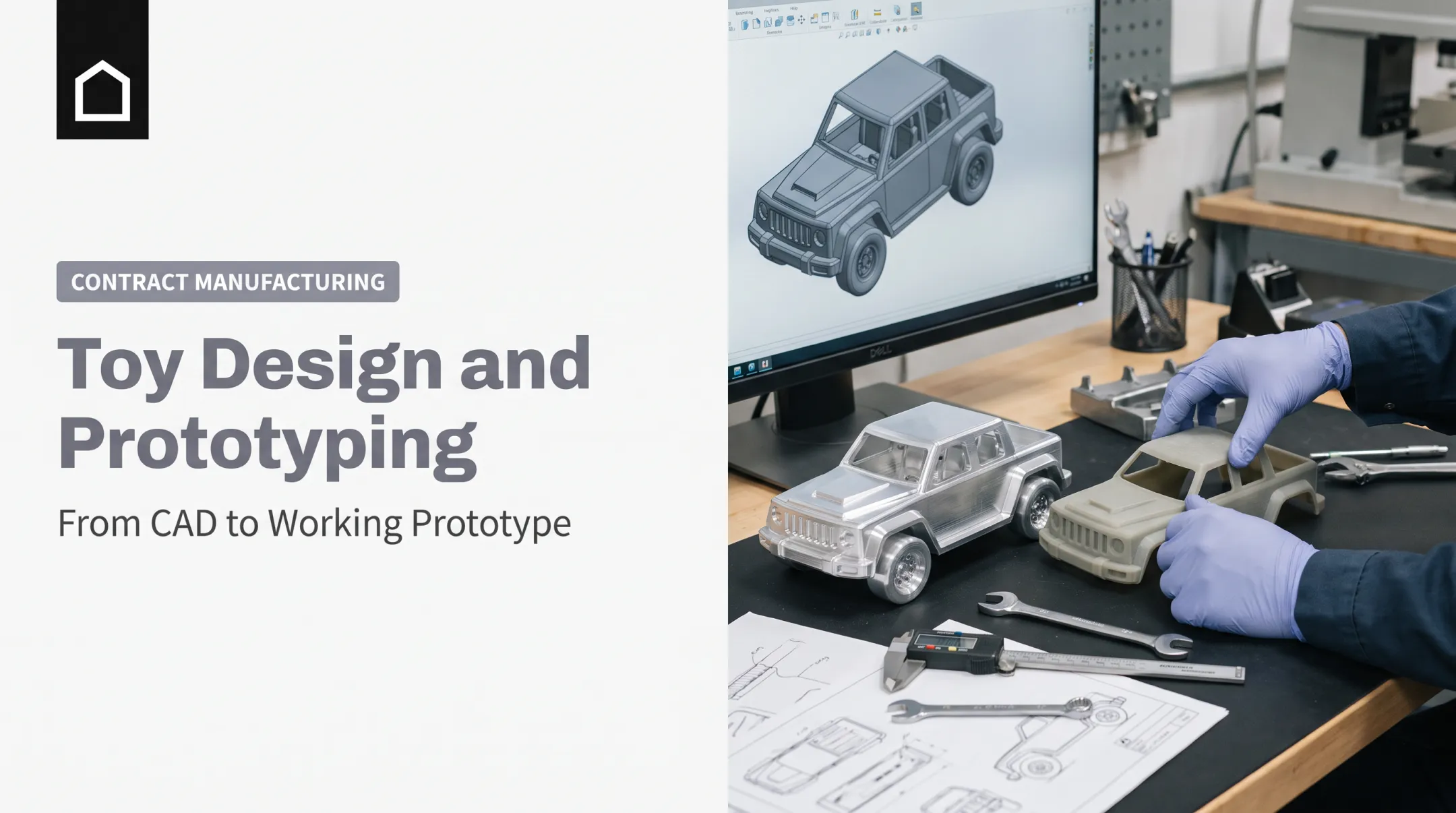
- Design & CAD Modeling — Build 3D models, run simulations, and refine ergonomics and aesthetics based on real-world constraints.
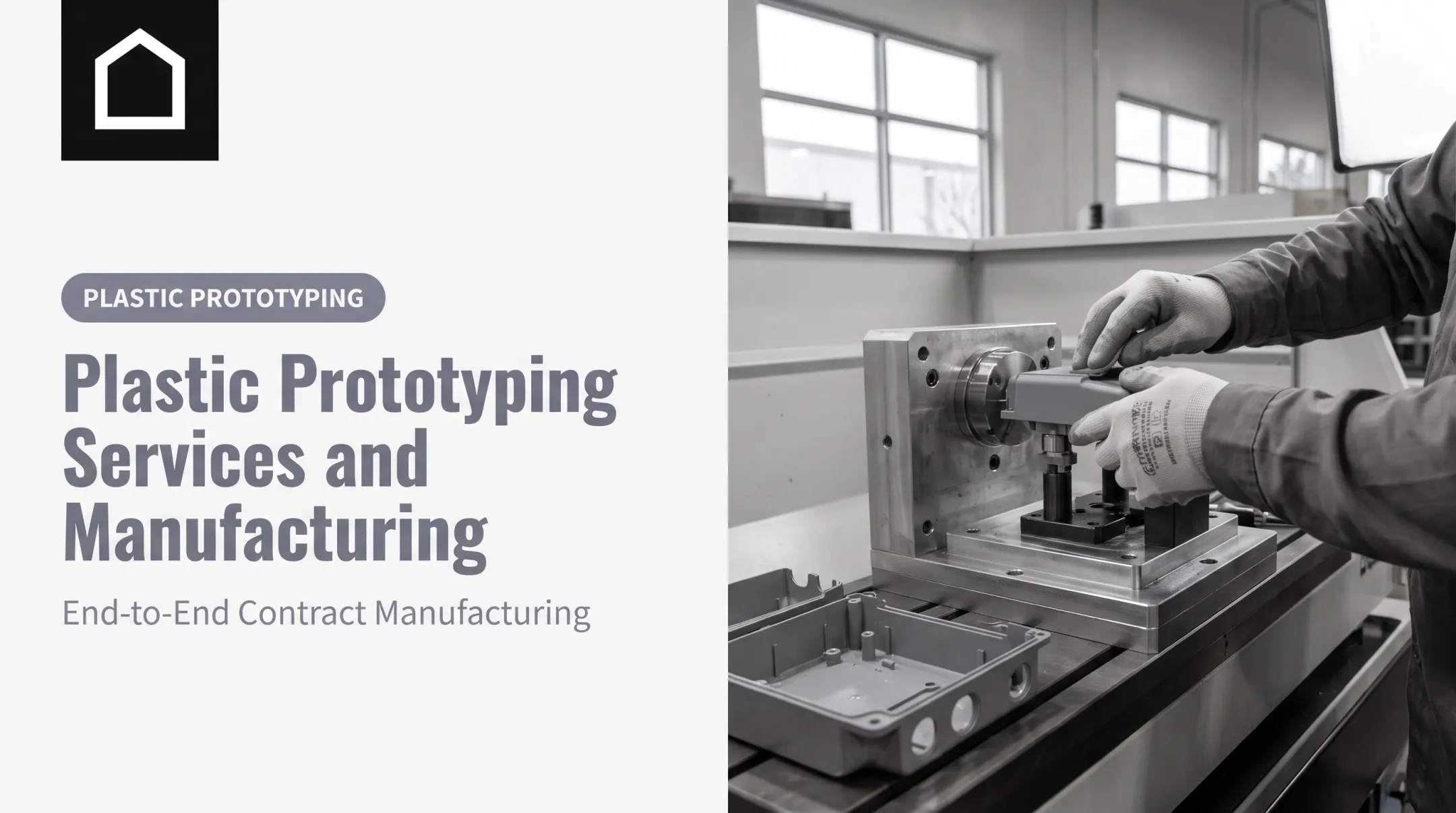
- Prototyping & Validation — Test form, fit, and function using 3D printing, CNC machining, or urethane casting before committing to tooling.
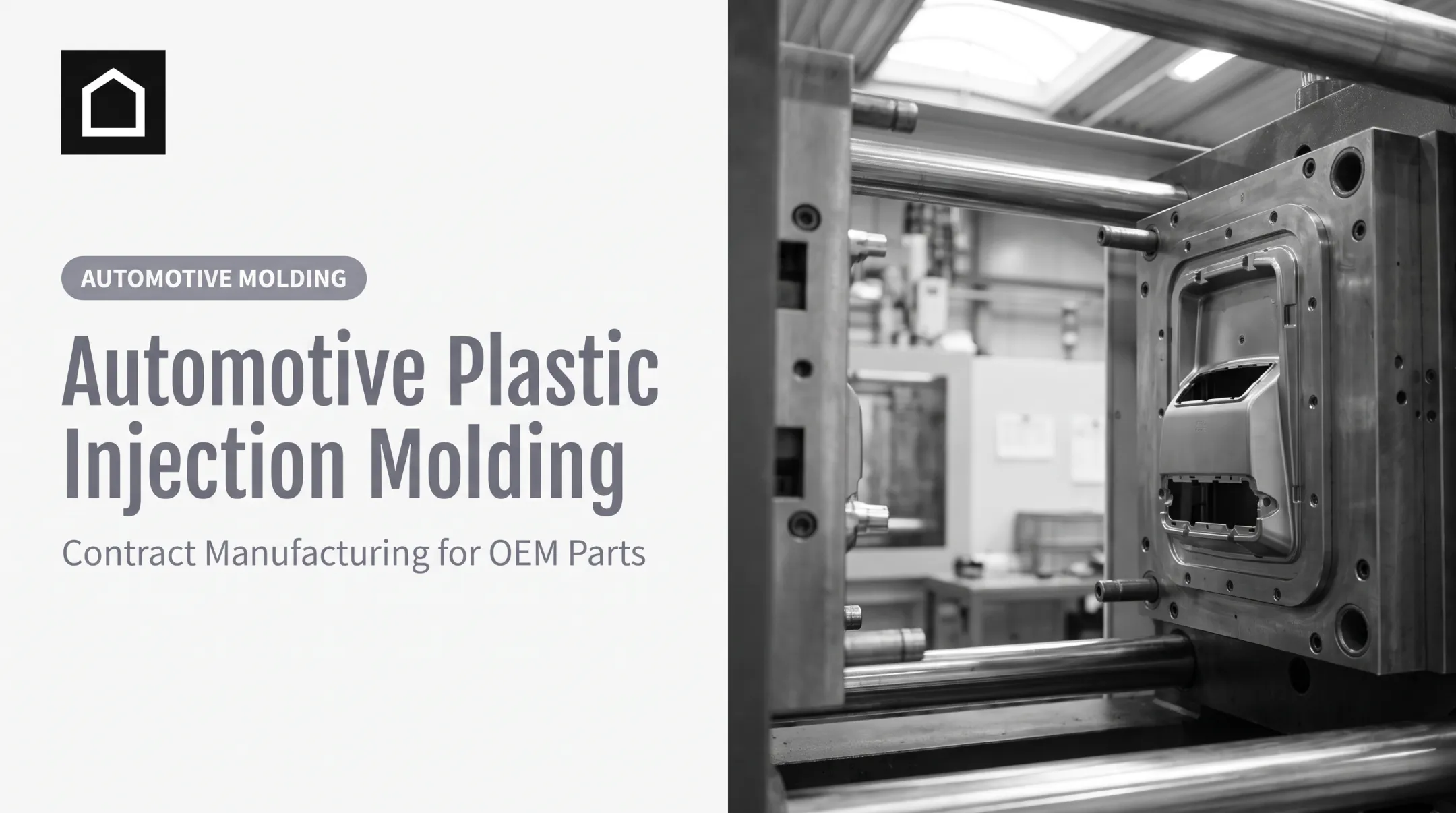
- Industrialization & Production — Finalize tooling, move into injection molding, and scale to full production with quality controls in place.

Regulatory analysis should run parallel to all five stages — not as a final checkbox. For medical, military, or automotive projects, waiting until prototyping to check FDA, ISO, or MIL-SPEC requirements almost guarantees a redesign.
Finine Design and Manufacturing handles all five stages in-house, from CAD modeling and prototyping through injection molding and finishing, so nothing gets lost between vendors.
Key Structural Design Considerations for Plastic Parts
Small geometry choices separate parts that mold cleanly from parts that warp, sink, or crack under stress.
Wall Thickness and Uniformity
Uniform wall thickness prevents uneven cooling, which is the root cause of warping and sink marks. Thicker sections cool slower than thin ones, and that mismatch shows up as visible defects on the finished part. Exact target thickness depends on the resin — Protolabs' wall thickness guidance notes that different materials tolerate different ranges, so uniformity within your chosen resin's window matters more than chasing a single universal number.
Ribs, Draft, and Corners
- Reinforcing ribs add strength without bulking up the whole wall. A common starting guideline is keeping rib thickness at roughly 40-60% of the adjacent wall thickness to avoid sink-through on the opposite surface.
- Draft angles let the part release cleanly from the mold. Vertical walls with zero draft tend to drag, scuff, or stick during ejection — a small angle (often starting around 1-2 degrees) solves this.
- Rounded corners (R corners) reduce stress concentration at sharp internal angles, which lowers the risk of cracking under load and improves how the material flows during molding.

Holes, bosses, and inserts add assembly flexibility but increase mold complexity. Each one is a decision point: does the added function justify the tooling cost?
Each one is a decision point: does the added function justify the tooling cost? Finine's team walks clients through these tradeoffs during CAD review, catching costly geometry issues before a part ever reaches the mold.
Choosing the Right Materials for Your Application
Material selection isn't a preference call. It's dictated by what the part has to survive.
Core factors to weigh:
- Mechanical strength and flexibility requirements
- Chemical and UV resistance
- Thermal performance across expected operating range
- Cost per part at target volume
- Aesthetic and finish requirements
Medical-Grade Considerations
Dental and orthopedic products face biocompatibility and sterilization demands that consumer parts never see. The FDA's guidance on ISO 10993-1 biological evaluation uses a risk-based approach tied to how a device contacts the body and for how long.
Each sterilization method (autoclave, gamma, or ethylene oxide) needs validation against the specific resin. Heat or radiation exposure can embrittle or discolor plastics that otherwise perform well.
Military and Automotive Demands
Military programs typically reference contract-specific MIL-STD requirements, with MIL-STD-810 covering environmental engineering tests for temperature extremes, humidity, and vibration. Automotive parts face their own weathering standards, including SAE's accelerated UV exposure testing for exterior materials.

The pattern across every regulated industry is the same: researching applicable standards early — FDA, ISO, or MIL-SPEC — avoids a costly redesign after tooling is already cut.
From Prototype to Mass Production
Jumping straight from CAD to production tooling is how companies end up paying twice for the same mold. Rapid prototyping catches design flaws before they get baked into hardened steel.
Rapid Prototyping First
Before committing to expensive steel, validate the design using:
- 3D printing — fast iteration for form and fit checks
- CNC machining — tighter tolerances, engineering-grade materials, good for low-volume runs
- Urethane or silicone casting — a middle step between a printed prototype and a full production mold, useful for testing quality and appearance at modest volumes

Tooling and Process Validation
Finine handles this transition in-house, moving parts from prototype to tooling without handing the project to a separate vendor.
Upfront collaboration between the designer and the molder during tool design catches problems while they're still cheap to fix. Once tooling is built, validation should confirm dimensional accuracy against CAD tolerances, material performance under real conditions, and part-to-part consistency before scaling up.
For medical devices, this step carries regulatory weight too — 21 CFR 820.75 requires process validation whenever results can't be fully confirmed by inspection alone.
Finishing Matters
Production painting and cosmetic finishing affect how a product looks and presents at launch. Surface prep, color matching, and detailing (including silk screen and rub-on graphics) turn a functional part into a market-ready one — especially important for sales samples and customer-facing products where first impressions carry weight.
Why a One-Stop-Shop Development Partner Matters
Every handoff between vendors is a place where information gets lost, timelines slip, or design intent gets diluted.
Using a single partner for CAD modeling, prototyping, CNC machining, urethane casting, injection molding, and painting removes those gaps. There's no waiting for File A to reach Vendor B in a format that actually works — it's one team carrying the design forward.
Finine Design and Manufacturing, based in San Diego, CA, works this way. The company offers CAD modeling and refinement, 3D printing, CNC machining, urethane casting, injection molding, and production painting under one roof.
Clients span automotive, military, consumer electronics, and medical, with particular depth in dental and orthopedic sales and educational products.
Cross-industry experience matters because each sector brings different pressure points:
- Automotive — durability and weathering demands
- Military — environmental and performance testing
- Consumer electronics — cosmetic finish and fast iteration
- Dental & orthopedic medical — real-world sales and educational product requirements
For companies moving from concept to production without managing five separate vendors, that single-partner model means fewer handoffs and a clearer path to a finished part.
Frequently Asked Questions
What are the 5 stages of product design?
Concept and requirements definition, material study and selection, CAD design, prototyping and validation, and industrialization into full production. Regulatory analysis should run alongside all five for regulated industries.
What are 5 products made from plastic?
Automotive interior components, medical device housings, consumer electronics casings, dental and orthopedic products, and military equipment housings all rely heavily on engineered plastics.
How long does plastic product development typically take?
Simple parts can move from concept to production in a few months; complex or regulated products often take 6–18 months. An in-house partner covering design through molding cuts handoffs and usually shortens that timeline.
What is the difference between prototyping and mass production tooling?
Prototype tools are built for speed and low cost, often good for a limited number of shots before wearing out. Production tooling costs more upfront but is engineered for durable, high-precision, repeatable manufacturing at scale.
Why is material selection so important in plastic product design?
The wrong material can compromise strength, chemical resistance, or regulatory compliance. Switching materials mid-project often means redesigning the part and retooling the mold.
What industries require specialized plastic product development expertise?
Medical, military, automotive, and consumer electronics all carry strict performance or regulatory demands. Each needs design decisions tied to that sector’s compliance standards.