
Unlike a consumer gadget, a medical device prototype has to survive scrutiny under FDA design controls and ISO 13485 quality-system requirements. Get the early steps wrong, and you're not just delaying a launch. You're building on a foundation that won't hold up under regulatory review.
This guide walks through the phases of medical device prototyping, the manufacturing techniques available at each stage, real examples of 3D-printed devices that made it to market, and what to look for in a development partner.
Key Takeaways
- Prototyping moves through distinct phases, each demanding higher fidelity and more rigorous testing
- Material and process choice (3D printing, CNC, injection molding) directly affects cost, speed, and regulatory readiness
- A single-source manufacturing partner cuts vendor handoffs and shortens time-to-market
- Dental and orthopedic devices need extra attention to biocompatibility and precision fit
What Is Medical Device Prototyping?
Medical device prototyping is the process of building physical or digital models to validate a design's function, fit, and safety before committing to full production. It sounds similar to prototyping in any industry, but the regulatory backdrop changes everything.
Under FDA design controls, prototypes aren't just proof-of-concept objects — they generate evidence. Design inputs must be measurable, design outputs must be testable against those inputs, and the whole chain needs to be traceable in a Design History File for Class II and III devices (FDA design controls). ISO 13485:2016 governs the quality system behind that process, and if your device contacts patient tissue, ISO 10993 biocompatibility requirements come into play depending on contact duration and nature.
That regulatory weight is exactly why prototypes matter to more than engineers:
- Regulators want documented proof that design decisions were tested, not assumed
- Investors want to see controlled iteration, not a single unverified concept
- Clinicians need to confirm the device actually works the way it's supposed to before it reaches a patient
A polished-looking prototype means nothing if it can't answer the specific design question it was built to test. This is why the prototyping process itself — CAD modeling, 3D printing, CNC machining — needs to produce testable, traceable results at every stage, not just a convincing mockup.
The Five Phases of Medical Device Development and Prototyping
Medical device development isn't officially divided into exactly five phases by FDA, but this five-stage model is a practical way to think about how prototypes evolve in fidelity and rigor.
Concept and Feasibility
This is where a clinical need becomes a design requirement. Rough, low-cost prototypes test the core mechanism or anatomical fit. The goal isn't polish — it's answering the riskiest assumptions first, before spending real money.
Alpha and Functional Prototyping
Here, teams test core functions and iterate based on early clinician feedback. Expect several rounds of design changes as the device's actual use conditions reveal problems that CAD models couldn't predict.
Beta and Design Verification Prototyping
Prototypes now use near-final materials and geometry. This stage involves rigorous bench testing and simulated-use testing, since verification confirms the design output matches the design input under FDA's framework (FDA design controls).
Pilot and Validation Prototyping
This stage uses production-intent tooling and materials. These prototypes typically feed regulatory submissions and clinical evaluation, since validation requires initial production-equivalent units.
Production Scaling
The validated prototype transitions into full manufacturing, with quality control systems in place to keep every unit consistent with what was tested and approved.

There's no universally accepted statistic proving early prototyping cuts development costs by a fixed percentage — treat any number you see with skepticism. What's well-documented is the underlying logic: catching a design flaw during CAD or 3D printing is far cheaper than catching it after injection-molding tooling is cut. Finine Design and Manufacturing supports this progression in-house, carrying dental and orthopedic device projects from CAD modeling through 3D printing, CNC machining, and injection molding under one roof.
Types of Prototypes and Manufacturing Techniques
Different manufacturing methods answer different questions. Picking the wrong one wastes time and money.
| Technique | Best for | Watch out for |
|---|---|---|
| CAD/digital modeling | Early visualization, stakeholder buy-in | Digital fit doesn't prove physical strength |
| 3D printing | Rapid iteration, complex geometries, custom dental/orthopedic parts | Requires controlled build parameters and validation |
| CNC machining | Tight tolerances, functional metal/plastic parts | May not replicate molded material behavior |
| Urethane casting | Near-production-quality parts before tooling | Silicone molds have limited use cycles |
| Injection molding | Validation testing, high-volume production | Tooling changes are expensive to redo |
How to choose: Match the technique to the question you're answering. Early-stage feasibility rarely needs injection-mold precision. Late-stage validation almost always does.

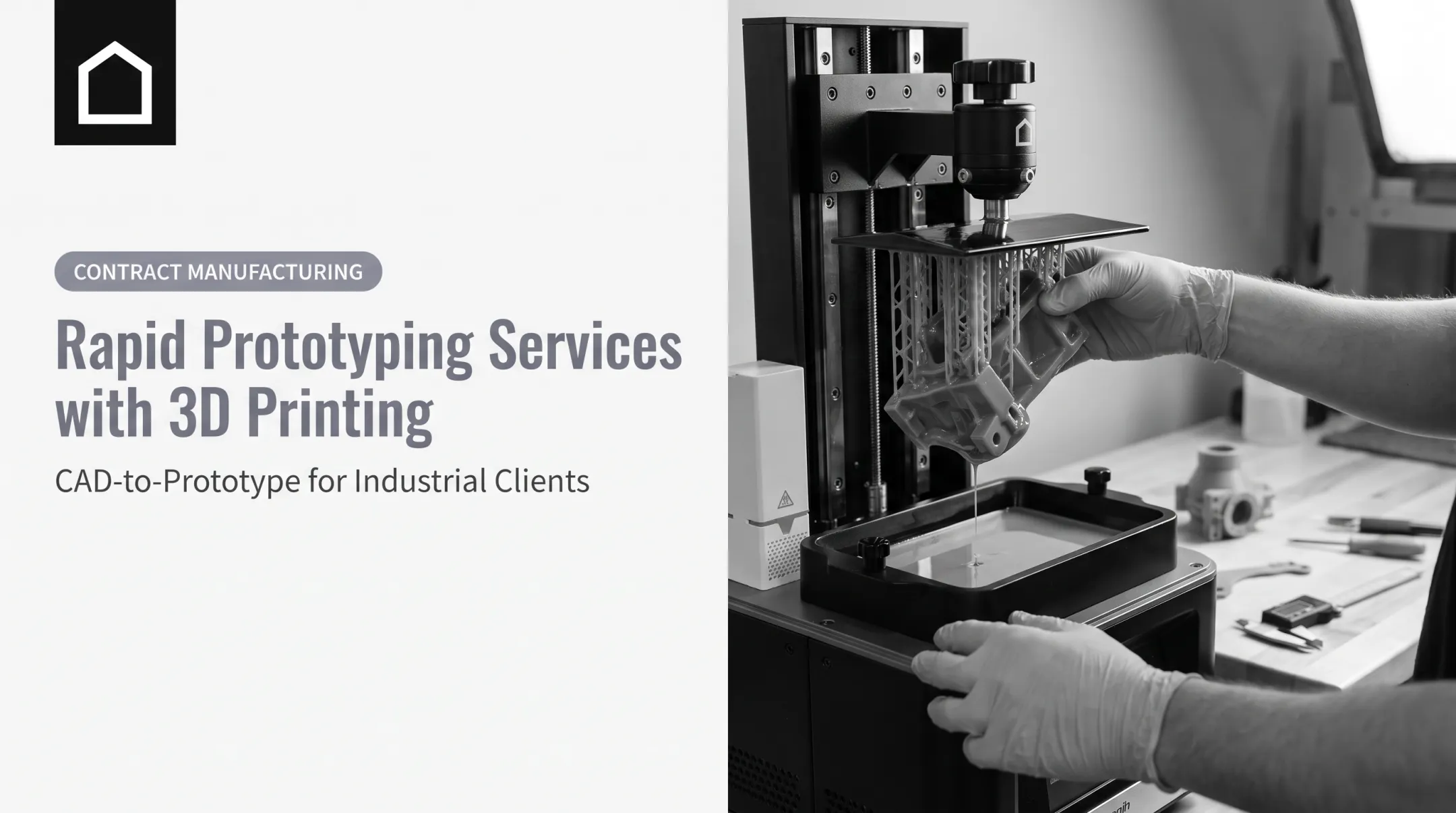
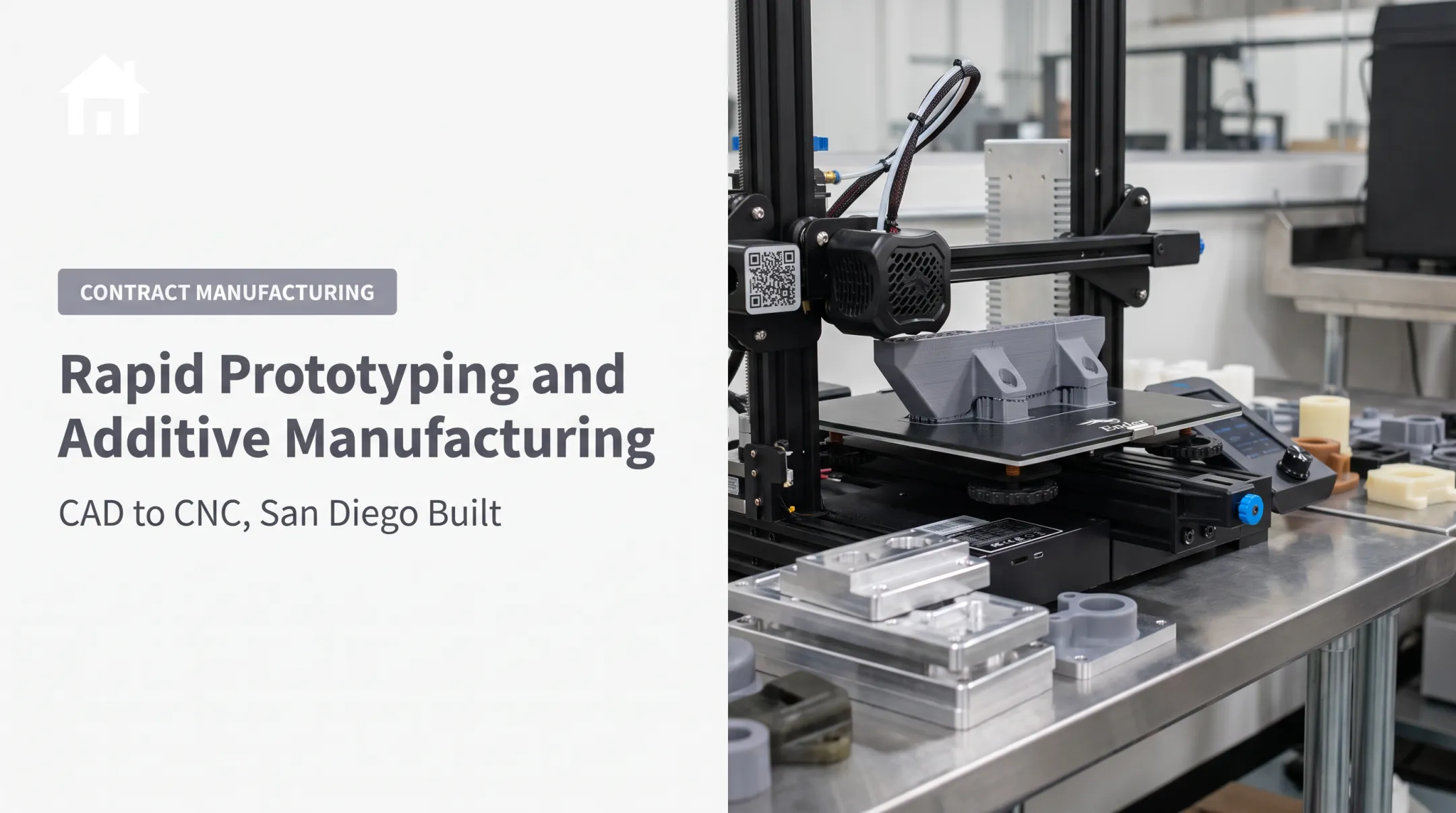
Finine Design and Manufacturing runs CAD modeling, 3D printing, CNC machining, urethane casting, and injection molding under one roof. A device moving from alpha prototype to design verification often needs several of these methods in sequence.
Consolidating them with one partner means:
- Materials and tolerances can shift between stages without re-briefing new vendors
- Design data carries forward instead of getting re-created at each handoff
- Schedule risk drops since one team owns the full prototype-to-production path
What Medical Devices Can Be 3D Printed?
Additive manufacturing has moved well past novelty status in medical devices. FDA identifies several categories where 3D printing is common, including orthopedic and cranial implants, surgical instruments, and dental restorations like crowns (FDA, 3D Printing of Medical Devices).
Common applications include:
- Surgical guides for joint replacement and osteotomy procedures
- Custom dental implants and orthodontic devices
- Orthopedic models used for pre-surgical planning
- Wearable diagnostic devices and patient-monitoring housings
Real example: Materialise received FDA 510(k) clearance for 3D-printed surgical guides used in knee osteotomies. The guides were designed to match the patient's own bone anatomy, transferring a digital surgical plan directly into the operating room. That's the prototype-to-commercial-product path in action: a printed patient-specific model went from design tool to a cleared surgical device.

There's an important boundary here. A printed anatomical model built to test fit is not automatically a marketable device. Getting from prototype to cleared product still requires the right regulatory pathway, material controls, and validation testing specific to that device, which is where Finine's experience with dental and orthopedic clients comes into play — turning early-stage models into production-ready parts.
Key Considerations When Choosing a Medical Device Prototyping Partner
Not every prototyping shop understands what regulated development actually demands. Before committing to a partner, check for these things.
Regulatory fluency. Does the partner understand FDA design controls and ISO 13485 quality-system expectations, or are they just fabricating parts? A partner familiar with ISO 13485 quality-system practices is a good sign, but certification alone doesn't guarantee FDA-readiness — ask what documentation and traceability practices they actually follow.
End-to-end capabilities. A partner offering CAD, 3D printing, CNC, molding, and finishing under one roof removes the friction of managing multiple vendors, each with its own lead times and communication gaps. Fewer handoffs generally means fewer opportunities for a design detail to get lost in translation.
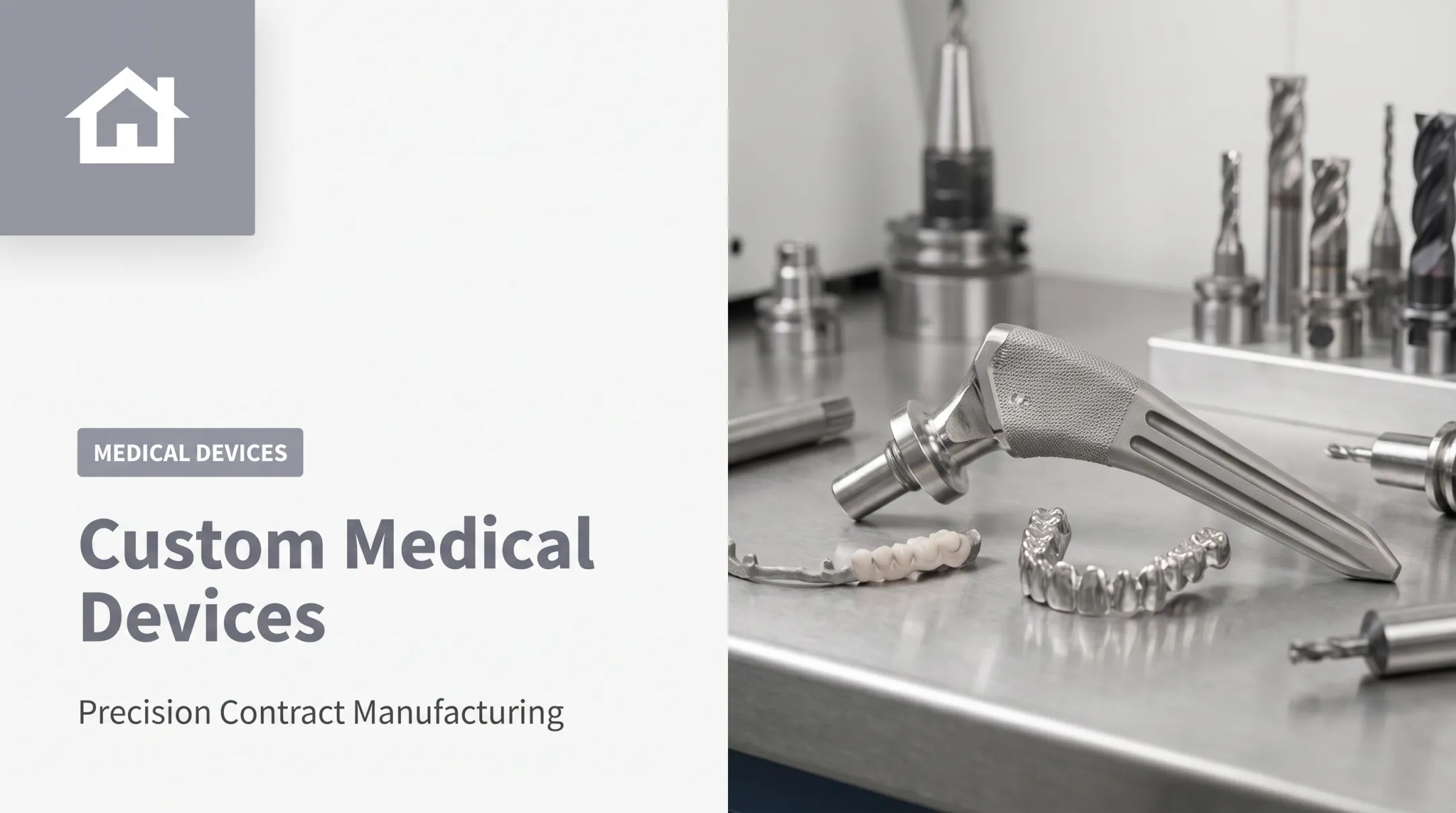
Dental and orthopedic specialization. These devices carry unique demands around biocompatibility and precision fit — a dental crown or orthopedic guide has to match patient anatomy almost exactly, with materials suited for extended tissue contact.
Finishing quality. Production painting and graphic finishing turn a functional prototype into something that looks and presents like a finished product, useful for investor demos or early sales conversations.
Finine Design and Manufacturing, based in San Diego, brings CAD modeling, 3D printing, CNC machining, urethane casting, injection molding, and production painting together in one facility. For dental and orthopedic clients, that structure means moving from a concept model to a validation-ready prototype without switching vendors mid-project.
Frequently Asked Questions
Where can I get medical device prototypes made?
Specialized prototyping shops, design firms, and full-service manufacturers with medical experience offer these services. Look for a partner who understands regulatory documentation, not just fabrication.
What are the stages of medical device prototyping?
Development typically moves through concept/feasibility, alpha/functional, beta/design verification, and pilot/validation stages, each using higher-fidelity materials and stricter testing than the last.
What are the five phases of medical device development?
Concept and feasibility, design and development, verification and validation, production, and post-market surveillance make up the broader lifecycle FDA oversees.
What are the types of prototypes used in medical device prototyping?
Visual prototypes (CAD models) support early buy-in, functional prototypes test core mechanisms, and near-production prototypes use final materials for validation testing before full manufacturing.
What are some examples of medical device prototypes?
Wearable patient monitors, dental implant models, orthopedic surgical guides, and custom surgical tool grips are common examples across the prototyping spectrum.
What is a prototype in medical terms?
A prototype is an early physical or digital model built to test and validate a device's design, function, or fit before committing to full-scale production.
Ready to move a dental or orthopedic concept forward? Reach Jaime at Finine Design and Manufacturing at Jaime@fi9design.com or 1.858.900-9787 to schedule a facility tour in San Diego.