
But the price tag varies a lot. A simple test part might run a few hundred dollars. A complex, multi-cavity project with premium resin can climb past $5,000. This article breaks down exactly what drives that range, what a full quote should include, and how to budget accurately before you request one.
TL;DR
- Projects range from a few hundred dollars (simple, low-quantity) to $5,000+ (complex, multi-cavity molds)
- Master pattern, mold fabrication, and per-part cost drive most of the price
- Simple geometry and low quantities cost less; tight tolerances and higher volumes cost more
- Higher upfront investment pays off for runs of 100+ units or when finish consistency matters
How Much Does Urethane Casting Cost? (Pricing Overview)
There's no flat rate for urethane casting. Total cost breaks into three parts: the master pattern, the mold, and per-unit casting. Each shifts with your part's geometry, material, and volume.
Common budgeting mistakes:
- Underestimating master pattern costs (CNC-machined patterns cost far more than 3D-printed ones)
- Assuming one mold survives an entire production run
- Forgetting finishing costs like sanding, painting, or silk-screening
Typical Cost Range
| Tier | Setup | Estimated Cost |
|---|---|---|
| Entry-level | 3D-printed pattern + single silicone mold, 10-20 parts | A few hundred dollars to ~$1,500 |
| Mid-range | Multi-cavity mold, moderate complexity, 50-150 parts | $1,500-$5,000+ |
| High-end | Complex geometry, multiple molds, premium resin, 150-300 parts | $5,000+ |

These ranges typically cover mold and unit costs, but often exclude rush fees, custom finishes, and assembly. Here's what each tier usually includes.
Entry-Level Setup
- Includes: Basic master pattern, one silicone mold, standard PU resin
- Best for: Proof-of-concept parts, single design iterations, low-visibility internal prototypes
Mid-Range Setup
- Includes: Refined master pattern, multi-cavity mold, mid-grade resin with color or texture matching
- Best for: Functional prototypes, small-batch pre-production, trade show samples
High-End Setup
- Includes: Precision CNC-machined master pattern, high-grade silicone tooling, premium PU materials, extensive finishing
- Best for: Medical or dental device mockups, regulated-industry parts with tight tolerances, bridge production runs
Key Factors That Affect the Cost of Urethane Casting
Pricing depends on three things: technical requirements, tooling choices, and production scale.
Material Selection
Polyurethane resins split into two families:
- Polyester-based PU: Higher tensile strength, better abrasion and chemical resistance, stronger high-temperature performance (PSI Urethanes)
- Polyether-based PU: Better hydrolytic stability, low-temperature flexibility, and rebound — ideal for humid or submerged conditions
Additives for hardness or chemical resistance add cost. Matching resin to end use matters even more in regulated fields: a dental mockup needs different material validation than a general industrial bracket, which affects both price and compliance.
Part Size, Complexity, and Design
Wall thickness, undercuts, and intricate geometry all increase mold complexity, labor time, and defect risk. A part with deep undercuts might need a multi-piece mold instead of a simple two-part cavity.
Design tip: Catching design-for-manufacturing (DFM) issues early — before the mold is cut — avoids costly rework later.
Mold Type and Quantity Needed
Silicone molds typically run $200-$1,500, depending on size, cavity count, and durability requirements (Uniflex). Each mold yields a limited number of usable parts before the silicone degrades — typically 10–50 pours, depending on resin and geometry.
- Single-cavity molds: Lower upfront cost, better for small runs
- Multi-cavity molds: Higher upfront investment, lower per-part cost at moderate volumes

Production Volume
Per-unit costs drop as volume climbs, but only up to a point. The practical ceiling for urethane casting is typically 100–300 parts. Beyond that, injection molding usually becomes the more economical choice.
Finishing and Post-Processing Requirements
Sanding, painting, silk-screening, and assembly all add to the final bill. A part destined for internal testing rarely needs cosmetic finishing. A customer-facing sample or trade show piece almost always does.
Cost Breakdown of Urethane Casting
Total project cost extends well beyond the per-part price tag.
- Master pattern (one-time): 3D-printed or CNC-machined model plus surface finishing. SLA patterns run about $150–$400; CNC patterns usually cost more.
- Mold fabrication (one-time, per mold): Silicone tooling priced by size, cavity count, and material grade, typically $200–$1,500.
- Casting and materials (per part): Mixing, pouring, curing, demolding, and resin — usually $10–$100 depending on size and finish.
- Finishing and QC (per batch): Trimming, sanding, painting, and inspection; cost scales with cosmetic and inspection requirements.
- Mold replacement (periodic): Tooling wears out after repeated cycles; replacement molds add cost on longer runs.

Urethane Casting vs. Injection Molding — Cost Comparison
The real tradeoff is upfront tooling versus per-unit cost as volume grows.
- Silicone molds run about $200–$1,500, far below steel injection tooling at $10,000 to $100,000+
- Injection molding wins on unit price at high volume once automation spreads the tool cost
- Urethane cast parts cost more each, but you avoid that large tooling outlay
- Most programs cross over somewhere between roughly 100–200 parts and about 500 parts, depending on geometry and tool assumptions

Best fit:
- Urethane casting for prototypes, bridge builds, and regulated-industry test parts
- Injection molding for high-volume final production
How to Estimate the Right Budget for Urethane Casting
Choosing the right process fit matters more than chasing the lowest quote. Factor in:
- Intended use — internal testing, customer-facing samples, and regulated medical or dental products each set different quality requirements
- Order volume — current quantity needs and whether you plan to scale to injection molding later
- Part requirements — tolerances, surface finish, and material performance
- Vendor structure — one partner for CAD, 3D printing, and casting cuts handoff delays and coordination costs
Finine Design and Manufacturing in San Diego handles CAD modeling, 3D printing, urethane casting, and injection molding in-house. Automotive, medical, military, and consumer electronics teams keep the same partner from prototype through production, which simplifies budgeting and handoffs.
What Most People Miss When It Comes to Urethane Casting Costs
- Fixating on per-part price while ignoring master pattern and mold costs that hit upfront
- Underestimating mold degradation, as silicone wears faster than expected and forces costly mid-run replacements
- Over-specifying tolerances or finishes that aren't functionally necessary for the part's actual use
- Chasing the lowest quote without confirming material quality or QC, especially risky for medical or orthopedic parts that need biocompatibility
Conclusion
Urethane casting costs swing widely based on part complexity, material choice, mold requirements, and volume. Looking only at per-part pricing misses the bigger picture. Master pattern costs, mold fabrication, and replacement tooling all factor into the real budget.
The right approach balances upfront tooling investment, per-unit price, and your long-term production plans — not just the number on the first quote you receive.
Frequently Asked Questions
How much does urethane casting cost?
Projects typically range from a few hundred dollars for simple, low-quantity parts to $5,000 or more for complex, multi-cavity molds. Size, material, complexity, and volume all shift the final number.
How do you calculate casting cost?
Total cost = master pattern + mold cost + (per-unit material and labor cost × quantity) + finishing. Each component scales differently as your requirements change.
Can you cast urethane?
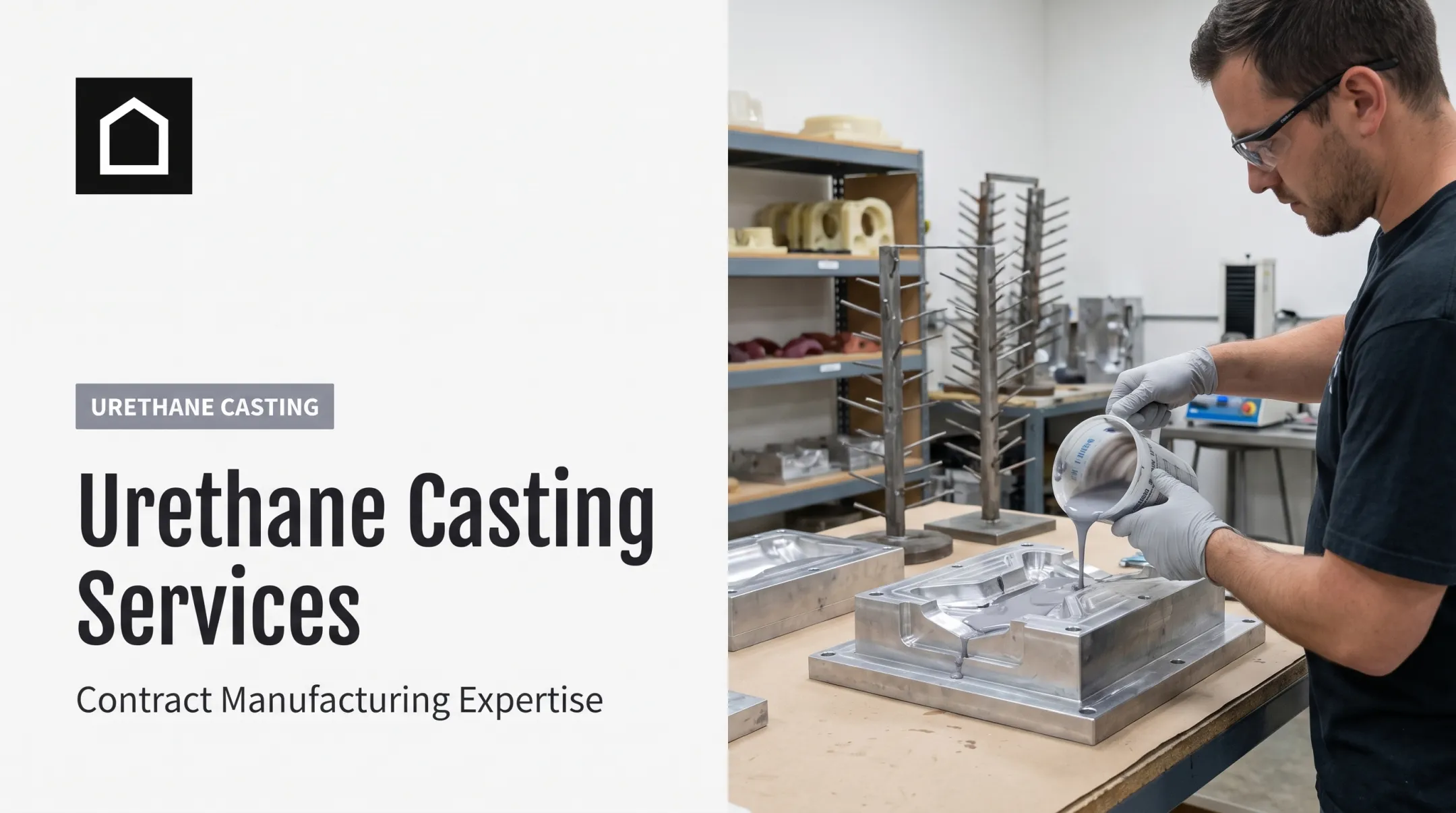
Yes. Urethane casting is a standard process that pours liquid polyurethane resin into a silicone mold, producing production-ready parts suitable for prototypes and low-volume runs.
Is urethane casting cheaper than injection molding?
It's cheaper upfront since silicone molds cost far less than steel tooling. Injection molding becomes cheaper per unit at higher volumes, making casting better suited for smaller runs.
How many parts can one silicone mold produce?
Yield varies by resin and geometry, but most molds produce between 10 and 50 parts before quality starts to degrade.
What's included in a typical urethane casting quote?
A complete quote covers master pattern creation, mold fabrication, casting and material costs, and finishing. Confirm what's excluded — rush fees and custom finishes often aren't bundled in.